How fast is a snail’s pace? We use the phrase “moves at a snail’s pace” to describe the slow rate at which things occur, such as old trains, hiking sand dunes, or tedious lectures. Snails have always been used to represent tranquility and slowness. But is it true that these creatures just stroll around? Just how “quick” do snails really move? That varies considerably from species to species.
In Numbers
The amber snail (Succinea) found in damp meadows and bogs, moves at a meager 0.08 inches (2 millimeters) per minute. Meanwhile, the renowned Burgundy snail (Helix pomatia) is said to cover 2.85 inches (7.2 centimeters) in the same time frame. It has been shown that certain species of nocturnal snails may move as quickly as 4.35 inches (11 centimeters) per minute.
In comparison to their aquatic counterparts, land snails move quite slowly. Whelks found in the North Sea of the Atlantic Ocean, for instance, have been recorded at a whopping 6.3 inches (16 centimeters) per minute. Nevertheless, this does not make them the top dogs among snails. There are also numerous orders of significantly speedier free-swimming snails. Some species of the mollusk family Heteropoda and the squid family Pteropoda (commonly known as sea butterflies) have been recorded traveling twelve meters per minute.
Yes, Even Snails Can “Sprint”
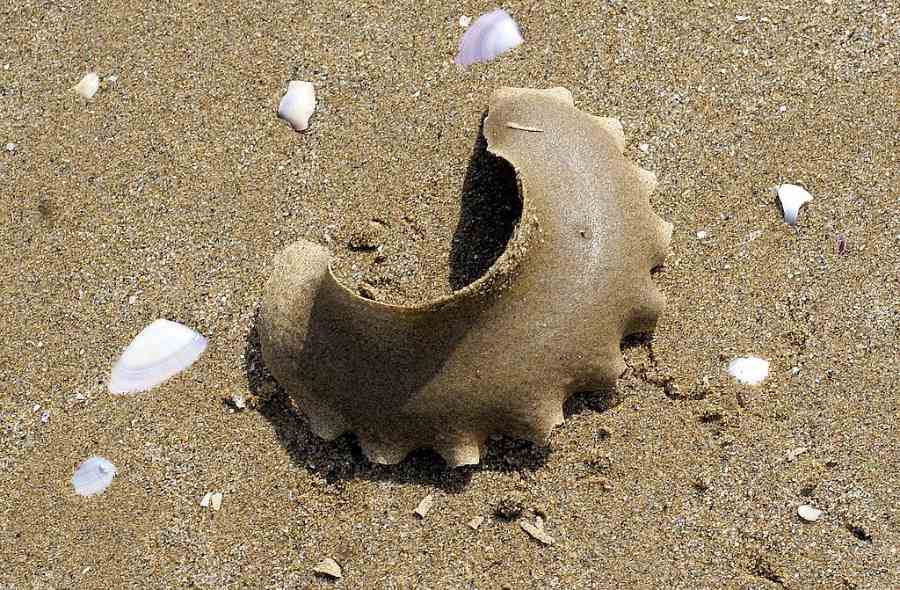
It is not known whether there is a world record holder for the fastest snail on the globe. Although most sea snails can’t swim, the moon snail (Neverita josephinia) may cover small distances by utilizing its foot as a “paddle.” A race of such a kind resembles a sprint.

Despite this, snails are noticeably slower than most other species, especially when size differences are disregarded. Some animals, like fire jellyfish, are capable of covering 108 feet (33 meters) in a minute, while squid may go up to 1650 feet (500 meters). Comparatively, a cheetah can cover around 1 mile (1.6 kilometers) in the same amount of time, while a peregrine falcon can supposedly fly at speeds of nearly 3.1 miles (5.6 kilometers) per minute when diving.
Snails Move Slowly But Respond Swiftly
But snails do not always act at the same speed. Cone snails in the tropics may move slowly because of their thick shells, but they have lightning-fast reflexes when ambushing their prey, which may include other snails, worms, or fish. After locating the prey, cone snails strike quickly with poison darts stabbed from a slowly stretched proboscis. This travels to the victim in under 200-300 ms. The Australian moon snail, Conuber sordidus, is no different. It uses its massive foot to rapidly capture the passing army crabs, which it subsequently consumes while they are still alive.
On the other hand, the snails with the slowest reaction times in the world are not agile. Certain organisms, like the “worm snails” of coral reefs, are sedentary and never move. Their skeletons are compared to those of tubeworms. These unusual mollusks survive by filtering plankton via a mucus net.
The Trail of Slime
But how come snails move around if they are not tethered to the ground or in the water? Many snails leave a slime trail behind them as they move since they crawl on a bed of mucus. The snail’s large foot is responsible for the actual propulsion. Its muscular contractions travel in waves from its rear to its front. Constant touch with the ground is maintained by several parts of the foot. In the same way, many marine sand snails secrete mucus to aid in their movement on the sand. These animals get around by generating a mucus shell that flows from front to rear, which directs the sand to the side as the snails move ahead.

Further reading:
- Snails move “faster than we thought”, says study. (n.d.). BBC Newsround.
- 8 Slowest Animals in the World. (2022, June 10). Treehugger.