In the late 1500s, magnetic compasses were already being used by captains to guide their ships across the seas. But nobody understood how they functioned. Some people attribute the compass’s northward pull to the North Star, while others attribute it to the Arctic’s magnetic mountains. William Gilbert, an English physician, found that the planet itself had a magnetic field.
Who was William Gilbert?
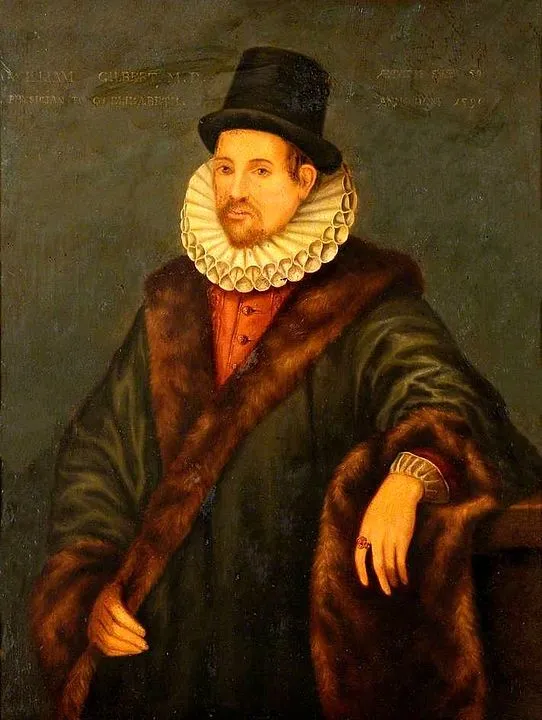
The early modern period saw the life of William Gilbert, sometimes spelled Gilberd. Along with Galileo Galilei and Johannes Kepler, he laid the groundwork for modern physics and is responsible for a plethora of breakthroughs in the realms of electricity and magnetism.
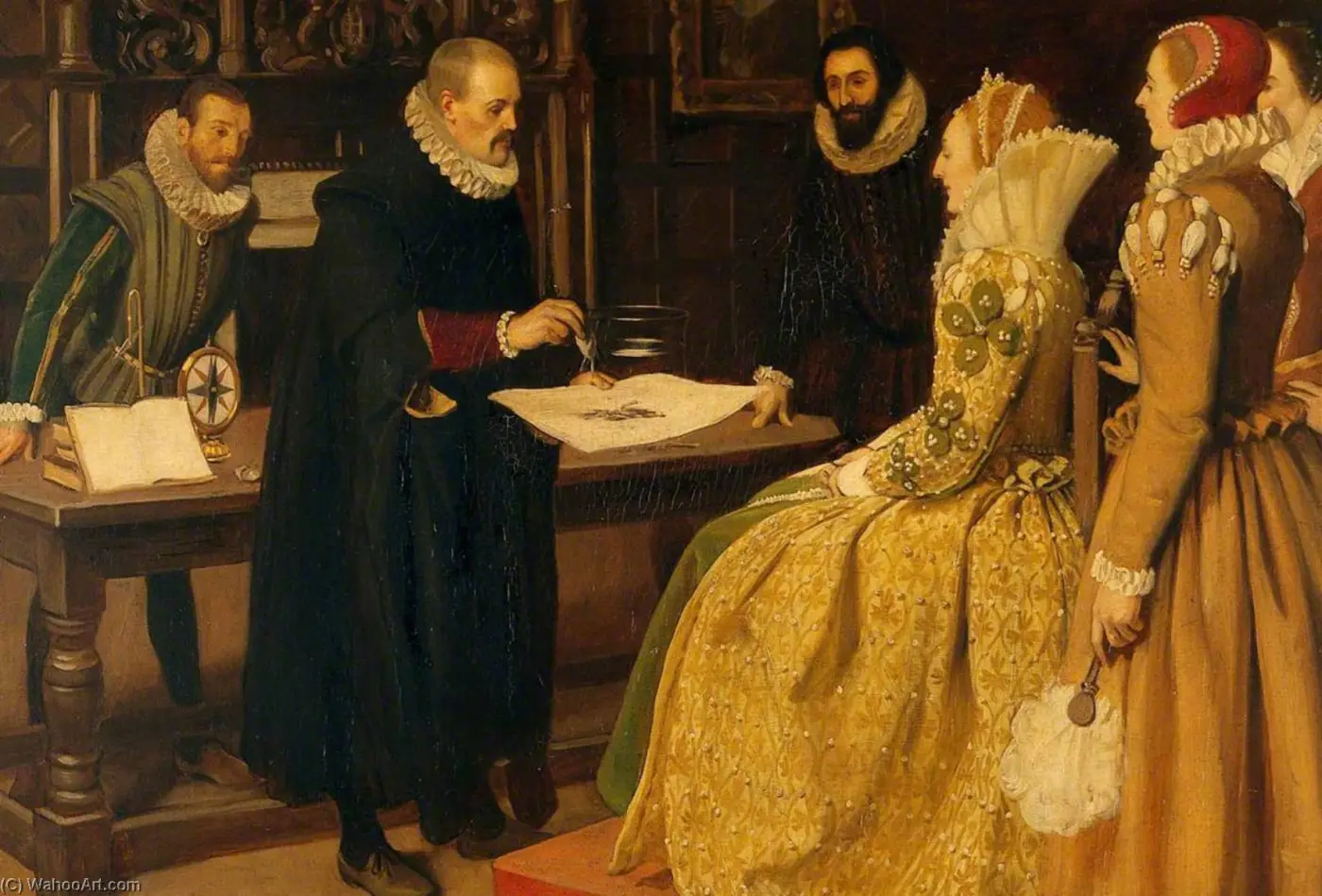
After being born in Colchester in 1540 (or 1544, depending on the source), Gilbert began his medical training at St. John’s College, Cambridge, in 1558. After finishing medical school, Gilbert moved to London in 1573 and quickly rose through the ranks, becoming president of the Royal College of Physicians in 1600. In 1601, Queen Elizabeth I named him her personal physician. Sadly, his time of honor was short-lived; the Queen passed away on March 24, 1603, and he moved either to London or Colchester on November 30.
He was a physician who also pursued his interest in scientific mysteries, first in chemistry and then gravitating toward the study of electricity and magnetism. There may be two reasons for this intense fascination with magnetism. As an Englishman, he obviously encountered the compass-related issues that are crucial for shipping, and as a doctor, he undoubtedly was aware of the alleged therapeutic benefits of the magnetic stone for all of the recorded time.
Long-standing reluctance prevented Gilbert from publishing his work. Although it wasn’t published in London until the year 1600, by 1628 the book, De Magnete, had already seen three printings in Germany. As the definitive work on electricity and magnetism, this book would be referenced for years to come because of the quantity of new insights it contained.
But why did William Gilbert wait so long to release his book? He answers this in the preface of the book in a sarcastic way:
But why should I, in so vast an Ocean of Books by which the minds of studious men are troubled and fatigued, through which very foolish productions the world and unreasoning men are intoxicated, and puffed up, rave and create literary broils, and while professing to be philosophers, physicians, mathematicians and astrologers, neglect and despise men of learning: why should I, I say, add aught further to this so-perturbed republick of letters, and expose this noble philosophy, which seems new and incredible by reason of so many things hitherto unrevealed, to be damned and torn to pieces by the maledictions of those who are either already sworn to the opinions of other men, or are foolish corruptors of good arts, learned idiots, grammatists, sophists, wranglers, and perverse little folk?
William Gilbert – On the Magnet. Source: Gutenberg
First systematic research
William Gilbert took a methodical approach to his study of magnetism, recording the names and locations of magnetite deposits, answering the issue of what distinguishes iron ore from magnetite, and making critical comparisons to research from earlier times. In doing so, he verified Maricourt’s earlier results and uncovered several new insights.
Iron could be made magnetic in two ways: by covering it with a magnetic stone or by being placed in a magnetic field. Gilbert could easily debunk Giambattista della Porta’s assertion that coating iron with a diamond was causing it to become magnetic. He gathered a group of witnesses and, in front of them all, rubbed 75 diamonds against a variety of iron rods and wire, but to no avail. The treatment did not make any of the iron magnetic. He had discovered that heating a magnet to high temperatures was rendering it ineffective.
He didn’t believe in magnetic ointments and other magnet-based treatments, and he said that if his ideas didn’t convince doctors that what they were doing was useless, the deaths of their patients might.
A tremendously large magnet
William Gilbert focused himself on the phenomena of terrestrial magnetism in addition to the general magnetism issues, building on Peter Peregrinus of Maricourt‘s earlier research. He also created a sphere-shaped magnetic stone that he referred to as “terella,” or “little earth,” since it was a miniature of the Earth, sharing its form and composition. He used a tiny magnetic needle to gauge its magnetic characteristics. On the sphere’s surface, there were attractive guiding forces directed toward the poles, two very distinctive spots. Gilbert was certain that the Earth was a massive magnet on the basis of his studies.
This also answered the often-asked question of why the compass needle always points north. The myth of the enormous magnetic mountain at the North Pole was shown to be false, just as Maricourt’s belief that Polaris (the North Star) was the source of directional power was.
Gilbert concluded that the needle’s north-pointing pole could never be its north pole, but only its south pole, since it was known that only poles of opposing polarity were attracted to one another. These days, the magnetic poles of the Arctic and Antarctic are accepted to be north and south magnetic, respectively. Gilbert postulated that a significant portion of the interior of the Earth was made up of magnetic ironstone or iron ore, among other elements, in order to explain the magnetic processes on Earth.
William Gilbert also recognized that the so-called inclination of the needle, which had been discovered by Georg Hartmann in 1544, took on various values when scanning the terella’s surface with the needle. The needle was horizontal at the terella’s equator, but it tilted toward the little sphere as it approached the poles, and at the pole itself, it pointed vertically downward toward the surface. Henry Hudson, during a journey to the Arctic Ocean in 1608, was able to validate Gilbert’s prediction of a vertical adjustment of the magnetic needle for the polar regions of the planet.
William Gilbert’s Amber experiment
The bulk of Gilbert’s amber research can be found in the second chapter of his second book. Again, they provide evidence for a methodical approach and are full of criticisms of modern writers who recount just what they’ve read in old texts without ever doing their tests. Additional materials with the attraction of amber had been found in the meantime, so he first made a new set of comparisons between them, this time dubbing the substances like amber (glass, sealing wax, sulfur, mastic, etc.) “electric bodies” and their power “vis electrica.” Sir Thomas Browne coined the term “electricity” in 1646, based on Gilbert’s 1600 New Latin electricus, which means “like amber.”
He included in the category of non-electric bodies those like metals that do not attract one another through electric forces. Careful research also allowed him to expand upon the distinctions between electrical and magnetic phenomena that Girolamo Cardano had previously identified. A dry body was required for the “vis electrica” to work, and he claimed that it drew other chemicals but did not alter them. Forces could not be generated by heating alone, and friction was required. Even a flame could diminish the effect of the rubbed amber.
Behaviour of magnetic forces
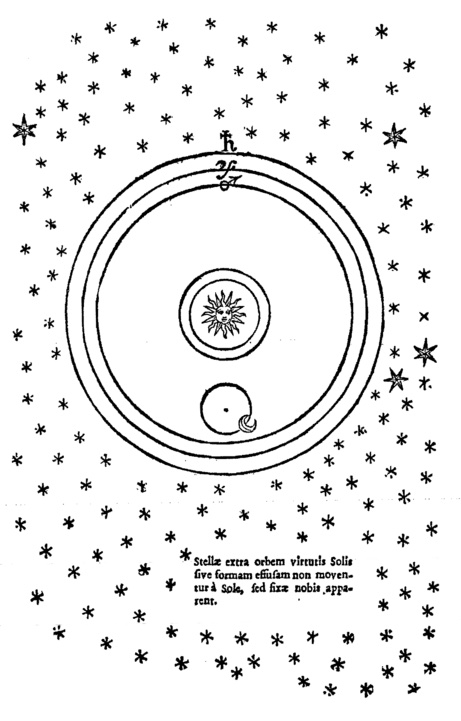
Magnetic forces, on the other hand, behaved entirely differently; they only operated on iron, but they also made it magnetic, and they could even exist in damp materials. More than that, he was struck by the contrasting size of the forces. Amber could only attract extremely small and light objects, but a magnetic stone could lift an iron that weighs quite a bit.
William Gilbert created the first iteration of the electrical measuring instrument, the “Versorium,” as part of his work. It’s sometimes misidentified as a straw electroscope, but he claimed it was constructed of metal, measured three to four fingers in length, and had a sharp end like a magnetic needle. It didn’t take long for Gilbert’s book on magnets to make its way through the study halls of Europe’s academics and into the hands of Nicolo Cabeo in Italy, where it was thoroughly examined.
Francis Bacon was one of the first to grasp the natural sciences
In contrast to medicine, a scientific study was not yet highly valued at the time. Otherwise, it’s hard to account for the fact that Galileo Galilei, although holding a chair in mathematics at the University of Pisa, was paid just a fraction of what a professor of medicine did at the same institution.
The publication of Gilbert’s book served as the catalyst for a cultural shift in which the study of nature was given more weight. Francis Bacon, philosopher and Lord Chancellor of England, was one of the first people to understand the importance of the natural sciences to human well-being and was therefore a particularly ardent supporter of the movement. He said that it was important to both watch natural events as they happen and study them in a lab.