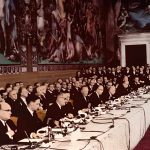
The Peace of Westphalia (Treaties of Westphalia) are a set of three foundational documents that signal the conclusion of the Thirty Years’ War and the Eighty Years’ War, respectively, between European nations. On January 30, 1648, the first of many agreements was signed. The Treaties of Osnabrück and the Second Treaty of Münster, signed on October 24, 1648, marked the conclusion of the talks. The diplomatic ties between nations were altered as a result of this historical event. Major shifts in territorial control also occurred.
- What events led to the Peace of Westphalia?
- How were the Peace Treaties of Westphalia negotiated and drafted?
- Which articles did the Peace of Westphalia contain?
- Peace of Westphalia established what norms for international relations?
- How did the Holy Roman Empire restructure in the German case?
- What effects did the Peace of Westphalia have on religion?
- HIGHLIGHTS OF PEACE OF WESTPHALIA
What events led to the Peace of Westphalia?
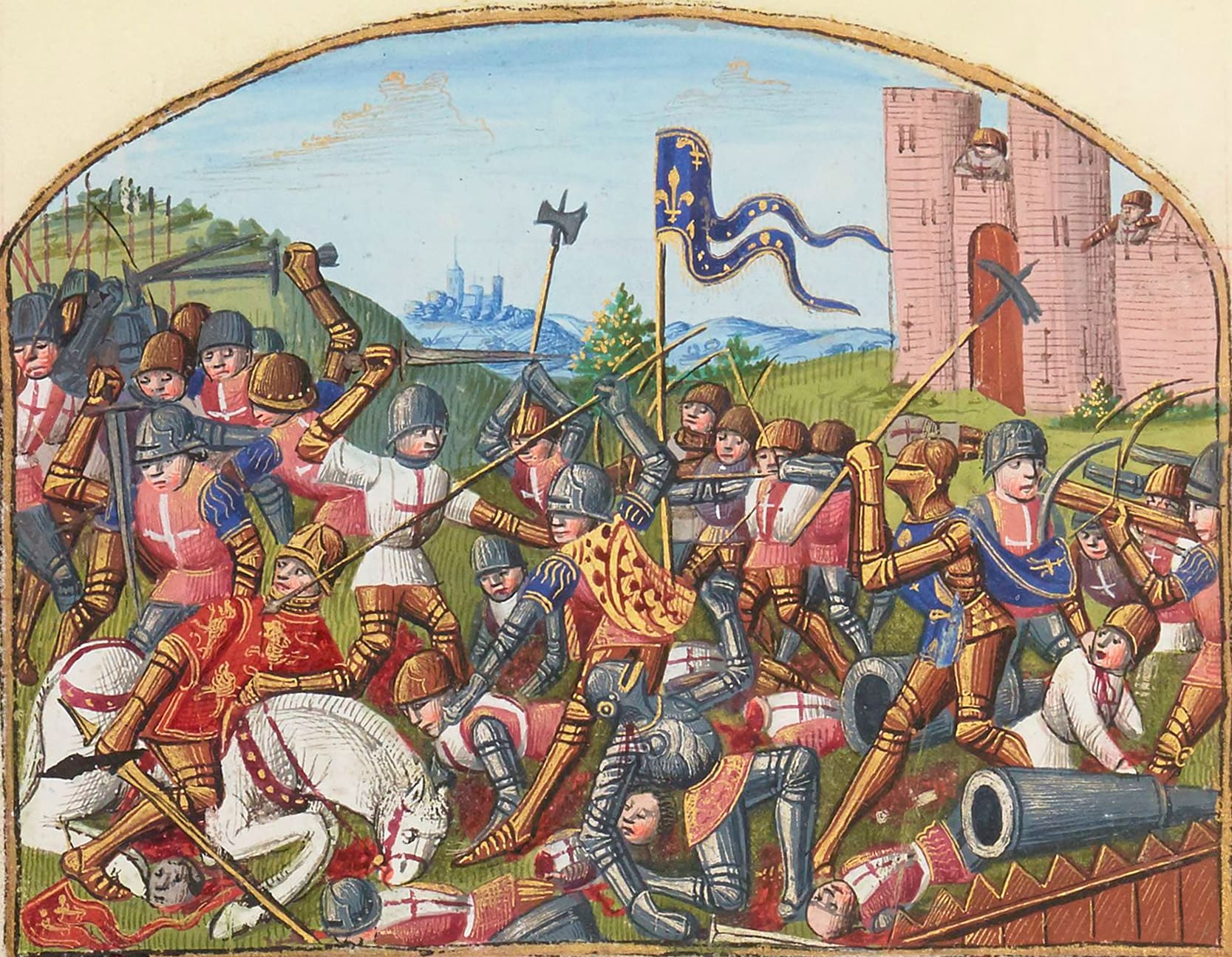
- As part of the Thirty Years’ War, Protestant German nations opposed the Holy Roman Empire and its allies. Between four and seven million people perished, while another 130,000-160,000 went missing.
- During the Eighty Years’ War, the Spanish Monarchy and the independent United Provinces of the Netherlands were at war with one another.
The root reasons of both wars were complex, including religion, politics, and territory. These conflicts encompassed almost every major European state and monarchy. France, Austria, Hungary, and even Norway were especially crucial examples. Before the Treaties of Westphalia, Europe was dominated by two powerful states: the French and Swedish monarchies. After the treaties were ratified, the two later groups benefited the most. It was mostly because of political and religious repercussions that caused this.
How were the Peace Treaties of Westphalia negotiated and drafted?
Münster, Germany was the site of the first talks. They happened toward the end of 1644. They moved to Osnabrück, Germany the next year. A number of problems emerged throughout these efforts at reconciliation, and not only because of religious differences. Separatism of certain regions, such as the Netherlands’ United Provinces, was one of them.
In addition to political interests and geographical sovereignty, there were additional obstacles that prevented a universal signing. Most of Europe’s countries were represented, excluding Russia, the Ottoman Empire, and England. The Treaties of Westphalia formalized the first large-scale union of European nations and established the foundation for the mutual respect that has since characterized international relations in the region. Furthermore, Western Christian ideals were cast aside in favor of state supremacy.
Which articles did the Peace of Westphalia contain?
The Peace of Westphalia consisted of three texts:
- The Treaty of Münster, which was signed on January 30, 1648, ended the war between the United Provinces and the Spanish Empire. This country recognized the United Provinces’ independence and kept some of the Spanish Netherlands’ land. A high international court of justice was also called for in the text. In 1675, it was broken up. The treaty also tried to speed up decision-making, which was needed to keep fines from being put in place.
- As for the second document of the Treaty of Münster, it was signed on October 1648. It served as a reminder of the peace treaty between the French monarchy and the Holy Roman Empire. The latter gave up the province of the Three Bishoprics as well as the regions of Alsace and several fortresses in Lorraine like Moyenvic. The German princes maintained their lands and continued to be subject to the legislation of the Holy Roman Empire, notwithstanding Alsace’s allegiance.
- The Treaty of Osnabrück was confirmed between the Holy Roman Empire and the Kingdom of Sweden on 24 October 1648, four months after it was first signed on 4 September 1648. It was the final paragraph of the Treaties of Westphalia and puts a definitive end to the Thirty Years’ War.
Peace of Westphalia established what norms for international relations?
The Peace of Westphalia laid the groundwork for the contemporary political structure of Europe. It was the first time when the leading politicians and nations of Europe came together. Decentralization was the implication. As a result, leaders or their agents were given more leeway in making decisions and carrying out administrative duties. By signing the eponymous treaties, each state was able to gain the legitimacy and acceptance of its peers, a necessary step in establishing a “Westphalian” system. The discussion of religion was shelved in order to make room for equal rights. The old order, which had made Christianity in the West a unifying symbol, was not on the forefront anymore.
The Treaties of Westphalia represented a major shift for nations and kingdoms in international relations. Norms were established to guarantee neutral discussions, uninfluenced by any dominant political or religious system, such as a monarchy or the Christian faith. There was less wiggle space for the monarchs, and the idea of the people began to gain traction.
How did the Holy Roman Empire restructure in the German case?
Because to the Treaties of Westphalia, the Holy Roman Empire had to be restructured from the ground up. After that, it was split up into 350 individual German states, which boosted the authority of the regional leaders (the princes) and weakened the Habsburg dynasty. “Territorial supremacy” describes this situation well. It extended to theological, temporal, and civil affairs. The Imperial Diet (governmental body) was tasked with resolving any and all potential disputes and alliances, as well as handling any other matters of state. It is important to understand that the imperial cities were also subject to this arrangement.
What effects did the Peace of Westphalia have on religion?
The Lutheran, Calvinist, and Catholic faiths were all acknowledged as legitimate by the Peace of Westphalia. Protestants, like everyone else, were guaranteed the right to worship freely. More so, Lutherans were given the same rights as Calvinists. There were at least 24 Protestants in the Imperial Chamber of fifty, and ecclesiastical authority was abolished. That is to say, the Treaties of Westphalia made it illegal to meddle with people’s religious practices. This was a historic first for international relations in general. No nation’s religious affiliation was held against it as a whole.
HIGHLIGHTS OF PEACE OF WESTPHALIA
August 20, 1648 – Last battle of the Thirty Years’ War
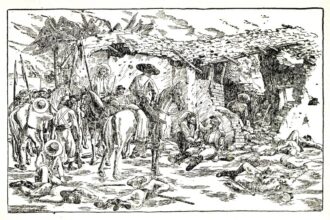
Archduke Leopold-Guillaume of Habsburg had taken the town of Lens three days before to the conflict. The Thirty Years’ War ended with this last combat. On August 20, 1648, it opposed the kingdom of France against the Spanish Monarchy. More than 4,500 people were killed or injured in the conflict. There were almost 5,000 Spanish prisoners of war taken by the victorious Kingdom of France.
January 30, 1648: The independence of the United Provinces is recognized in the Treaty of Münster
The peace of Münster, the first of the Westphalian treaties to be signed, formalized the Spanish monarchy’s recognition of the independence of the United Provinces of the Netherlands. The Thirty Years’ War between the two sides ended as a result of this. This new nation was now politically autonomous on the European scale, apart from the Spanish Netherlands.
Treaties of Westphalia were released to the public on October 24, 1648
On October 24, 1648, the Treaties of Westphalia were published after the signing of the second Treaty of Münster and the Treaty of Osnabrück. They declared a shift in European geopolitics and the establishment of more egalitarian international relations that put religion to one side. The agreements also limited the desires of nations and monarchies to expand their territories.