There are many distinct layers of solid, viscous, or liquid rocks that work together to form the Earth. Each of the three kinds of layers—from the inner core to the continental crust—is distinct in terms of structure, thickness, and temperature. Find out what the Earth’s crust is made of among all these materials.
The five layers that make up planet Earth
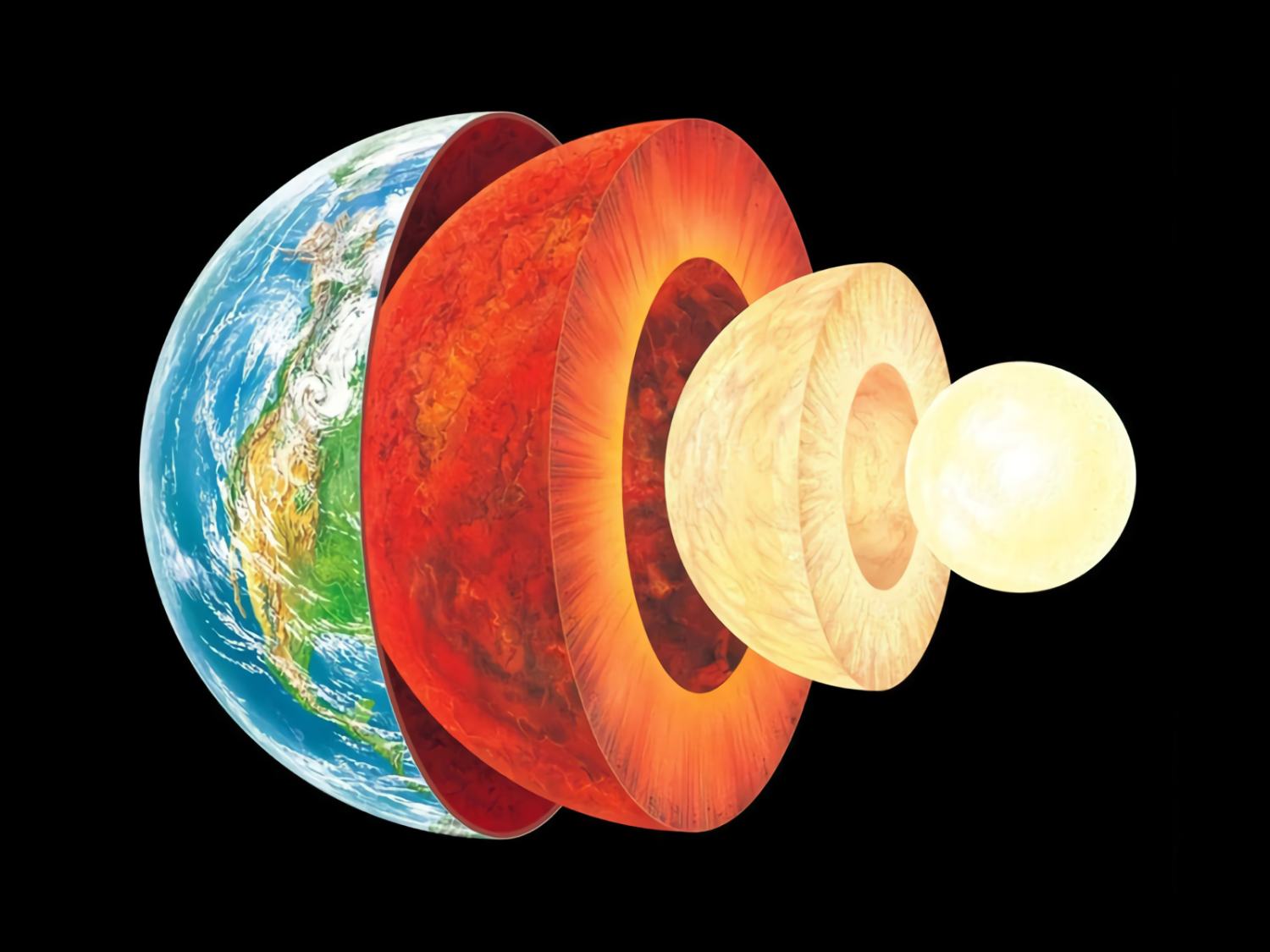
The three primary configurations of the Earth’s five layers are as follows:
- The core is 17 percent of Earth and can be found in its center. It is the hottest area in the world because it is made of iron and nickel. The inner core can reach temperatures of 10,800 degrees Fahrenheit (6,000 degrees Celsius) and is the densest part of the planet. Estimates put its thickness at 750 miles (1,200 kilometers). The outer core is in a liquid state since it is 6,900 degrees Fahrenheit (3,800 degrees Celsius).
- The mantle is a transitional layer between the solid rocks (beneath the Earth’s crust) and the molten rocks (near the core) where the electric currents that create the Earth’s magnetic field are generated. Even though it’s not as heated as the core of the Earth, at 81% of the planet’s volume, it nevertheless reaches temperatures above 1,800°F (1,000°C). The upper mantle is relatively solid, whereas the lower mantle is made up of molten rocks (called magma) and is hence more viscous. It lies immediately under the Earth’s crust and ranges in thickness from 340 to 435 miles (550 to 700 kilometers).
- The Earth’s crust: this is the outer section of the Earth, the one we know best since it is where people, animals, and vegetation evolved.
The layer of the Earth called the “crust”
The crust is the outermost layer of the planet that can be directly seen by humans. It consists mostly of rock, and makes up just 2% of Earth’s total volume. Also, it has a layered structure with two distinct sections:
- The continental crust is a section of the Earth’s crust that corresponds to the continents that have risen to the surface. The surface temperature is about 60–70°F (15–20°C), and it is mostly granitic in composition. The reliefs that make up the landscape produce variations in its thickness.
- The oceanic crust, which is at the bottom of the seas and has a thickness of around 6 mi (10 km), is thicker than the continental crust, which can be anywhere from 9 to 44 mi (15 to 70 km). Deep underground, temperatures of up to 1,000°F (540°C) have been recorded. It is denser than continental crust because it is composed of basaltic rocks.
To what extent do tectonic plates play a part in the structure of the Earth?
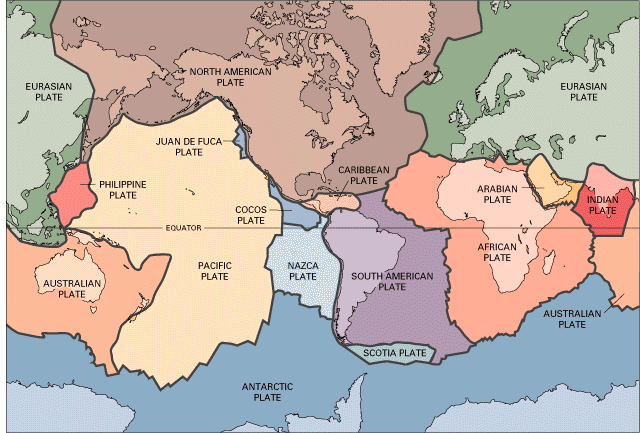
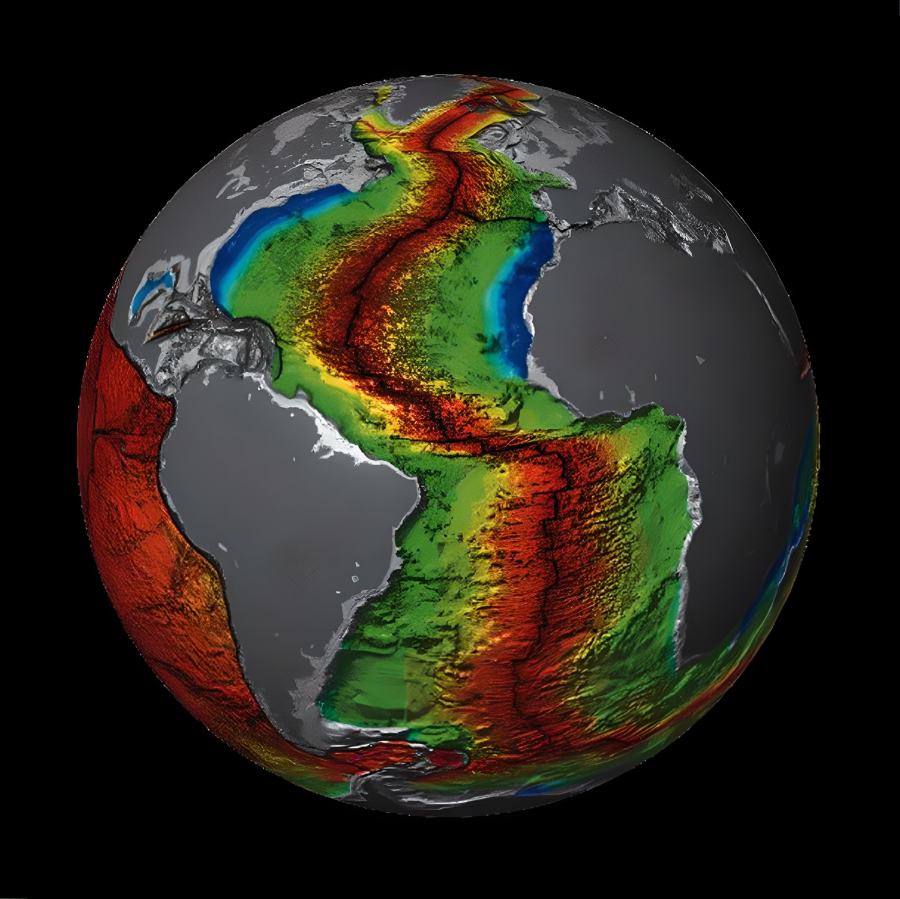
Since the movement of the tectonic plates is responsible for creating the oceanic crust, they are an important part of the crust. The seafloor plates are in constant motion, with a space of around 1,550 miles (2,500 kilometers) between them. Oceanic ridges are formed as these plates move apart, creating faults that are then filled with magma. These seamounts have a combined length of more than 40,000 miles (64,000 kilometers) and a width of 620 to 1240 miles (1,000 to 2,000 kilometers).
Certain summits of these mountains rise above the waves to become islands. The Azores and Iceland both came into being due to this event. Given their origin, volcanic materials including basalt, trachyte, and lava compose these areas. In fact, the island nation of Iceland has capitalized on this natural phenomenon by switching to geothermal power as its primary energy supply.