Mordhau at a Glance
What is the Mordhau technique?
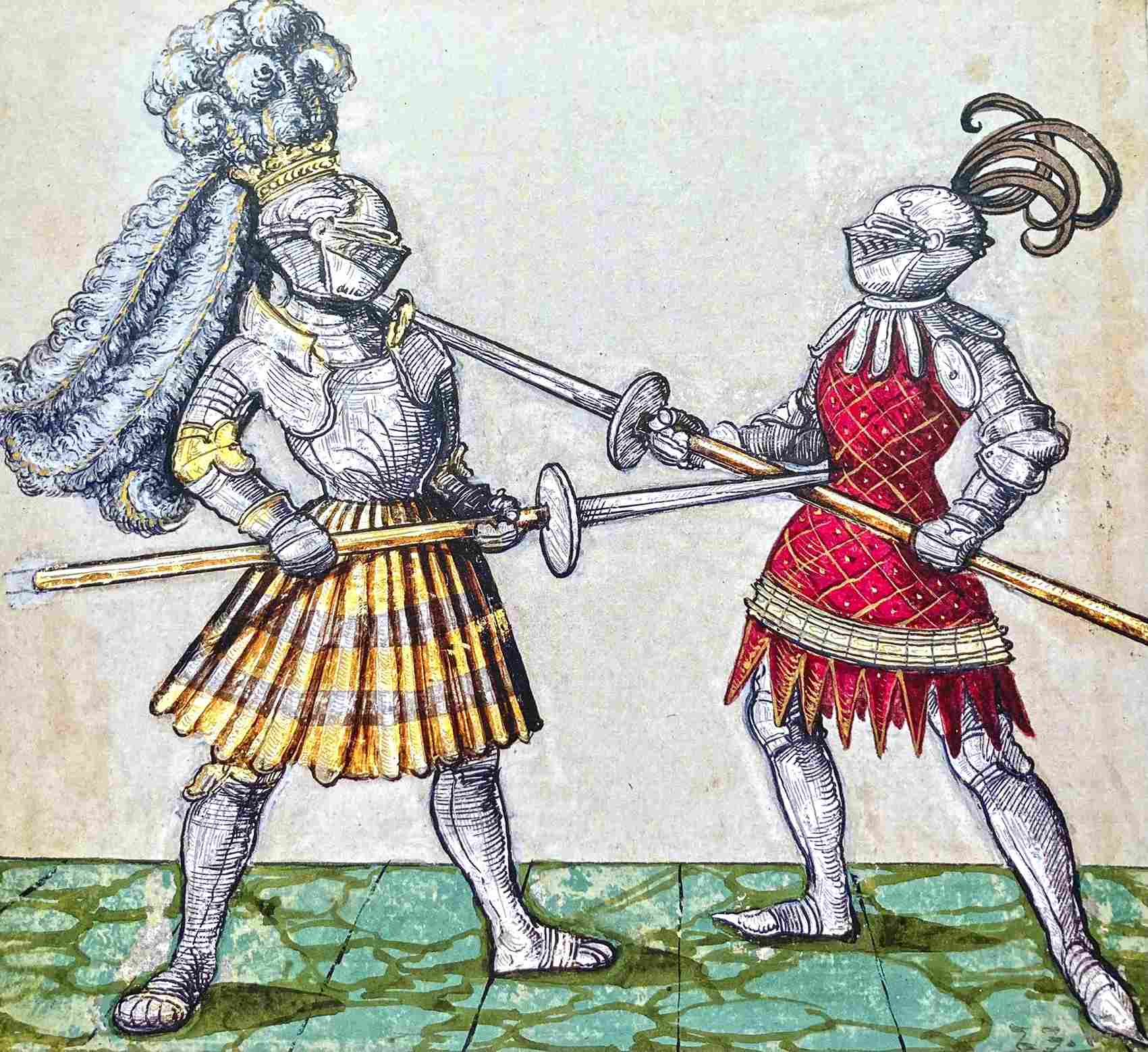
The Mordhau technique is a half-sword technique used in the German School of Fencing for combat with a long sword. This medieval combat technique involved holding the long sword upside down with both hands on the blade, allowing the pommel or crossguard to be used as a striking weapon against the opponent, similar to a mace or Lucerne hammer.
What was the origin of the Mordhau technique?
In European martial arts, the Mordhau technique was developed for use in battles involving plate armor. The term u0022Mord,u0022 meaning u0022murder,u0022 and u0022hau,u0022 meaning u0022blowu0022 come together to form the Mordhau, also known as the Mordstreich.
How effective was the Mordhau technique in battles?
The Mordhau technique was particularly useful against heavily armored foes. The crossguard of the sword, the weapon’s heaviest part, was used to deliver a tremendous hit on the opponent’s armor. Even when a strike wouldn’t pierce through the enemy’s armor, it could still bend the armor and make it harder for the opponent to breathe or continue to move, often resulting in surrender or death.
How was the Mordhau technique executed?
In the Mordhau technique, right-handed individuals wielded the sword by holding the blade with their right hand closer to the crossguard while directing the sword with their left hand by holding the tip of the blade. This method expertly mixes an element of surprise with a substantial impact. Once a gap in the opponent’s armor was exposed, the person would then be able to use the thrusting technique of the Mordhau to create a blunt force trauma.
Is the Mordhau still used in modern martial arts or combat techniques?
In today’s martial arts and fighting styles, the Mordhau is seldom employed. Its creation was motivated by the need to oppose plate armor, which is now obsolete. The method, in its many forms, is, nonetheless, still used in HEMA (Historical European Martial Arts) practice and exhibitions.
The Mordhau technique, also known as the “murder stroke,” was a half-sword technique used in the German School of Fencing for combat with a long sword. During the execution of the maneuver, this medieval combat technique involved holding the long sword upside down with both hands on the blade, allowing the pommel or crossguard to be used as a striking weapon against the opponent, similar to a mace or Lucerne hammer.
- Mordhau at a Glance
- What is the Mordhau technique?
- What was the origin of the Mordhau technique?
- How effective was the Mordhau technique in battles?
- How was the Mordhau technique executed?
- Is the Mordhau still used in modern martial arts or combat techniques?
- Use of the Mordhau
- Origin of the Mordhau
- The Significance of the Mordhau
- How Effective Was Mordhau?
- The Difference Between Mordhau and the Half-Sword
- Does Mordhau Require Gloves?
- In Popular Culture
Use of the Mordhau
Mordhau is a sword-gripping technique wherein a blow is delivered resembling that of a hammer, mace, or axe. This method is executed by holding the hilt of the weapon by the blade.
In the Mordhau technique, right-handed individuals wielded the sword by holding the blade with their right hand closer to the crossguard while directing the sword with their left hand by holding the tip of the blade.
The Mordhau technique was perfected in battles against heavily armored swordsmen.
This was the particular hand positioning most commonly used for the Mordhau technique. Conversely, the opposite hand position, where the left hand holds the blade closer to the crossguard, was relatively uncommon.
This method expertly mixes an element of surprise with a substantial impact. Because of its bludgeoning effect, the method is most useful against heavily armored foes.
The use of a crossguard allows one to reach vulnerable or otherwise inaccessible spots of the body (such as the armpit). The European swords had a large crosspiece that could pierce an opponent’s armor and shield.
Origin of the Mordhau
In European martial arts, the Mordhau technique was developed for use in battles involving plate armor. Unarmored or weakly armored swordsmen utilized the Mordhau far less often. When they did use it, it was not so much for a decisive blow but rather to displace their opponent.
In the heat of the battle, it was one of the most unexpected close combat techniques.
From the 14th through the 16th centuries, sword blades were almost useless against plate armor. It was impossible to cut through the steel plates with a lightweight sword since the blade wouldn’t have been enough to do any damage, unlike, for example, an axe.
The term “Mord,” meaning “murder,” and “hau,” meaning “blow” come together to form the Mordhau, also known as the Mordstreich.
Hence, the sole purpose behind the creation of heavier polearms like the Bec de Corbin was to combat armored adversaries. Another historical armor-piercing weapon created with the same aim was the horseman’s pick, a type of war hammer.
Half-swording, the practice of using a sword with just one or two hands, is often credited with popularizing the Mordhau. But European swords were often double-edged, so a combatant wielding the sword in Mordhau’s grip would actually be harmful.
The Significance of the Mordhau
However, the swords were no longer hopeless against plate armor when employing the piercing strikes of the Mordhau. Locks, throws, and stabbing through the gaps in the armor were the mainstays of swordplay while wearing protective gear.
In order to execute a Mordhau strike, it would be necessary to weaken the target first by delivering a forceful strike to a vulnerable area of the body, such as the head or joints.
Once a gap in the opponent’s armor was exposed, the person would then be able to use the thrusting technique of the Mordhau to create a blunt force trauma.
A hit like this didn’t have to be fatal, but it did need to startle or incapacitate the opponent. The sternum might crack, the head could fracture, and the teeth could be knocked out. Even the Norse deemed this strategy useful, dubbing it the “barbed hilt.”
How Effective Was Mordhau?
Even when a strike wouldn’t pierce through the enemy’s armor, it could still bend the armor and make it harder for the opponent to breathe or continue to move, often resulting in surrender or death.
The Mordhau was used in conjunction with levering (using the pommel of the sword as a lever to disarm the opponent) and throwing (tripping the opponent with the sword or using the pommel of the sword to strike the opponent’s legs) to produce results similar to those obtained by a war hammer or mace, which were more powerful striking weapons than swords.
In Mordhau, the crossguard of the sword, the weapon’s heaviest part, was used to deliver a tremendous hit on the opponent’s armor. The pommel, which was typically crafted from steel, formed the second part of the sword that was employed in this technique.
Hans Talhoffer’s Fencing Book (Fechtbuch, c. the 1440s), a 15th-century European fencing manual, contains numerous depictions and possible applications of the Mordhau. There is an extant 16th-century copy of this book in the Metropolitan Museum of Art, New York.
The Difference Between Mordhau and the Half-Sword
Two European martial arts styles from the Middle Ages are the Mordhau technique and the half-sword method. The implementation and intended aim of the two strategies are where the biggest distinction resides.
By holding the blade in one hand and the handle in the other, as in the half-sword method, the sword is essentially shortened and converted into a stabbing weapon.
This tactic was largely used to get access to vulnerable areas of an opponent’s armor, such as the visor or armpit, and deliver a lethal blow.
Mordhau, on the other hand, has you grip the blade with both hands and strike with the crossguard or pommel. When a knight’s sword was broken or he was up against an opponent with heavy armor, he would resort to this strategy.
The Mordhau strike has the potential to damage or bend the armor of the opponent, making it difficult for them to move or breathe and leaving them open to further strikes.
Both methods saw usage in the Middle Ages, but they were implemented in distinct ways.
Does Mordhau Require Gloves?
Historical drawings show that the first Mordhau practitioners did not use gloves throughout their training. However, contemporary practitioners believe that gloves provide additional safety and confidence when carrying out this technique.
Although the Mordhau method may be performed barehanded, doing so may hinder the practitioner’s ability to deliver power, especially under pressure when the hands may get sweaty or slick.
Furthermore, there are other, less dangerous methods of half-swording that may accomplish the same goals. The practitioner may strike with the same amount of power while lowering the danger of severing their own tendons if they maintain one hand on the grip and the other on the hilt.
Therefore, wearing gloves while doing the Mordhau method was optional.
In Popular Culture
- A famous online multiplayer game called “Mordhau” takes its name from this method. Players fight fierce battles with a wide variety of medieval weapons and tactics.
- Although historically accurate, the Mordhau style is not as well-known as other sword-fighting methods, such as the broadsword or the katana, which are more often shown in popular culture. This makes it less likely to be featured in movies and TV shows.
References
- Hans Talhoffer’s (1420–1490) Fencing Book (Fechtbuch) (German) – MetMuseum
- Grzegorz Zabinski, Bartlomiej Walczak – Codex Wallerstein: A Medieval Fighting Book from the Fifteenth Century on the Longsword, Falchion, Dagger, and Wrestling, 2002.