Behind the towering scientific fame of Albert Einstein stood an intricate, close-knit German-Jewish family network of entrepreneurs, engineers, and textile merchants whose financial support and domestic stability shaped the physicist’s adult life. Few members of that extended clan occupied as unique a dual role in Einstein’s biography as Rudolf Einstein. Born in the Swabian town of Buchau in 1843, Rudolf was already Albert Einstein’s uncle by marriage and blood—and when Albert divorced his first wife and married Rudolf’s eldest daughter, Elsa, in 1919, Rudolf simultaneously became his nephew’s father-in-law, sharing his comfortable Berlin apartment on Haberlandstrasse during the exact decade when General Relativity made Einstein the most famous scientist on Earth.
The Tangled Family Tree of Swabia and Hechingen
To understand how Rudolf Einstein came to be both Albert Einstein’s uncle and father-in-law, one must untangle the overlapping branches of the Einstein and Koch families in nineteenth-century Wurttemberg. Born in 1843, Rudolf Einstein was the first cousin of Albert Einstein’s father, Hermann Einstein (their respective fathers, Raphael Einstein and Abraham Einstein, were brothers from the small town of Buchau). That blood link alone made Rudolf a first cousin once removed—and an honorary uncle—to young Albert.
However, the family bond was doubled through marriage. In the 1870s, Rudolf Einstein married Fanny Koch; just a few years later in 1876, Rudolf’s cousin Hermann Einstein (Albert’s father) married Fanny’s younger sister, Pauline Koch (Albert’s mother). Because two Einstein cousins had married two Koch sisters, Rudolf and Fanny’s daughter, Elsa Einstein—born in 1876, three years before Albert—was simultaneously Albert Einstein’s first cousin on his mother’s side and his second cousin on his father’s side.
The Prosperous Textile Manufacturer of Hechingen
Unlike Albert’s father Hermann and uncle Jakob, whose ambitious electrical engineering and dynamo factories in Munich and northern Italy repeatedly collapsed into painful bankruptcy, Rudolf Einstein was a cautious, remarkably successful businessman. Settling in the picturesque Hohenzollern town of Hechingen, Rudolf became a partner in a thriving cotton weaving and textile manufacturing firm, Baruch and Söhne.

While Hermann Einstein’s family struggled with precarious finances and frequent relocations, Rudolf’s textile mill generated steady wealth, allowing him to raise his daughters—Elsa, Paula, and Hermine—in upper-middle-class Swabian comfort and spend summers vacationing near Munich, where young Elsa and little Albert played together as children. Even during the 1890s, when Hermann Einstein desperately needed loans to keep his Italian electrical business afloat, it was the pragmatic, wealthy Uncle Rudolf who stepped in with financial backing—though he eventually had to warn his idealistic cousin Hermann against pouring any more family savings into doomed engineering ventures.
Moving to Berlin and Welcoming Albert Into Haberlandstrasse 5
Around the turn of the twentieth century, having amassed a comfortable fortune in Hechingen, the aging Rudolf retired from active factory management and moved with his wife Fanny to the German imperial capital of Berlin. Soon after, their eldest daughter Elsa—whose first marriage to the textile trader Max Lowenthal had ended in divorce in 1908, leaving her to raise two young daughters, Ilse and Margot—moved into a spacious, seven-room, fourth-floor apartment directly above her parents at Haberlandstrasse 5 in the quiet, leafy Bavarian Quarter of Schoneberg.
During Easter of 1912, when thirty-three-year-old Albert Einstein visited Berlin from Prague while his first marriage to Mileva Maric was disintegrating, he reconnected warmly with his widowed mother Pauline (who was living with Rudolf and Fanny) and his divorced cousin Elsa. Two years later in 1914, when Max Planck and Fritz Haber recruited Albert to move to Berlin as director of the Kaiser Wilhelm Institute for Physics, it was the welcoming sanctuary of Uncle Rudolf’s family building that became Albert’s anchor. After suffering a severe stomach ulcer and nervous collapse in 1917 from overwork after completing his General Theory of Relativity, Albert moved right into Elsa’s apartment at Haberlandstrasse 5 to be nursed back to health, and following his divorce from Mileva, he married Elsa on June second, 1919—turning his seventy-six-year-old Uncle Rudolf into his legal father-in-law.
Life Under One Roof With the World’s Most Famous Genius
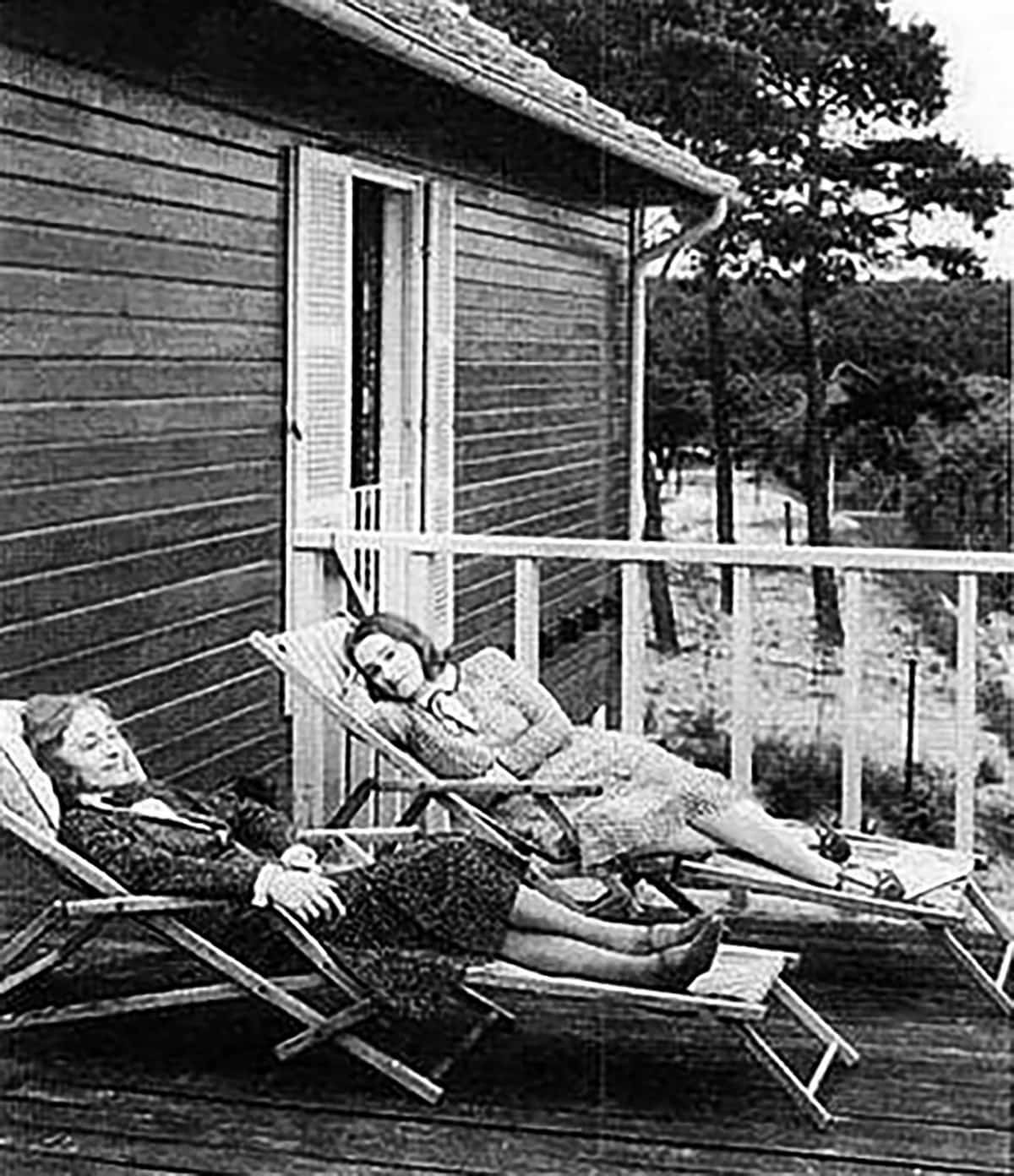
For the last nine years of his life, until his death in November 1928 at the age of eighty-five, Rudolf Einstein lived directly beneath—and shared daily meals with—the newly minted Nobel Laureate as reporters, prime ministers, Charlie Chaplin’s envoys, and physicists like Niels Bohr climbed the stairs of Haberlandstrasse 5. By all accounts, the dynamic between the old-school, cigar-smoking textile merchant and his bohemian, violin-playing nephew/son-in-law was full of dry humor and mutual affection.

Because Elsa had lost much of her independent savings in the hyperinflation that followed World War I before Albert’s international lecture fees and Nobel money arrived, Rudolf’s business acumen helped keep the multi-generational household running smoothly during the turbulent early years of the Weimar Republic. Passing away peacefully in Berlin in late 1928—mercifully five years before the rise of the Nazi regime forced Albert and Elsa to flee Germany forever and confiscated the Haberlandstrasse apartment—Rudolf Einstein remains the quiet, pragmatic patriarch whose financial foresight provided the domestic harbor for twentieth-century physics’ greatest mind.