Camels are known for their ability to tolerate long periods without drinking a single drop of water. This capacity is often attributed to their humps. The camel’s humps indeed play a vital role for the mammal, but they are not meant to keep it hydrated.
Surviving Without Eating for Months
These protrusions do not contain water but rather fat. This allows the camel to have significant energy reserves in case of food scarcity, which is highly advantageous in a desert climate. As a result, a camel can survive for four to five months without eating.
As it depletes these reserves, its humps gradually “deflate,” and the camel must find something to eat. It’s worth noting that the dromedary, with its single hump, has the same storage capacity as the camel.
There are two main types of camels: the dromedary camel (one hump) and the Bactrian camel (two humps). Both store fat in their humps, but their adaptations and habitats are slightly different.
The Camel: A Hydration Champion
Even though its humps do not keep it hydrated, a camel can indeed go a week without drinking. Two mechanisms come into play to enable this remarkable feat.

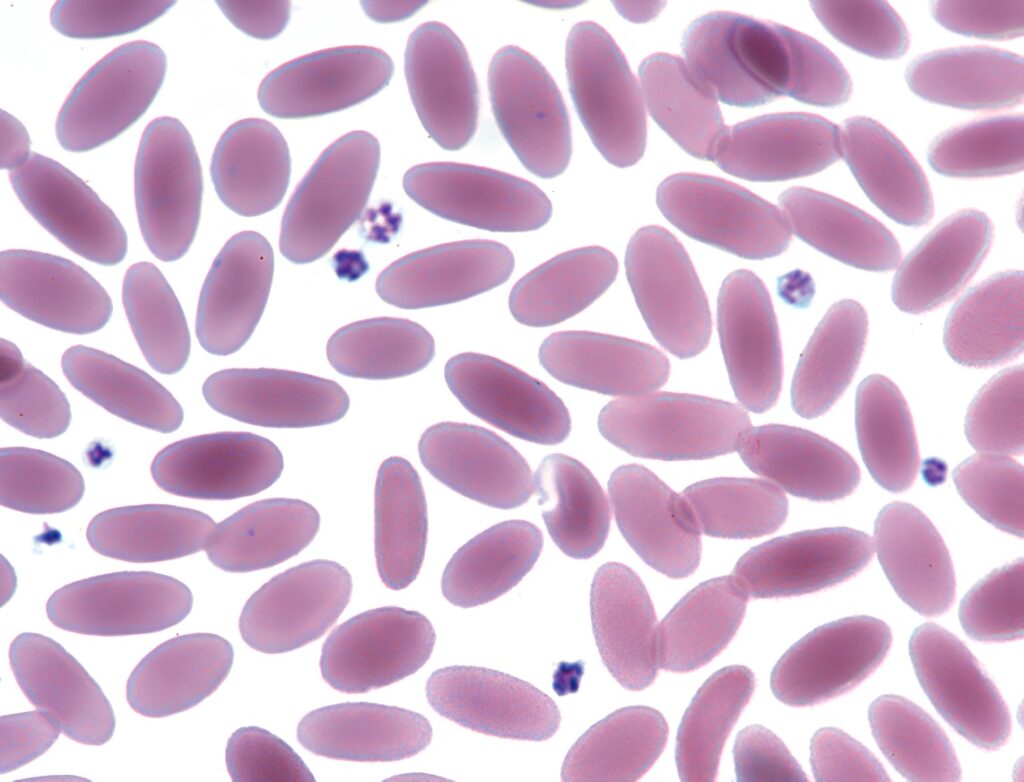
First, its red blood cells are oval in shape. This unique configuration allows blood cells to transport oxygen through thicker blood resulting from dehydration and circulate in small blood vessels despite the increased viscosity.
Most importantly, these oval cells have the ability to absorb more water. They can swell up to 240% of their initial volume without bursting, whereas the cells of most animal species can only expand by 150%.
This explains why when a camel finally finds a water source, it can ingest up to 114 liters (30 gallon), equivalent to half a filled bathtub.
Camels can convert the fat stored in their humps into both energy and water.
When they metabolize fat, it releases water as a byproduct, which can help them stay hydrated in the absence of external water sources.
A Nose Like an Air Conditioner
Furthermore, camels make the most of each breath. Their nose functions like an air conditioner. Their nasal passages manage to retain moisture from the inhaled air.

As a result, the air exhaled by the camel is drier, and the retained moisture helps it stay hydrated a bit longer, awaiting the next water source.
Camels in the Canadian North
Surprisingly, a Canadian research team discovered in 2013 that camels existed in the Canadian Arctic about 3.5 million years ago.
In fact, the ancestors of camels are believed to have appeared in North America 45 million years ago. They later migrated via the Bering Land Bridge connecting America to Asia.
Their famous humps could have been useful there too. The fat reserves on their backs could have aided in surviving harsh winters.
Why on the Back?
However, one might wonder why there is an accumulation of fat on the back rather than the abdomen, as in most mammals, including humans.
One hypothesis suggests that these humps have a protective effect by exposing the animal less directly to the intense desert sun’s rays, thus helping regulate its body temperature.
Camels, also known as dromedaries, have a single hump, while the Bactrian camel has two humps. This difference is due to their evolutionary history and adaptations to different regions. The single-hump camel is better suited for hot deserts, while the two-hump camel is found in colder, arid regions.
Why Are Camels Often Referred to as “Ships of the Desert”?
Camels are often called “ships of the desert” due to their ability to traverse arid and challenging desert environments. They can carry heavy loads, endure long journeys, and provide vital transportation and resources to desert-dwelling communities. Camels have historically played a central role in the nomadic lifestyle of desert communities.