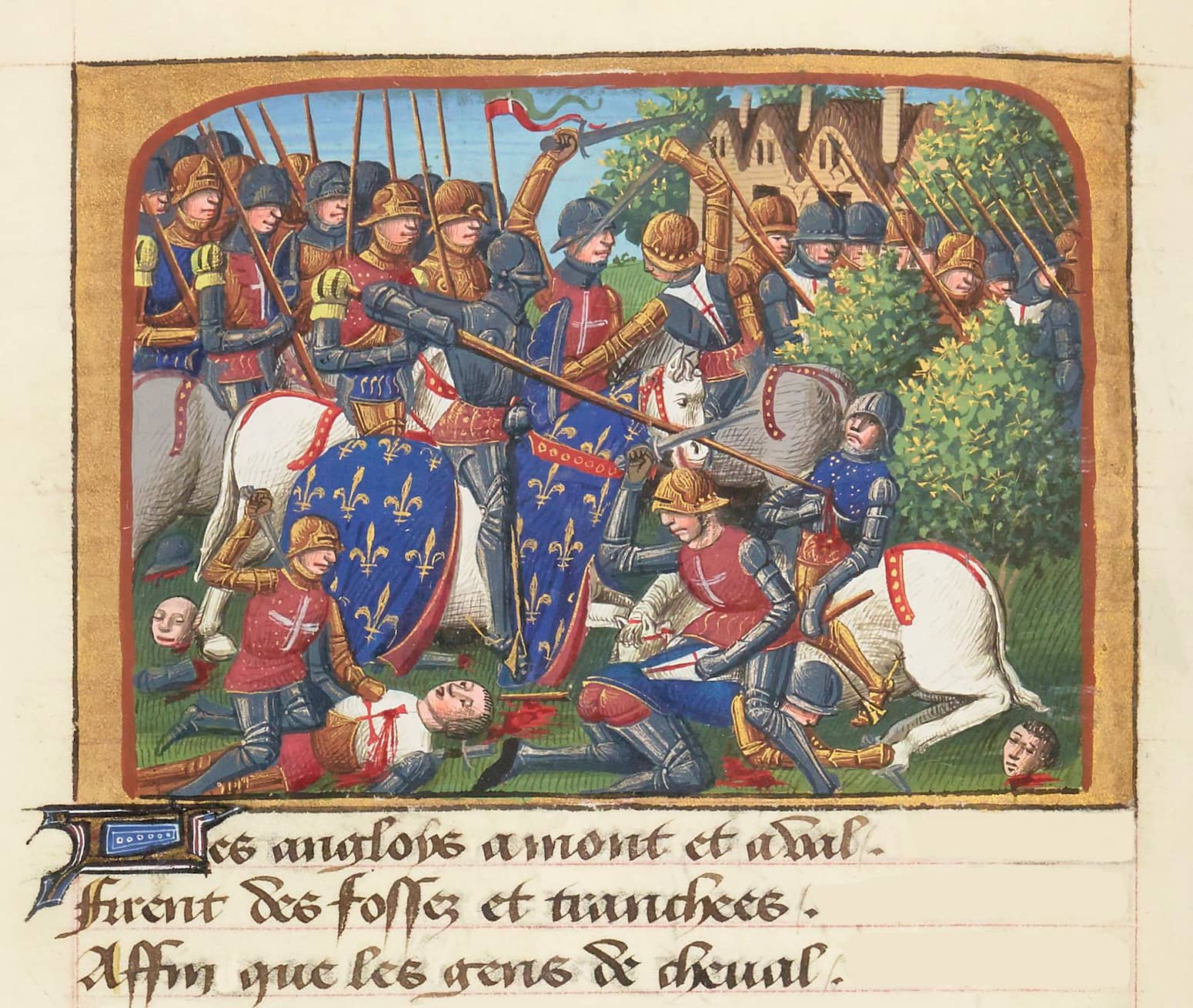
The Battle of the Teutoburg Forest, also known as the “Varian Disaster,” occurred in September of the year 9 AD. This historical event marked the devastating defeat of Varus, a renowned Roman general, by the forces led by Arminius, commanding the Germanic troops. The Roman army fell victim to a well-executed ambush by the Germanic forces in the Teutoburg Forest, located in Lower Saxony.
- What Were the Causes of the Battle of the Teutoburg Forest?
- Who Fought at the Battle of the Teutoburg Forest?
- How Did the Battle of the Teutoburg Forest Unfold?
- Who Won the Battle of the Teutoburg Forest?
- What Were the Consequences of the Battle of the Teutoburg Forest?
- Burial of the Fallen of the Varian Army under Germanicus
The exact date and precise location of the battle remain challenging to determine, but the site of Kalkriese, approximately fifteen kilometers north of Osnabrück in Lower Saxony, is currently considered the most probable location. The engagement resulted in the demise of over 20,000 Roman soldiers.
What Were the Causes of the Battle of the Teutoburg Forest?
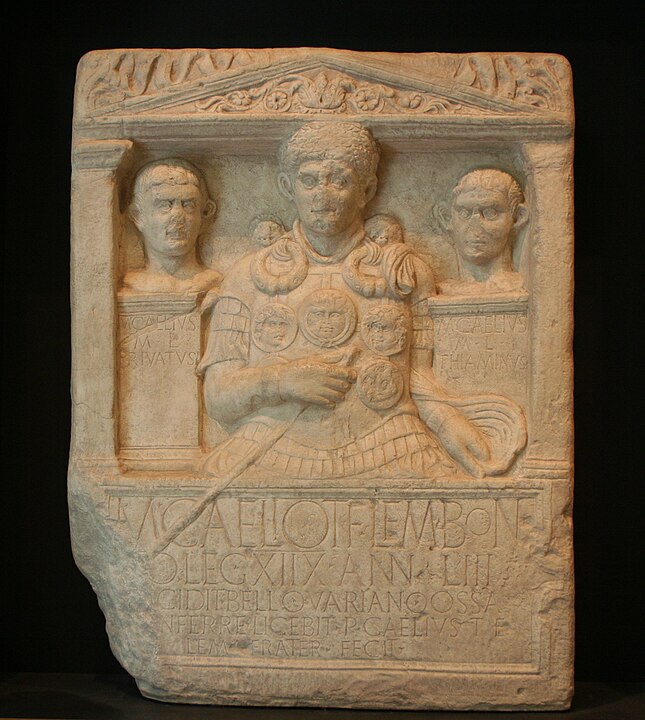
In the early stages of Roman expansion into Germania, despite Julius Caesar’s successful crossings of the Rhine on two occasions, Roman incursions were sporadic and considered military feats. Augustus, Julius Caesar‘s adoptive son, aimed to extend Roman dominance over both banks of the Rhine. The Germanic campaign was led by Drusus, a Roman consul, followed by his brother Tibere. In 8 BCE, Roman forces achieved success by reaching the Elbe and the Weser rivers. Tibere and Augustus were acclaimed imperators for their outstanding achievements in Germanic territory, a title bestowed upon victorious generals.
Publius Quinctilius Varus, then a senator, was appointed governor of Germania. While he governed the region as a pacified province, Varus faced criticism for his tactlessness, harshness, and authoritative approach. The locals, deeming these practices humiliating, expressed discontent with his governance. One of Varus’s advisers was Caius Julius Arminius, the leader of the Cherusci, a Germanic nation. While Arminius assured Varus of the satisfaction of the locals with his appointment and decisions, he secretly forged alliances with other Germanic tribes with the objective of ambushing Varus.
Who Fought at the Battle of the Teutoburg Forest?
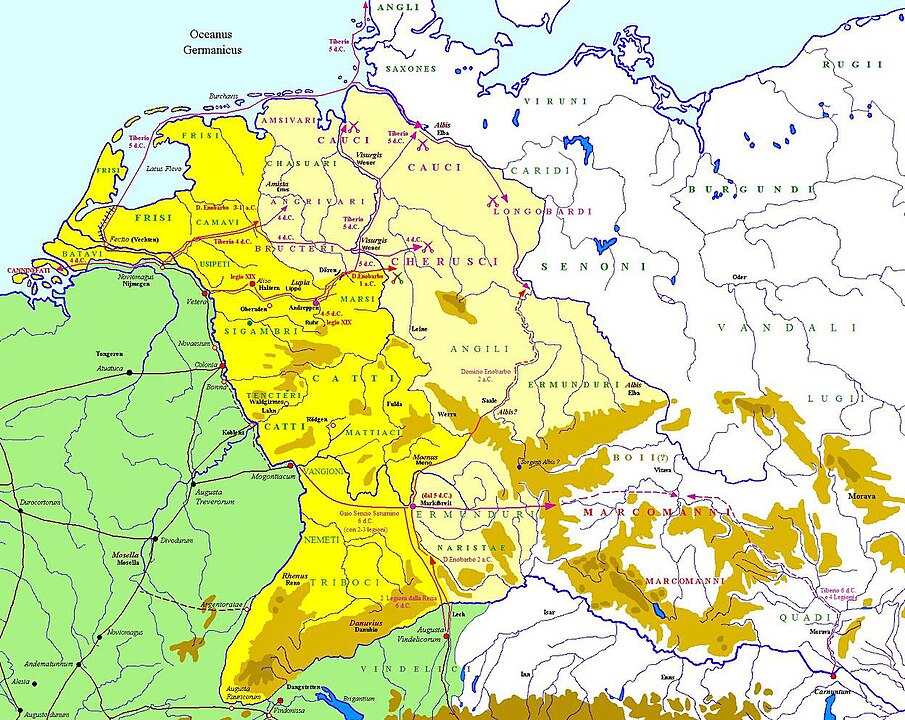
The Battle of the Teutoburg Forest pitted several Germanic tribes against the Roman army. Arminius, leading the Cherusci, discreetly allied with eight Germanic tribes, including the Marsi (a small western tribe), the Chatti (a people in the upper Weser and Eder regions), and the Bructeri (a tribe residing in Hanover and Westphalia). The Chauci, Sicambri, Usipetes, Angrivarii, and Tencteri also participated in the conflict. Notably, Arminius, then 25 years old, had been raised in Rome as a Roman citizen. He was the son of Segimerus, an ally of the Roman Empire. According to some Roman historians, like Cassius Dio, Segimer fought alongside his son in the Battle of Teutoburg.
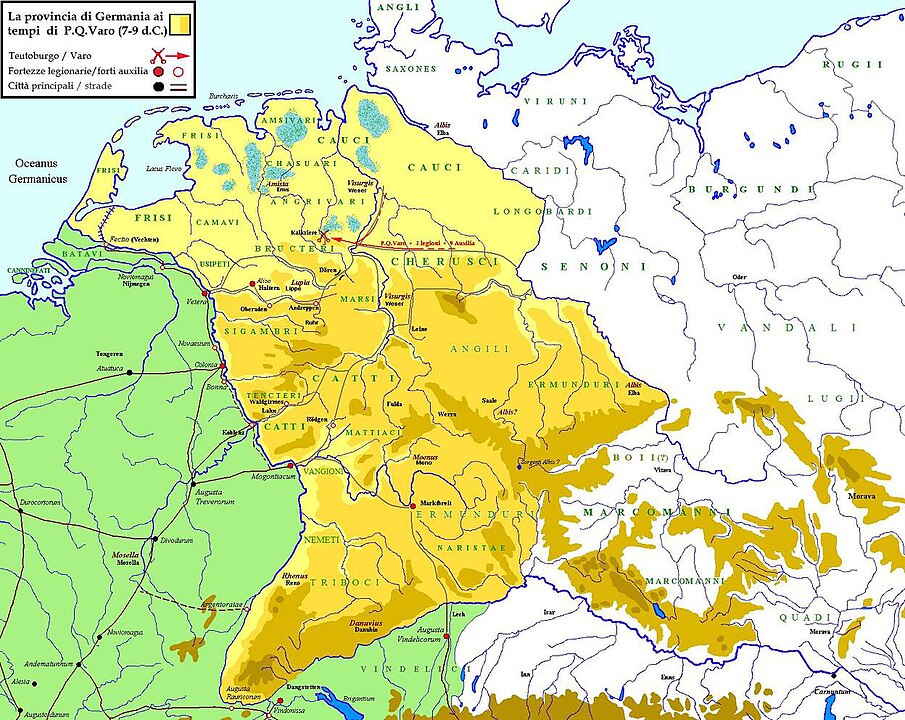
Varus commanded the Roman forces. This general and politician, the son of Sextus Quinctilius Varus, a Roman quaestor associated with the Republican party, was tasked by Augustus to reorganize Germania in 7 AD. The extensive reforms undertaken by Varus fueled discontent among the local populations. In September of the year 9 AD, Arminius warned Varus of an imminent danger. Varus assembled three Roman legions (Legio XVII, XVIII, and XIX) and six auxiliary cohorts, totaling around 23,000 men. Arminius commanded an estimated 15,000 men.
How Did the Battle of the Teutoburg Forest Unfold?
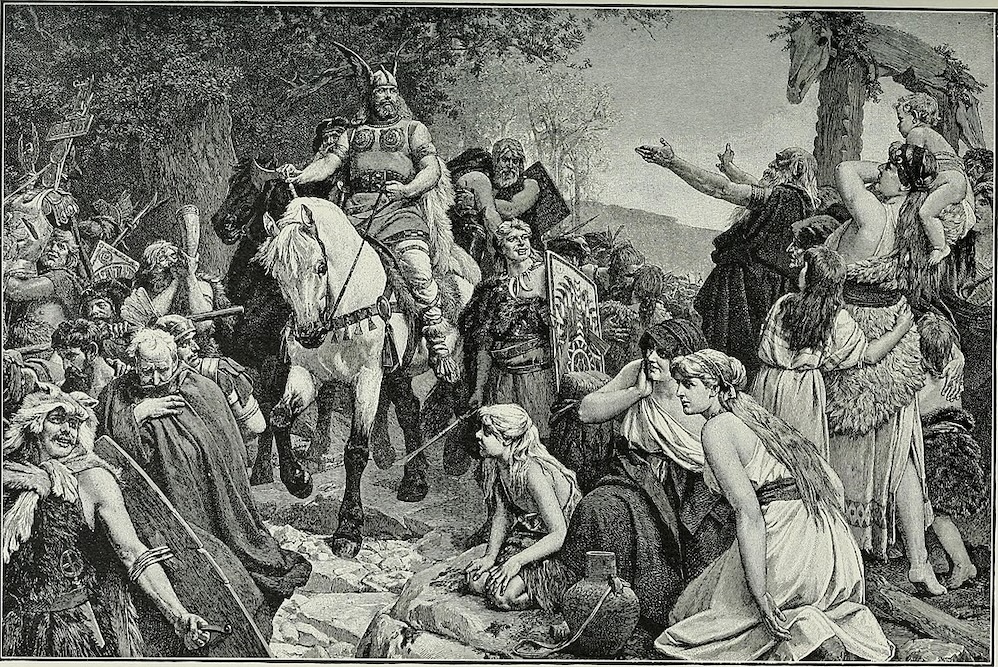
Arminius decides to set an ambush for Varus. While Varus inspects the East of Germania, he returns to the capital. The leader of the Cherusci informs him that an attack is imminent, but Varus disregards the warning. He even takes the time to stop on the way to assist a Germanic tribe in need. The trap closes in on him.
The attack by the Germanic troops was brutal. They advance on a narrow strip of land with swamps on the right and wooded hills on the left. Additionally, the Roman troops are stretched thin and scattered in the Teutoburg Forest. On the first day, the losses for the Roman Empire were already significant. On the second day, the attacks remained intense, and the Roman troops were unable to set up a camp. On the third day, the Germanic tribes continued the assault.
Who Won the Battle of the Teutoburg Forest?
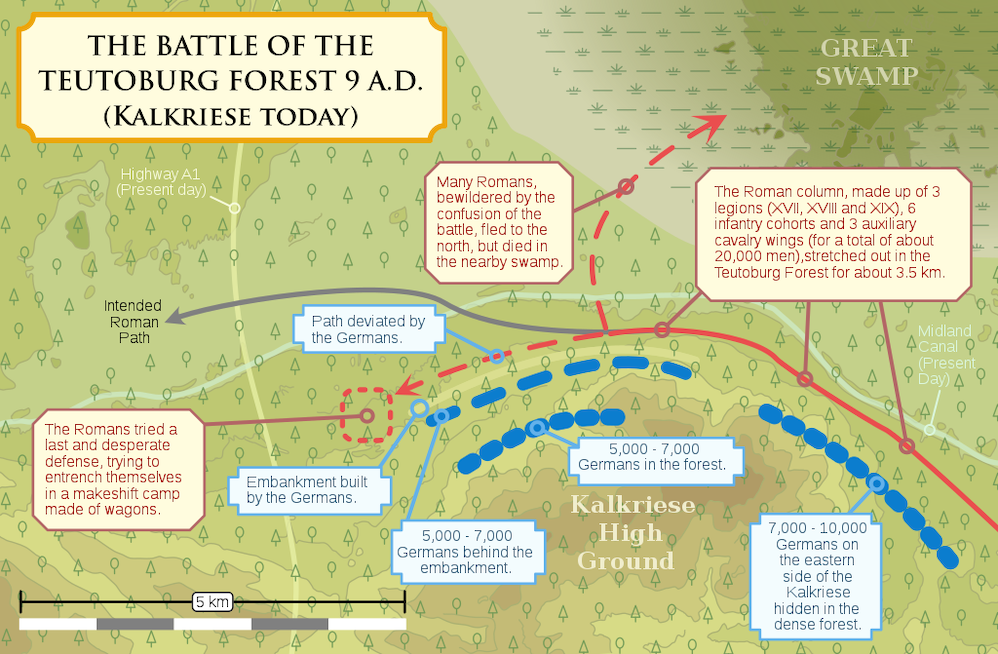
At the end of the third day, the Roman troops were overwhelmed. The Germanic tribes enjoyed several advantages. Firstly, they possessed excellent knowledge of the terrain. Secondly, the weather conditions were atrocious, with rain and wind, and the Romans’ attire became burdensome. While some Roman soldiers managed to take refuge in a camp near the town of Aliso, others were captured. It is noteworthy that the Germans seized two iconic eagles of the legions. The Romans found themselves surrounded. Lucius Eggius, the prefect, died on the battlefield. As for Varus, he committed suicide with his sword. All Roman camps on the right bank of the Rhine were taken by the Germanic troops, except Aliso.
The losses in the Battle of Teutoburg were significant. Among the Germanics, the number of soldiers killed was minimal. However, among the Romans, between 16,000 and 20,000 were reported dead. Some soldiers were enslaved. In Rome, it was reported that Augustus felt devastated by this defeat. Suetonius, a high-ranking official, and Roman author, wrote that the emperor had developed the habit of banging his head against doors and pleading with Varus to return his lost three legions (Legio XVII, Legio XVIII, and Legio XIX). Varus’s head was indeed sent to Rome for burial.
Quintili Vare, legiones redde! (Quintilius Varus, give me back my legions!)
Emperor Augustus.
What Were the Consequences of the Battle of the Teutoburg Forest?
The consequences of the Battle of the Teutoburg Forest were significant, extending beyond Varus’s suicide. In response, Augustus took measures to fortify the Rhine frontier, specifically the borders of Upper Germany and Rhaetia. Tibere and later Germanicus, another Roman general, were dispatched to oversee these efforts. In 15 AD, the Romans returned to the site of the massacre. Tacitus, a Roman historian and philosopher, vividly described the scene, noting the lands were “filled with bones” and “barbaric altars.” This defeat marked a notable setback for the Romans, comparable to the Battle of Cannae against Hannibal Barca’s Carthaginians in 216 BC.
The conflict with the Germans persisted, leading to the Battle of Pontes Longi in 15 AD. Arminius continued to lead the Germanic fighters, while the Roman forces were under the command of General Caecina. Despite significant losses (between 10,000 and 15,000 deaths), the Romans managed a defensive success by reaching the Rhine. In the following year (16 AD), Germanicus reclaimed the two legionary standards from the Bructeri and Marsi. The Battle of Idistaviso, where Germanicus captured Thusnelda, came after this. It is noteworthy that Publius Gabinius captured the third iconic Roman eagle from the Chauci tribe in 41 AD. Ultimately, out of concern for his expanding influence, allies assassinated Arminius in 21 AD.
Burial of the Fallen of the Varian Army under Germanicus
As Germanicus discovered the battlefield in the year 15 according to the Roman historian Tacitus:
Varus’ first camp with its wide circumference and the measurements of its central space clearly indicated the handiwork of three legions. Further on, the partially fallen rampart and the shallow fosse suggested the inference that it was a shattered remnant of the army which had there taken up a position. In the center of the field were the whitening bones of men, as they had fled, or stood their ground, strewn everywhere or piled in heaps. Near lay fragments of weapons and limbs of horses, and also human heads, prominently nailed to trunks of trees. In the adjacent groves were the barbarous altars, on which they had immolated tribunes and first-rank centurions.
Cornelius Tacitus, The Annals, BOOK 1, chapter 61 (tufts.edu)
Tiberius criticized the burial of the Varian soldiers who had died. The soldiers’ fear would increase by seeing the slain and unburied comrades, paralyzing their combat strength. Additionally, Germanicus, due to his priestly office as an augur, should not have concerned himself with the burial of the soldiers.