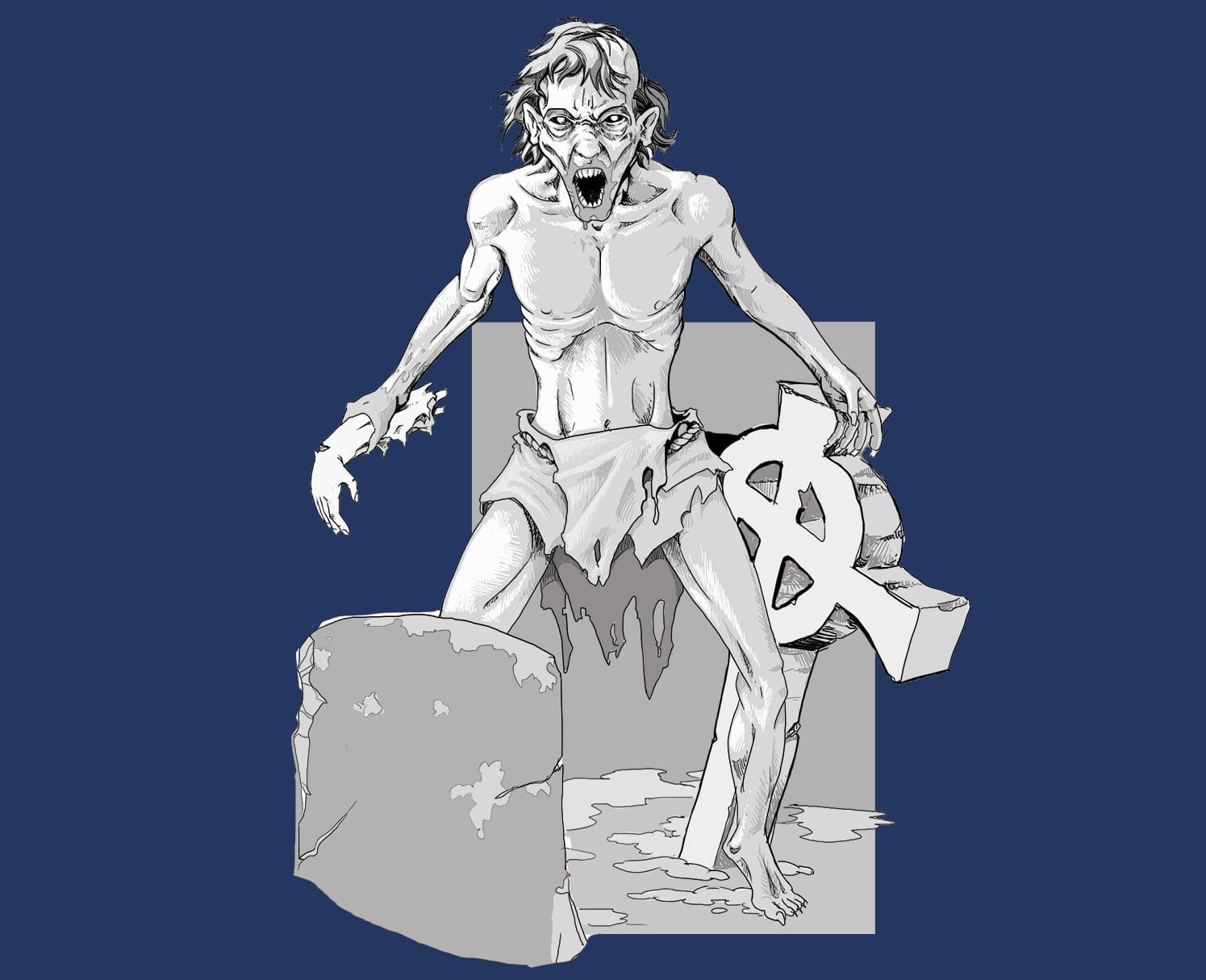
Orco was the god of the Underworld in early Roman mythology. Similar to Hades, the name of the god was also used to refer to the Underworld itself. In tradition, his figure was also associated with Dis, before merging into Pluto. The term referring to him, being nearly homophonous with the Greek Horkos (ὅρκος, “oath”), son of Eris, the punishing demon of broken oaths, led to confusion with this latter deity as well.
Origins
The origin of this deity is likely Etruscan: Orcus is portrayed in some frescoes in Etruscan tombs as a hairy, bearded giant. Among the Etruscans, the fate of every deceased was to be led into a world of suffering, without light and hope, populated by demonic creatures, such as Soranus (Śur, the black), traces of whom are even older in the Central-Italian civilizations, Tuchulcha (Tuχul-χa, the demon) with the face of a vulture and armed with serpents, or Charun (Charon), with a deformed face wielding a heavy hammer, who played a prominent role as kidnappers and executioners of souls. In this context, the gloomy figure of Orcus likely finds its origin.
The so-called Tomb of Orcus, an Etruscan site in Tarquinia, owes its name to a bold attribution by its early discoverers, recognizing the figure of a hairy, bearded giant, who could also be a Cyclops.
Due to the gradual disuse of this deity, in Roman mythology, the figure of Orcus is often identified, confused, or associated with that of other deities, mainly Dis and Pluto.
In the late imperial era, he was usually mentioned as a synonym for the Underworld.
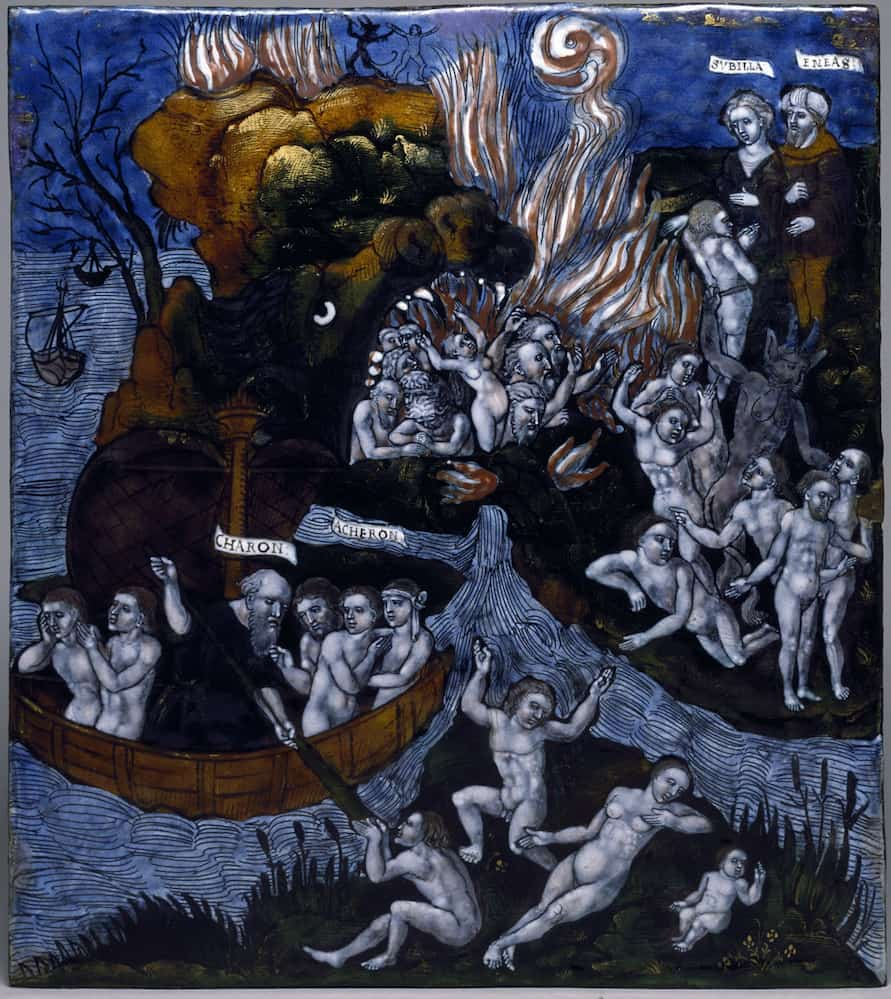
Occasionally, his invocation clearly distinguished the functions of the god Pluto-Hades: as the god of the underworld, of the hidden riches within it, and of the dead, he could be seen as a generous father dispensing wealth, thus identified with Dis Pater (or Pluto), or as the dark and brutal Lord of the Underworld, thus identified with Orcus (or Hades).
Continuation and other forms of the myth
A temple of Orcus may have been present on the Palatine Hill in Rome. Orcus was primarily revered in rural areas, and there are no definite records of his official worship in cities.
This remoteness allowed him to survive in the countryside long after the cessation of the worship of the main gods. He survived as a popular figure in the Middle Ages, during which aspects of his cult were transmuted into the figure of the wild man, with festivals organized in rural areas of Europe persisting into modern times. In fact, much of what is known about the celebrations associated with Orcus comes from medieval sources.
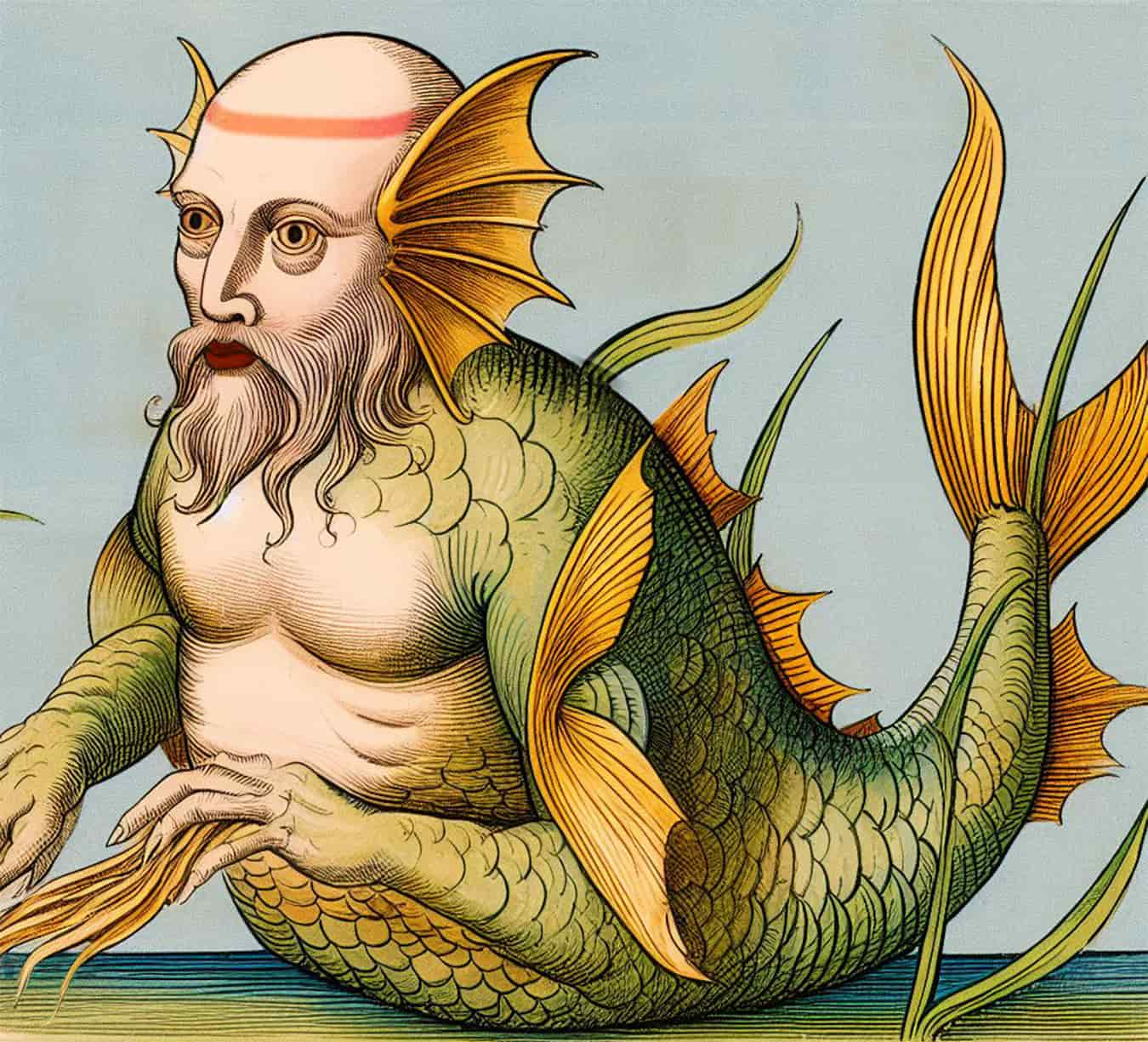
From the association with death and the Underworld, the term “orcus” began to be used for other monstrous creatures and was picked up by medieval bestiaries. The term “orco” appears in the Italian works of Jacomo Tolomei (1290), Fazio degli Uberti, and Ristoro Canigiani (1363), who explicitly mention it as a scarecrow for children.
A more detailed description is found in “Orlando Innamorato” by Matteo Maria Boiardo, depicting a hideous creature with large tusks and hair resembling that of a wild boar, dripping with the blood of its victims. Another example appears in “Orlando Furioso” by Ariosto, who, evidently inspired by the Polyphemus of the Odyssey, outlines a monstrous blind giant, also with boar tusks, who devours human flesh; this orc should not be confused with the “orca”, a sea monster also present in Ariosto’s work and rather linked to its analogue in Pliny the Elder’s “Naturalis Historia”.

Sharing the etymology of the term, as well as this new usage, is the French “ogre”, found in “Perceval ou le Conte du Graal” from the 12th century by Chrétien de Troyes. Its more famous appearance is in the fairy tales of Charles Perrault.
The term “Orc”
The English “orc” was introduced in the 8th century with the cycle of Beowulf, which combines Norse mythology with Christian elements and classical culture, where the race of the monstrous Grendel is described as “Orc-néas”, which seems to mean “corpses of Orcus”, thus the term “orcus” is the original Latin and can be interpreted as a synonym for Orcus or Hades. The same dwelling of Grendel, an underwater cave hidden in a foggy marsh, is not dissimilar from representations of the Underworld.
Orc was subsequently taken up by J.R.R. Tolkien in his personal fantasy mythology, upon which his literary works are based.