For the past several years of desktop PC processor generations—specifically Intel’s 13th- and 14th-generation “Raptor Lake” chips led by the Core i9-13900K and 14900K—chasing the crown for the world’s highest clock speeds came with a fiery penalty: sky-high electrical power consumption exceeding 250 to 300 watts under load, scorching operating temperatures that pushed liquid coolers to their absolute limits, and entirely too much wasted heat. With the launch of the flagship Intel Core Ultra 9 285K (codenamed Arrow Lake-S), Intel threw out its fifteen-year-old “Core i9” naming scheme and executed the most radical architectural pivot in the company’s modern desktop history—prioritizing dramatic reductions in power draw and heat alongside massive multi-threaded productivity and AI capabilities.
Goodbye “Core i9” and Hyper-Threading: A 24-Core Tile Revolution
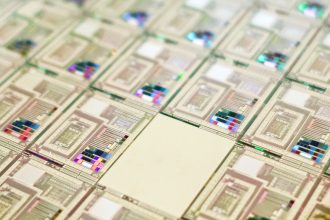
The first thing PC builders notice about the Core Ultra 9 285K is that it is no longer constructed from a single monolithic slab of silicon forged in Intel’s own factories. Instead, Arrow Lake-S uses a disaggregated, multi-chiplet 3D Foveros tile architecture, utilizing TSMC’s cutting-edge N3B (3-nanometer) manufacturing process for its main Compute Tile:
- 8 Lion Cove P-Cores + 16 Skymont E-Cores: Like its predecessor, the 285K features a hybrid total of 24 physical cores—8 high-performance “Lion Cove” P-cores boosting up to 5.7 GHz, paired with 16 completely redesigned “Skymont” Efficient E-cores running up to 4.6 GHz.
- Why Intel Killed Hyper-Threading (24 Cores / 24 Threads): For the first time in two decades on a flagship desktop chip, Intel completely removed Simultaneous Multithreading (Hyper-Threading) from the P-cores, making the 285K a 24-core, 24-thread processor rather than a 32-thread chip. Why? Because the new Skymont E-cores are so staggeringly fast—delivering a **32% instructions-per-clock (IPC) jump** over previous E-cores, making a single modern E-core faster than an old Raptor Lake P-core at low power!—that stripping out power-hungry Hyper-Threading circuits saved silicon area and cut wattage dramatically while actually boosting total multi-core throughput by 8% to 15%.
Slashing Power by up to 80–100 Watts and Running 15°C Cooler
Where the Core Ultra 9 285K truly shines in real-world testing is its thermal and electrical transformation compared to the furnace-like Core i9-14900K:
- Dramatically Lower Gaming and Workload Wattage: In heavy gaming titles and video-encoding workloads where the old i9-14900K routinely gulped down 250W to 285W of wall power and immediately slammed into its 100°C thermal throttling ceiling, the Core Ultra 9 285K often uses 50 to 100 watts less power—averaging well under 100W to 140W in many games and keeping package temperatures 10°C to 15°C cooler on a standard 360mm liquid cooler.
- Heavyweight Productivity King: In professional multi-threaded creation benchmarks like Cinebench 2024, Blender 3D rendering, HandBrake video transcoding, and Adobe Premiere Pro, the 285K trades blows at the very top of the desktop charts—beating both the i9-14900K and competing 16-core chips while generating a fraction of the fan noise and heat.
- Built-In NPU for Local AI: For the first time in a desktop socket processor, the Core Ultra 285K integrates a dedicated Neural Processing Unit (NPU) delivering 13 TOPS (and 36 total platform TOPS across CPU, NPU, and integrated Arc Xe-LPG graphics) to offload background AI tasks like real-time video background blurring, audio noise suppression, and local assistant workloads without touching your main graphics card.
The LGA-1851 Platform and DDR5-Only Future
Because the Core Ultra 200S series transitions to the new LGA-1851 motherboard socket (launched alongside Intel Z890 chipsets), upgrading to the 285K requires a new motherboard and marks Intel’s complete farewell to older DDR4 memory—supporting strictly high-speed DDR5 RAM (including new CUDIMM clock-driver memory modules capable of soaring past 8,000 MT/s), native Thunderbolt 4, and up to twenty lanes of PCIe 5.0 connectivity for next-generation graphics cards and NVMe SSDs.