When Santiago Ramón y Cajal was a young anatomist in 1887, he saw the nerve fibers stained by the new method described by Italian scientist and medical doctor Camillo Golgi for the first time. He described this moment of enlightenment as follows:
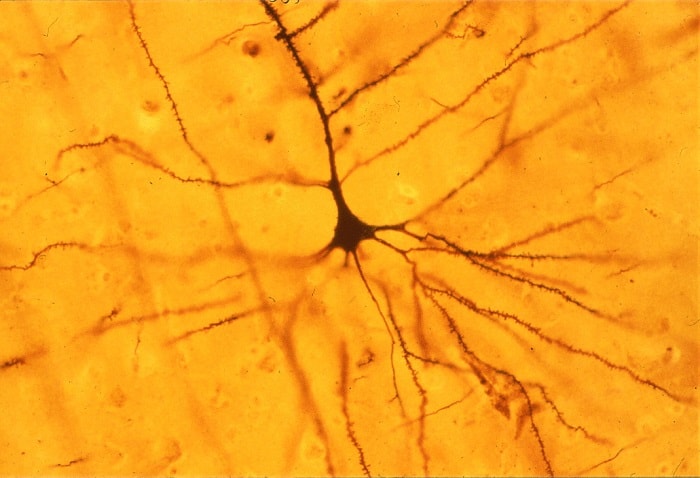
What an unexpected sight! Sparse, smooth, and thin black filaments or thorny, thick, triangular, stellate, or fusiform black cells could be seen against a perfectly translucent yellow background! One might almost liken the images to Chinese ink drawings on transparent Japanese paper […] this is the Golgi method
Santiago Ramón y Cajal, Histologie du Systeme Nerveux de L’Homme et des Vertebres (Histology of the nervous system of man and vertebrates), 1909
Who was Santiago Ramón y Cajal?
Santiago Ramón y Cajal was born on May 1, 1852, in a small village in the Spanish countryside. His father was a barber-surgeon. Later, with great effort, he managed to get a medical diploma and asked his son to go to medical school. But like many talented young men, Cajal was a rebellious adolescent, and he didn’t like the strict discipline of the school. He intended to become an artist, as he was talented at it from an early age. This idea terrified his father, and his father eventually won; Cajal graduated from medical school in Zaragoza in 1873.
He immediately joined the medical service in the army. But, in less than a year, he contracted malaria and tuberculosis in Cuba and was sent home. Santiago Ramón decided to start a career that relied heavily on his artistic skills, as anatomy was the only subject in which he was interested or inclined. He reached increasingly prestigious academic positions in Valencia, Barcelona, and Madrid and was internationally recognized for his discoveries in the cellular architecture of the nervous system; in 1906, he won the Nobel Prize in Physiology and Medicine with Golgi.
Seeing inside the brain
Until the middle of the 19th century, the use of a microscope to examine cells and tissues was limited to primitive techniques. This was a particular problem, especially when examining the nervous system. The “cell theory”—the argument that all living things are made up of cells—was explicitly stated in 1839 and considered valid for almost all organs; only the nervous system was an exception. Yes, the nervous system was functioning with electricity, but how was electricity produced and transferred, and what was its relationship with this fine structure?
Even the brain and spinal cord seemed to consist mostly of fibers. Although the cells were visible, they were hardly distinguishable in the middle of the fiber masses, and it was not known whether they served a secondary purpose, such as feeding the fibers, or whether they had a greater significance. Golgi solved the problem by finding a way to stain nerve tissues with silver chromate. This made it possible to see the nerve cell pathways in the brain for the first time since only a small number of cells could be stained properly.
But Golgi staining was not very reliable, was difficult to reproduce, and was not used much in the 1880–1885 period, as Golgi reported. Golgi’s courage was broken when he moved away from neurohistology and started working on malaria, which had brought him new fame. Santiago Ramón took over his method, made innovations in the staining technique, and progressed to make many original discoveries over the years. He had observed numerous different types of nerve cells—now called neurons—and their relationships with each other in different parts of the central nervous system. The depth and breadth of his observations are so impressive that today’s neuroanatomists still refer to him when they write their findings.
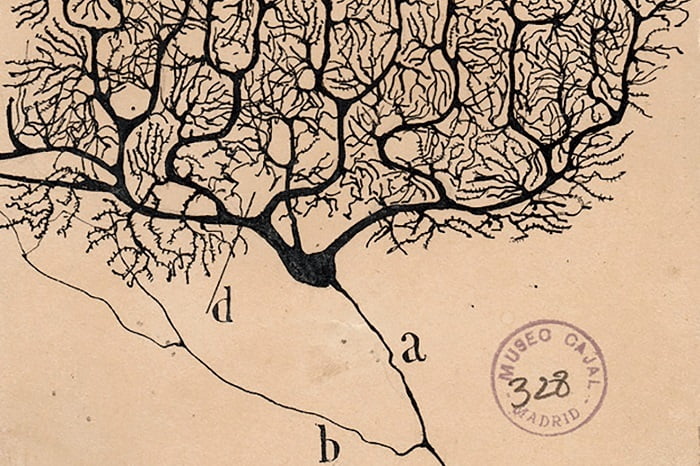
Certain features of Cajal’s personality had important effects on his success. He had the imagination to choose the most important problems to work on and to identify exactly where they were in the central nervous system. Since it was rare to see the entire neuron at a glance, and it was never seen by most people, he traced it patiently and meticulously by taking different looks at the neuron. Later on, he synthesized the details of these glances, describing what he saw clearly.
He had no equal in capturing the relationship between the neurons, rarely seen together at a glance from a microscope. His strongest part was not to trace long paths along with the nervous system but rather to evaluate the connection between cells in certain areas, such as the cerebellum, brain shell, and web layer. He would not avoid drawing a gap between a neuron and the fibers of the adjacent neuron to highlight the discontinuity he felt was there when it was not possible to see it.
Santiago Ramón y Cajal: The founder of modern neuroscience
His work was important in establishing the main principles that we consider essential to understanding the nervous system today. The first principle is about the basic units of the neuron system. Shorter dendrites and longer axons branch out of the cell body, which provides nutrition to these elongated ridges. The second principle is that nerve impulses move only in one direction in one neuron: from dendrites to the cell body, then from the cell body to dendrites or axons and branches that connect to the cell body of another neuron. The third principle is that each neuron maintains its integrity. There is a physical discontinuity between neurons. Connections do not involve physical association with the extensions of another neuron. Nerve stimulation only moves in one direction during this discontinuity (later called the synapse); that is, nerve pathways are neuron and synapse chains.
He was an uncompromising advocate of the concept of autonomous neurons that follow restricted conduction pathways throughout the nervous system, known as the Cajal neuron doctrine. He reasoned that the localization of certain functions in specific areas of the brain and spinal cord could explain the rapidly evolving evidence. It was especially beneficial to study the cells in the brain shell. These were the basis for mapping the visual, tactile, and motor representations at different locations in the shell.
The neuron theory continued to evolve and had such a great power of explanation and foresight in the physiology and pathology of the 20th century that the theory was considered the foundation of modern neurobiology, where Cajal was the founder of modern neuroscience. However, there were criticisms of the neuron theory when Cajal was still alive. When Cajal died in 1934, he was still defending the theory. The theory was proven only in the 1950s by the visualization of synapses with an electronic microscope.
Santiago Ramón y Cajal quotes
“Any man could, if he were so inclined, be the sculptor of his own brain.”
“As long as our brain is a mystery, the universe, the reflection of the structure of the brain will also be a mystery.”
“Perseverance is a virtue of the less brilliant.”
“Nothing inspires more reverence and awe in me than an old man who knows how to change his mind.”
“Heroes and scholars represent the opposite extremes… The scholar struggles for the benefit of all humanity, sometimes to reduce physical effort, sometimes to reduce pain, and sometimes to postpone death, or at least render it more bearable. In contrast, the patriot sacrifices a rather substantial part of humanity for the sake of his own prestige. His statue is always erected on a pedestal of ruins and corpses… In contrast, all humanity crowns a scholar, love forms the pedestal of his statues, and his triumphs defy the desecration of time and the judgment of history.”
“The mediocre can be educated; geniuses educate themselves.”
Santiago Ramón y Cajal
Bibliography:
- “Portrait of Santiago Ramon y Cajal (1852-1934) 1906 by Joaquin Sorolla
- “Severo Ochoa y Ramón y Cajal, Monumento a” (in Spanish)
- “Centro de Interpretación Ramón y Cajal de Ayerbe”. Ayuntamiento de Ayerbe: guía de servicios, agenda, información municipal (in Spanish).
- “Santiago Ramón y Cajal Exhibit – history – Office of NIH History and Stetten Museum”. history.nih.gov.
- “The Nobel Prize in Physiology or Medicine 1906”. NobelPrize.org.
- “History of Neuroscience”. Society for Neuroscience.