Friedrich August Kekulé was the primary developer of chemical structure theory, a method for tracing the intricate architecture of complex molecules. One of the most obvious ways this theory could be used was with “aromatic” chemicals. This new understanding sped up the growth of the chemical industry at the end of the 19th century.
I turned my chair toward the fireplace and sank into a half-sleep. Again, the atoms fluttered before my eyes… But look, what was that? One of the snakes had seized its own tail, and the figure whirled mockingly before my eyes. I awoke in a flash, and this time, too, I spent the rest of the night working out the consequences of the hypothesis.
from August Kekulé’s speech in 1890
Who was August Kekulé?
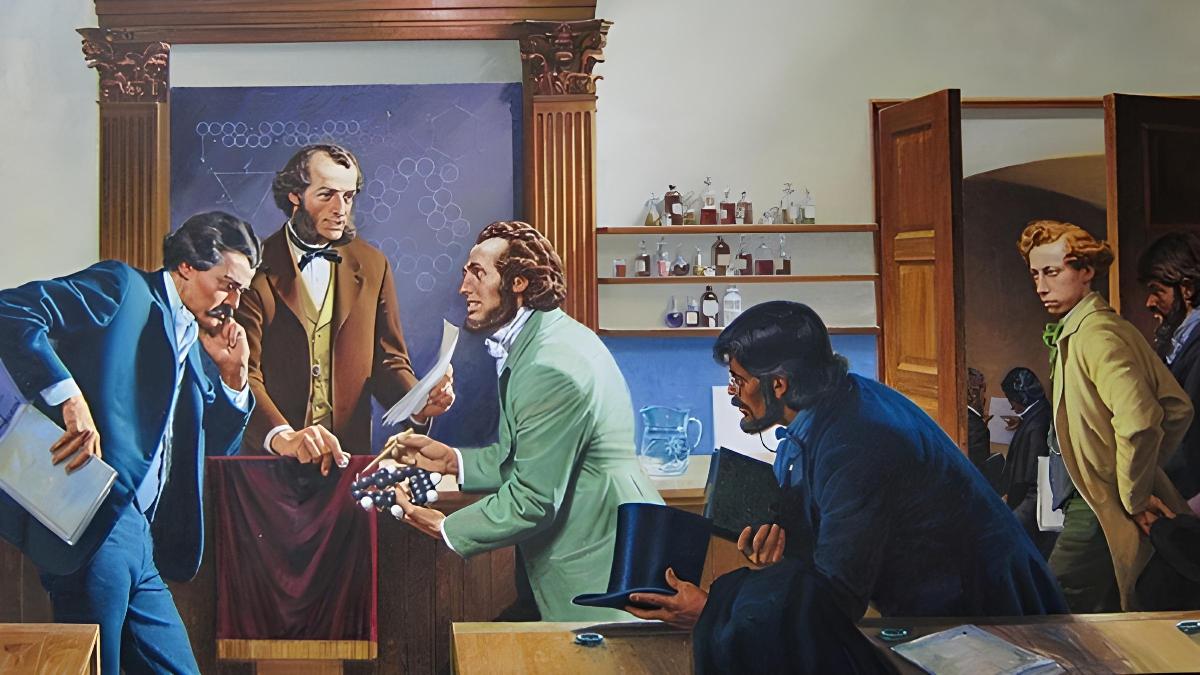
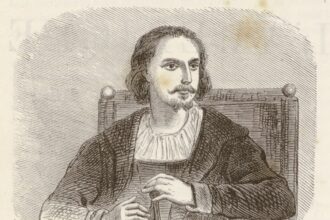
August Kekulé was born in Darmstadt, the capital of Hesse, a small, independent country in central Germany. His father was a member of the Cabinet of the Grand Duke, and since he wanted his son to be an architect, August began to study architecture at a small university in the country in the north of Giessen. At that time, one of the best-known chemists was among the faculty members; after attending Justus von Liebig’s lessons, August became passionate about chemistry.
As Kekulé neared the end of his education, Liebig advised him to pursue postdoctoral training, partly because chemists were in short supply. Finally, Kekulé made three training trips: one to Paris, one to Switzerland, Chur, and the last to London. He was later admitted to Heidelberg University as a faculty member. After two and a half years in this position, in the fall of 1858, he was appointed chemistry professor at Ghent University in the French-speaking region of Belgium.
Nine years later, when he was one of Europe’s most famous chemists, he was summoned to the University of Bonn, where he spent the rest of his professional life. Although Kekulé was happy to return to his country, he was unhappy in his private life. His young and beautiful wife died while giving birth to his first children, and he could not find happiness in his second marriage.
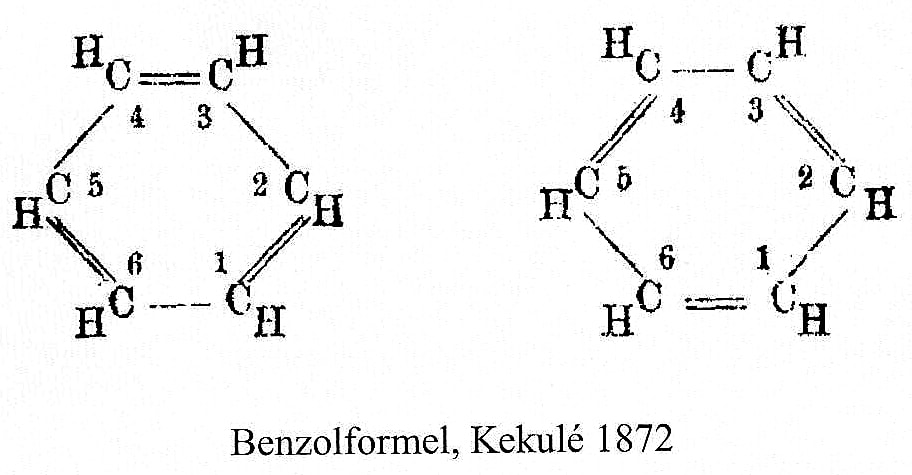
In the 1840s, chemists began developing possible ways to detect the sequence of atoms in molecules, but there were also many opposing ideas and confusions in this regard. August Kekulé, a young theoretical chemist, found himself at the center of these debates. He had the advantage of having an intense professional practice not only in Germany but also in France, England, Switzerland, and Belgium. A number of European scientists were just beginning to develop a theory about the valence of atoms—for example, a hydrogen atom combines with another atom only with one bond, oxygen atoms with two, nitrogen atoms with three, or carbon atoms with four (even to four different atoms).
According to the story that Kekulé told in his old age, during his third post-doctoral educational trip, a molecule image appeared before his eyes while dreaming on the upper floor of the London bus, which was pulled by horses on a summer evening in 1855. He returned home and described in detail how many molecules could be separated into atoms one at a time. The fact that each carbon atom was only connected to four other atoms was secondary to the linear carbon-atom bonds that formed once they were linked. Three years later, he wrote about this theory in a book. The main idea of a chemical theory quickly became an important tool for chemical analysis and synthesis.
In the same speech, August Kekulé talked about the second dream he saw in the evening of 1862 while half-asleep in front of the fireplace in his own apartment in Ghent. He saw a snake seize its own tail. This molecular dance, which this time appeared in front of his eyes and not in his mind, gave him the clue that the benzene molecule—the main structure of chemicals called “aromatics”—could be in the shape of a ring, not a straight line. This idea formed the essence of his benzene theory, published in 1865.
August Kekulé and organic chemistry
Coincidentally, the synthetic dye industry was turning into a huge market at that time, especially in Germany, and almost all new paints were benzene derivatives. In fact, not only dyes but drugs, food chemicals, ammunition, plastics, and all kinds of synthetic materials were built on aromatic structures. August Kekulé’s newer and better scientific understanding of these substances played a key role in production research and was the main factor in the sudden growth of many new chemical industries.
August Kekulé was one of the most creative scientists of the 19th century. His extraordinary energy and sense of humor, bright personality, and scientific charisma attracted international students, friends, and fans. But it was his own citizens who were most grateful to him. As Kekulé approached the end of his life, Germany had become an international leader in organic chemistry, led by his ideas. These ideas form the basis of organic chemistry today.
Bibliography
- Oxford Academic, “Eureka experiences“.