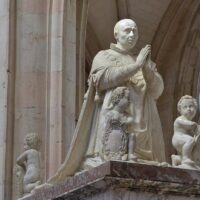
Charles X (1757–1836) was the last King of France from the House of Bourbon (1824–1830). Opposed to any attempts at reform during the Estates-General of 1789, he fled France after the storming of the Bastille, later living in Italy, Prussia, and Austria. As the leader of the Ultra-royalist party during the reign of Louis XVIII, he became king upon Louis XVIII’s death.
His reign was marked by the authoritarian and reactionary policies of his minister Villèle, which made him unpopular despite the victory at Navarino and the appointment of the more liberal Martignac ministry in 1828. The ordinances of July 25, 1830, which dissolved the yet-to-convene Chamber, altered the Charter, and suppressed freedom of the press, triggered the July Revolution of 1830 and Charles X’s abdication on August 2. He died in exile.
Tumultuous Youth of Charles X
Born on October 9, 1757, in Versailles, Charles-Philippe of France was the youngest son of Louis, Dauphin of France, and Maria Josepha of Saxony. Titled the Count of Artois, he was the grandson of Louis XV and the younger brother of Louis XVI and Louis XVIII. Married at the age of sixteen to Maria Theresa of Savoy, while leading a somewhat libertine lifestyle, he had two daughters who died in infancy and two sons, the Duke of Angoulême, who became Dauphin, and the Duke of Berry, assassinated in 1820. With a haughty demeanor and undeniable charm, he won the favor of the court, especially with the women.
His frivolous life, marked by numerous conquests, including the famous Madame de Polastron, reflected his lack of interest in studies and political debate. The scandals of his marital life and his excessive debts due to gambling and extravagant living were quietly handled by his brother, Louis XVI.
An Anti-Revolutionary Past
As early as 1787, the Count of Artois became notable for his conservative positions, opposing, for example, the convening of the Estates-General. During the 1789 French Revolution, advised by the king himself, he fled the country and, as an emigrant, rallied the nostalgic supporters of the Ancien Régime. After an unsuccessful attempt to land on the island of Yeu, he lost the leadership of the monarchist refugees following the exile of the Count of Provence (the future Louis XVIII). He had to wait until 1814 to return to the kingdom, where he was appointed lieutenant general by the king.
During the Second Restoration, his political influence grew considerably, especially after the assassination of his son, the Duke of Berry. He led the conservative opposition and, as the king weakened, gradually took control of the government, particularly since he was the heir to the throne.
Coronation of Charles X in Reims and Popular Enthusiasm
When Louis XVIII died from gangrene in both feet, the Count of Artois ascended the throne. A grandson of Louis XV and brother of two kings, Charles X was crowned in Reims on May 29, 1825, following the traditional ceremony. This old-fashioned coronation, full of piety and archaic symbols, sparked reactions from moderate political leaders, who feared a return to the values and customs of the Ancien Régime.
Nevertheless, upon his accession, the king enjoyed considerable monarchist enthusiasm and extraordinary popularity. Despite his age, he retained a certain charm. However, his days of romantic conquests were over, and the ostentatiously pious monarch only charmed for a brief time. His shallow education made him more focused on protecting his privileges than addressing popular demands.

A Conservative Reign

In foreign policy, the French government struggled to reclaim distant territories that treaties had ultimately granted it. Despite efforts, the island of Saint-Domingue definitively gained independence in 1825. Slowly, ties between the French navy and the colonies were rebuilt, thanks to the Ministry of the Navy. However, attempts to annex Senegal, Madagascar, and French Guiana were unsuccessful. Military intervention thus refocused on Algeria (Invasion of Algiers, 1830) and Greece (Battle of Navarino, 1827).
Domestically, although Charles X initially promised to respect the 1814 Constitutional Charter, by 1825, he had implemented a number of conservative measures that quickly became unpopular. The Chateaubriand and Villèle government, in place since 1821, marked the end of moderate aspirations. Intellectuals like Thiers, Michelet, and Mignet harshly criticized the regime in their works.
Despite the short-lived liberal ministry of the Viscount of Martignac (1828–1829), the Ultra-royalists eventually prevailed. From 1829, the cabinet led by Prince de Polignac, who became president of the council, systematically undermined key principles of the Constitutional Charter. In response, the Chamber was dissolved twice, and the most moderate ministers resigned. The conflict between Charles X’s government and the deputies plunged France into a severe political crisis.
Ordinances of Saint-Cloud and Charles X’s Abdication
On July 25, 1830, facing political opposition, Charles X initiated a veritable coup d’état. He issued four ordinances, including suspending freedom of the press, dismissing the deputies, calling for new elections, and modifying the electoral system.
The Parisian uprising, fueled by politicians advocating a republican state, led to the revolt of the “Three Glorious Days” or the July Revolution. Unable to respond to popular demands, the king was eventually forced to abdicate, not in favor of his son, the Duke of Angoulême (who briefly became Louis XIX), but in favor of his grandson, the Duke of Bordeaux, later known as the Count of Chambord, or Henry V.
In the meantime, the Duke of Orléans, the king’s cousin, was initially appointed regent against his will by Charles X but was pressured by the deputies to accept the lieutenancy general of the kingdom. At the end of the July Revolution, he took power as Louis-Philippe I. Forced into exile, Charles X, titled Duke of Ponthieu, first sought refuge in Great Britain, Austria, and Prague before spending his final days in 1836 at a monastery in Gorizia, Slovenia. The brief reign of Louis XIX, Count of Marne, claimed the title of head of the House of France, but no Bourbon would ever return to the French throne.