With a single upward flick of a ginger quiff of hair, a blue crew-neck sweater over brown plus-fours, and a loyal white wire-haired Fox Terrier named Snowy (Milou) trotting beside him, the young Belgian reporter Tintin has sold more than two hundred and seventy million comic albums translated into over one hundred and ten languages. Behind the twenty-four adventures of this ageless globetrotter stood a single obsessive perfectionist from Brussels: Georges Prosper Remi, universally known by his reversed initials, Hergé. Over a fifty-four-year career, Hergé single-handedly elevated the European comic strip from a disposable children’s newspaper filler into the Ninth Art—pioneering the crisp graphical style known as Ligne Claire (“Clear Line”).
Boy Scouts, Reversed Initials, and the Birth of Tintin in 1929
Born on May twenty-second, 1907, in the Brussels municipality of Etterbeek into a lower-middle-class Belgian family, young Georges Remi found his true childhood home inside the Boy Scouts, where he earned the totem nickname “Curious Fox” and developed a lifelong passion for camping, honor, and drawing cartoons in Scout magazines. In 1924, looking for a pen name, he took his initials—G.R. (Georges Remi)—reversed them to R.G., and spelled them out phonetically as they sound in French: Hergé.
After working in the subscriptions department of the conservative Catholic Brussels newspaper Le Vingtième Siècle, the twenty-one-year-old Hergé was put in charge of editing and illustrating the newspaper’s new Thursday youth supplement, Le Petit Vingtième. On January tenth, 1929, Hergé needed a hero for a new serialized adventure strip: taking an earlier Boy Scout character he had drawn named Totor, swapping the Scout uniform for stylish 1920s golf trousers (plus-fours), and adding a white dog modeled after a terrier he saw in a Brussels cafe, Hergé published the very first panels of Tintin in the Land of the Soviets.
1934: How Chang Chong-chen Transformed Tintin Into High Art
Hergé’s earliest three Tintin books (Land of the Soviets, Tintin in the Congo, and Tintin in America) were improvised week to week with minimal research, relying on crude slapstick humor and the colonial stereotypes of 1930s Belgium. Then, in the spring of 1934, after Hergé announced that Tintin’s next adventure would take him to China, a Catholic chaplain at the University of Louvain introduced Hergé to a brilliant twenty-six-year-old Chinese sculpture and painting student at the Brussels Royal Academy of Fine Arts: Zhang Chongren (Chang Chong-chen).
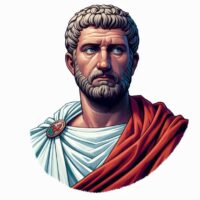
The Sunday afternoon meetings between Hergé and Zhang changed the history of comic books forever:
- Obsessive Documentary Authenticity: Zhang taught Hergé Chinese calligraphy, Daoist philosophy, poetry, and the exact political reality of the 1931 Japanese invasion of Manchuria, personally painting the authentic Chinese street banners inside the panels of The Blue Lotus (1934–1935).
- A Lifelong Standard of Research: From The Blue Lotus onward, Hergé refused to draw a single foreign street corner, railway locomotive, pistol, submarine, or airline uniform without assembling an immense archival file of real photographs, blueprints, and scale models at his Studios Hergé—later sending Tintin to the Moon in Destination Moon and Explorers on the Moon (1950–1954) with such astonishing engineering realism fifteen years before Apollo 11 that astronauts actually praised the books!
Mastering the “Ligne Claire” and the Supporting Cast
Graphically, Hergé perfected the influential aesthetic later named Ligne Claire (“Clear Line”): every single element on the page—whether Tintin’s face in the foreground, a speeding sports car in the middle ground, or a mountain castle on the horizon—is drawn with the exact same uniform, crisp black ink contour line, devoid of messy cross-hatching or muddy shadows, and filled in with flat, vibrant blocks of color. By keeping Tintin’s own face an iconic, minimalist geometric circle (two dots for eyes, a curved dash for a nose, and a circle for a mouth) while rendering the background cars and ships in hyper-realistic detail, Hergé allowed every reader on Earth to project their own face directly onto the hero.
During the dark years of the German occupation of Belgium in World War II (when Hergé controversially continued publishing non-political adventure strips inside the German-controlled daily newspaper Le Soir, resulting in his temporary arrest and ban by Allied resistance authorities at the Liberation in 1944 before publisher Raymond Leblanc, a decorated Resistance hero, vouched for him and launched the weekly Tintin Magazine in 1946), Hergé introduced the unforgettable ensemble cast that gave the series its comic heart:
- Captain Archibald Haddock (Introduced in 1941’s The Crab with the Golden Claws): The bearded, Loch Lomond whisky-loving merchant sea captain whose volcanic, non-profane tirades of creative insults—“Ten thousand thundering typhoons! Blistering barnacles! Bashi-bazouks! Ectoplasms!”—provided the series with a flawed, deeply human emotional foil to the virtuous Tintin.
- Professor Calculus (Tryphon Tournesol, 1943): The hard-of-hearing, pendulum-swinging scientific genius modeled after Swiss physicist Auguste Piccard.
- Thomson and Thompson (Dupond et Dupont) and Bianca Castafiore: The bumbling, bowler-hatted identical detective duo and the glass-shattering “Milanese Nightingale” opera diva.
Tintin in Tibet and Hergé’s Final Wish
In the late 1950s, while suffering a severe psychological crisis and nightmares of blinding white snow as his twenty-five-year first marriage to Germaine Kieckens broke down after he fell in love with young studio colorist Fanny Vlamynck, a Jungian psychoanalyst in Zurich advised Hergé to stop drawing Tintin to save his mental health. Instead, Hergé poured his inner demons—and his heartbreaking twenty-five-year longing for his lost Chinese friend Chang Chong-chen, with whom he had lost contact after the Chinese Revolution—into his deeply personal 1960 masterpiece, Tintin in Tibet, a story containing zero villains or guns, driven purely by Tintin’s unshakeable loyalty to rescue his friend Chang from a Himalayan plane crash. (Amazingly, twenty-one years later in 1981, the real Zhang Chongren was located alive in China and flown to Brussels for a tearful airport reunion with Hergé before millions of television viewers!)
Before passing away in Brussels on March third, 1983, at the age of seventy-five while leaving his twenty-fourth album, Tintin and Alph-Art, in unfinished pencil sketches, Hergé left one strict, inviolable instruction in his will: no other artist would ever be permitted to draw a new Tintin album after his death, ensuring that the boy reporter and his creator exited the stage together forever.