Moon Shadow at a Glance:
Why does the Moon’s shadow not always fall on Earth?
The Moon’s orbit around the Earth is inclined by 5.14 degrees, which means that it does not always pass through the same plane as the Earth’s orbit around the Sun. This is why solar eclipses do not occur during every New Moon phase and the Moon’s shadow does not always fall on Earth. Additionally, the size of the shadow varies depending on the Moon’s distance from the Earth.
What are the umbra and penumbra of the Moon’s shadow?
The umbra is the darker, cone-shaped portion of the Moon’s shadow that is visible during a total solar eclipse. It has a maximum diameter of 166 miles on Earth’s surface. The penumbra is the lighter shadow that surrounds the umbra and is visible during a partial solar eclipse.
What is the path of totality?
The path of totality is the narrow strip of Earth’s surface where the Moon completely covers the Sun during a total solar eclipse. It can be several hundred miles wide and thousands of miles long. As the Moon orbits the Earth, the path of totality changes and moves from west to east.
When the Moon moves into Earth’s orbit in such a way that it completely blocks out the Sun, the result is a solar eclipse. During a solar eclipse, the Moon’s shadow falls on Earth. The Moon’s shadow falls on Earth only during the New Moon phase. Because this is when solar eclipses occur. The Moon’s shadow that falls on Earth can be divided into two categories: the umbra and the penumbra. For the reverse effect, the Earth’s shadow falls on the Moon during lunar eclipses.
- Moon Shadow at a Glance:
- Why does the Moon’s shadow not always fall on Earth?
- What are the umbra and penumbra of the Moon’s shadow?
- What is the path of totality?
- The Moon Shadow is a Rare Sighting
- Moon’s Shadow on Earth: Umbra and Penumbra
- The Path of Totality
- Why Does the Moon’s Shadow Not Always Fall on Earth?
- The Moon’s Shadow is Not Always the Same in Size
The Moon Shadow is a Rare Sighting
On August 11, 1999, a total solar eclipse was visible from space for the first time. French astronaut Jean-Pierre Haigneré of the CNES took this picture above of the Russian space station Mir and recorded the Moon’s shadow falling on Earth.
Rarely does the Sun become completely blocked out in the sky, but when it does, the sky darkens significantly because of the Moon’s shadow, and the temperature drops by a few degrees. As the Moon’s shadow sweeps over Earth’s surface, it can reach speeds of up to 2,175 miles per hour (3,500 kph).
The shadow cast by the Moon on Earth travels from West to East and it can stay on Earth for as much as 7 minutes and 31 seconds. If the Moon’s shadow stays for several minutes like this, some birds, insects, and other animals can mistake the shadow for nighttime and act accordingly.

Moon’s Shadow on Earth: Umbra and Penumbra
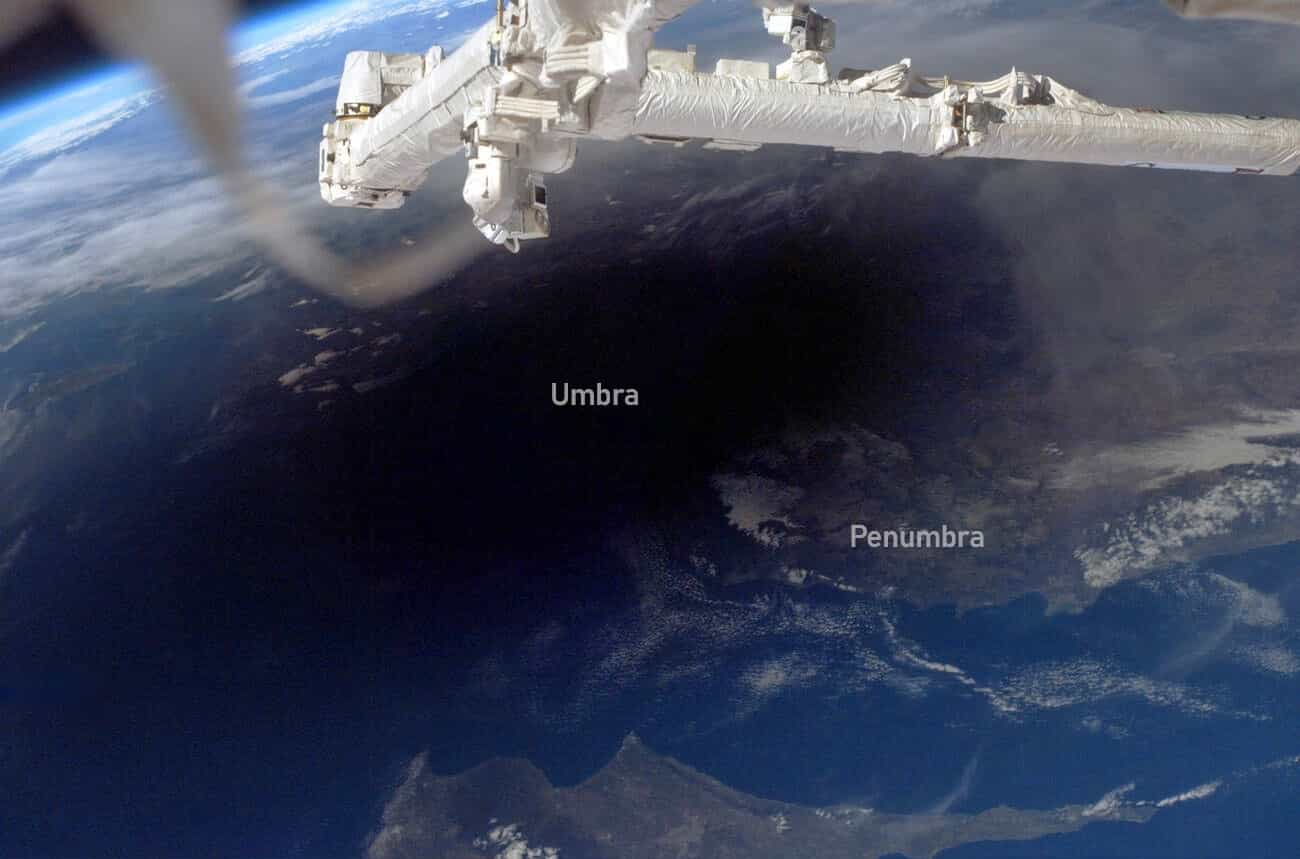
The umbra is the deepest, most cone-shaped portion of the Moon’s shadow on Earth. A total solar eclipse, in which the Moon totally blocks out the Sun, can be seen from inside this umbra. This tense shadow stays for only a few minutes on Earth’s surface. On Earth, the umbral shadow cast by the Moon has a maximum diameter of 166 miles (267 km).
A partial solar eclipse occurs when the Moon obscures the Sun’s light only in a small area, known as the penumbra, which is a lighter shadow around the darker umbra.
The Path of Totality
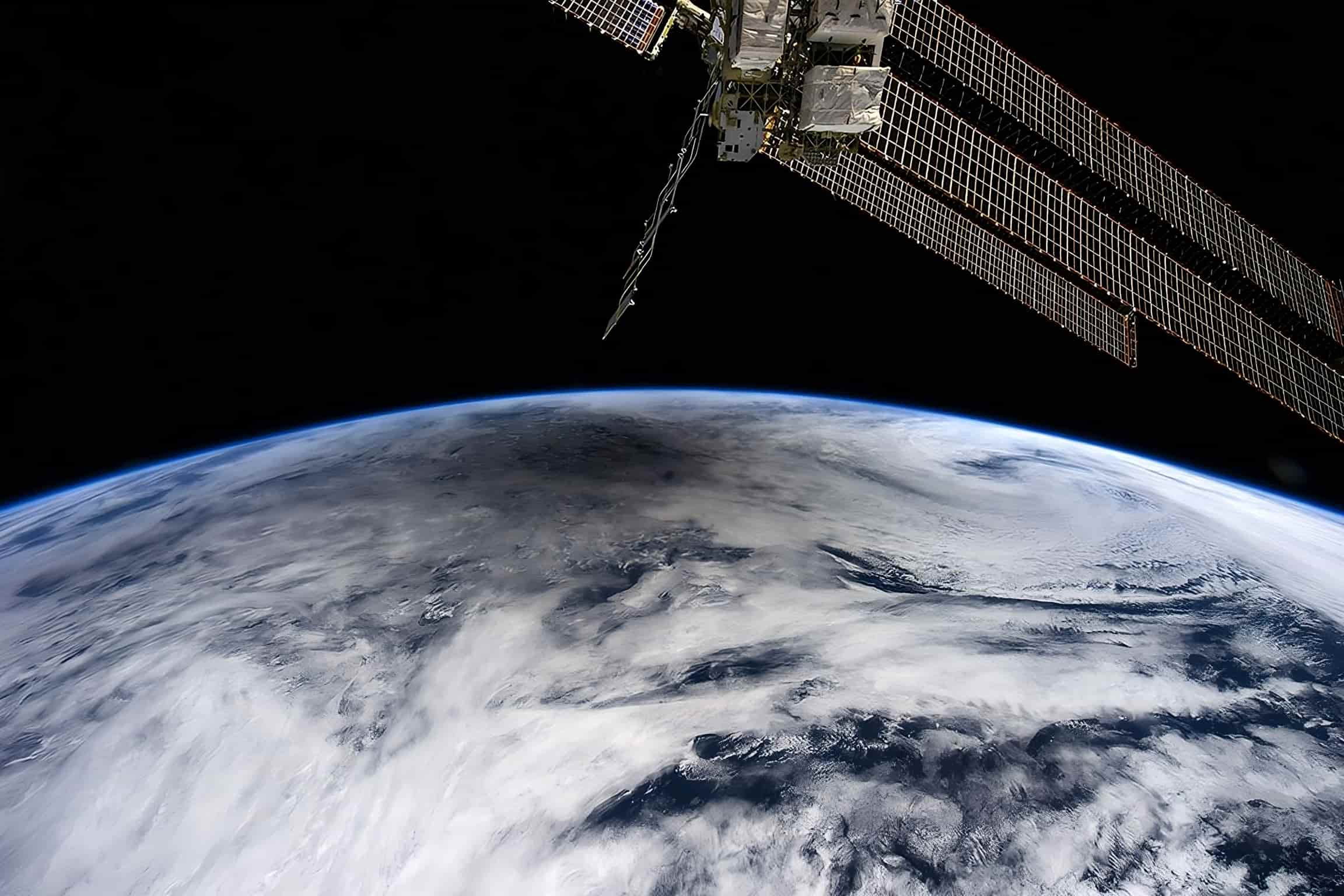
There is also the term “path of totality“. This is the thin strip of Earth’s surface that is completely covered by the Moon’s shadow. It is usually around a few hundred miles wide, but it can be thousands of miles long.
As the Moon travels in its orbit around the Earth, the path of totality will change positions and be visible at various times. Again, the path of the Moon’s shadow over Earth will move from west to east.

Why Does the Moon’s Shadow Not Always Fall on Earth?
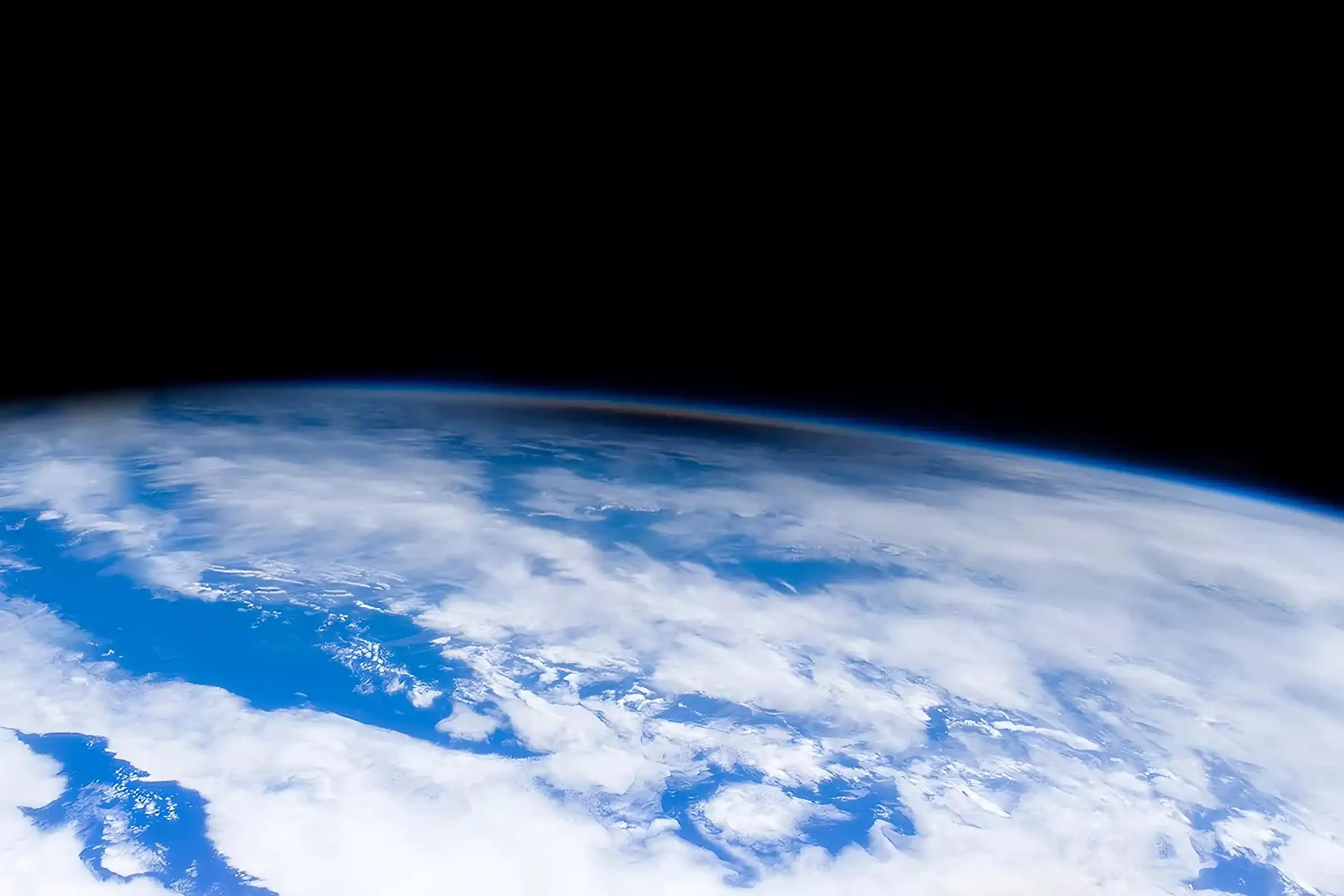
Only when the Moon is in exactly the right position between the Sun and the Earth can a solar eclipse take place and the Moon’s shadow fall on Earth.
Every New Moon would include a solar eclipse and a Moon shadow if the Moon’s orbit around Earth was aligned with the Earth’s orbit around the Sun.
Due to the inclination of the Moon by 5.14°, solar eclipses can only take place when the Moon passes through the same plane as Earth’s orbit around the Sun.
The Moon’s Shadow is Not Always the Same in Size
The amount of the Earth’s shadow cast by the Moon varies over time. Because the Moon travels an elliptical path around the Earth, its average distance from the Earth changes. During perigee, when the Moon is closest to Earth, its shadow is the largest on the planet, and during apogee, when the Moon is furthest away, the shadow is the smallest.