In the grand timeline of cosmic history, scientists identify two monumental thresholds that transformed the silent matter of the early universe: first, cosmogenesis and geogenesis, the formation of stars, planets, and complex chemistry; and second, biogenesis, the spark some four billion years ago when non-living organic molecules crossed the boundary into self-replicating life, forming the Earth’s biosphere. In the early twentieth century, a trio of visionary thinkers in Paris proposed that planet Earth was actively crossing a third, equally profound evolutionary threshold: noogenesis—the origin and evolution of conscious thought, collective intelligence, and the planetary “thinking layer” known as the noosphere.
Vladimir Vernadsky, Édouard Le Roy, and Pierre Teilhard de Chardin
The word noogenesis combines the ancient Greek noun nous (meaning mind, intellect, or rational consciousness) with genesis (origin or birth). The concept emerged in Paris between 1922 and 1926 during an extraordinary intellectual collaboration among three scholars coming from completely different disciplines: the brilliant Russian geochemist Vladimir Vernadsky (who had popularized the scientific concept of the biosphere as a geological force), the French mathematician and philosopher Édouard Le Roy, and the French Jesuit priest, paleontologist, and evolutionary philosopher Pierre Teilhard de Chardin.
Having worked in China on the paleontological team that discovered Peking Man (Homo erectus), Teilhard de Chardin observed a striking pattern across hundreds of millions of years of fossil history, which he formulated in his posthumously published 1955 masterpiece, The Phenomenon of Man, as the Law of Complexity-Consciousness:
- As matter evolves over geological time, atoms assemble into increasingly complex molecules, cells, and multicellular organisms.
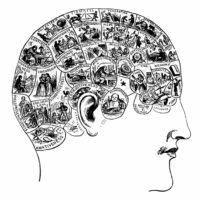
- Directly proportional to the rising structural complexity of an animal’s central nervous system and brain (a process Teilhard called cephalization) is a corresponding rise in internal consciousness and self-awareness.
- When early hominids crossed the threshold of self-reflection—not merely knowing things like other animals, but knowing that one knows—evolution jumped from purely biological mutation to cultural, technological, and intellectual evolution: the birth of noogenesis.
The Noosphere: Earth’s Thinking Envelope
Just as early life multiplied across the oceans and continents to wrap the rocky core of the Earth (the geosphere) in a living blanket of plants, animals, and bacteria (the biosphere), Vernadsky and Teilhard argued that human thought, language, science, and communication networks were weaving a new, invisible planetary envelope around the globe above the biosphere: the noosphere (the “Sphere of Mind”).
To Vernadsky, the geochemist, the noosphere was a measurable physical reality: through agriculture, mining, chemistry, and engineering, human intelligence had become the single largest geological force on the planet, moving more rock and altering the atmosphere faster than volcanoes or rivers. To Teilhard de Chardin, because the Earth is a closed spherical surface, as the human population multiplied and global communication technologies shrank distance to zero, human minds were being compressed together into an interconnected global brain—converging toward an ultimate future pinnacle of unified planetary consciousness that he termed the Omega Point.
How the 1920s Noosphere Predicted the Modern Internet and AI
For decades during the mid-twentieth century, mainstream evolutionary biologists dismissed Teilhard de Chardin’s writings on noogenesis as overly poetic or mystical. Yet in the 1990s and early 2000s, as fiber-optic cables, satellites, and the World Wide Web suddenly linked billions of human brains into an instantaneous global information network, computer scientists and media theorists realized with astonishment that Teilhard and Vernadsky had predicted the architecture of the Internet seventy years before a single browser existed.
Writing in the 1930s and 1940s, Teilhard explicitly envisioned a future in which all humanity would be linked by an electronic nervous system of shared memory and computational machines that amplified human thought. Today, from Wikipedia and global scientific databases to large language models and neural networks trained on the collective written output of our species, noogenesis is no longer a theoretical philosophy—it is the daily digital reality of twenty-first-century civilization.