Once upon a time, a prince named Rama was born in an era that was not written but remembered. He was the first son of Dasaratha, the ruler of the Kosala kingdom in the north of India. When Rama was a little boy, he killed a horrible demon that haunted the people. When he grew up, he married a very beautiful princess named Sita by setting up and even breaking the bow that no other man excelled in a power contest.
Rama, Sita, and Ravana
Combining power with courage and beauty with virtue, Rama has awakened jealousy in the monarch’s palace over time. The king chose him as his successor, but to pay off a debt of honor, he later had to make his choice in favor of another wife’s son, Bharata. He ordered Rama to leave his kingdom. Rama saw his father’s trouble and preferred to bow to his fate.
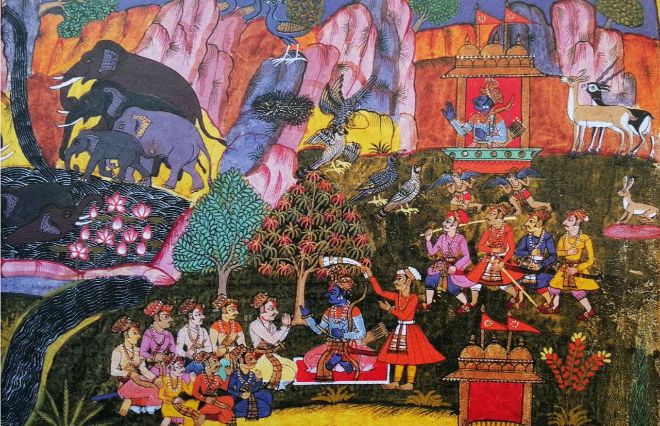
It will never be known if Rama is someone who lived. The great epic of Ramayana, the book that describes his life, was written in the 1st millennium AD when India was conquered by the Aryans, the light-skinned horsemen from the north of the country.
Rama’s adventures might have been built around the life of a true prince who lived in the north of India between 1000 and 700 BC. There is no doubt that their adventure played an important role in the Hindu religion, just as much as the impact of the Aryan invasion had on the history of India. As is known, there is no single central figure in Hinduism. However, in the Hindu tradition, Rama’s majesty shines brightly.
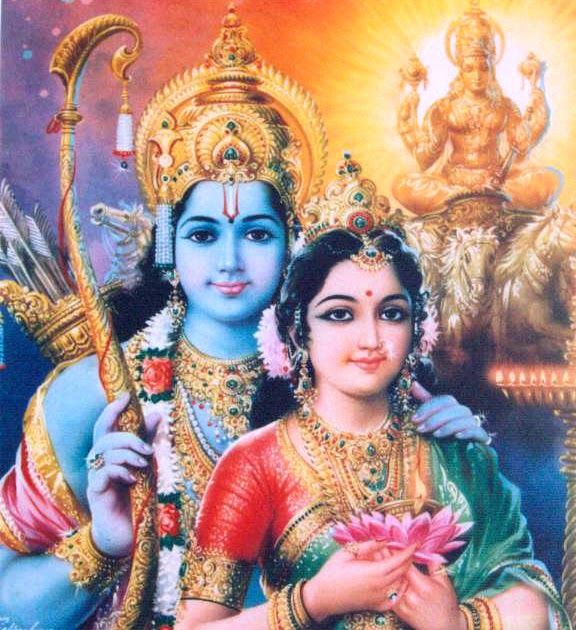
According to legend, Rama enters the magical Dandaka forest after leaving her father’s palace. Here he rescues a series of holy men from the hands of evil spirits. This, however, attracts the wrath of Ravana, the guardian of this forest. Ravana is the ten-headed demon king of Lanka island. To take revenge on Rama, he deceives Rama’s wife Sita, and takes her to his castle.
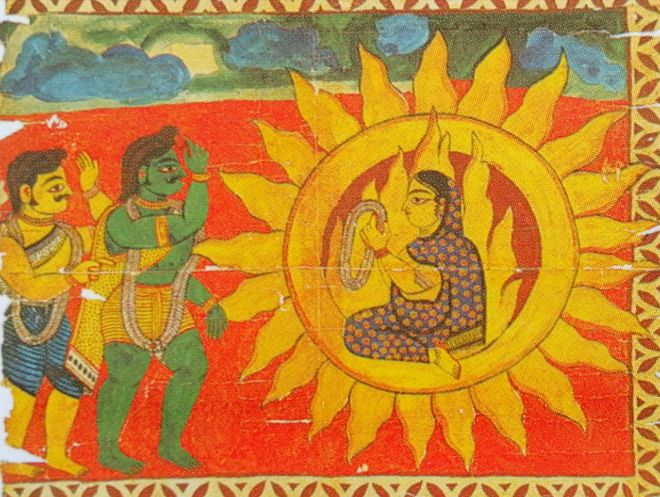
Rama has no companions, but he is so virtuous that an army of bears and monkeys offers to help him. They build a bridge over the strait that separates Lanka, ravaging Ravana and saving the princess. Rama is reluctant to take Sita. He is afraid that he may have lost his virtue while he was in prison. Sita jumps into a fire, but never burns.
Valmiki appears in his own story
After Rama returns victoriously to Ayodhya, the capital of Kosala, he wears the royal crown with great celebrations. However, his journey is not over yet. There are rumors about the purity of his wife Sita. Rama drives Sita to the forest as a prisoner of his perfectionism. Sita goes under the patronage of the great wise Valmiki and gives birth to two sons. When the boys grow up, the family reunites for a short time. Sita suggests that she is innocent and wishes the earth split and swallows her. Her wish comes true. Rama gives up his land in favor of her sons and climbs to heaven.
Every Hindu is familiar with the Ramayana’s 24,000 couplets (slokas). The epic is said to have been composed in Sanskrit, India’s traditional language, by the wise Valmiki.
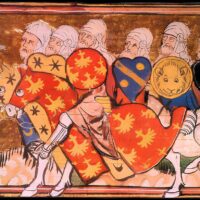
The Ramayana epic’s subject of integrity and bravery in the face of a series of tests and provocations may be describing the character of an Aryan prince; the name “Aryan” means “noble” in Sanskrit.
Rama is said to be the seventh body that the Hindu deity Vishnu wears. Rama is a sign of courage, but it also represents God’s teaching and the personal way to salvation. Sita, on the other hand, is perfect for a pious, chaste Hindu lady. Lakshmana, Rama’s half-brother, and friend is a symbol of loyalty. Hanuman, the Monkey Commander, is revered as an example of full devotion to a celestial ruler.
Rama’s story becomes a movie, Gandhi’s death, and the demolition of a mosque
Around 1,000 years ago, Hindus started to revere Rama. Rama became the center of a cult known as Bhakti some 500 years ago. With the invasion of India by the Mongolian-born Mughal Empire in the 16th century, Muslims took control of the nation. The Hindu masses’ response was more cultural than political, and they were inspired by the poet Tulsidas (1532-1623), who effectively portrayed the Rama epic. Tulsidas was writing in Hindi, the northern and central Indian language. Many different versions of the Ramayana have been written in many languages and areas.
When Gandhi was killed, his final words were “Hey, Rama!” which translates as “Oh, God!” When a Ramayana adaptation aired on television in the 1980s, almost 700 million Hindus tuned in every Sunday morning for more than a year. Ramayana is also popular in Indonesia, where Muslims constitute the bulk of the population. A Thai monarch wanted the epic to be translated into his language two centuries ago. Since then, every ruler of this Buddhist kingdom has used the title “Rama” to demonstrate the legitimacy of their rule.
In 1992, a mob of Hindus demolished a mosque in Ayodhya, thought to be Rama’s birthplace, that had stood since the Mongolian invasion. 1,000 people were killed in the events that followed. In modern India, people still argue about whether secularism can beat the feeling that Hinduism stirs up in its regions.