Archaeologists excavating the remains of the Hittite city of Hattusa have uncovered graffiti dating back 3,500 years: red paint figures on the tunnel walls. To our knowledge, these roughly 250 characters are the only colored Anatolian hieroglyphs that have been discovered so far. The majority of Anatolian hieroglyphs discovered to date have been carved into rock or sculpted in relief. The discovery suggests that literacy in Hittite was not limited to the ruling class.
It is generally agreed that the Hittites, behind Egypt and Assyria, were the third most powerful civilization in the Eastern Bronze Age. Large portions of Asia Minor and the Near East were under their rule. Hittite Hattusa, which served as the capital from 1600 to 1200 B.C.E., was located about 93 miles (150 kilometers) east of Ankara, Turkey. In its prime, the city area was up to 445 acres (180 hectares), and it was surrounded by walls that stretched over 5.5 miles (9 kilometers). The city served as the seat of the great kings and had huge gates and temples.
Found in the underground passageway
Archeologists have previously seen inside a tunnel that led under a colossal fortress. The Yerkapi rampart was up to 130 feet (40 meters) high and over 820 feet (250 meters) long, and it was shaped almost like a pyramid. At the very top of the ramparts of Yerkapi stood a gate adorned with four sphinxes.
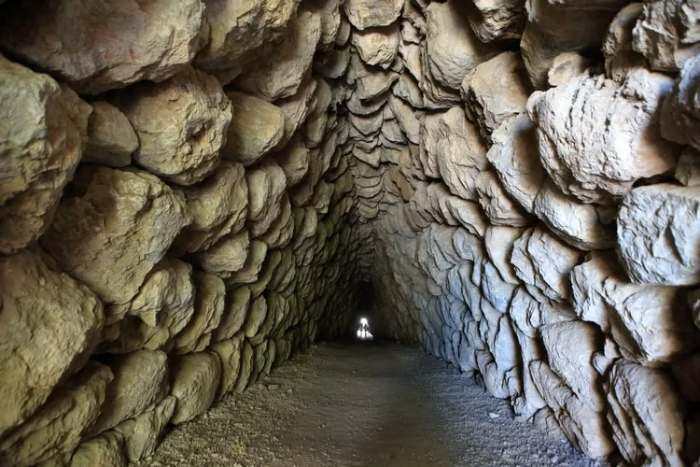
It has long been hypothesized by archaeologists that this impressive edifice was built not for defense but rather as part of a religious ceremony. In August 2022, an excavator was exploring the tunnel under the Yerkapi and saw some crimson markings on the tunnel’s only coarsely hewn walls. They were graffiti styles colored with a reddish-brown root paint on the walls.
Walls covered with colored hieroglyphs
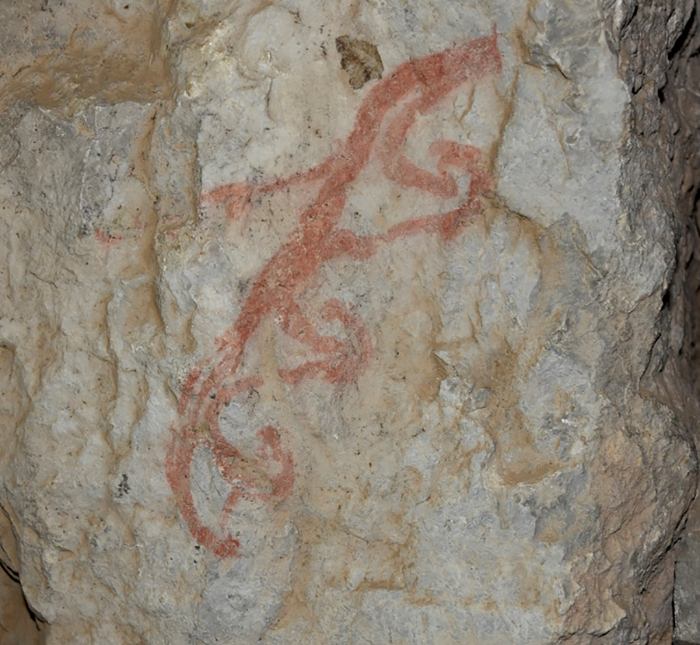
The investigation of the 249 characters discovered in the Yerkapi tunnel confirmed that they are Bronze Age Anatolian hieroglyphs, a pictorial script more often seen on rock monuments or seals in the Hittite Empire. Unlike other known hieroglyphs, however, they are not carved into a rock or fashioned into a relief. On the other hand, the Yerkapi’s signs were not only carved into stone, they were also colored. Archaeologists say that just two sites in the former Hittite Empire have yielded any examples of such colored inscriptions.
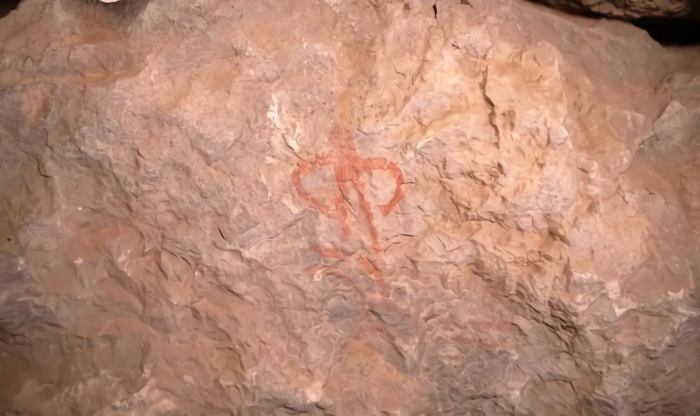
The discoveries at Yerkapi show that the use of Anatolian hieroglyphic writing was far more pervasive in Hittite culture than was previously thought. Initial investigations reveal that the Yerkapi monument in Hattusa is covered with graffiti featuring at least eight distinct sets of repetitive characters. Many of the inscriptions have been well maintained and may be read with just a little effort, while a few have been degraded beyond readability. The research indicates that many of the graffiti from the Bronze Age are names of persons or gods, while others serve as a kind of signal along the way.
The discoveries provide light on the Late Bronze Age in a way that was not anticipated. Archaeologists have digitized the whole building, including the hieroglyphs, and created a three-dimensional model of it to record this rare find.