It was not clear how much the Earth’s rotation had changed throughout the millennia, but observations of past solar eclipses have provided new evidence. These data imply that the Earth’s rotation was somewhat faster than predicted about 1,600 years ago but slower than the models predict for the last 1,400 years. The locations and periods at which Byzantine citizens were able to see a complete solar eclipse give evidence for this.
Our day-to-day life and the ticking of the clock are both timed to the rotation of the Earth. So, in principle, a day is 86,400 seconds long, which is the amount of time it takes for the Earth to complete one rotation. However, in reality, the rotation of the Earth fluctuates throughout the year owing to tidal forces, glacier melt, and other variations in the gravitational field. Leap seconds are added or withdrawn from the global standard time in various years to account for these differences.
In 2020, for instance, scientists found evidence of the rotational acceleration of the Earth; their measurements showed that days were up to 1.46 milliseconds shorter than predicted. The rate decreased again in 2021, yet it is still above the calculations.
Solar eclipses for the history of Earth’s rotation
So, how did this look hundreds of years ago? Telescopes and laser measuring instruments are recent inventions that allow us to accurately track Earth’s rotation. So, scientists have to depend on indirect clues to find out the Earth’s rotation in ancient periods. To top the list, we have solar eclipses. A total solar eclipse lasts just a few minutes and may be seen from a very small area of Earth’s surface (known as the “path of totality“).
To further confine the Earth’s rotation, scientists may utilize information about the times and locations of previous eclipses. This is because, given that the Earth rotated as predicted, models can be used to pinpoint the specific location and time of any prior solar eclipse. But if there are discrepancies, it means Earth’s rotation was either quicker or slower than recorded history indicates.
Scouring Byzantine archives for answers
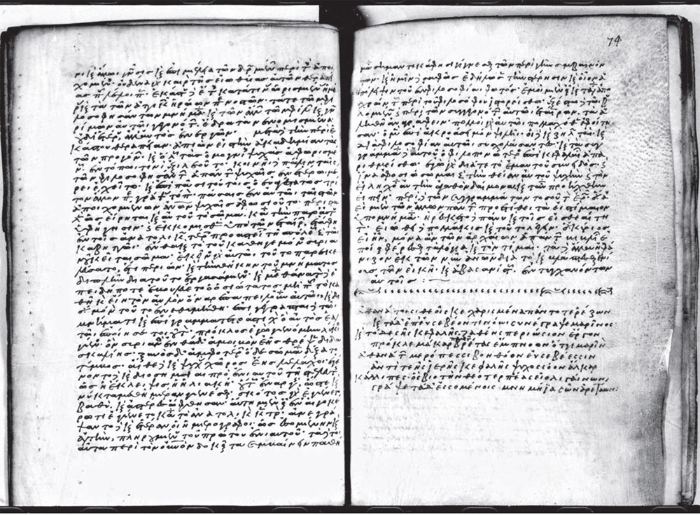
To better understand Earth’s rotation during that time period, a team of Japanese astronomers headed by Hisashi Hayakawa of Nagoya University looked through records of five solar eclipses that occurred between the 4th and 7th centuries, when such information was previously unavailable.
In order to do this, the group gathered and evaluated writings from the vast Byzantine Empire, which enclosed the whole Eastern Mediterranean. They were on the lookout for any mentions of the eclipses of 346, 418, 484, 601, and 693, all of which should have been seen in this area.
Researchers explain their methodology, which entails conducting tests on historical sources to determine which ones are the most credible. The path of totality was verified using descriptions of stars seen during the eclipse, and the observational data retrieved from the older sources was matched to current models.
Differences between data and model
The researchers were able to piece together enough information about all five solar eclipses to determine the Earth’s rotational period at the time. Therefore, the new Delta-T data closed a large gap and advised that values for the 5th century should be changed higher while values for the 6th and 7th centuries should be changed downward.
An ancient document from the 5th century attests that on July 19, 418, in Constantinople, the sky was clear enough to see stars during the middle of the day. According to the team, the city must have been directly in the line of totality for this eclipse to occur there.
Our knowledge of how Earth’s rotation changed throughout the ages is enhanced by these new data. They reveal the convection currents in the Earth’s mantle, global ice amounts, and the long-term evolution of sea level as geophysical contexts. This is because Earth’s rotation may be influenced by all of these things.