Who invented the telescope? The telescope enabled us to find our place in the universe and discover the fine balance deep in space and its treasures. We don’t know who made the first usable telescope or which genius predicted the future of this tool. But Dutch lens maker and inventor Hans Lippershey was the first to apply for a patent for the telescope in 1608.
The real inventor of the telescope, and the patent issues
Hans Lippershey was born in Wesel, Germany. In 1594, he moved to Middleburg, Netherlands (then the Dutch Republic). He got married the same year, became a Dutch citizen, and opened an optician in his city. Little is known about his life. What is known for certain is that he was the first to apply for a patent for the telescope, which he called “kijker” (Dutch for “observer”, also “binocular”).
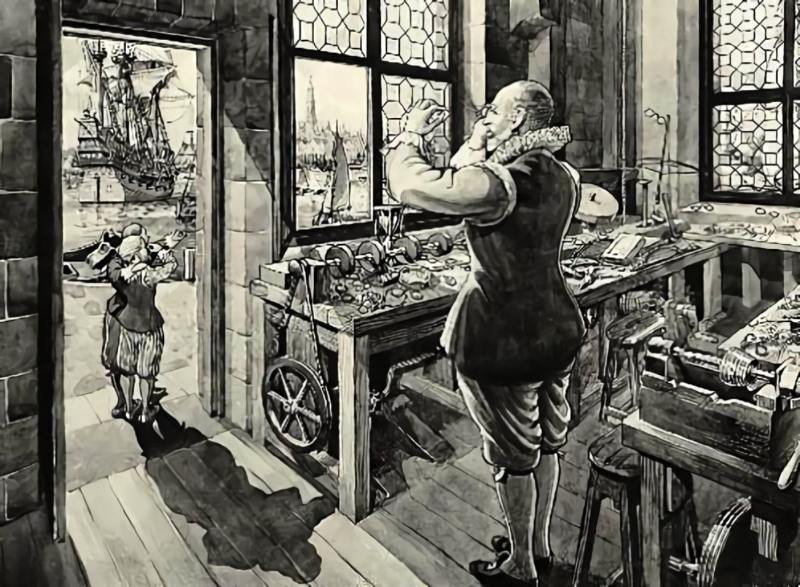
In September 1608, the inventor Lippershey went to the Dutch Republic’s political capital, Den Haag, and applied for a patent for his invention. But his discovery was turned down, saying it was too simple. The device was made up of two lenses placed at a distance inside a pipe. Nevertheless, authorities at Den Haag saw a future in Lippershey’s invention and commissioned him to make a telescope with three lenses (or binoculars) used with both eyes. The Dutch Parliament made a generous payment to Lippershey for his work. The money he received was more than enough for him to buy and repair the neighboring house.
However, the Dutch Parliament had several reasons to reject the patent application: Within a few weeks, another Dutch spectacle-maker, Jacob Metius (1571-1630), made an application very similar to that of Lippershey. Thus, a claim of priority regarding the invention of the telescope came up in the 1620s. Zacharias Janssen (1580–1638), who lived a few houses away from Lippershey’s, suggested that he find the telescope first.
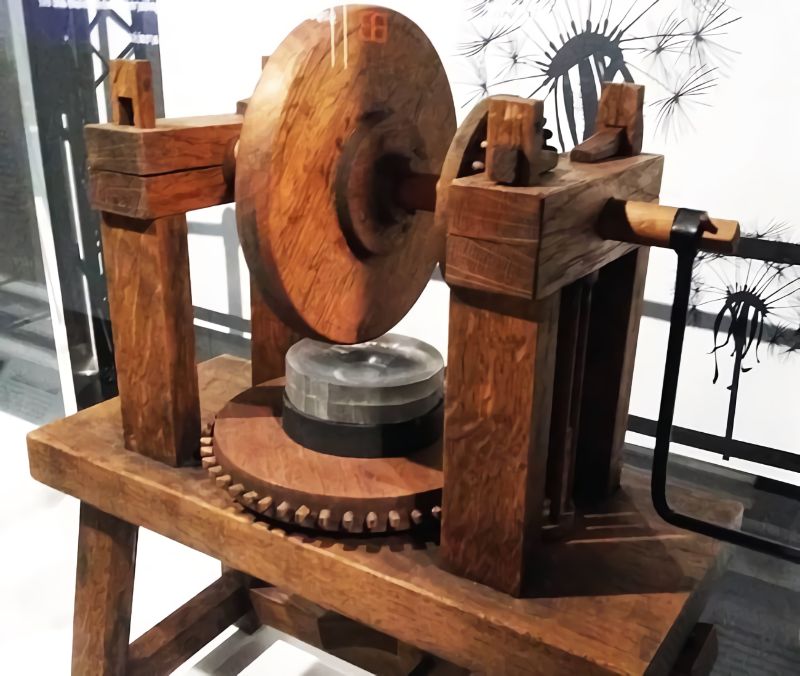
The oldest drawing of the telescope is from a 1609 letter sent by Italian scholar Giovanni Battista Della Porta (1535-1615). Della Porta later suggested that he found the telescope before Lippershey but died without proving his claim. In fact, it’s likely that many lens makers did align two lenses correctly and get enlarged images long before Lippershey, but they couldn’t see where what they were doing would lead.
Italian glassmakers’ role in the discovery of telescope
The telescope’s invention reached a turning point in 1609, when people who learned about it began to make their own telescopes and use them for a new and world-changing purpose. The new goal was to discover the sky. The first person to observe the sky with a telescope was the English astronomer and mathematician Thomas Harriot (1560-1621). Harriot made a drawing of the Moon he saw through the telescope on July 26, 1609. Galileo Galilei (1564-1642), who was much more famous than him, did the same drawing four months later with more details. He explained his magnificent findings in his book Sidereus Nuncius (The Sidereal Messenger) in 1610.
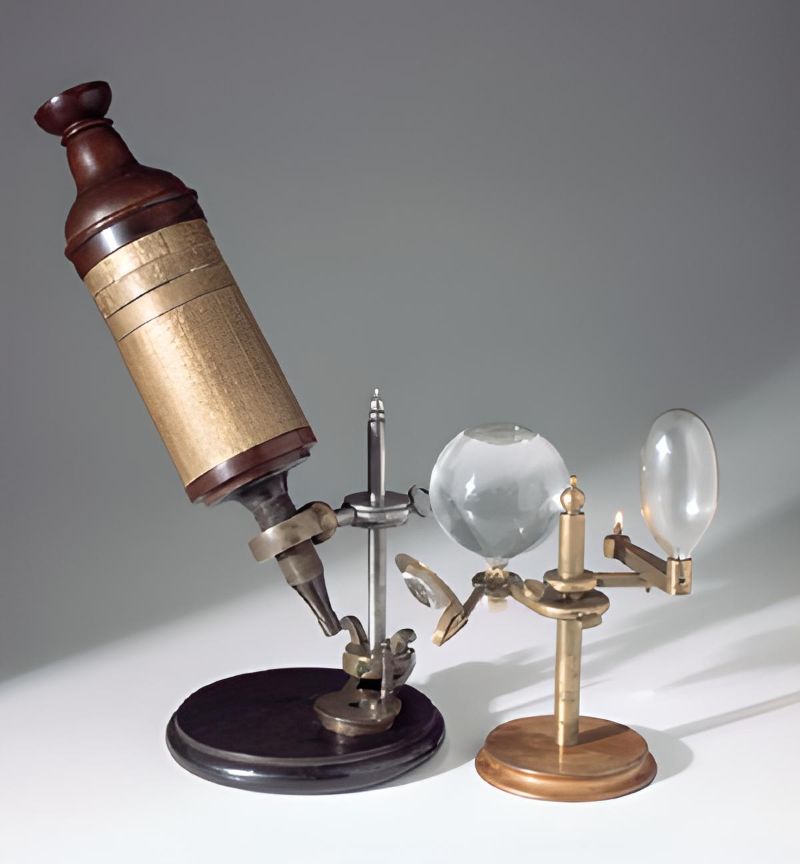
Hans Lippershey is usually honored as the person who discovered the microscope or, more precisely, the compound microscope (consisting of two or more lenses). But again, Zacharias Janssen developed this device almost at the same time. As a result, no patents were issued for the microscope, as any inventor who could place the two lenses at the right distance would get a larger image of the objects. But none of them were lucky enough to invent the telescope.
The city of Middelburg, where Lippershey and Janssen lived, was famous for glass production. The city owed this reputation to its superior lens grinding technique and its ability to produce fine, bubble-free glass, which it developed over the years. Working with high-quality glass was an innovation in 17th-century Northern Europe. The production secret for the glass was taken from Italy, which had held a monopoly on quality glass since the 13th century. Besides the lens producers from Middelburg, the Italian glassmakers of the 13th century deserve to be honored for their contribution to the emergence of these extraordinary inventions that changed the world in some way. The invention of the telescope is among these honors.
Did Galileo Galilei invent the telescope?
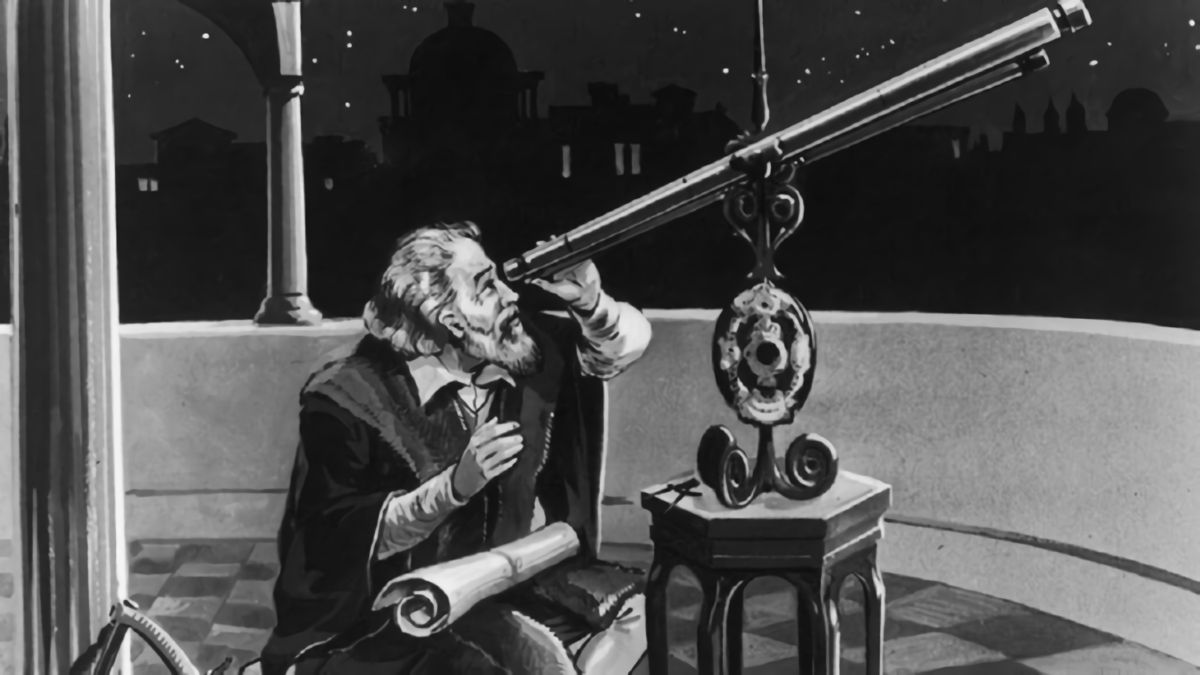
Although Lippershey is a skilled craftsman in all aspects and filed for a patent for the telescope, Galilei is considered the true hero of this story. His detailed observation of the Moon, as well as his observations about Jupiter’s moons, overturned the dogmatic theory that the Earth was in the center of the universe. With Galilei, the invention of the telescope gained new meaning.
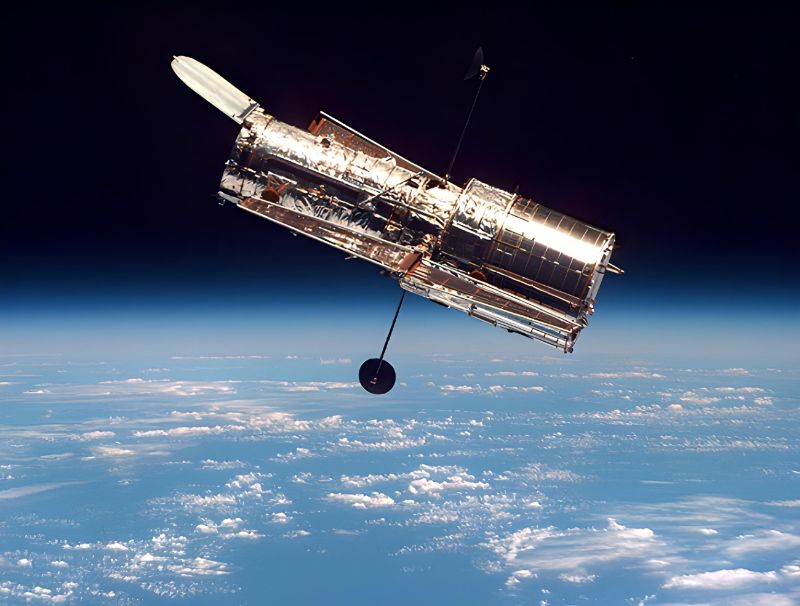
Hubble used a concave mirror, not an objective lens, to collect the light. The built-in camera takes incredibly clear pictures of all kinds of celestial objects using the collected light.
By developing this simple telescope design, Galileo invented his own device with a magnification of eight times in August 1609. Lippershey’s device could only triple the magnification. Galileo, who also tried compound microscopes in the 1610s, became the first person to make biological observations through a microscope in the 1620s. Galileo was a great thinker. He is often referred to as the forerunner of physics or even modern science. He was a very complete scientist rather than an inventor. Even though he found the early thermometer and a geometric caliper, he did not invent the telescope.