Archimedes of Syracuse was the greatest and most famous inventor of the ancient world and also one of the greatest mathematicians. From his writings that have survived to the present day, we have extensive knowledge of his discoveries in the field of mathematics. However, the details of his most important inventions are only available today thanks to the notes held by their contemporaries.
Who was Archimedes?

Archimedes was born on the island of Sicily, then called Syracuse, which was a colony of the Greek Empire at the time. There is very little information about his life or personality. The things that are known are based on the interpretations of historians who lived in the same period or in the centuries that followed. The most important source is the Greek historian Plutarch (circa 46–120 AD), known for his stories about the historical personalities of Greece and Rome. According to Plutarch, Archimedes’ father was an astronomer, and his family had close ties with the Syracuse ruler King Hieron II (306-215 BC).
King Hieron asked Archimedes to design a pump to drain water from the ship for his journey to Alexandria, Egypt. Archimedes found a simple but brilliant solution. This device, now known as the Archimedes’ Screw, was a large helical screw housed inside a pipe, and as the screw was turned, the water was drawn up.
The invention was so effective that it soon became available in many countries for agricultural use. The Archimedes’ Screw is now found in factories, earthmoving businesses, pumping rainstorm runoff, or lifting water or wastewater. Also, it is still used in agriculture all over the world.
Archimedes combined mechanical and experimental principles with mathematics. He saw a close relationship between the disciplines. He studied the mathematical studies of his time in Alexandria and soon expanded them. It was his remarkable mathematical proofs and thoughts that inspired his genius.
Simple machine designs
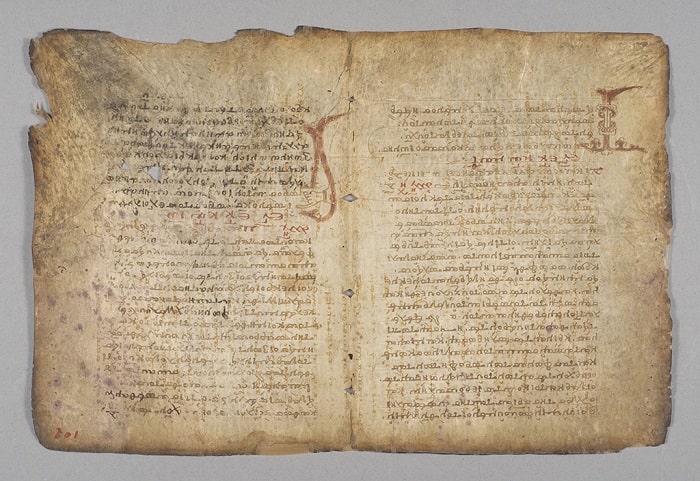
Although none of Archimedes’ original papers have survived to this day, there are several copies of the papers that went on for about 1000 years after his death. The most important of these is a manuscript on parchment from the 11th century. This work contains Archimedes’ writings engraved; there are some Christian prayers written, and it is all part of a book.
This book is now known as the Archimedes Palimpsest, and it was actually sold at an auction in 1998. Scientists have used the most advanced techniques to “see the inside” of the Christian text and read Archimedes’ handwriting for the first time. The analysis’ most important finding is that Archimedes discovered some principles of the mathematical calculation technique known as calculus today. This technique, which is of great importance in terms of modern science and technology, was devised only in the 17th century by Isaac Newton (1643–1727) and Gottfried Leibniz (1646–1716).
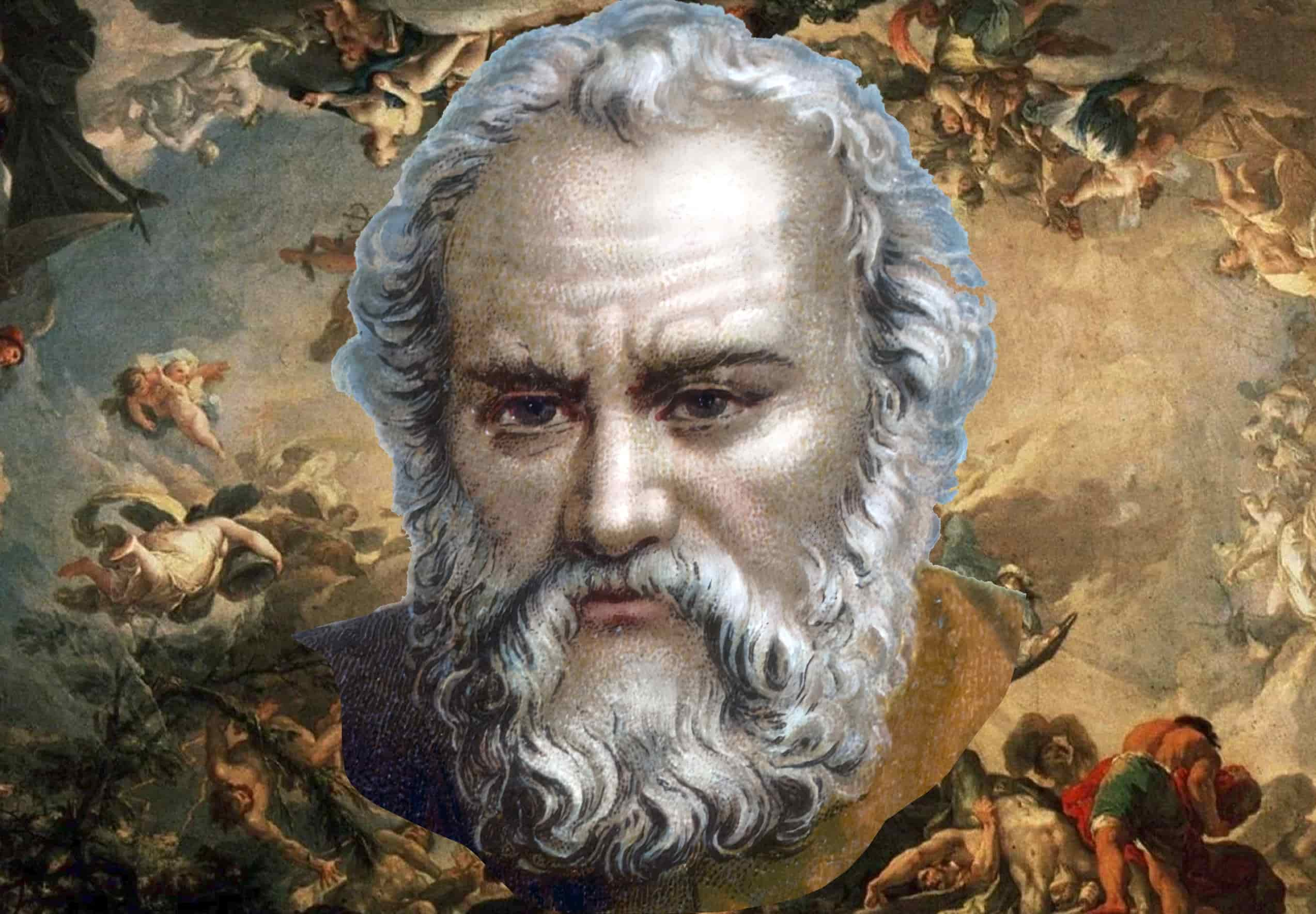
Using a method that corresponds to applied mathematics today, Archimedes calculated the location of the centers of gravity of various objects and solved the mathematical principles that are fundamental to “simple machines,” such as levers, pulleys, and gears.
He created the first odometer (a device that measures travel distance) using his understanding of gears, a clock that strikes every hour, and a device that forecasts the positions of the Sun, Moon, and the five known planets at the time.
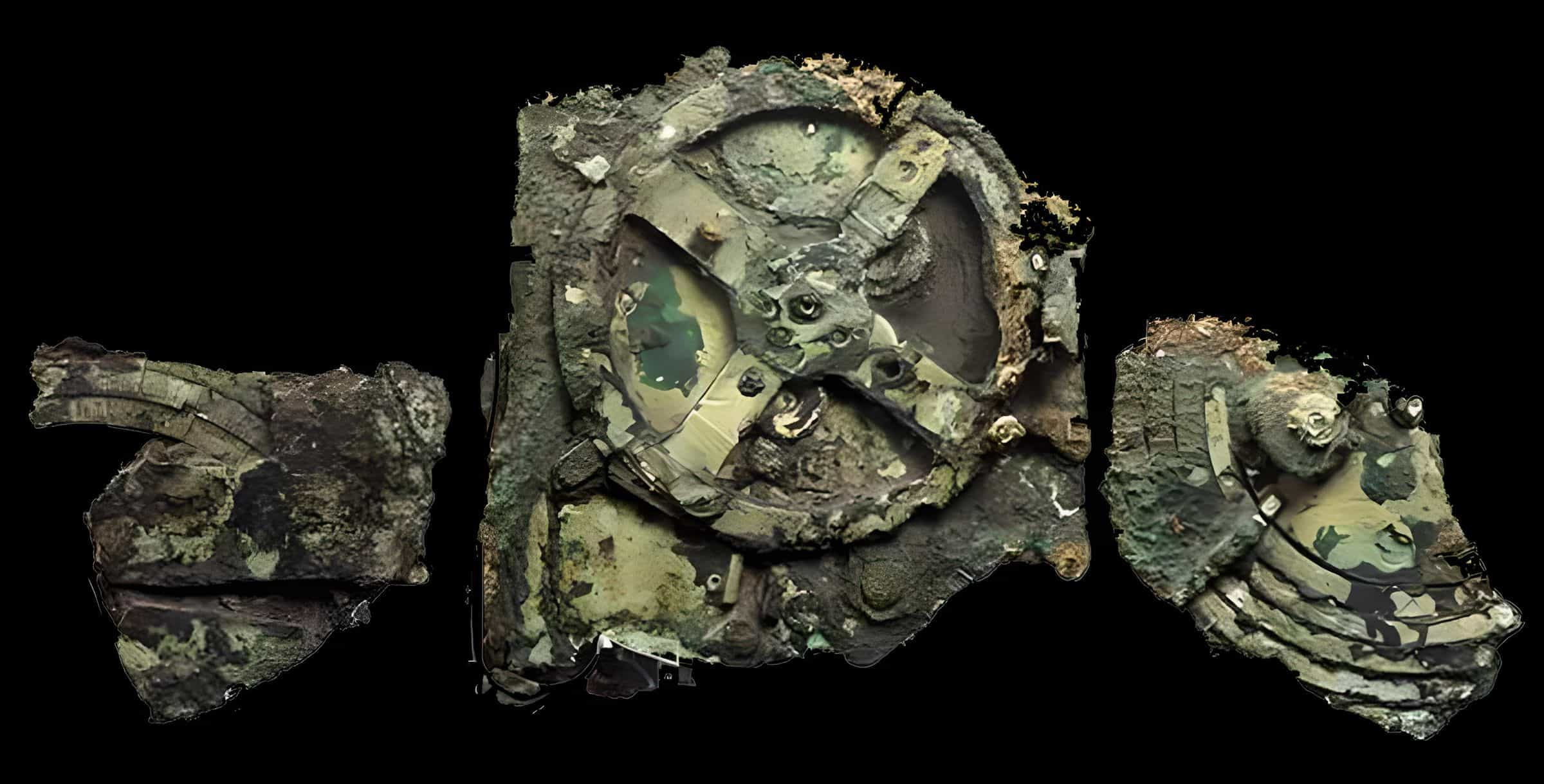
In 1900, divers found a device in a shipwreck lying off the Greek island of Antikythera, which is 2000 years old. The device is called the “Antikythera mechanism,” which scientists described as an ancient celestial computer. Some historians believe that this device is closely related to the work of Archimedes.
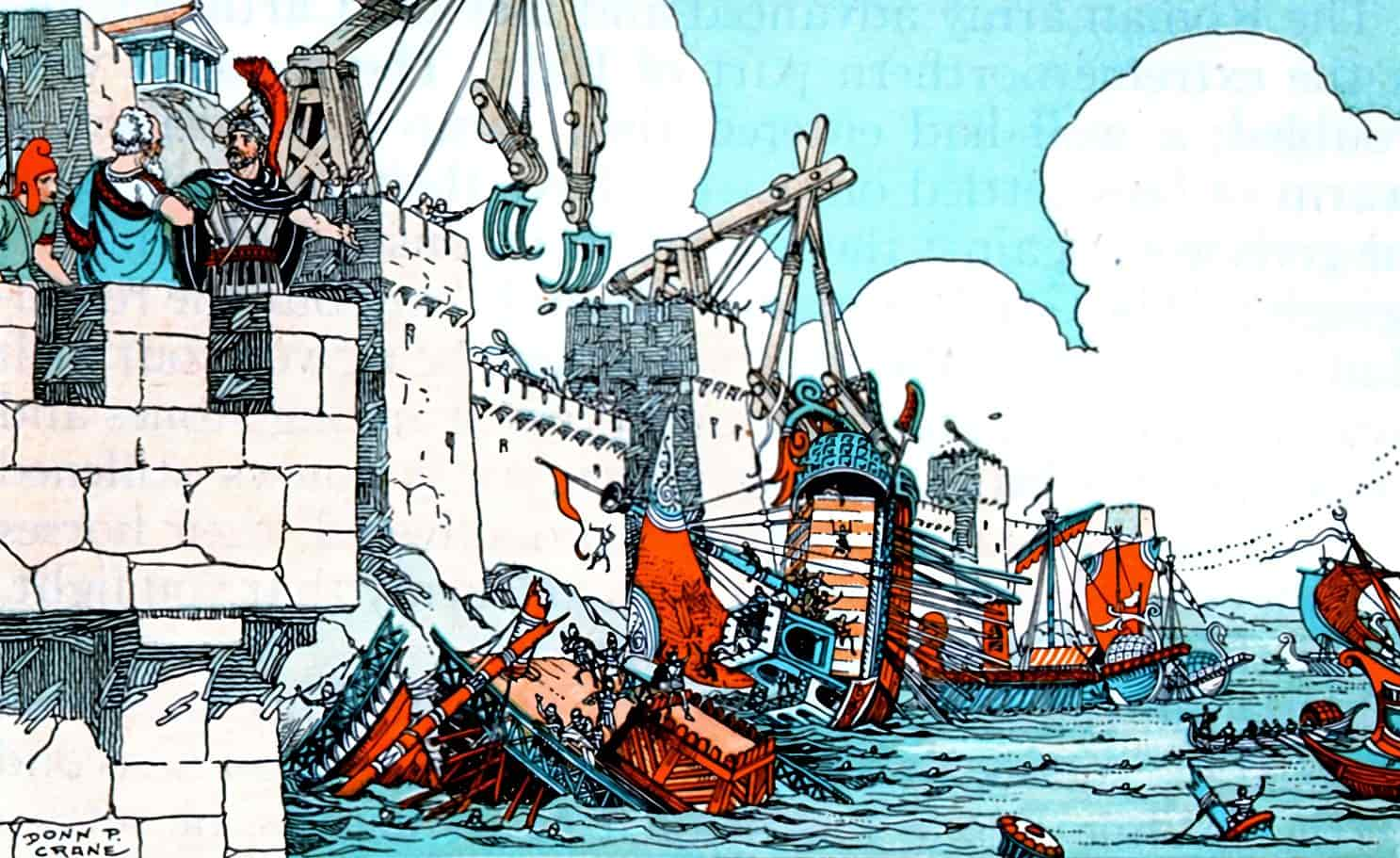
Among Archimedes’ discoveries, the most popular at his time were the weapons he had developed to defend Syracuse during the Roman siege of the city in 214 BC. Among them, the most famous was the Claw, a type of crane fastened to a wall that lifted the Roman ships into the air and then dropped them to capsize.
Pulley system
In ancient civilizations, the lever, inclined plane, wheel, axle, wedge, and pulley, which physicists called “simple machines,” were widely utilized. Archimedes is known to be the first person to use two reels together to exert tremendous power. This device, known as a pulley system, is currently used for lifting and towing heavy loads.
According to Plutarch, Archimedes developed this apparatus to respond to King Hieron after he claimed that there was no such weight that a lever could not reposition. Hieron told Archimedes that it was impossible for him to move the giant ship called Syracusia. The ship could only be towed by a group of powerful men. However, Archimedes was able to move the ship full of cargo and crew only with one hand, not with a lever but with a pulley system.
Archimedes quotes
“Mathematics reveals its secrets only to those who approach it with pure love, for its own beauty.”
“Man has always learned from the past. After all, you can’t learn history in reverse!”
“Give me a place to stand, and a lever long enough, and I will move the world.
“Rise above oneself and grasp the world”
“Those who claim to discover everything but produce no proofs of the same may be confuted as having actually pretended to discover the impossible.”
“There are things which seem incredible to most men who have not studied Mathematics.”