In everyday life, exact measurement is not important. A wooden bowl may be enough to divide the grain evenly, but scientists interested in the size of microscopic objects have needed precise instruments. Simple or complex, there are measuring instruments made for all sorts of purposes throughout history. The oldest standard measuring instrument may be the grain measure: Fixed quantities of grains such as wheat or barley were used as standard units of mass in ancient times. So let’s take a look at the invention and historical development of measuring instruments.
- Global Measurement Standard
- Measuring Rod – 2650 BC
- Lead Weight – 250 BC
- Roman Set Square – 1st Century BC
- Jade Weight – Date Uncertain
- Circumferentor – 1676
- Vernier Caliper – 17th Century
- Spring Scale – 18th Century
- Cased Balance – 18th Century
- Scale – 18th Century
- Micrometer – 18th Century
- Standard Weights – 19th Century
- Brass Half-Circle Theodolite – 19th Century
- Surveyor’s Chain – 19th Century
- Nesting Cups – 19th Century
- Laser Distance Meter – 21st Century
- Laser Spirit Level – 21st Century
- Modern Micrometer – 21st Century
- Analytical Weighing – 21st Century
- Conical glass container – 21st century
- Graduated pipette – 21st century
Global Measurement Standard
In scientific experiments or studies, measurements must be made with an appropriate level of rigor and accuracy to guarantee that the results are reliable. Scientists need measuring instruments that use universally defined standard units to get acceptable margins of error. Today, almost all countries use the International System of Units (SI) – the modern form of the metric system – which was introduced in 1960.
Measuring Rod – 2650 BC
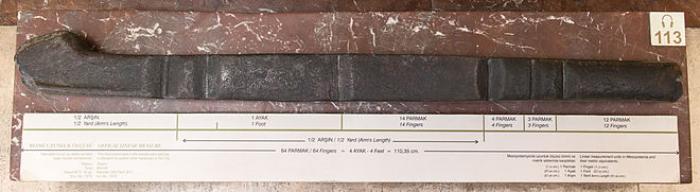
A copper-alloy bar discovered in Nippur is the oldest measuring rod and one of the oldest known measuring instruments. It is asserted that the bar was used as a measuring standard and that it was created around 2650 BC. This strangely labeled graduated rule was based on the Sumerian cubit which was around 518.5 mm (20.4 in).
Lead Weight – 250 BC
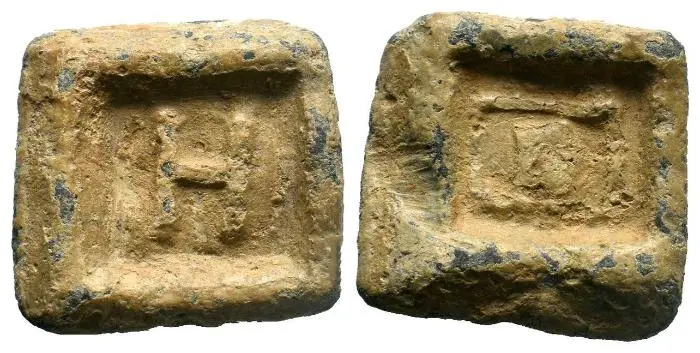
Greek merchants traditionally used rectangular-shaped leads as standard weights. These varied from a few centimeters to a few millimeters and were inscribed with Greek letters.
Roman Set Square – 1st Century BC
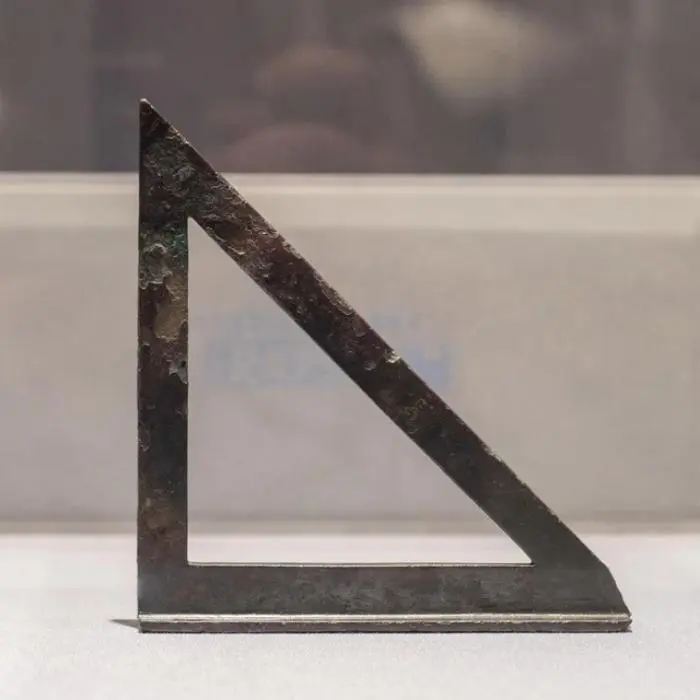
Roman set square was an important measuring instrument for Roman builders, enabling them to create perfectly square blocks. The example below comes from the ancient city of Herculaneum in Italy. They would place the square against the surface and draw a line, then turn it and draw another line on top to make a 90-degree square.
Jade Weight – Date Uncertain
In early Chinese society, precious minerals such as jade were used as a standard of weight. The ancient jade sample below was a standard unit of weight.
Circumferentor – 1676
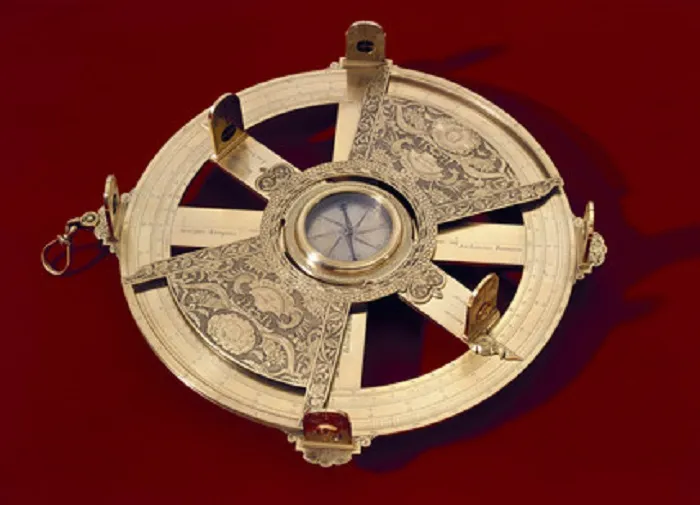
Before the invention of the precise measuring instrument the theodolite, the circumferentor, an instrument used by architects, was used to measure angles and the vertical and horizontal distances.
Vernier Caliper – 17th Century
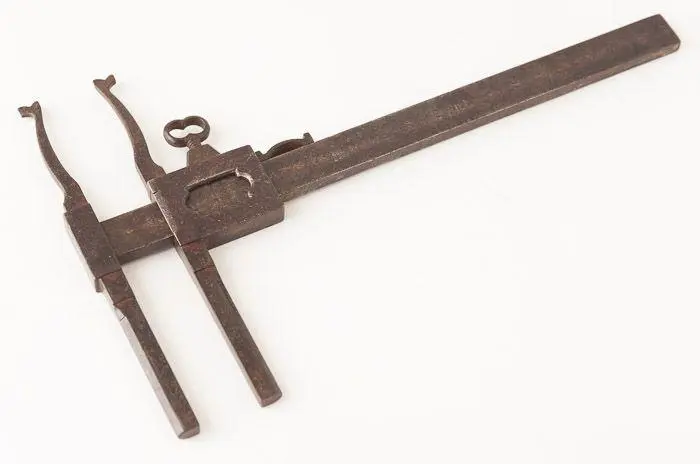
In 1631 Paul Vernier invented a sliding scale to make small measurements with high precision. The principle of the Vernier scale is used unchanged for its modern counterparts.

Spring Scale – 18th Century
Originally introduced in the 18th century, the spring scale worked with a spring that compressed in proportion to the applied force, i.e. weight. The dial could be set in units of mass (e.g. kilograms) or force (Newtons).
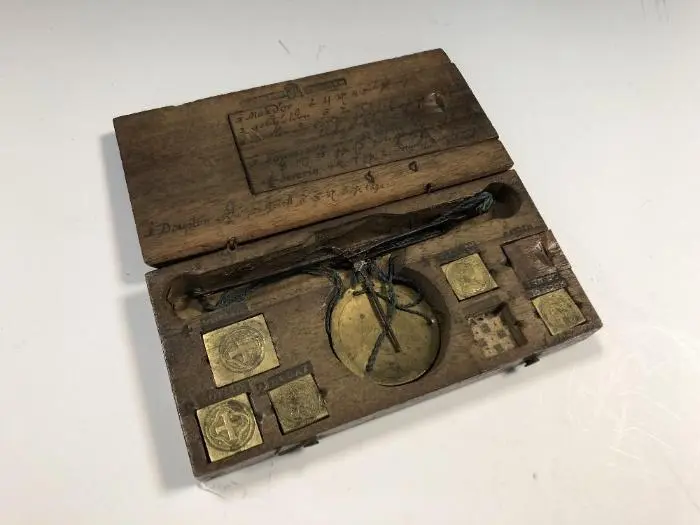
Cased Balance – 18th Century
In the 18th century, the balance beam was used in medicine and science, but small portable scales called cased balance were also used to measure coins.
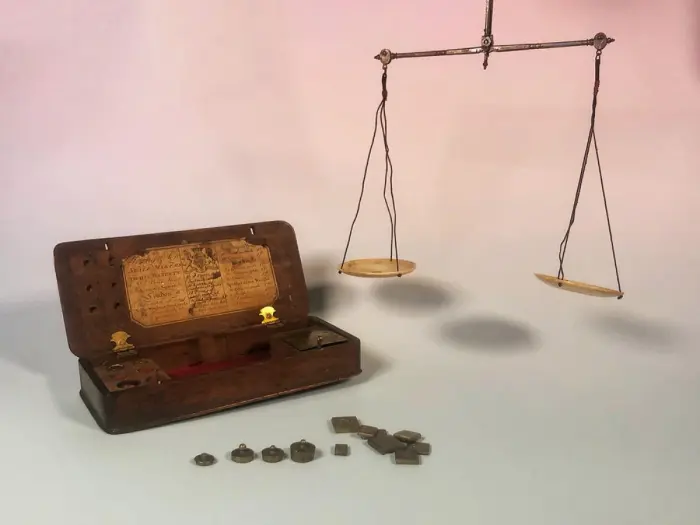
Scale – 18th Century
The first scale used to this day appeared in the 18th century. It was based on the logic that an unknown weight is balanced by known weights until it reaches an equilibrium point.
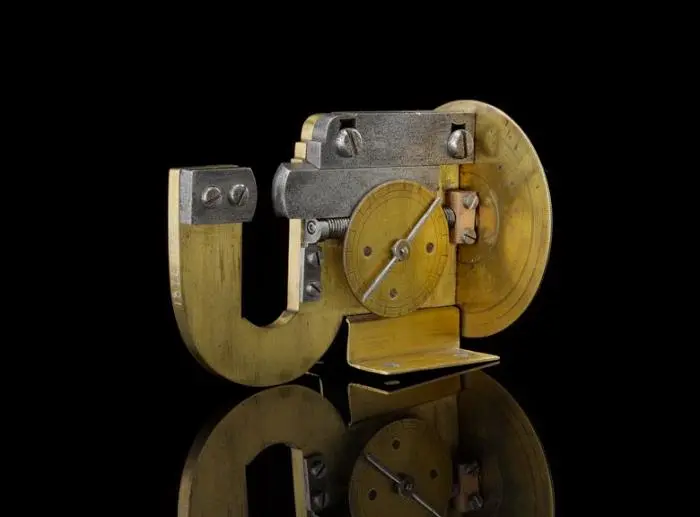
Micrometer – 18th Century
Invented in the 18th century, the first micrometers ushered in the era of precision engineering; these adjustable screw-like devices enabled the precise measurement of small lengths. The measurement was taken where the screw touched the measuring device. Watt’s micrometer dates from 1776 and is probably the first screw micrometer ever made.
Standard Weights – 19th Century
In the past, many nations used the pound as the standard unit of weight, but after the 19th century, countries switched from pounds to kilograms.
Brass Half-Circle Theodolite – 19th Century
A theodolite is used to measure vertical and horizontal angles and is an important tool for architects. The instrument’s telescope focuses on a distant object whose position is defined by vertical and horizontal scales.
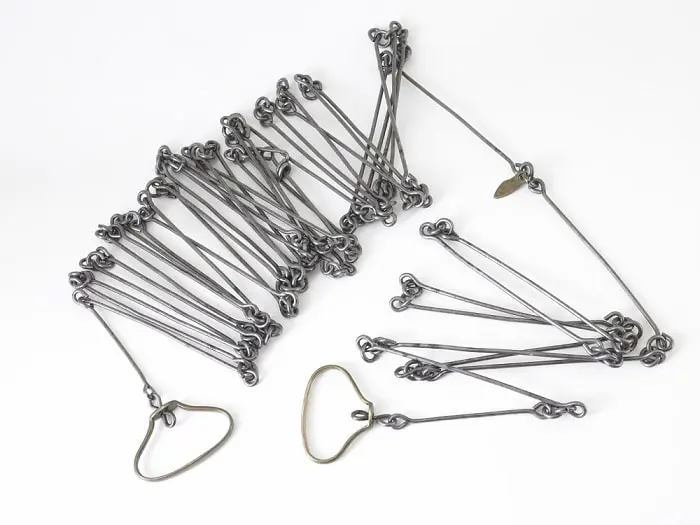
Surveyor’s Chain – 19th Century
Land surveyors started using chains around 1600 which was invented by Edmund Gunter. In surveyor’s chain the chains are attached to each other with fixed lengths. A Gunter’s chain has 100 links that are joined together by two rings and measures 66 foot (20 meters) in length. Each link is 7.92 inches (201 mm) long.
Nesting Cups – 19th Century
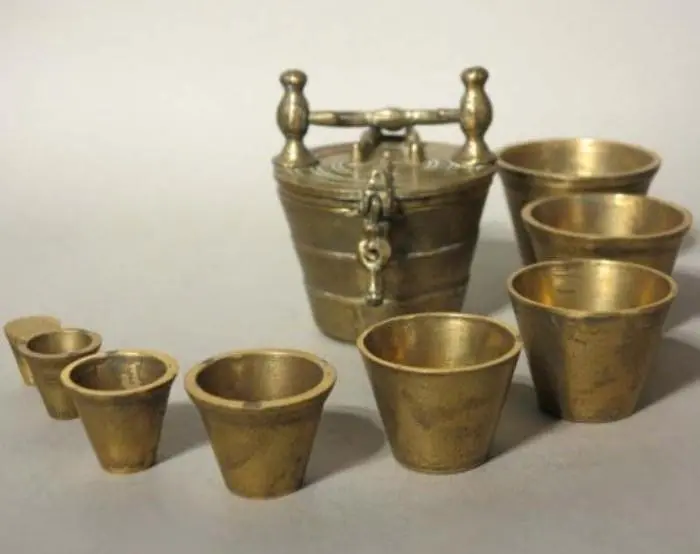
Standard cup-like weights used as balancing weights in mechanical balances. Nesting cups can be nested in multiples.
Laser Distance Meter – 21st Century
Laser distance meter, fires a laser beam at a distant object and measures the time it takes for the beam to reflect off the object and return. 14 years ago, Leica Geosystems invented the first laser distance meter, the Leica DISTO, revolutionizing measuring instruments.
Laser Spirit Level – 21st Century
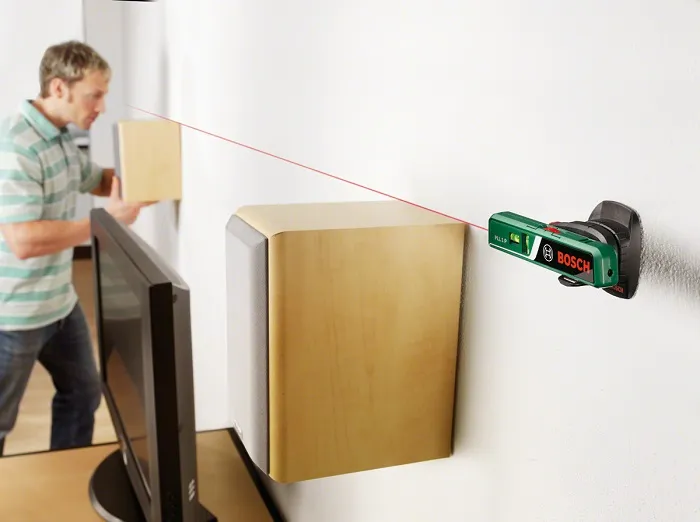
It is an instrument used in construction to measure vertical angles and the level it measures indicates the horizontality of the plane along the laser beam.
Modern Micrometer – 21st Century
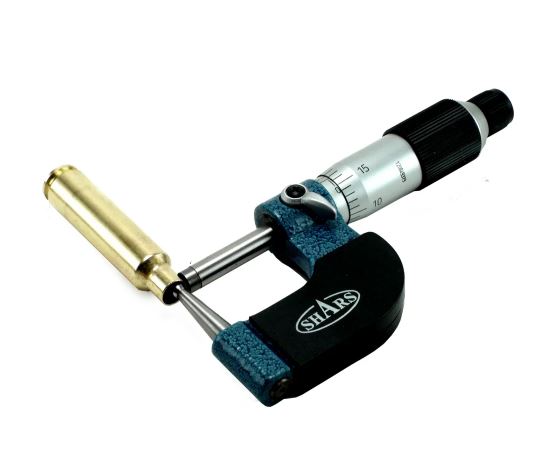
Most modern micrometers, which is used by encircling an object, function as a caliper that can measure very small distances. It has numbers around a movable screw and a measuring rod at the front.
Analytical Weighing – 21st Century
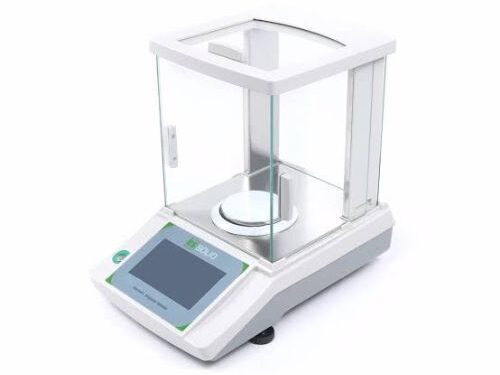
Analytical scales, the most sophisticated modern digital scales, can measure small fractions of a gram and are highly sensitive and protected from air movement, dust, and vibrations.
Conical glass container – 21st century
The conical glass vessel is used as a hand-held container in which chemical reactions are carried out in experiments where the total volume is not known with certainty.
Graduated pipette – 21st century
Glass pipettes divided into millimeter fractions can precisely measure liquid volumes drop by drop. It is employed to precisely measure and transfer a liquid volume between containers.