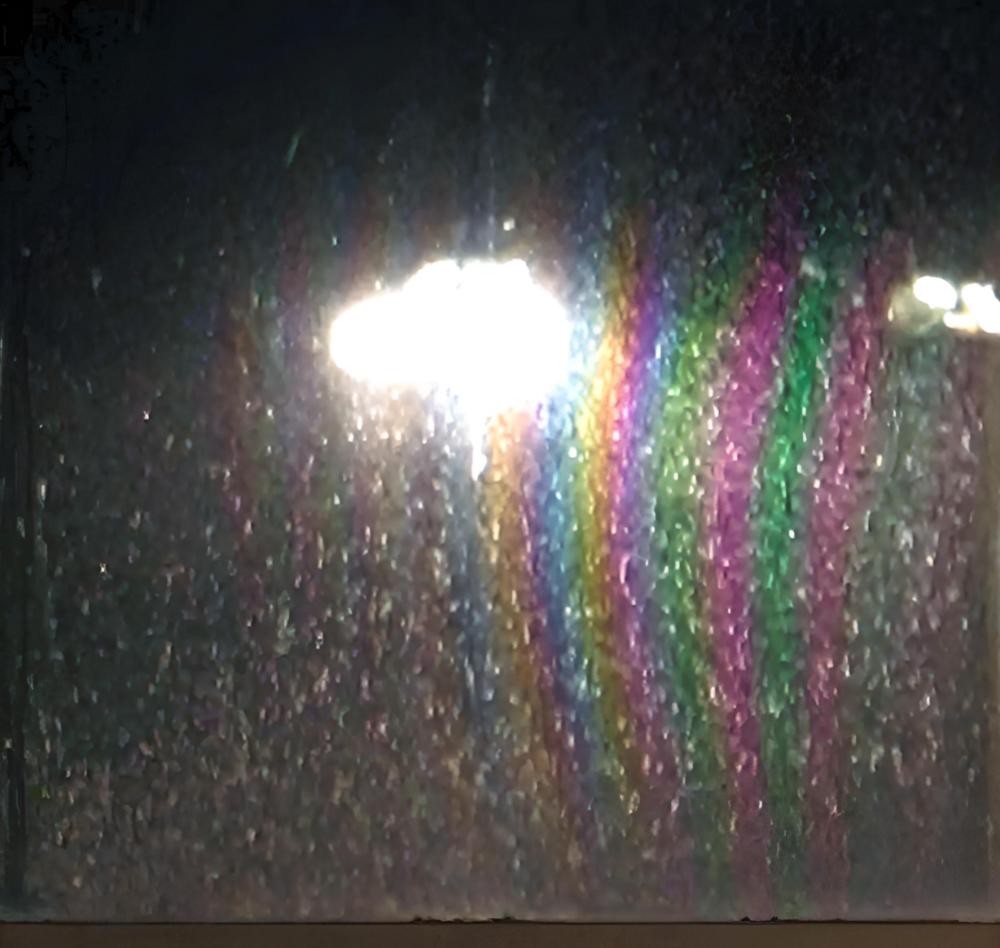
A strange event was captured on camera as a photographer tried to look through the window of a deserted building at night. The lens focused on the dirty window, and the camera flashed on its own. The outcome was a picture of light refraction on glass. It was framed by a rainbow of stripes. When an automobile is parked under a window, the reflected headlight can be framed by the exact same effect. This is an optical phenomenon called “Quetelet rings.”
This photograph above taken through a dirty mirror reveals the rings of Quetelet as slightly curved stripes. The reflex divides the color spectrum at the maximum of zero diffraction. It continuously transitions from blue to red.
The discovery of the effect
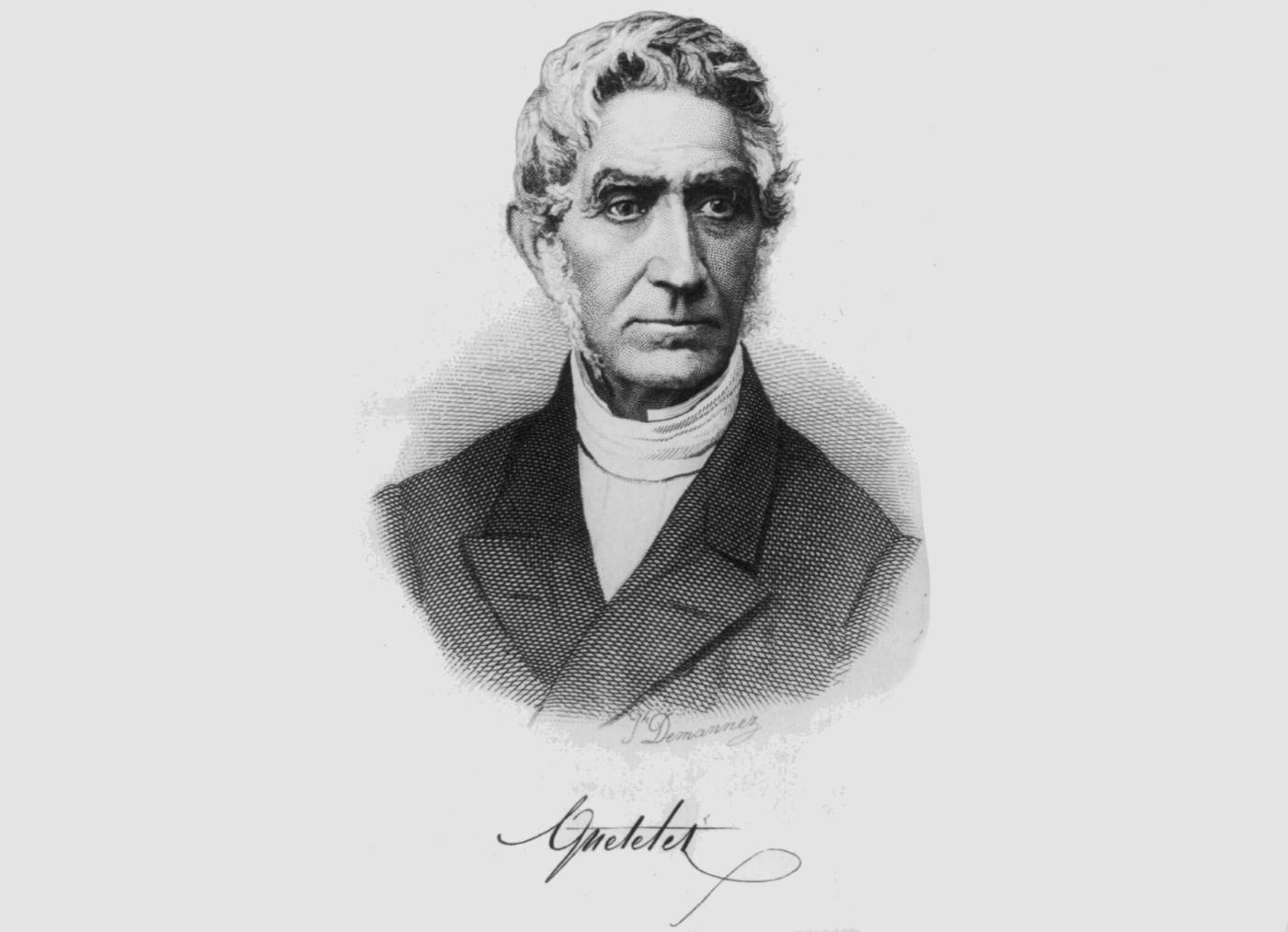
The creation of this effect on a window is determined by a thin film of dirt. Because once the window area is cleansed, it no longer shows the colors of the Quetelet rings. Because of this, we can rule out the interference phenomenon, which is noticeable in double-paned windows and becomes more pronounced after cleaning. Adolphe Quetelet (1796–1874), a multitalented Belgian scientist and astronomer, is honored with the moniker “Quetelet’s rings” for his contribution to explaining this finding.
In daily life, we see spectrum-colored rings that look remarkably similar to so-called corona (multi-colored disks). Under the right atmospheric circumstances, they form around the sun or moon and are produced by microscopic particles in the air like dust, pollen, or water droplets. There are times when all you need is a fogged glass to make out a lantern glowing through a ring of bright colors.

It is essential that particles of the same size scatter the light in these corona events. When it comes to the Quetelet rings, this is obviously not the case, since we are dealing with a dust coating produced at random from grains of varying sizes and compositions. Moreover, what we see is a reflection of the light, rather than the light itself. In addition, the colorful rings often do not surround the light reflection itself but rather seem to rotate about some other point, as if the two events were unrelated.
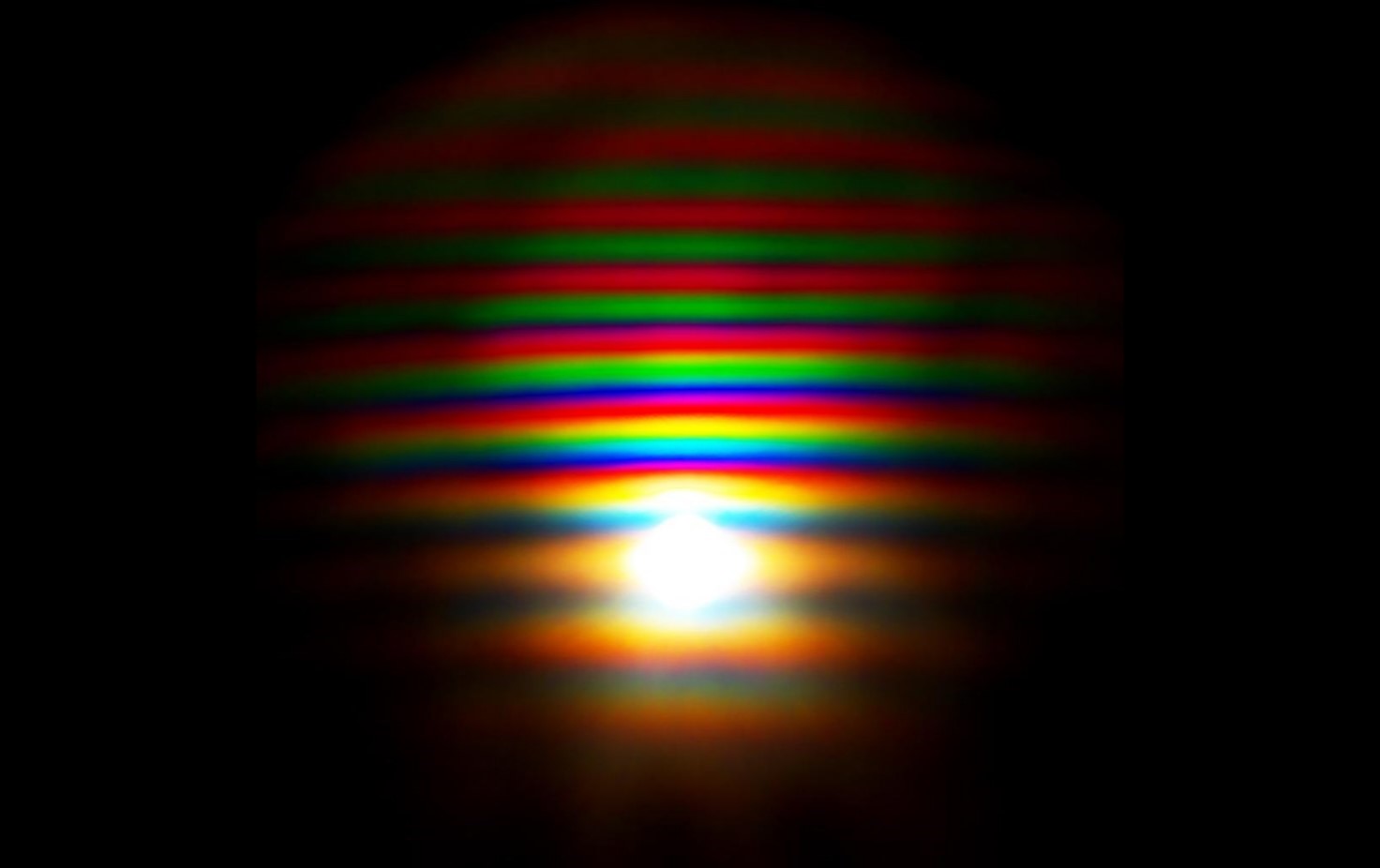
The sunlight streams in through a filthy window and illuminates it vertically. Several ring colors are clearly evident. Here, they are aligned with the zeroth diffraction order.
However, a closer inspection reveals that the monochromatic light spot is located in a prime place. This is the order of zero diffraction. Instead of being in the middle, as it would be in a typical corona, this one may be seen on the outermost ring. On each side of them, a colorful arc was formed by the intersection of the first, second, and higher diffraction orders. When seen in the zeroth order, the colors in the subsequent stripes always flow from blue to red. However, this sequence is inverted when viewed in the first order.
This property is unique to Quetelet rings. These exhibit the usual characteristics of a specular reflection as well. The arcs change direction in opposite directions as one traverses them, and the radii of curvature rise closer to the disk.
The requirements for the Quetelet rings
The involvement of small scattering particles is vital in many processes, including the production of the ring effect or corona. Quetelet’s rings are located atop a thin, see-through layer, like glass. A second layer is required for light reflection. The metal covering of a mirror or its back is ideal for this colorful effect.

If two light waves from the same source interact with the filthy window in just the right manner, an interference will happen. A particle of dust on the outside of the window will disperse one wave, which will then be reflected back through the window from the inside.
On the other side, one gets reflected backwards by the same particle before being distributed forwards. Deflecting and reflecting occur out of sync with one another, thus their courses diverge somewhat. The phase difference between them allows the light to be magnified in the eye or cut out on the camera sensor when they overlap.
The formation of the Quetelet rings
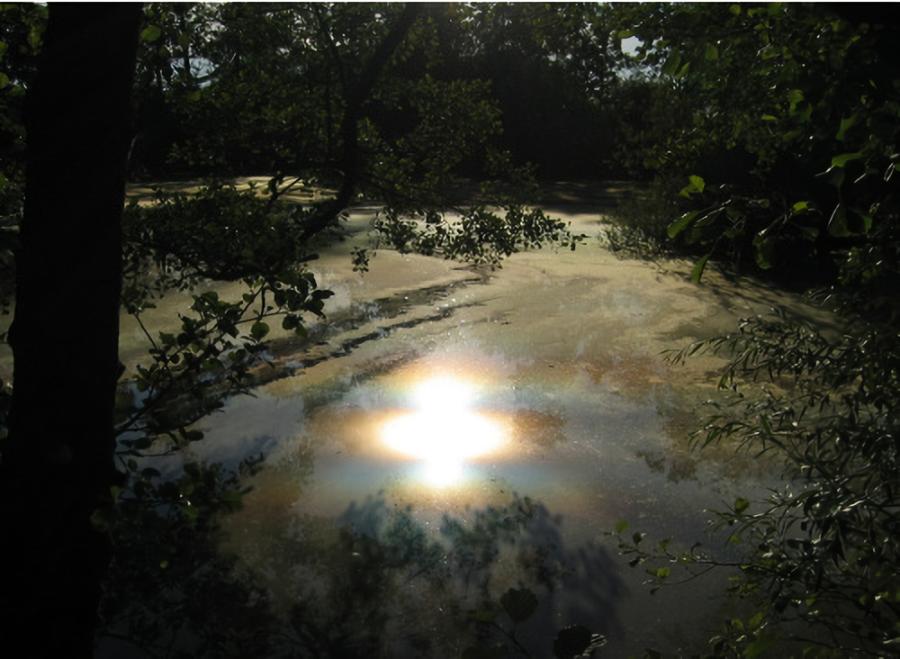
Quetelet rings are formed when two light waves traveling from a point source collide with a dusty mirror. A dust particle first disperses one of them, and then the back boundary layer reflects it. This also applies to the inverse situation. Spectral interference occurs when two or more colors pass through the eye at the same time.
A perfectly symmetrical casing may be seen by looking at its glass front from a perpendicular angle when, say, a spotlight or the sun is shining directly behind you. It doesn’t matter where in the plane the dust particles are located relative to the light source or the observer; as long as they’re all at about the same distance, they’ll all scatter the light in the same manner.
Finally, the maximum amount of zero interference is located in the geometric center of the concentric color circles. However, one blocks at least some of the light from reaching the eye. So, to see the Quetelet disks, people usually tilt their heads slightly to the side. With this change, the radiation source is reflected off of one of the rings, and the system’s center travels the other way.
Quetelet stripes may be created experimentally with little effort. A flat mirror coated with talcum powder or fogged with tiny drops of water can do the trick. At a distance of two to three meters from the mirror, using a light source as point-like as possible (such as a flashlight with the reflector removed) and holding the lamp up to your forehead, you may see colorful stripes surrounding the direct reflection. These rings have a central part whose location changes as the viewer shifts their gaze away from the light source.