The American space agency NASA was founded more than 60 years ago, making the United States the undisputed leader in the exploration of space. Let’s analyze how it came to be, how it operates, and what it hopes to accomplish on the Moon and Mars. NASA is the iconic agency of space exploration, yet it was founded in a completely different era from the one we know today. NASA was established to compete with the Soviet Union, which had the lead in space at the time. In only ten years, NASA was able to overtake the Soviets.
- What is NASA?
- What exactly does NASA do?
- What is NASA’s mission to the Moon?
- NASA’s plans for Mars
- The NASA headquarters
- The NASA telescopes
- What is NASA’s APOD?
- Who created NASA?
- Who owns NASA?
- Who funds NASA’s space programs?
- What is NASA’s budget?
- Can you visit NASA?
- The European counterpart to NASA
- How can I work at NASA?
- How to follow NASA live?
After successfully landing men on the Moon, it was able to revitalize existing initiatives and propose more ambitious new missions. It is not only the source of much of what we know about the cosmos and our solar system today, but also of many of the modern conveniences we take for granted.
Some of NASA’s most recognizable accomplishments include the Apollo program, which made Neil Armstrong’s Moonwalk possible, the Curiosity rover, which has been exploring Mars since 2012, and the Hubble telescope and its successor, James Webb, which have given us breathtaking views of the cosmos. Now that a permanent station orbits our natural satellite, NASA can return to the Moon for extended human exploration. It also hopes to send people to Mars to continue exploring the red planet.
What is NASA?
To keep the American space program on track, the federal government established NASA. The group was established in 1958, and its members have been hard at work ever since, creating tools and sending probes into space to learn more about the cosmos. NASA is the leading space exploration agency, with vehicles, telescopes, human flights, research, and publications all having global impacts in the scientific and technological sectors.

What does “NASA” stand for?
It is the National Aeronautics and Space Administration, or NASA, for short. NASA is not only involved in the aerospace industry, but also coordinates important space exploration and research initiatives.
What exactly does NASA do?
The National Aeronautics and Space Administration’s job is to implement the civilian space program for the United States. In 1958, a civilian agency was established to oversee all of the nation’s space endeavors. So, NASA is not only in charge of the space program, but also of several aeronautics projects. In outer space, NASA focuses on many distinct areas:
Perhaps the most well-known is the International Space Station (ISS), a symbol of the human spaceflight program that has been in operation since its launch in 1998. The group has 44 astronauts and is still accepting applications for 2022.
NASA’s scientific program encompasses a wide range of endeavors with the Sun and the rest of the solar system as its ultimate targets. It is also curious about Earth, especially its atmosphere, gravitational field, and temperature.
Finally, a portion of NASA’s funding is allotted to aeronautical and space-related research. This last point is crucial, yet it is largely unknown.
What is NASA’s mission to the Moon?
In 1969, the Apollo program was a success because NASA was able to land men on the Moon for the first time. Now, half a century later, with the Artemis program, the American agency is on the cusp of replicating this accomplishment, but this time it’s only the beginning.
The goal of the Artemis program is to establish a permanent human presence on the Moon. Lunar Gateway is a proposed NASA space station that would be permanently stationed in Moon orbit, providing astronauts with a launch pad for frequent and easy trips to the Moon. This outpost will serve as a research facility and a jumping-off point for missions to the Moon and, eventually, Mars.
NASA’s plans for Mars
For decades, NASA has shown that it can successfully send probes and, later, rovers, to the red planet. The latter have conducted several tests and observations at the scene, enhancing our understanding of Earth. The 2020 mission of the Perseverance rover allows for the study and collection of rock samples. Yet, the return of the materials to Earth presents NASA with its greatest challenge. We may know how to go to Mars now, but there’s no way we can ever get home again. Thus, the problem of how to bring back Martian samples is crucial to the investigation of Mars.
An actual human expedition to Mars, scheduled for sometime between 2030 and 2040, is at the center of NASA’s future programs. As a result, the space agency is looking at the Artemis program as the beginning of a far more audacious undertaking, with the future Lunar Gateway station serving as a launchpad for such missions.
The NASA headquarters
The United States capital of Washington, D.C., is home to NASA’s main office. In addition, it operates ten space centers in various locations. Some of them have achieved widespread recognition thanks to their extensive public outreach and groundbreaking programming.
For example, the Goddard Space Flight Center serves as NASA’s primary facility and is situated in Maryland, close to the nation’s capital. An impressive amount of space-related scientific research is being conducted at the institution. It’s responsible for the creation of more than 50 spacecraft, many of which have achieved legendary status. Some of its best-known products are the Hubble and James Webb space telescopes and the Parker Solar Probe.
The Lyndon Baines Johnson Space Center is a legendary NASA facility. It is located in Texas, not far from Houston. Although it is well-known as a control center for human flights, it is also one of the primary locations for astronaut training. Formerly known as the “Manned Spacecraft Center,” it played a pivotal role in the Apollo missions that first put humans on the Moon.
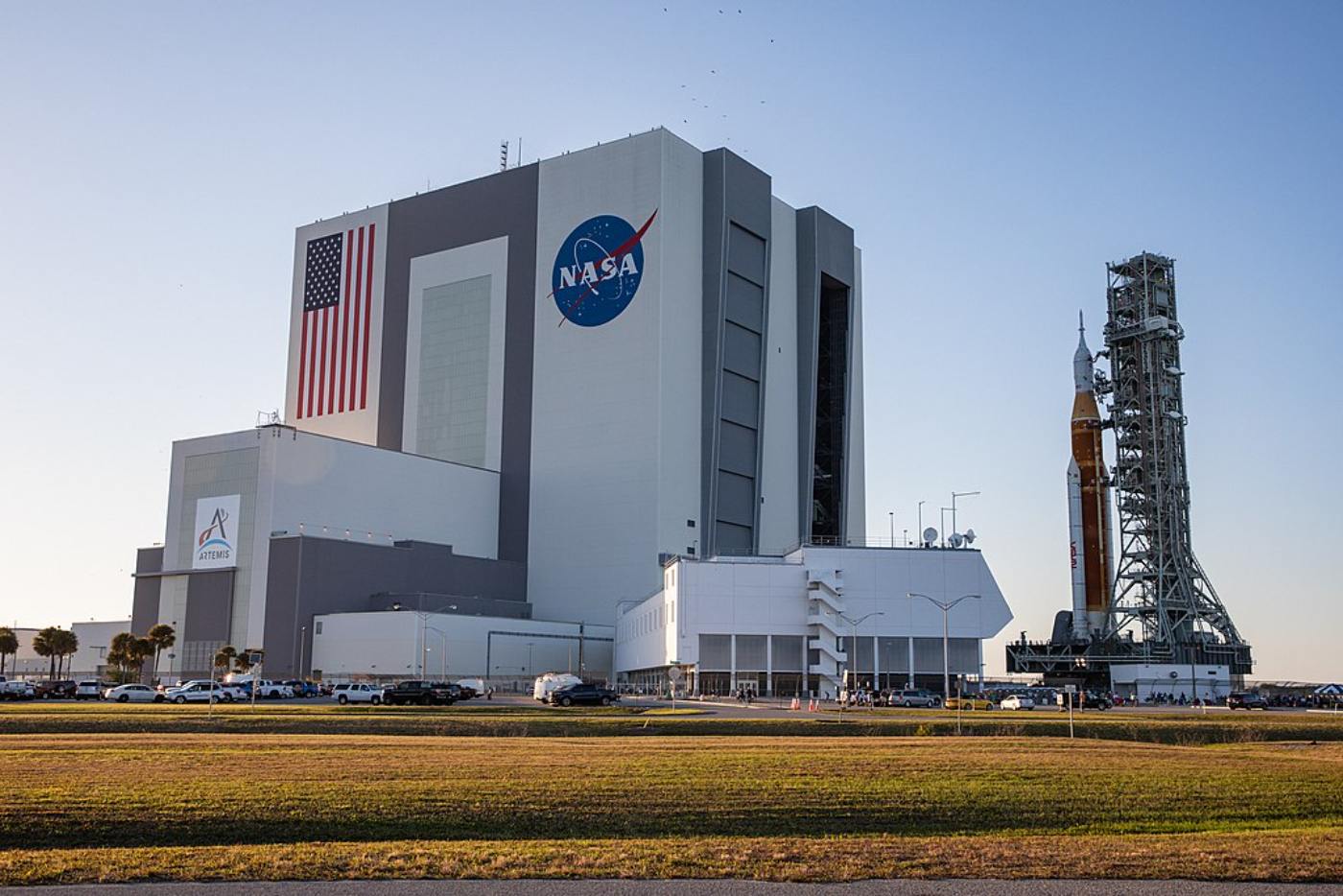
In addition to Cape Canaveral, another launch site often cited when rockets lift off is the Kennedy Space Center in Florida, which is located west of Orlando. The facility is situated only a short distance from the launch site and the world-famous Cape Canaveral launch pads. For the 2022 Artemis 1 mission, the Space Launch System (SLS) was built at the Kennedy Space Center.
The NASA telescopes
NASA has come up with a lot of telescopes since it was founded in 1958. They are built on a variety of technologies, each with its own set of advantages and disadvantages depending on the task at hand. Telescopes built specifically for use in space can see distant objects and gather data that would be impossible to get on Earth.
There has never been a more advanced telescope than the James Webb Telescope. The first photographs were captured in June 2022, after the satellite had been in operation for more than 5 years (it was launched in December 2021). These are very stunning, and they promise to aid in our future knowledge of the cosmos.
The illustrious Hubble Telescope, which preceded the James Webb Telescope by 15 years after its 1990 launch, was a forerunner of the James Webb Telescope. In spite of its advanced age, Hubble will continue to complete its tasks until its deorbit in 2030 or 2040. Meanwhile, it keeps surprising us in new ways.
The James Webb Space Telescope’s exciting journey has only just started, and now NASA teams are hard at work on a new telescope, the Roman Space Telescope. The planned liftoff date is 2026 from Florida’s Kennedy Space Center. It is hoped that this instrument will better grasp the mysteries of dark matter or dark energy, but the mission is also expected to find hundreds of new planets.
What is NASA’s APOD?
The acronym for “Astronomy Picture of the Day” (APOD) describes a NASA-run photo archive that is updated daily. The site suggests an image of the cosmos and an astronomer-written explanation every day. The APOD has been around since 1995, and its site has retained its original format ever since.
Who created NASA?
On July 29, 1958, President Dwight Eisenhower reorganized the National Advisory Committee on Aeronautics (NACA) into the National Aeronautics and Space Administration (NASA). When the United States was trying to catch up to the Soviet Union in space, it was in the midst of the Cold War, and this is when NASA was founded. The Soviet Union launched Sputnik 1, the world’s first artificial satellite, into orbit in 1957. Then, in April of 1961, Yuri Gagarin took the plunge and made history as the first human to orbit Earth.
It was in reaction to this that NASA was established in 1958. In a now-iconic speech, President John F. Kennedy said in 1962, “We have chosen to go to the Moon in this decade and to accomplish still other things, not because it is easy, but precisely because it is difficult.” With that sentence, he rallies the public behind the endeavor and sets in motion a genuine race to our natural satellite, the Moon.
Who owns NASA?
The uniqueness of NASA is that it is neither publicly nor privately owned. The United States government funds this organization, which is headquartered in the United States. The annual budget of the United States is set by Congress and must be approved by the President.
Who funds NASA’s space programs?
Budgetary support for NASA originates in the United States. The government support its many initiatives. The annual budget is set by Congress. The budget is set in accordance with the space agency’s proposed programs and the money it asks for.
What is NASA’s budget?
The budget for NASA is flexible. The United States makes an annual adjustment. Congress, by means of a vote that, depending on the year, may generate some debate. This funding period runs from October 1 to September 30 of the next fiscal year. The figure for 2022 was $24.04 billion.
Can you visit NASA?
The Kennedy Space Center in Florida is open to the public as one of NASA’s space centers. In fact, the Apollo rockets took off from this same site. Although many individuals labor at NASA sites, visitors are only allowed to see reenactments. The Kennedy Space Visitor Complex is where guests can see exhibits and ride buses to see everything from the launch pad to the rocket assembly facility.
The European counterpart to NASA
ESA, the European Space Agency, serves as Europe’s version of NASA. More ambitious than any one European nation could ever hope to do on its own, this one brings together 22 nations to plan, select, and carry out joint initiatives. Together, they have been able to construct ambitious missions like Gaia, which has spent the last 7 years mapping the heavens and refining Hipparcos’s database of 120,000 stars.
One of the four major instruments for the James Webb Telescope was created by ESA in collaboration with NASA. The telescope was launched with extreme accuracy using the Ariane 5 rocket, which was also constructed by ESA.
How can I work at NASA?
NASA is always looking for talented people to fill a broad range of roles, but unfortunately, only U.S. citizens are eligible to apply. There are very few opportunities for non-Americans to work at the organization. As an example, astronauts must meet this requirement as part of their profession.
NASA offers a wide variety of careers, but all of them need experts in a certain sector. In most cases, higher education experience and/or a terminal degree (e.g., a PhD or an engineering degree) are expected from applicants. In addition, you’ll need a strong background in the area. NASA has a wide variety of open opportunities that can be applied for on its website.
How to follow NASA live?
If you go to the NASA website, you may find one of the agency’s official YouTube channels, NASA Live. As an added bonus, the article details the future space activities that will be covered live on the channel.