It is getting closer and closer to spring as the days are getting longer and the temperatures are getting higher. Now that winter is coming to an end, nature will also soon emerge from its slumber: the first tips of new greenery are making their way out of the ground, the buds on many shrubs and trees are beginning to thicken, and crocuses, snowdrops, and daffodils appear to be just waiting to finally bloom. However, how do they determine when the time is right? What causes some flowers to bloom first while others lag behind?
There is a vast arsenal of different triggers, each of which is effective on its own or in combination with other triggers. Internal factors such as plant hormones, genes, or the minimum size of the plant can also influence whether or not it flowers and when it does so, in addition to external factors such as the length of the day and the temperature of the surrounding environment.
The chill of winter helps the formation of flowers
A drop in temperature is the primary stimulant that causes bulb formation in many bulbous plants. For example, daffodils, crocuses, and tulips require at least a few weeks of cold weather during the winter to initiate the first stages of flowering in the bulbs that make up their stems and leaves. These precursors are not activated, and the flower does not begin to sprout until the weather becomes warmer again in the springtime. Particularly low temperatures, on the other hand, can reverse this pushing of the flower. Because of this, the bud will not emerge from the protective soil even if there is an abrupt drop in temperature after the first few warm days.
Many types of fruit trees even have their own built-in version of a heat counter, which allows the plants to keep track of the number of warm days and calculate with a high degree of precision whether or not the climate is already suitable. The trees won’t start to sprout new growth until after a predetermined number of warmer days have passed. Because of this, even a small number of unusually warm days during the winter cannot cause flowering to begin. The hazelnut, on the other hand, does not have this temperature regulator, and as a result, it can “pleasure” people who suffer from pollen allergies even in the winter, provided that the weather is warm enough for a few days.

The flowering program is activated when the day length increases
The length of the days is another factor that plays a significant role, as many plants flourish when the winter nights become shorter and the summer days become longer. As soon as the ratio of daytime to nighttime hours reaches a predetermined point, they will start to bloom. There are several plant species, including crop plants such as lettuce and spinach, for example, that are solely stimulated by light.
But how exactly do these plants measure the length of the day? There is a possibility that, just like us humans, they could possess an internal clock as well. This ticks about once every twenty-four hours, and as a result, it serves as an inner reference point. Their genes also regulate the minimum amount of light exposure required during this time before they will start to bloom. This limit is different for each species, and it can even change between individuals of the same species.
An instrument measures how bright its surroundings are
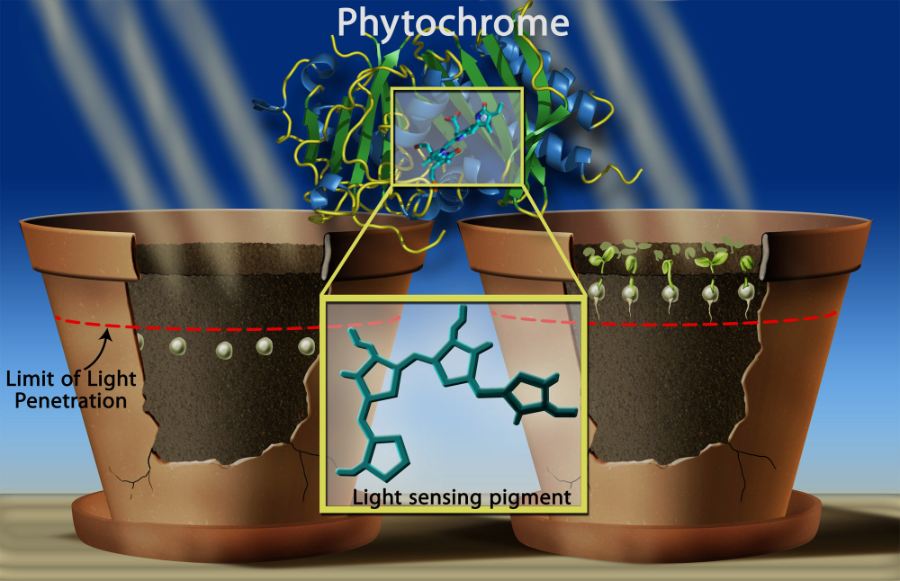
Plants have light sensors embedded in their tissues so that they can determine whether or not it is bright or dark in their immediate environment. Plants are able to detect and absorb light through a group of photoreceptor proteins known as phytochromes. They make use of them to keep track of the length of the day, and then use a complicated mechanism to compare this learning with the time kept by their inner clock. If the specified limit value is then surpassed in the spring, this will trigger an all-domino effect of physical changes, and the plant will begin to bloom as a result of these modifications.
It is the other way around for flowers that do not bloom in spring but rather in fall or winter; for them, the dark phase of the night must first reach a minimum duration before they form a flower. It is already adequate for plants with such short day lengths to turn on the light for only a brief period each night to prevent them from blooming again. These can include things like the poinsettia or the flaming beetle, for instance. Horticulture requires the shading of certain plant species because the light from moving vehicles, for example, is enough to prevent flowers from opening properly.