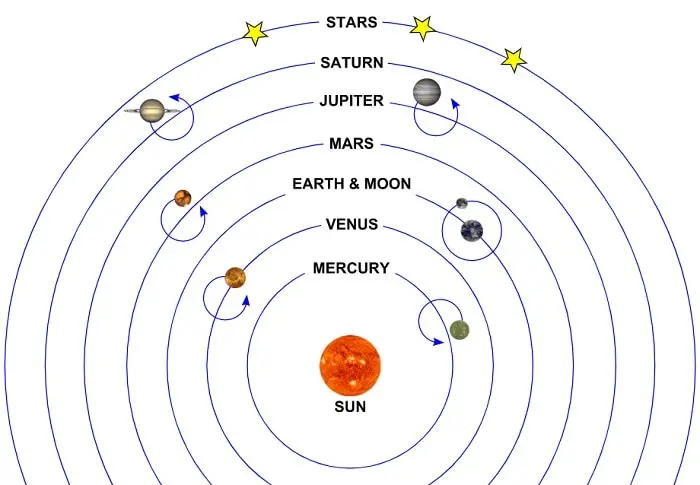
Astronomy developed under the influence of two main factors: the invention of the telescope, which revealed previously undetectable celestial objects, and advances in mathematics, physics, chemistry, and computing, which were crucial in understanding astronomical observations. Early astronomy was closely linked to mythology, religion, and prophecy. Sky observations were used to measure time, organize calendars, determine the dates of religious holidays and make astrological predictions. For millennia, the Earth was believed to be the center of the universe. However, this approach did not fully explain the movements of the Moon, Sun, and the planets.
- Modern astronomy
- Historical development of astronomy
- 2000 BC – Solar and lunar calendars
- 1400 BC – Gods and zodiac signs
- 90 – 168 BC – Ptolemy’s universe
- 1420 – Ulūgh Beg
- 1543 – Heliocentric universe
- 1608-1668 – First telescopes
- 1780s – William Herschel
- 1920s – Edwin Hubble
- 1930s – Radio telescopes
- 1960s – present – Discovery of other planets
- 1990 – present – Space telescopes
Modern astronomy
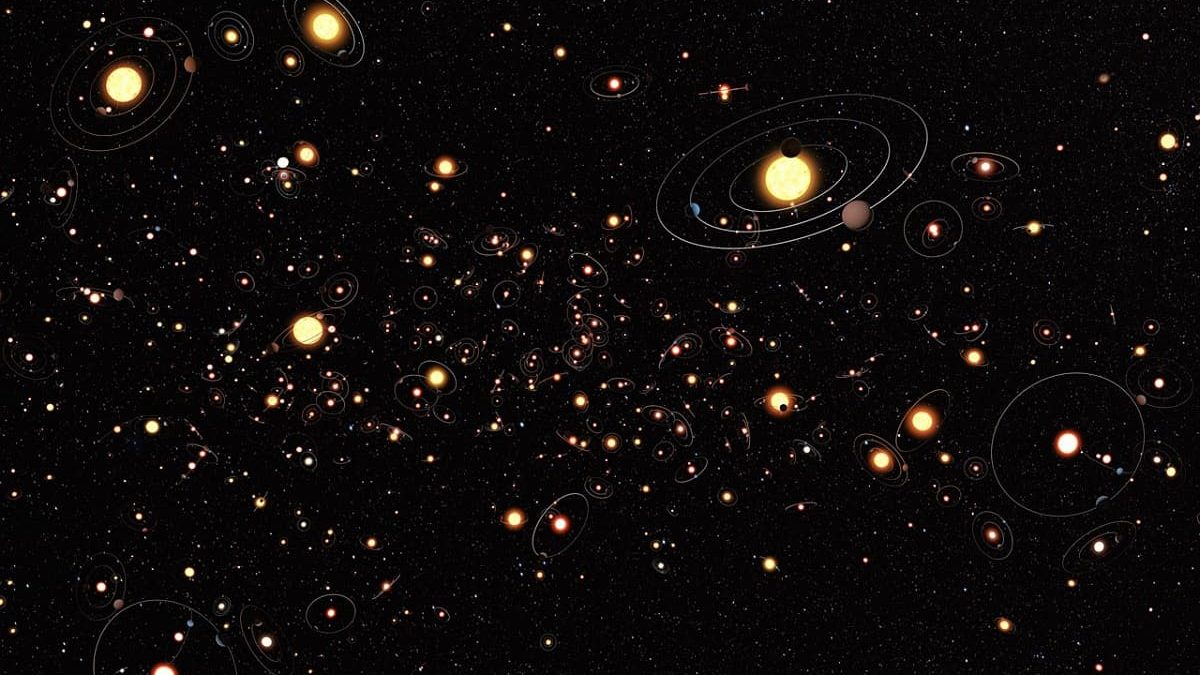
In 1543, Nicolaus Copernicus published his heliocentric model, which put the Sun at the center of the Earth and is widely believed to mark the birth of modern astronomy. Then the telescope, invented in 1609, revealed a series of astronomical objects. In the 17th century, Johannes Kepler established the laws of planetary motion and Isaac Newton explained the force of gravity that controls these motions. In the 19th century, the distance to the Sun and nearby stars was accurately measured, spectroscopy was introduced, and advances in theoretical physics provided explanations for such things as how stars generate their energy (through nuclear reactions at their centers).
Before 1920, many thought that the universe consisted only of the Milky Way. But Edwin Hubble measured the speed at which distant star clouds disappeared, and it became clear that these star clouds were independent galaxies. Not only were these galaxies moving, but also the speed at which they were separating from each other increased with distance. This suggested that the universe had a beginning where everything was tied together. The idea was that this expansion was caused by an enormous explosion called the Big Bang.
The findings of modern space astronomy support the Big Bang theory, but also reveal that most of the universe is composed of black matter and energy, the nature and origin of which are still unknown.
Historical development of astronomy
2000 BC – Solar and lunar calendars
The Babylonians produced the first calendar by combining 365.25 days of the solar year with 29.53 days of the lunar year. Similar calendars were used in ancient Egypt.
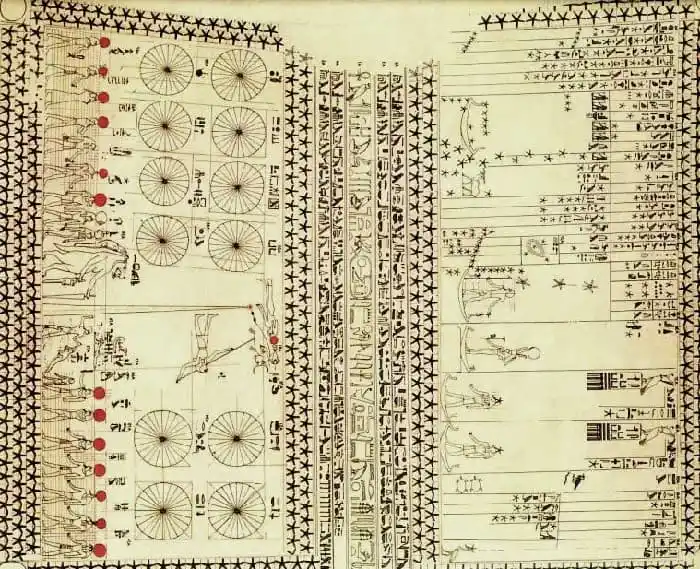
1400 BC – Gods and zodiac signs
The ancient Egyptians produced the earliest known zodiac symbols depicting the stars, planets, and their associated deities. Zodiac signs also appear in Babylonian handicrafts.
90 – 168 BC – Ptolemy’s universe
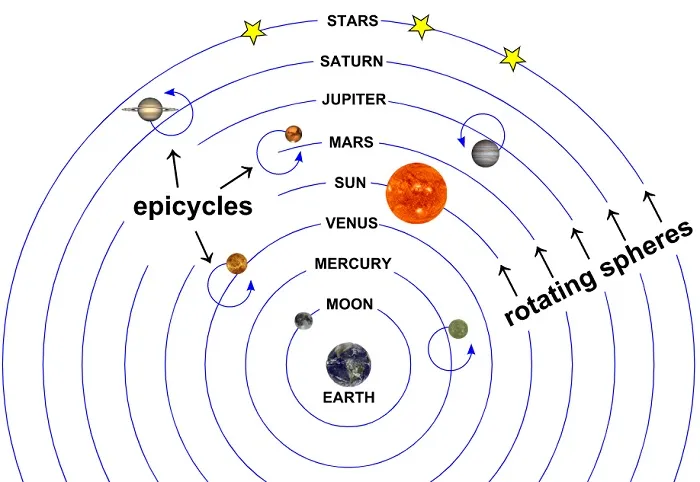
The Greek sage Claudius Ptolemy proposed the Earth-centered view of the universe, which was the norm until the 16th century.
1420 – Ulūgh Beg
Turk Ulūgh Beg of Iran established an observatory in Samarkand. As a mathematician, he measures that the Earth’s axis is tilted by 1/1000.
1543 – Heliocentric universe
Copernicus argued that the Earth revolves around the Sun, not the other way around. This view made the Earth only one of the six known planets and undermined religious authority.
1608-1668 – First telescopes
German-born Dutch lens-maker Hans Lippershey builds the first refracting telescope; “for seeing things far away as if they were nearby”. English scientist Isaac Newton builds the first reflecting telescope in 1668.
1780s – William Herschel
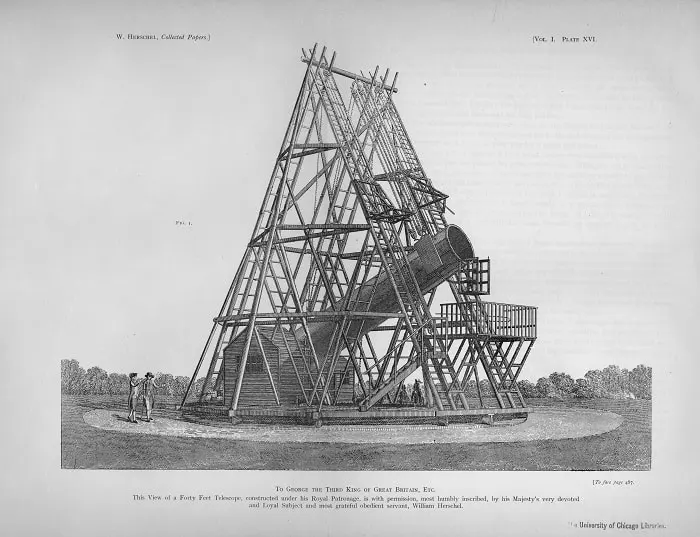
Herschel discovers Uranus using a homemade telescope (1781). He builds more than 400 telescopes, including a 1.26-meter reflector.
1920s – Edwin Hubble
Using the US 2.5-meter Hooker telescope, Hubble discovers that the universe has more than 100 billion galaxies and is expanding.
1930s – Radio telescopes
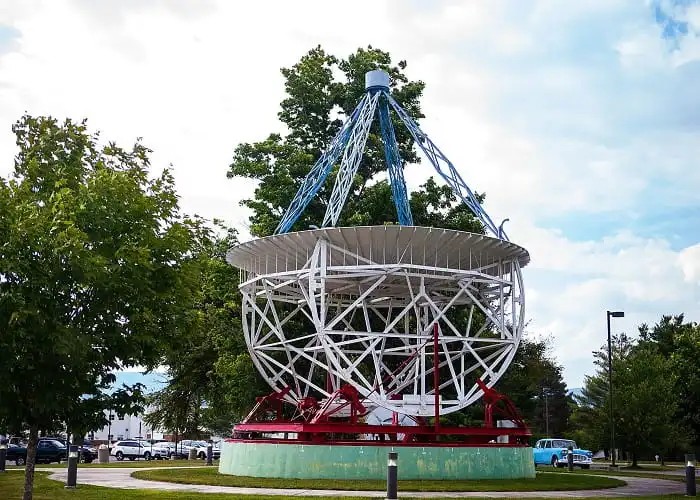
Radio astronomy, a new branch of astronomy, began when the first radio telescopes showed radio waves from the Sun and distant galaxies.
1960s – present – Discovery of other planets
Spacecraft are used to explore the Solar System. They orbit and land on other planets, moons, asteroids, and comets.
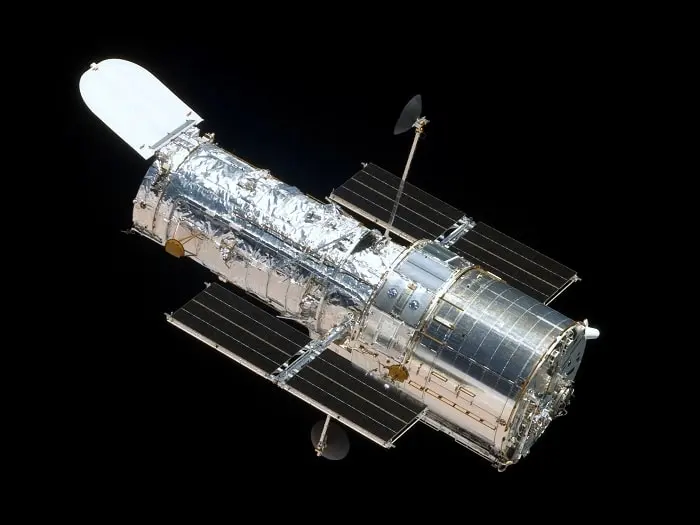
1990 – present – Space telescopes
Telescopes are placed near the Earth’s surface or in orbit, from where they explore space by observing the different wavelengths of light.