Monks throughout the Middle Ages had a higher standard of living than the majority of the general populace. However, at one particular time, their health deteriorated noticeably. The Augustinian Order was responsible for several of the most innovative monasteries in existence throughout the Middle Ages. At these monasteries, the monks carried out their daily activities in separate latrine units where they were permitted to wash their hands.
However, compared to regular people, who had been without access to such facilities for a considerable amount of time, they had double the risk of having intestinal parasites. This was shown in a research paper that was published in the International Journal of Paleopathology by Tianyi Wang and her colleagues from the University of Cambridge.
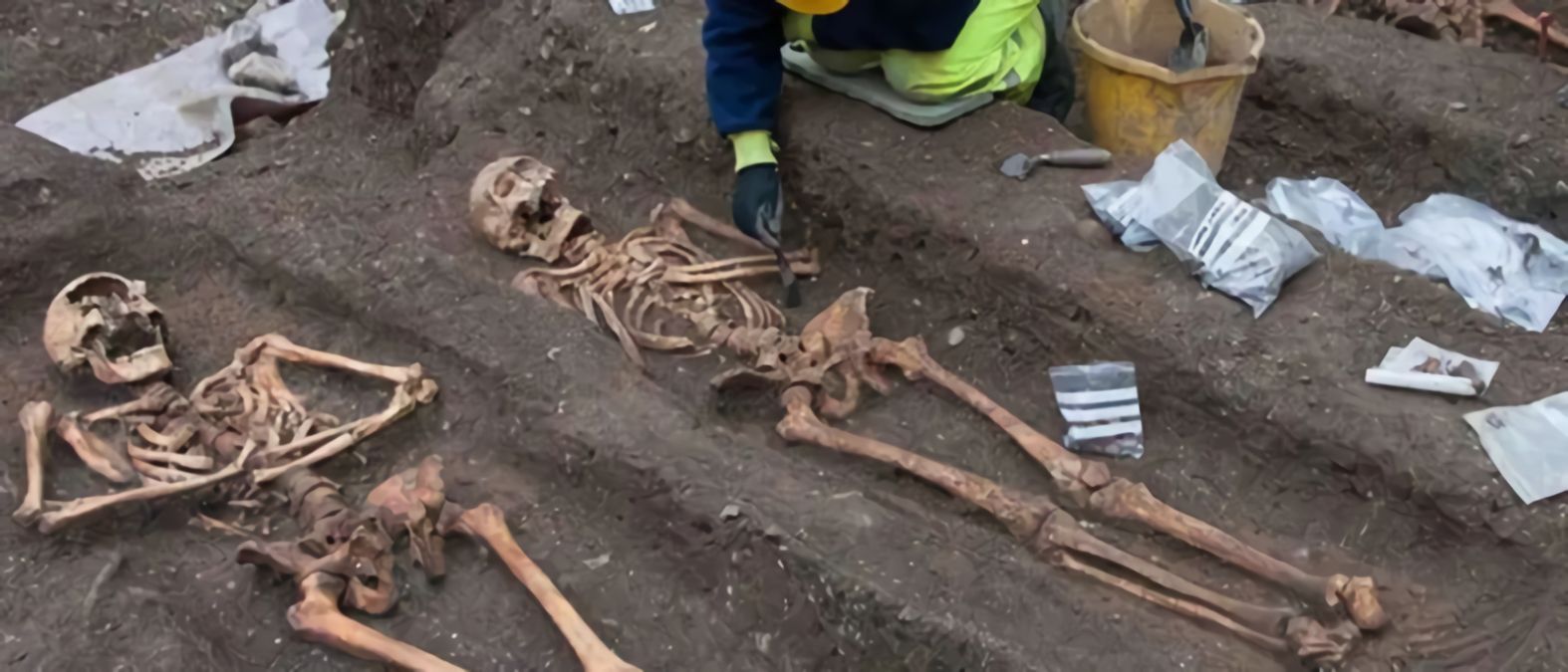
The study group investigated soil samples that were taken from graves that were located in a variety of cemeteries in Cambridge. Within the boundaries of the monastery, affluent townspeople who shopped there were buried close to the monks. However, the majority of those who were buried at the older cemetery of the church All Saints beside the Castle were people who had a low social rank during that time.
Looking for Specific Parasites
The two groups are simple to differentiate from one another based on a specific criteria, such as the presence of metallic clothing components. The researchers took samples from a total of 44 graves that dated back to the period between the 10th and 14th centuries. The researchers combed through the sediments of the graves in search of the remains of certain parasites, such as roundworms and whipworms. The eggs of these animals are very hardy and can remain dormant in the soil for a very long time.
The researchers only considered a person to be infected if they discovered parasite eggs in the pelvic region – which is where they should also find their final resting place after the intestines have decomposed – or if the number of such eggs in the abdomen was four times more frequent than on the head of the individual or the foot end. Eggs were able to present at the burial site because the soil used there was contaminated.
High Amounts of Parasite Eggs
In point of fact, Wang and colleagues discovered abnormally high amounts of parasite eggs in 11 of the 19 monk burials that were investigated, whereas they discovered such levels in just 8 of the 25 instances involving the rest of the community. Studies conducted in other European cemeteries consistently found signs of parasites in around one-third of the deceased; this ratio may thus correlate to the level of exposure that individuals had to worms and other parasites during that time period. Despite the fact that the monks lived in cleaner circumstances than common people, they had substantially greater amount of intestinal parasites in their bodies.
Monks Had Poor Hygiene practices
The researchers suspect that the difference in parasite rates between the monks and the general population is due to how both groups managed their excretions because roundworms and whipworms are primarily spread through poor hygiene. It was a usual practice in the Middle Ages for people to fertilize their vegetable fields with their own excrement, which is one explanation for why the monks may have done this. According to Piers Mitchell, who headed the research team that conducted the investigation, this might have resulted in many infections with the worms.
The monks may have had some discomfort as a result of the infection, but it did not do them any long-term damage. On the one hand, they planted plants in the gardens of their monasteries and utilized them as wormers. The wild herbs were one example.
Even instructions on how to eat those plants so as to mask the bitter aftertaste may be found in medieval manuscripts. On the other hand, since the land around the monastery had been fertilized, the people who lived there ate better food than those who lived outside the gates. As a general rule, this meant that they were also able to live much longer than medieval citizen.