Even in the womb, unborn offspring respond to taste cues, learning what their mother consumes via the amniotic fluid. Recently, scientists have used ultrasonography to directly see this response for the first time. Babies seemed to smile when they tried the sweet carrots, but their mouths scrunched up when they smelled the bitter-tart kale. The smell of kale causes the fetus (in the picture above) to put up a defensive face.
The unborn child’s sense of taste develops before its other senses, including hearing and sight. In the eighth week of pregnancy, the first taste receptors appear, and by the time the baby is 15 weeks along, it is able to taste the amniotic fluid it is ingesting. By this time, the infant has picked up on the mother’s eating habits. Numerous studies with infants provide evidence that these first tastes significantly influence what kids want to eat as they grow up.
Vegetable smackdown: Carrots vs. Kale
Now, researchers led by Beyza Ustun of Durham University are utilizing high-resolution 4D ultrasound pictures to show how a fetus reacts to different tastes in the amniotic fluid. These photographs provide the first clear glimpse into the unborn child’s reaction to various flavors. In their research, for the first time, they were able to see these responses.
One hundred pregnant women consumed a capsule of a test flavor on an empty stomach at 32 and 36 weeks of pregnancy. Each capsule included either 400 milligrams of sweet carrot powder, 400 milligrams of tart and bitter kale powder, or 400 milligrams of a neutral-tasting control material. In order to prevent her reaction from influencing her child, the mother was unable to tell which flavor she was receiving while swallowing. The researchers started documenting the baby’s responses through ultrasonography after the capsule had made its way through the stomach.

Unborn babies expressed their emotions clearly
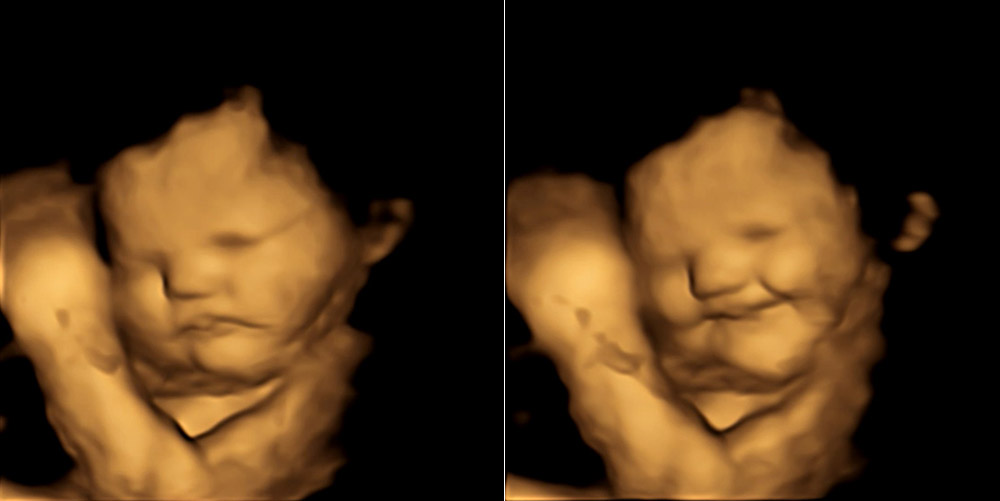
Indeed, fetuses’ facial expressions were seen within 30 minutes after the mothers ingested the aroma capsules. In this little time frame, the aroma compounds had made their way from the small intestine into the circulation and then through the placenta into the amniotic fluid. The unborn babies’ mostly neutral facial expressions were altered in a distinctive manner depending on the exposed aroma.
When their mother had ingested the delicious carrot powder, the offspring would open their mouths wide, as if smiling, or pucker their lips, as if sucking. The expression was different when the pregnant women were exposed to the bitter taste of kale, as their unborn children’s responses included squeezing their lips together and/or rising their upper lips. According to the research group, their faces mirrored the defensive emotions of a newborn child.
Watching the babies’ faces light up as they smelled the sweetness of carrots or the earthiness of kale, and then sharing that moment with their moms, was a genuinely unforgettable experience, according to the team.
Perception of taste in the womb has a long-lasting effect
These findings provide conclusive evidence that fetuses can detect the aroma of their mothers’ foods while still in the womb. Scientists discovered advanced fetal perception and its capacity to discriminate between distinct taste cues from the mother’s diet.
Prenatal exposure to a variety of tastes helps shape a child’s food preferences. According to scientists, the potential long-term effects of these early sensory experiences are significant. This is because a mother’s diet influences her child’s food preferences from a young age via early exposure to tastes. Scientists now want to understand if the habituation effect dampens these initially adverse responses. (Psychological Science, 2022; doi: 10.1177/09567976221105460)