The Catholic Church commemorates All Saints’ Day, a feast honoring God and all the saints, on November 1st. Since the beginning of the Church, Christians have honored the lives of the saints who died as martyrs. Many cultures are familiar with All Saints’ Day because of the time off from school that it often coincides with. Despite its apparent name, All Saints’ Day is often confused with the subsequent Feast of the Dead and, to a lesser extent, with the preceding Halloween celebration. So, it might be crucial to distinguish those days from each other.
What is a saint?
We must first define the saint. According to Catholic teaching, a saint is an outstanding human being (or an angel, but that’s another story…) who lived a good life on Earth. Actions that are totally consistent with what Jesus of Nazareth preached. Some of the saints were martyred because of how dedicated they were to their religion. According to the Catholic canon, others have worked miracles as well. Of course, seeing a miracle or dying a martyr is not required to become holy.
Popes have been bestowing this level of sanctity through the beatification and canonization processes since the 13th century. It seems that people who have been canonized are those who have achieved everlasting bliss and are now at peace with God. The Catholic Church established a martyrology to honor the lives of its martyrs and assigns each saint a special day of the year on which to be prayed to.
Both Catholics and Orthodox Christians believe that the communion of the saints of the Church Triumphant in heaven with the Church Militant or the Church of the living, is unbroken. Christians believe in a form of solidarity that transcends place and time, a bond known as the communion of saints, which connects both the living and the dead (Church Penitent). If one subscribes to this doctrine, he or she may address the saints as if they were right by his/her side.
The cult of saints
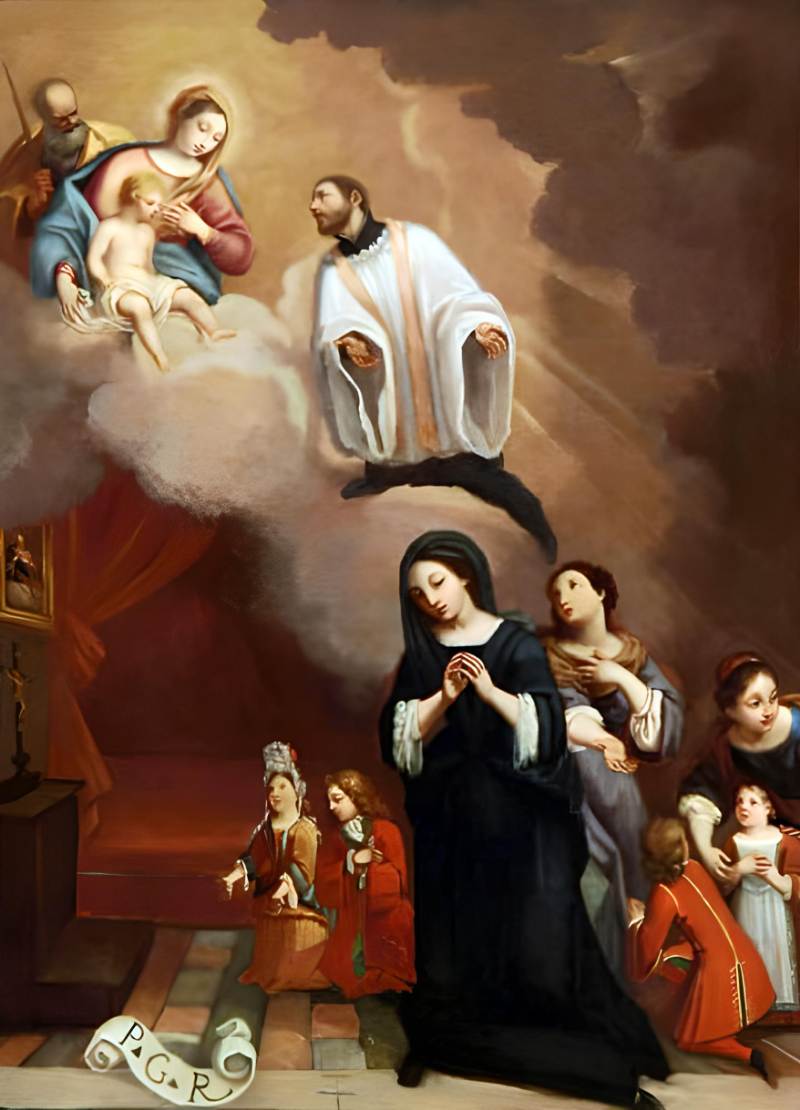
The believer does not pray to the saint, as is commonly claimed, but simply to God (in his three forms). The faithful person is “pleased” with expressing his or her appreciation for the saint and asking for the saint’s intercession with God. Therefore, the saint is not a god, but rather a mediator between the believer and God.
In response to Protestant accusations that Catholics worshipped saints, this distinction was hammered out especially strongly at the Council of Trent (1545–1563). Protestants still don’t put much stock in saints, even now. The doctrine of the communion of saints is still not accepted by Protestants.
So, Catholic Church glorifies persons who they believe had a direct connection with God by canonizing them and designating a day after them. However, the Catholic Church does not make the claim that it knows all there is to know about all the saints who have lived and made it to heaven. This leads the Church to believe that there are many more saints than it is aware of, all of whom are worthy of worship.
The celebration of All Saints’ Day is an answer to this issue; it serves to reaffirm the connection between contemporary Christians and the many saints who have come before them, both those commemorated in the calendar and others who have been all but forgotten by history. All Saints’ Day is not only a day to honor the dead, but also a time for Christians to reflect on how their own lives may emulate the sacrifices of the saints they honor.

Therefore, the saints serve an important pedagogical purpose. In addition, the selection of the portion from Saint Mark’s Gospel read on All Saints’ Day is seen as crucial; it serves as a guide to holiness in its most distilled form.
Origin of All Saints’ Day
We may date this celebration of all saints back to before the 12th-century canonization process and even before the 16th-century notion of devotion to the saints. Yes, there were several kinds of canonization by various Christian groups prior to the formal canonization by the Pope. Accordingly, All Saints’ Day has been celebrated since the 5th century. Since no one date had been chosen during the period, most places (including from Syria to Rome) celebrated it around Easter.
All Saints’ Day has been celebrated annually on May 13 since 610, when Pope Boniface IV dedicated the Roman Pantheon, rechristened as the Church of St. Mary and Martyrs. Some believe that the date of November 1 was chosen in the 8th century, during the dedication of a chapel to all the saints in St. Peter’s Basilica in Rome, by Pope Gregory III; others believe that the date was chosen in 830, when Pope Gregory IV ordered the universality of this festival, making it common to all of Christendom.
Unlike the next day’s Feast of the Dead, which is not a public holiday in some countries unlike All Saints’ Day, All Saints’ Day is celebrated on November 1. For this reason, many Christians commemorate All Saints’ Day by doing rituals often associated with the Day of the Dead, such as paying respects at graves.