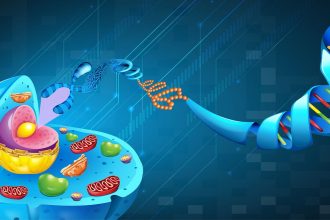
Ancient DNA has been unearthed in northern Greenland. According to DNA dating back two million years, this frozen wasteland was once home to a diverse ecosystem filled with mammoths, reindeer, rodents, and birds, as well as horseshoe crabs and a wide range of algae. According to the team’s research in Nature, this “lost world” has no modern-day analog.
Prehistoric genetic material, such as bones, teeth, and silt, may shed light on human history and culture. However, DNA degrades with time. Approximately one million-year-old DNA sequences have been recovered from deep sea sediment cores and mammoth teeth from the Siberian tundra. Some scientists believe that the stable freezing temperatures of the polar regions make the constantly frozen soil there an ideal deep freezer for ancient DNA.
Searching through the polar wastes
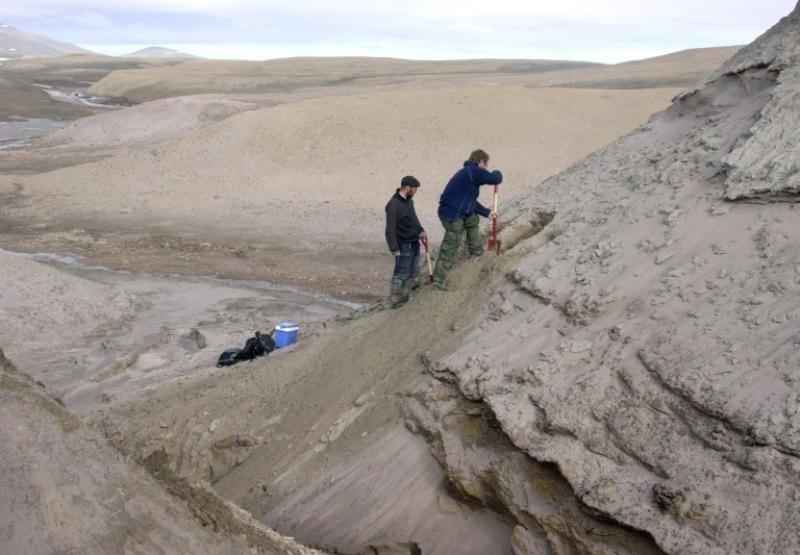
The discovery of the oldest DNA ever found frozen in the Arctic permafrost and the remnants of a previously unknown “lost world” is the latest sensation to emerge from the region. The group led by Kurt Kjaer from the University of Copenhagen analyzed sediment samples and drill cores from the arctic desert of Peary Land in the far north of Greenland, which is one of the most inhospitable places on Earth today.
Present-day conditions have rendered this location completely barren, with no plants and no stray animals to be found. In contrast, fossils, pollen, and other indications of life preserved in the frozen soil previously showed that this region had no ice 2–3 million years ago, when it was around 18°F (10°C) warmer than now. Because of this, scientists have been poring through the roughly 330 feet thick (100 meters) sediment layers that make up the Kap Kobenhavn Formation in search of ancient environmental DNA. For this purpose, they gathered and examined forty-one soil samples from five different locations.
Providing these soils stayed permanently frozen, the team believes it is possible that DNA pieces of at least 50 base pairs in length may have been preserved in the Kap Kobenhavn Formation.
The discovery of DNA in North Greenland dating back 2 million years demonstrates a radically different biosphere at that time.
The oldest DNA that is 2 million years old
Surprisingly, Kjaer and his team did make a discovery; they counted almost 2.8 billion unique DNA pieces in the sand samples they analyzed. Geological and molecular clocks indicate that these genetic fragments date back to around 2 million years ago. As a result, this DNA is far older than any other DNA that has been sequenced up to this point. This, they argue, proves that genetic information is preserved in permafrost soils, which remain frozen year-round.
Despite the rapid rate at which DNA may decay, the researchers have shown that, under the correct conditions, they can trace genetic material back considerably deeper in time than was previously thought possible. They matched the DNA sequences they discovered to databases of plant and animal DNA to determine what kind of species they belonged to.
A forgotten world
The startling conclusion is that North Greenland’s arctic desert, which is now so desolate and inhospitable to life, was previously teeming with life. The genetic evidence points to a thriving environment that had a broad range of plant and animal life as well as a chilly but mild temperature. Large herbivores, like the mastodons of the proboscideans, had enough to eat in this “lost world” since plants grew so abundantly.
The researchers isolated DNA from 102 distinct plant species; in certain instances, the sediments even included pollen and plant remnants from these plants. Poplars, willows, birches, hawthorns, pyews, and trees of life all contributed to the breezy woodlands of this prehistoric setting. 2 million years ago, the area around Kap Kobenhavn was home to a variety of plants, including both grasses and conifers, as well as shrubs, herbs, and a total of 12 distinct grass genera.
Sufficient for the biggest proboscideans
The fauna of this ancient habitat has left behind fewer genetic remnants. In contrast, the genetic remnants that have been found attest to a very varied fauna. Hares, geese, and a wide variety of lemming-like rodents were there, along with reindeer and even mastodons, as early members of the proboscideans, according to the team. Researchers were unable to identify with any certainty whether the elephant relatives from Kap Kobenhavn were early members of the mammoths or another group of mastodons owing to the fragmented DNA.
The fascinating part, however, is that the plant life of the period must have given adequate food for mammoth-like proboscideans if they had lived in this “lost world” well beyond the Arctic Circle. According to Kjaer and colleagues, mastodon DNA suggests there was once a healthy population of these massive grazing animals. This necessitated a more fertile boreal ecosystem than was formerly assumed based on local plant fossils.
Distinctive habitat
When analyzed as a whole, the DNA samples point to a completely distinct ecosystem, the likes of which no longer exist elsewhere on Earth. Both the DNA and the macrofossils found at Kap Kobenhavn represent a very diverse collection of plant species, the scientists say; yet, no extant plant community or environment has all of these species. There is no living analogue to the species found in this community, which is a combination of current boreal and Arctic species.
Prehistoric North Greenland’s flora and fauna also diverge significantly from what is currently known, and these findings are just the tip of the iceberg. Researchers have discovered countless sequences of microorganisms, aquatic organisms, and fungi in the DANN samples; however, a more thorough analysis of these organisms is still in the works.