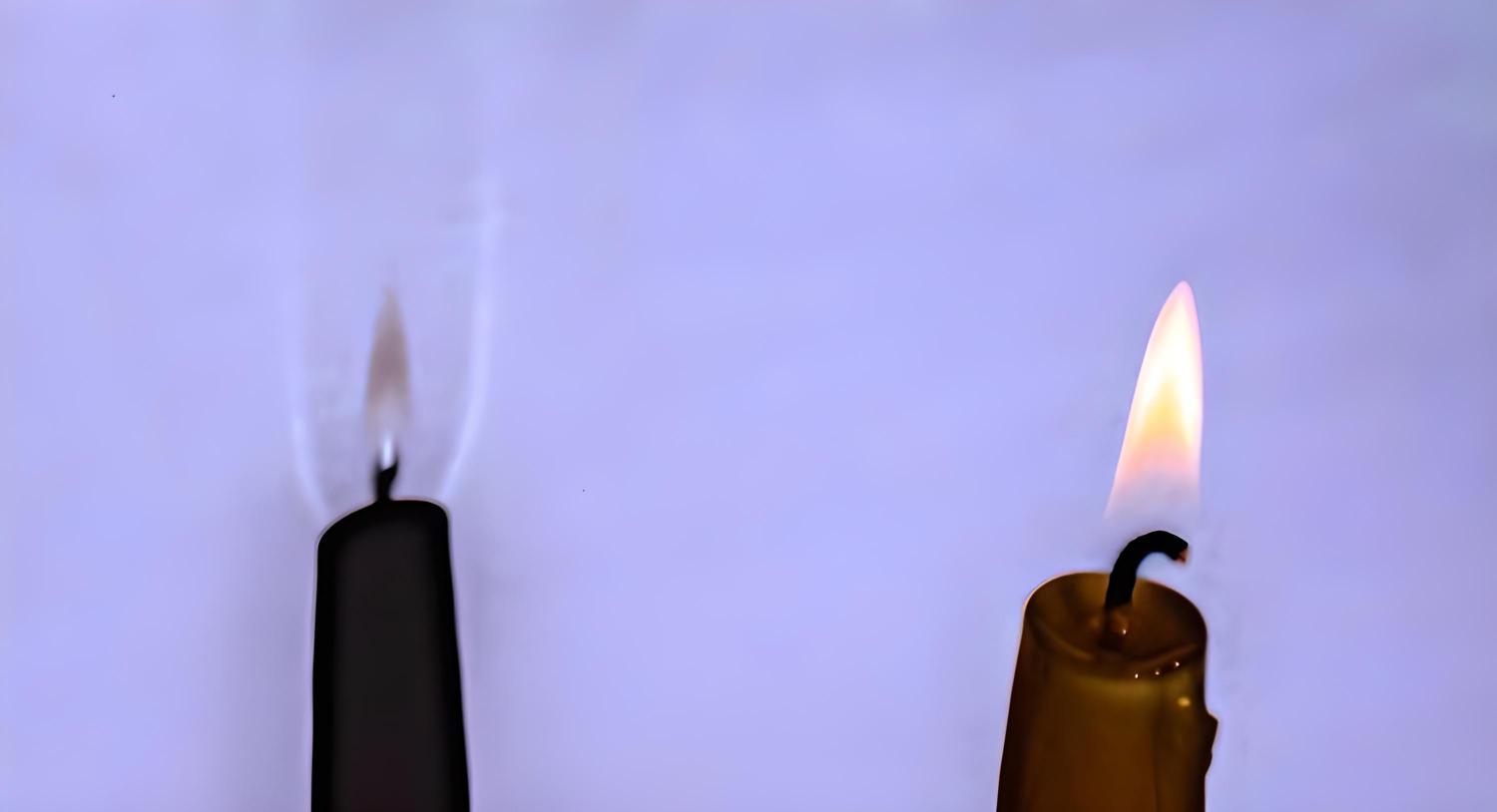
A candle’s shadow is projected on the window reveal or wall in front of it when lit by a light source. Not only is the shape of the wax body painted there, but so is the actual flame. You may think this is the shadow of the light. Looking at a small object through the flame allows for a closer examination of this phenomenon. Because the flame’s transparency will differ in various spots.
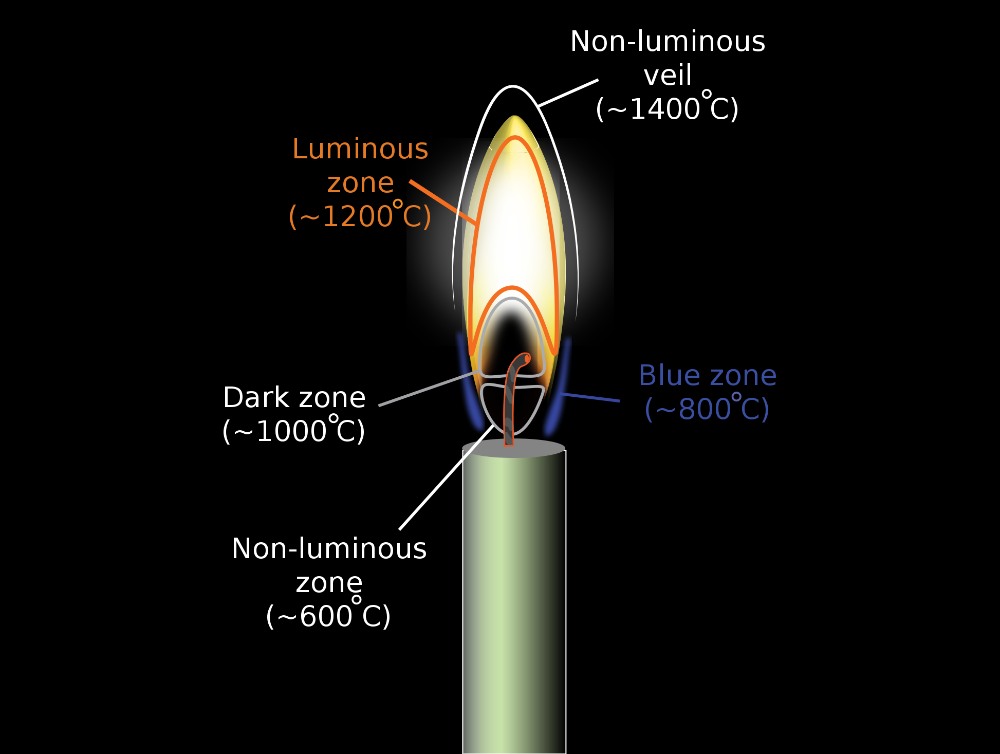
An item behind the central luminous zone of the candle flame appears almost invisible. This area is the least see-through and contributes significantly to the penumbra on the surface. By contrast, the outer seam and the center of the flame around the wick are almost transparent and leave practically little discoloration on the wall.
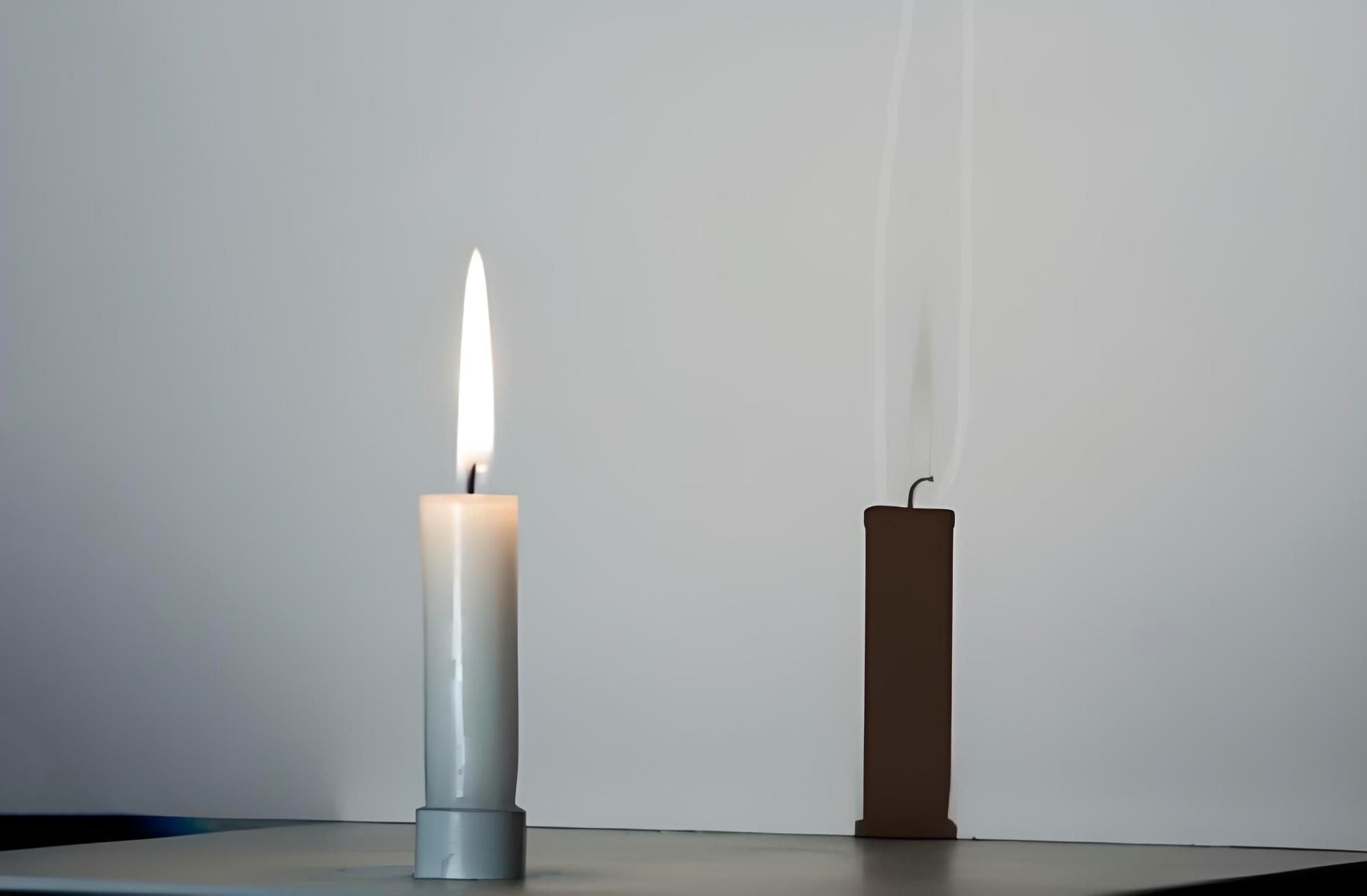
Surprisingly, however, the projection features not just darker regions than others, but also brightenings that seem brighter than the blazing sun. As a result, there are two parallel brilliant stripes on each side of the flame, and a similarly bright patch sticks out in the wick’s shadow. These amplifications in particular show that what we’re dealing with is not only a shadow picture of the candle flame, but rather a complicated interplay of the emitted light with the heated surroundings.
Several underlying systems support the complicated physical and chemical processes that occur in a burning candle. Wax melts at the bottom of the wick and evaporates into long-chain hydrocarbon molecules as it rises. These become hotter and split up into tiny pieces as they go into the center of the black flame. They won’t catch fire until they reach the flame’s outermost layer and come into touch with the oxygen in the air. In this region, the thermometers tend to soar. The combustion byproducts are expelled in an upward-striking plume thanks to the high buoyancy effect.
There is a drastic temperature change when the air enters the exhaust gas plume from the outside. It follows naturally that the brilliant lines must be a consequence of light penetrating this boundary layer. When the temperature and, by extension, the density of a gas change, refraction results. The mirages seen over hot asphalt roadways and the flickering seen over a fire are two examples that demonstrate this.
Light is refracted differently depending on the strength of the refractive index in the candle flame and the exhaust plume. You plot its path over the exhaust plume and the flame, once traveling on a plane in the luminous zone’s centre and once precisely above the wick.
The following is true for both planes. Within a radius of roughly 0.40–0.16 inches (10–4 mm) from the axis of symmetry, the refractive index decreases extremely steeply if one approaches the flame from outside the exhaust plume. Following this, the strength of the decline gradually declines until it finally levels out. Beginning from this point forward, the two planes diverge. As one approaches the luminous zone, the refractive index rises again until leveling out in the center. In the wick plane, however, things are very different. Here, after reaching the minimum, the refractive index grows dramatically and even surpasses the value for ambient air.
Because of the extreme spike and subsequent reduction in temperature along the symmetry axis, the behavior shown in the zone above was to be anticipated. The temperature profile, however, does not fully account for the elevated refractive index in the wick-to-flame-core region. There is a clear dependency on the gas’s material makeup. Light is refracted considerably more severely by the pure wax vapor present than by the air or the combustion gases in the exhaust plume.
Gases having an optic impact
Light is bent off of its straight trajectory in various ways due to changes in the refractive index. This has an effect on the rays in the little area where the ambient air meets the rising exhaust plume. The curved paths of the deflected rays eventually intersect with those that travel in a straight line from farther away. It’s because of this that the projection surface is bathed in dazzling bands of light.
In addition, the rapidly growing refractive index in the flame core causes light to be deflected rather strongly inward. In order to maintain symmetry, there is some overlap to the right and left of the middle. Therefore, the light intensity rises with distance in a given region behind the candle. It’s because of this that we’ve been able to pinpoint the location where the wick’s shadow falls.
This implies that the two stripes and center spot seen behind a transilluminated candle flame may be linked back to the refractive index profile. This is due to the high refractive index of the wax vapor close to the wick and the temperature gradient that exists there.
For example, soot particles dominate the luminous zone where the candle flame is less visible. Thus, a shadow is seen in the projection, but it is considerably brighter than the shadow cast by the candle’s central core. Intriguingly, it’s not an entirely gray color; rather, it has a faint brownish hue.
The coloration is also caused by the soot particles. They are at least 10 times smaller than the wavelengths of visible light, measuring in at about 20 nanometers. Therefore, they mostly engage in Rayleigh scattering, which affects the shorter-wavelength, more blue-toned components of the light. This allows the projection’s prominent long-wave reds to pass through. This is consequently akin to an early morning (dawn) or late afternoon (dusk) situation.