The transportation industry was radically altered with the invention of the first automobile. The history of the automobile has gone through several transformations, from early attempts at human-powered transportation to fully autonomous and networked electric cars. An important development throughout the industrial revolution, this breakthrough has had far-reaching social and economic effects.
Never before have so many people, on both an individual and a societal level, come to embrace and even idolize a technological object. Manufacturers nowadays are developing smaller vehicles with cutting-edge safety features and engines (electric, solar, hydrogen, etc.).
The first car in history
Carriages were the means of transportation before the invention of the first automobile. Carriages were either sleds or carts with wheels and were drawn by a person or a pack animal. As early as the early 18th century, scientists and engineers attempted to fit a steam engine inside a car, but it wasn’t until the late 18th century that they saw any real success. In 1770, Frenchman Joseph Cugnot created the first car in history.
The military engineer Cugnot decided to mechanize the artillery cart (“fardier”) by replacing the horse with a third wheel powered by a steam engine. The aim was to use the cart to transport heavy parts like cannon barrels. These trials were not definitive, but they did serve to highlight the potential of high-pressure steam as driving power.
In 1769, Joseph Cugnot first created a small-scale version of his project which he called “fardier à vapeur.” In 1770, he constructed a full-scale version of the fardier à vapeur, with the intended capabilities of carrying four tons and traveling 4.8 miles (7.8 km) in one hour. The car weighed 2.5 tons and was controlled by a pair of handles.
The fardier had to stop every 15 minutes to refill the machine with wood. The steam engine was too cumbersome and inefficient to be really useful, therefore Joseph Cugnot’s efforts ultimately failed along with those of his French, American, and British successors.
Engineers focused on bettering the train instead, setting aside the automobile until the development of the internal combustion engine, which was lighter, more efficient, and less bulky.
The first car with an internal combustion engine
The first car in history powered by an internal combustion engine, a three-wheeled vehicle, was built in 1885, and its creation is credited to German inventor Carl Benz. The car was called Benz Patent-Motorwagen (“patent motorcar”) and it was also the first mass-produced car in history. In 1886, it was shown to the public after receiving a patent for it.

In the latter months of mid-1888, the Patent-Motorwagen became the world’s first commercially available car. Patent-Motorwagen was sold for $4,750 in today’s money. This first Motorwagen used the Benz 954 cc (58.2 cu in) single-cylinder four-stroke engine, and produced 0.75 hp (0.55 kW).
At its debut in Mannheim, Germany, Karl Benz drove the car at a peak speed of 10 mph (16 km/h). The car’s internal combustion engine helped establish Karl Benz as the father of modern cars. He built 25 units of Patent-Motorwagen in total.
The first auto show
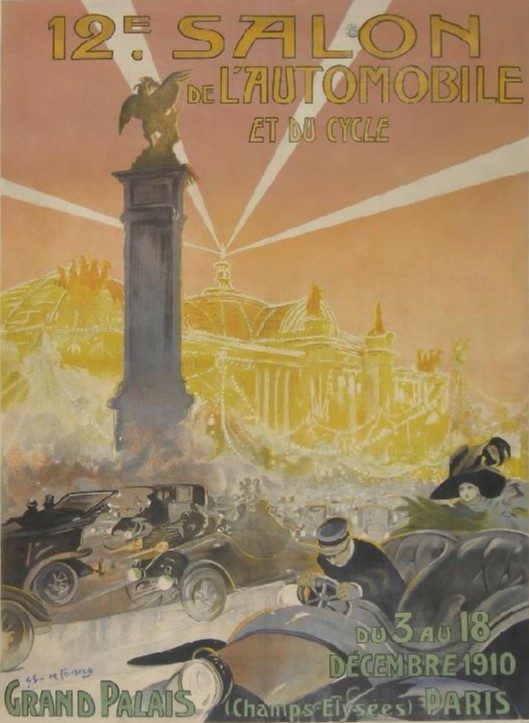
In 1898, Paris’s Grand Palais hosted the world’s first motor show, known as the “Paris Motor Show.” Even after 125 years, it remains a major event in the automotive industry. The retrospective exhibition at the tenth edition of the show in 1907 was even more magnificent and comprehensive, with artifacts ranging from the Cugnot cart, a real “prehistoric” legend from 1770, to a De Dion-Bouton tricycle from 1885, a German Daimler draisine from 1887, and a De Dion-Bouton steam omnibus from 1896.
There were still Brasier and Renault automobiles on exhibit, along with electric vehicles, but sadly absent was Etienne Lenoir’s gas-powered vehicle, which was said to have been utilized in Paris in the early 1860s and inspired Jules Verne.
The first car to break 100 km/h
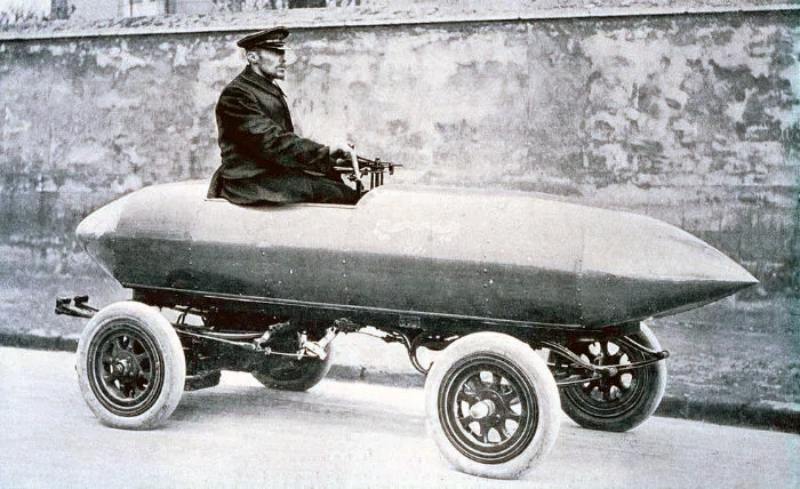
While the issue of motorization had yet to be resolved, the first accomplishment of the automobile concerning the vehicle’s global conception did not change much over the next few decades in terms of transmission, steering, or bodywork. While some may have seen the near dead end of the electric automobile coming, it wasn’t proven until the century’s conclusion when competition between different forms of propulsion finally pushed an electric car above 62 miles per hour (100 km/h).
On April 29, 1899, Belgian engineer Camille Jenatzy finally crossed this psychological boundary of a “speed in three digits” in his La Jamais Contente (“The Never Contented”). It was the first car that broke the 100 km/h barrier (62 mph) and reached 105.9 km/h (65.8 mph).
The first affordable car
Henry Ford’s goal was to mass-produce an automobile that was easy to build, reliable, and affordable. He was successful in his gamble by introducing assembly line production, which had a profound impact on the automobile industry across the world.
When Henry Ford unveiled his vision for the Model T in 1908, Ford Motor Company was already five years old. He aimed for a simple car design that would allow the vehicle to be assembled quickly and a solid build quality that would demonstrate its reliability. Both of which contributed to the Model T’s minimal maintenance costs.
After-sale service was first introduced by Ford with the introduction of the Model T. Ford established a network of carefully selected agents by 1908, when other automakers still ignored regular maintenance as a cost of doing business. This increased the brand’s awareness.
Ford’s Highland Park plant, located outside of Detroit, produced 3,900 vehicles daily in 1914. Furthermore, between the years of 1908 and 1927, 16.5 million Model Ts were sold. In the early 1920s, the Model T was the world’s most popular car, with production facilities in the United Kingdom, Germany, France, Denmark, South Africa, and Japan.
The Model T lacked modern conveniences such as a wiper (since the windshield was optional), a radio, and even a driver-facing door. The accelerator was on the steering wheel. In 1972, the Volkswagen Beetle became the best-selling automobile of all time, surpassing the Ford Model T.
The automobile becomes an industry
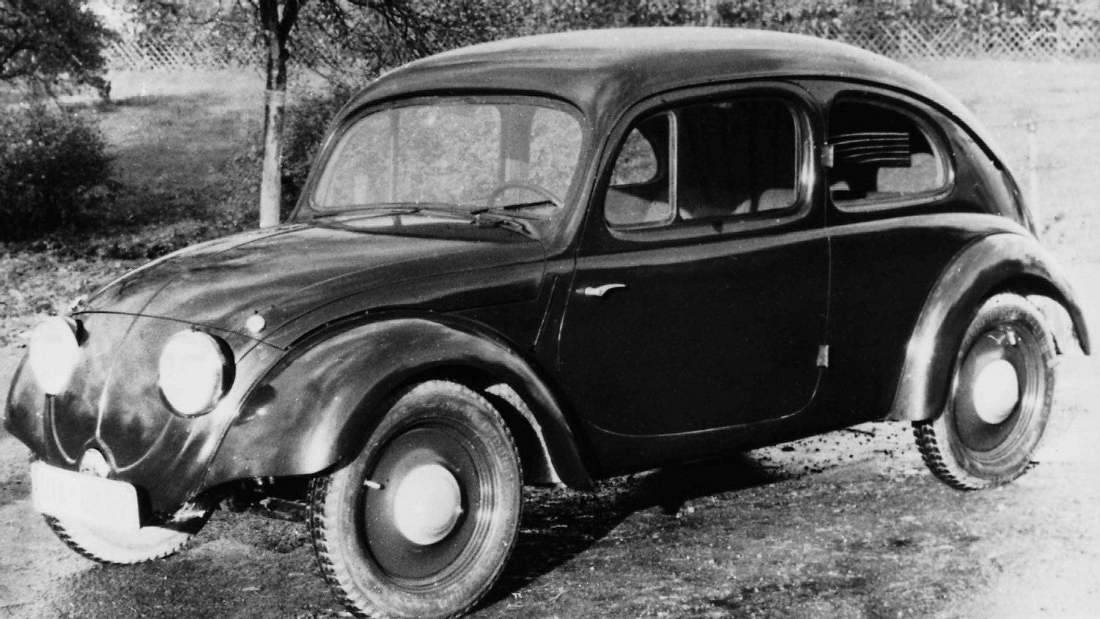
Already in 1900, more than 9,500 automobiles were manufactured in the United States, France, and Germany. Henry Ford came up with the Model T eight years later and had millions of them mass-produced using his assembly lines. He is the one responsible for the birth of fast, personal transportation for everyone. At the turn of the 20th century, Ford standardized manufacturing throughout the automotive industry and beyond.
Several million Volkswagen “Beetles,” Renault 4CVs, and Citroen 2CVs were mass market successes at the end of World War II, making vehicle ownership more accessible to the average European. Because of the dramatic growth in the number of cars on the road and their average speed, legislation mandating the use of driving licenses and establishing highway codes became necessary.
The automobile caused major shifts in society, especially in how people saw and used their personal space. It encouraged the growth of trade and communication between nations, as well as the construction of several new facilities (roads and highways, parking lots). Everyone still recognizes the names of the great pioneers of the car industry, from Ferdinand Porsche to André Citroen and Louis Renault.
Contemporary challenges of the car
The car industry faced several difficult changes in the 1970s. Rising gas prices and concerns about supply were a direct result of the 1973 and 1979 oil shocks. Automobile companies started making more compact models. They improved the engines so that vehicles could go longer on the same quantity of fuel. They made the bodies more aerodynamic by altering their shapes.
As the number of drivers increased and automobiles became safer and quicker, so did public concern about road safety. Both the frequency and severity of accidents increased.
Another major issue is exacerbated by the growing number of automobiles on the road: air pollution. Although catalytic converters are effective at reducing a variety of harmful emissions, carbon dioxide (CO2), a major contributor to the greenhouse effect and, by extension, global warming, is one of the few gases they cannot remove. Manufacturers like Tesla are shifting their attention to electric vehicle research and development in order to combat this environmental threat.
Bibliography
- Ervan G. Garrison, 2018. History of Engineering and Technology: Artful Methods. Routledge. ISBN 978-1351440486.
- L. J. K. Setright, 2004. Drive On!: A Social History of the Motor Car. Granta Books. ISBN 1-86207-698-7.
- Jonathan Glancey, 2013. The Car: The History of the Automobile
- “1885–1886. The first automobile”. Daimler.