Early in the 1970s, the Middle East saw significant political and economic unrest that spread across the whole Western world. Israel came under increased pressure from the international community as a result of the Six-Day War, which began in 1967, when Israel took control of the Sinai Peninsula, the Golan Heights, and occupied the Gaza Strip, the West Bank, and East Jerusalem. Arab nations requested a swift departure from the seized areas. But under Golda Meir’s leadership, Israel lulled itself into a feeling of security with the passing of its arch-enemy, Egyptian President Gamal Abdel Nasser.
Warnings about possible retaliation from the Arab world went unheeded. Meir and the Labor government in power at the time rejected even a peace offering from the newly elected Egyptian President Anwar Sadat, who in 1970 stated his desire to forge a peace treaty with Israel in exchange for Israel ceding the Sinai Peninsula back to Egypt.
The Middle East’s atmosphere was further inflamed by the offer’s rejection, which strengthened the idea of a coordinated Egyptian-Syrian strike on Israel. On Yom Kippur, the Israelites’ holiest festival, on October 6, 1973, Egypt and Syria ultimately attacked Israel. After a temporary shock, Israel responded forcefully and, three weeks later, stood with its forces 37 miles (60 km) from Damascus and 62 miles (100 km) from Cairo. However, the Arab states were far from defeated and were using another much stronger means of pressure than their troops – oil.
How Did the 1973 Oil Crisis Begin?
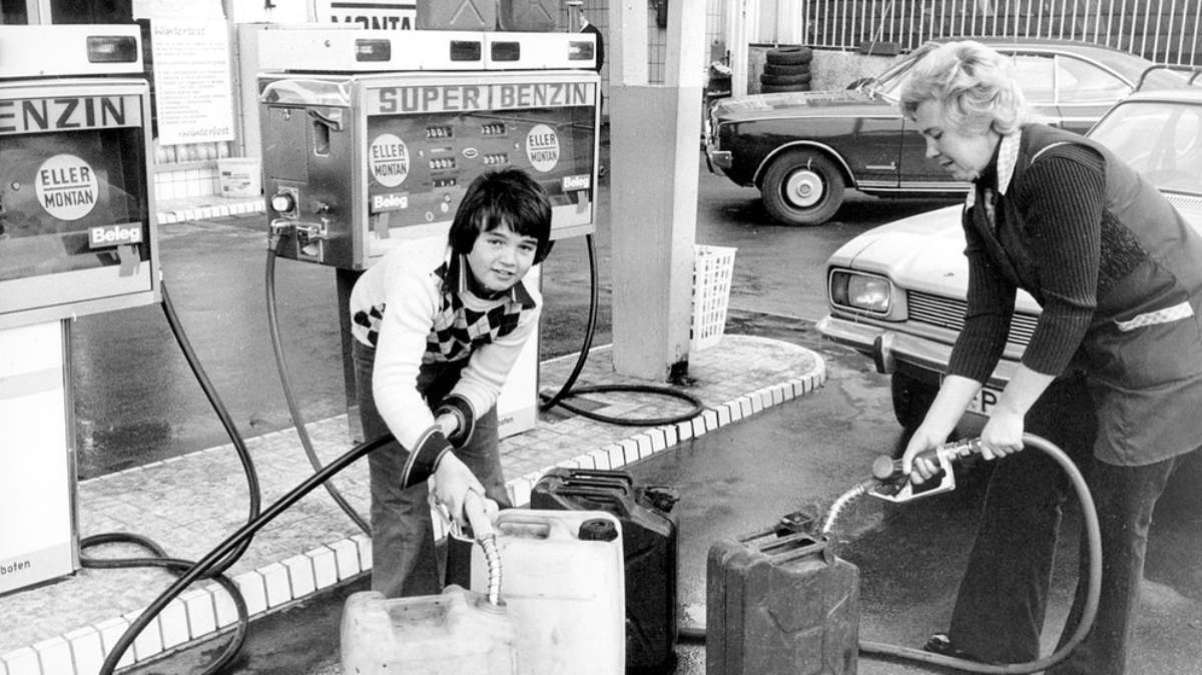
In reaction to the war known as the Yom Kippur War, the Organization of Petroleum Exporting Countries (OPEC) made the decision on October 17, 1973, to cut oil output by 5% from its level in September 1973. This was made feasible by the fact that the Arab nations already controlled a sizable piece of the oil market. The oil-exporting Arab nations announced that they would drastically cut down on their output until Israel’s seized areas were freed and the “rights of the Palestinian people” were reinstated.
Even countries like the United States and the Netherlands, who were seen as allies of Israel, were subject to a comprehensive oil supply blockade. This was done to put pressure on the West to stop supporting Israel any further. Oil and gasoline prices abruptly increased by roughly double in October 1973 as a result of the war in the Middle East. A global rethinking was started: Nuclear energy must be supported.
However, the rise in oil prices that coincided with the boycott was partly a response to inflation and the depreciation of the currency. The countries that exported oil got together to form OPEC in the hopes that higher oil prices would enable them to recover the rising costs of the commodities and equipment they were purchasing from industrialized nations.
The Effects of the Crisis
The oil market rapidly saw the impact of this action. Oil rose sharply in price. Given that oil was a crucial component of industry and a major source of energy, this left Japan and the Western industrialized nations in a vulnerable position. For instance, the Federal Republic of Germany imported 75% of the oil it used to meet its energy demands, 75% of which came from Arab nations.
Up until that point, the developed nations’ global energy sources were thought to be limitless. Now it was clear that even if they were consumed sparingly, most of the European countries’ oil reserves would only endure for around a few months. The populace was shocked by the abrupt oil embargo. Politicians anticipated a catastrophe of unfathomable proportions, economists foresaw the end of growth and prosperity, and journalists fueled public anxiety with ominous headlines.

In an attempt to preserve at least part of the valuable oil, the German government, led by Chancellor Willy Brandt, agreed on November 19, 1973, to impose a four-week restriction on Sunday driving for all drivers as well as a 100 km/h speed limit on all roads. On November 25, 1973, there were almost no automobiles on the road in Luxembourg, Denmark, the Netherlands, or Switzerland. Only a small number of organizations, like taxi drivers and physicians received exclusions. Only in Germany, 13 million automobile owners were impacted.
On the first car-free Sunday, November 25, 1973, strict restrictions were implemented across the country to enforce the driving prohibition. On rural roads and highways, though, police still stopped roughly thousands of drivers for driving without a permit. The consequence was that the legislature raised the punishment for breaking the Sunday driving restriction from 80 to 500 German marks. Only around 220 people were caught on the next car-free Sunday.
The oil weapon quickly had its first political effects. Israel was urged to leave the regions it had occupied since 1967 in a Middle East proclamation released by the EC foreign ministers on November 5, 1973. Japan joined this demand in December. The first signs of a thaw in tensions were then given by OPEC, which progressively loosened the restrictions on oil tax levies. The oil delivery prices still continued to be high even after things improved and oil output rose. By year’s end, the cost of a barrel of crude oil had quadrupled from what it was before the start of the Middle East conflict.
The Results of the 1973 Oil Crisis
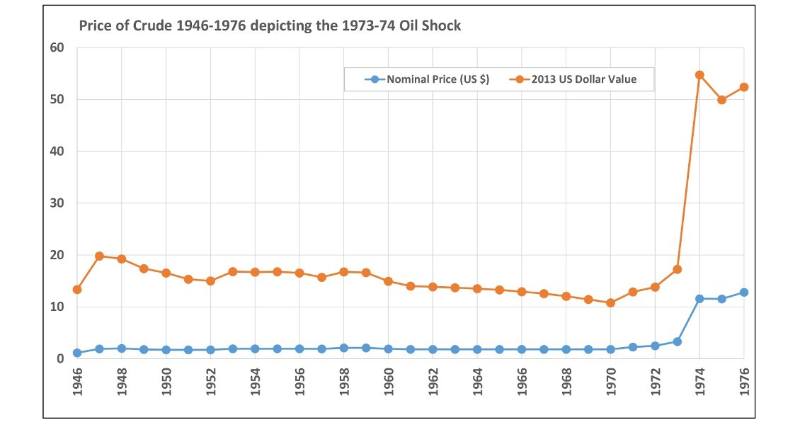
The effects on the economy were catastrophic. The significantly elevated cost of energy led to a catastrophic economic collapse with clear signs of a recession. However, at the same time, the high price of oil worsened inflation, causing economies to enter stagflation, a condition in which prices are increasing while the economy is in a state of stagnation. The shock to oil prices sent the Western world into the biggest economic crisis since the Great Depression.
The crisis had made it abundantly evident to the Western industrialized countries how reliant their economies were on oil imports, even as the political and economic situation began to recover again from 1975 on. As a consequence, several nations’ quest for other energy sources (such as nuclear energy, wind energy, and solar energy) to lessen their reliance on oil was sparked by the oil scarcity.
For instance, the German government authorized a 6 billion DM initiative in December 1973 for the development of 40 nuclear power facilities. Despite this, oil is still one of the most significant sources of energy. The oil crisis encouraged the OPEC nations to keep progressively raising the price of oil from $2.83 per barrel in 1973 to $36.15 per barrel (1980). A new set of issues for governments resulted from the widespread unemployment among the developed Western nations. The era of the European economic miracle had come to an end. But, just a few years later, a different commodity—silver—saw its price soar to previously unheard-of heights in 1980 that it became the focus of a speculative bubble.