They patiently wait on top of the house until Santa squeezes his hefty frame through the chimney to deliver presents and have some milk and cookies. Santa Claus is often seen making his way through the skies in a sleigh drawn by reindeer. One could wonder, “Why the reindeer?” Why didn’t Santa simply hitch some horses to the front of his sleigh like everyone else?
The arrival of Santa Claus
The origins of Santa Claus are far from what they are now. Santa Claus did not play a part in the celebration of the winter solstice until Pope Gregory designated December 25 as Jesus’ birthday in 354. There was a lengthy tradition in which the Christ Child, representing the Three Wise Men, would bring presents. Not until the nineteenth century did Santa Claus become well-known in many countries around Europe.
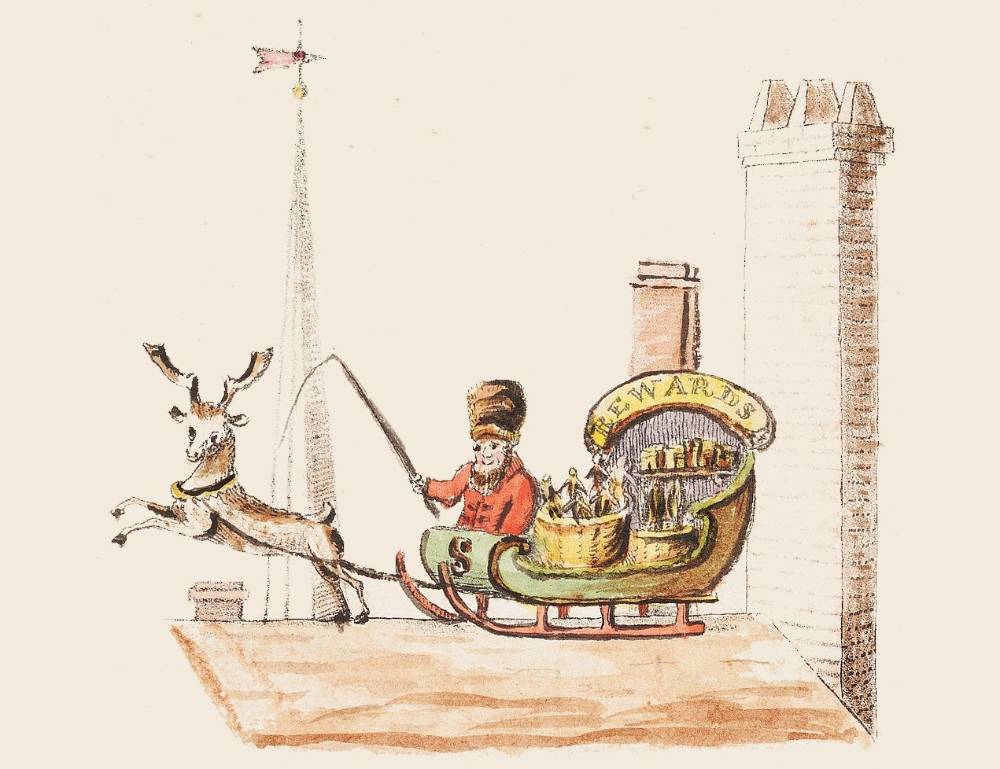
An anonymous artist in 1821 created eight illustrations for the poem “Old Santeclaus with Much Delight,” which depicted, among other things, a man in a scarlet coat riding a reindeer sled for the first time in history. The artworks included with the poem are the first-ever portrayals of Santa Claus to be published in print. It’s the earliest written account of Santa Claus’s arrival on Christmas Eve and the first time his reindeer and sleigh are mentioned (let alone depicted).
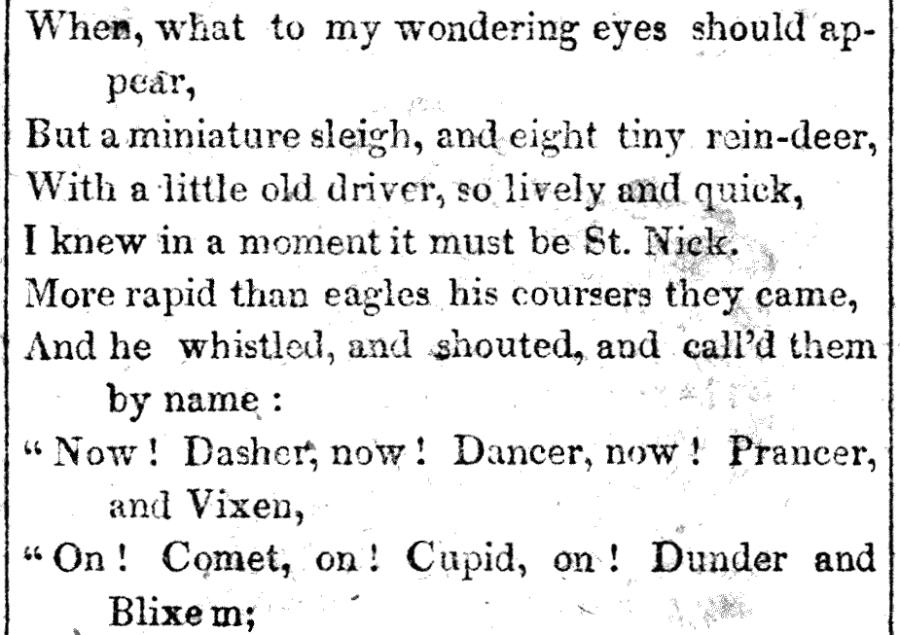
The American writer Clement Clarke Moore’s “The Night Before Christmas,” written two years later in 1823, is famed for its description of a bearded Santa Claus and the names of his reindeer: Dasher, Dancer, Prancer, Vixen, Comet, Cupid, Donder (also written “Donner”), Blitzen, and Rudolph. The poem tells the story of Christmas Eve, when Santa travels by sleigh pulled by his trusty team of reindeer to give presents to good little boys and girls.

A significant portion of the present conception of Santa Claus is predicated on the names of his reindeer and the belief that they can fly with his sleigh. Several Christmas classics include reindeer by name, especially Rudolph, whose bright red nose made him an instant icon.
The portrayal of Santa Claus gained traction, maybe because he was simpler to mold into chocolate than the abstract concept of the Christ Child.
In 1847, the Austrian Moritz von Schwind sketched Mister Winter, a white-bearded, overweight man in a large, hooded cloak. When Santa first appeared, he seemed like a cross between Saint Nicholas, the gift-giver saint, and the very gloomy, punitive Knecht Ruprecht of European folklore.
The origin of the reindeer of Santa Claus
In 1868, an illustration of a reindeer sled appeared in New York’s Harper’s Magazine. Santa Claus coming down chimneys was an American invention. When mentioned in print in Clement Moore’s “A Visit from St. Nicholas,” reindeer hauling Santa’s sleigh became an iconic image associated with the holiday. The authors opted for reindeer probably because of their lengthy history as sleigh draft animals among the nomads. But, there is still more to the origins of the reindeer of Santa Claus.

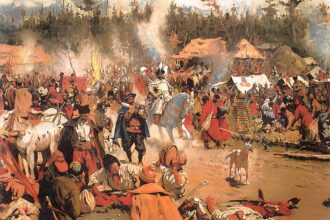
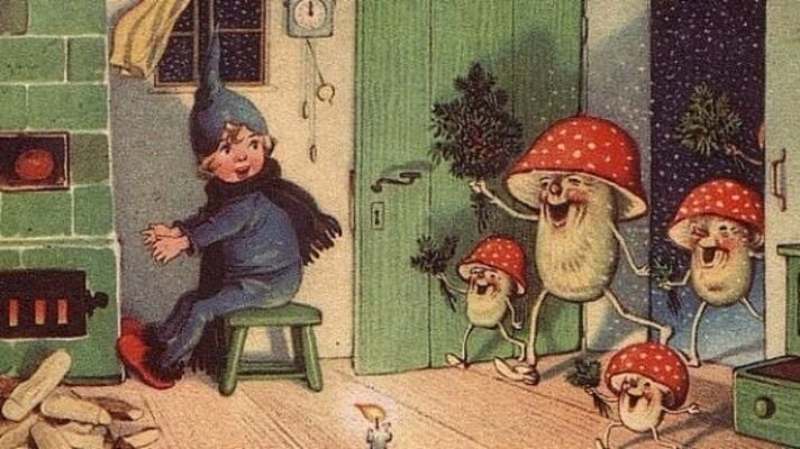
Tribes in northeast Siberia, including the Koryaks, Chukchi, and Kamchadals, had rituals honoring the big reindeer spirit. The shamans were able to communicate with this spirit by consuming fly agarics (toadstools) either as a decoction or in their dried form. According to a 1658 account written by a Polish prisoner of war, this practice was as follows: “They eat certain fungi in the shape of fly agarics, and thus they get drunk worse than on vodka, and for them, that’s the very best banquet.”
Hallucinogenic mushrooms caused the shaman to “float” through the smoke vent of his hut and into the realm of reindeer spirits, from whence he returned with dances, tales, and songs as “gifts” for his people. The only thing missing is a chimney and some Christmas carols to go along with some toys, and you’ve got yourself a pretty suitable Santa Claus.
From winged horses to flying reindeer
Another explanation for the origins of the reindeer of Santa Claus involves a wandering Muslim preacher by the name of Sari Saltuk. Many of the mythologies that have developed around this person have parallels in European stories about St. Nicholas. Some assume that this itinerant preacher’s story inspired certain aspects of Santa Claus. On the back of his flying horse Ankabil, Sari Saltuk made it to Europe (allegedly to “Lapland”), where he has resided for eternity. The flying reindeer may have descended from this equine with wings.
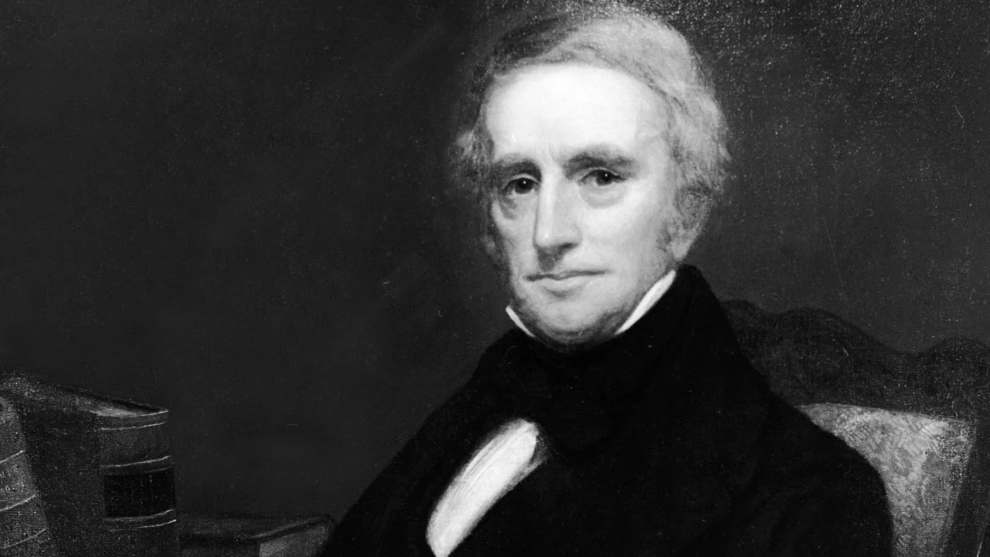
The thing is, Clement Clarke Moore, one of the first authors to portray Santa Claus in 1823, was also a professor of Oriental languages. Whether he inserted one of his favorite Koryak stories into his Christmas poem or transformed Ankabil into a flying reindeer, one thing is certain: Santa Claus would not be as effective in distributing his gifts without his flying reindeer.
Bibliography
- Jean Blacker; Glyn S. Burgess; Amy V. Ogden, 2013, “The Life of St Nicholas: Introduction”.
- Jeremy Seal, 2005, Nicholas: The Epic Journey from Saint to Santa Claus.
- Bowler, Gerry (2005). Santa Claus: a biography. McClelland & Stewart Ltd. ISBN 978-0-7710-1668-4.