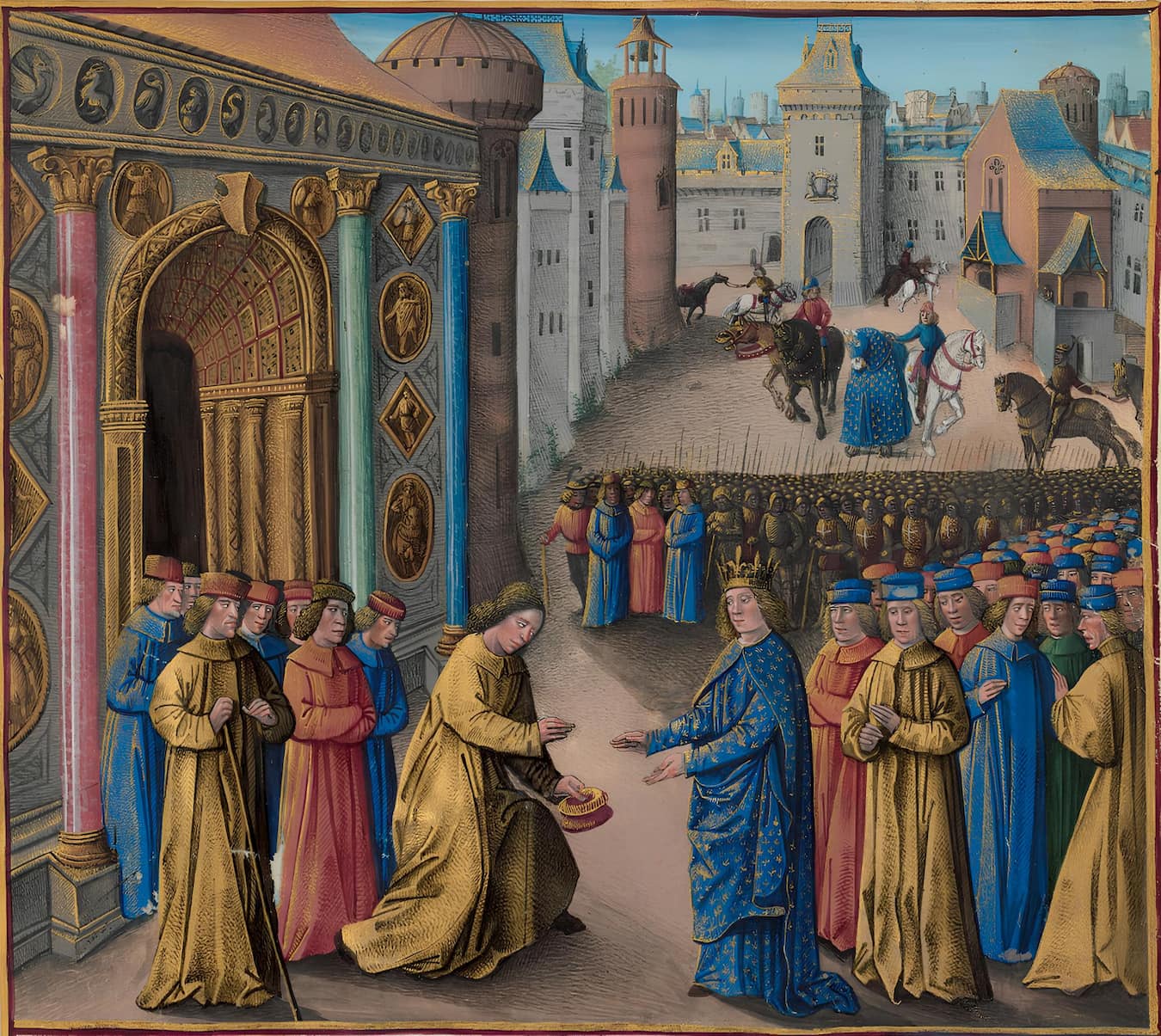
Have you ever wondered where the word “pharaoh” comes from and why it was never an official royal title? It is true that the name “pharaoh” was never used as a formal royal title in ancient Egypt, but it was nonetheless often used to refer to the country’s top ruler. The Greek term φαραώ, from which the English name pharaoh is derived, means “great house” in ancient Egyptian per-aA and the usual reading is pr-aA.
Origin of the word pharaoh as a title for the kings of Egypt
The word pr-aA was originally used primarily in the world of the aristocracy. Palaces, court offices, and court vocations were referred to by the prefix imy-r pr-aA (“Overseer of the Great House”) or smr pr-aA (“Courtier of the Great House”). The king’s name and official titulature were considered sacrosanct, therefore using them in vain was considered vulgar and even blasphemous. However, the phrase gradually came to be used as a polite euphemism for addressing the king, much like “Your Majesty.”
The term “pr-aA” for the king first appears in writings from the 12th dynasty, although it wasn’t widely used until the 18th and 19th dynasties of the New Kingdom (the latter half of the 2nd millennium BC). By the time of the 22nd dynasty (about 945–around 730 BC), the word pr-aA had become a common term of respect.
Later, during the Hellenistic era (the final few centuries before the beginning of our era), pr-aA became the usual word for any ruler as such, not only Egyptians. In this context, it was also used to refer to foreign kings. That’s when the Greeks adopted the term, and it stuck as the standard way to refer to Egypt’s monarchy ever since.

What was the official title of the ancient Egyptian kings?
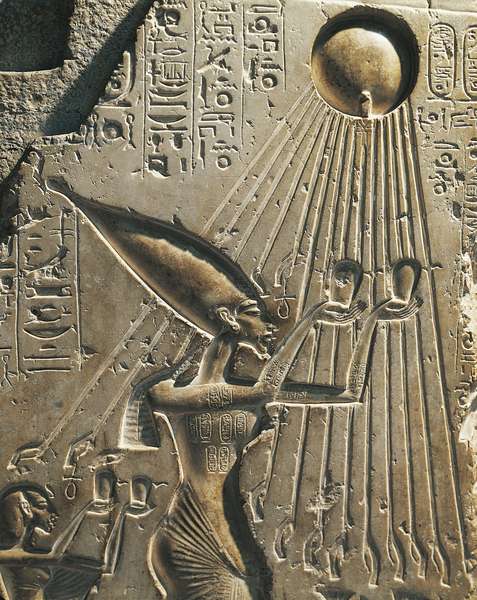
Five separate title names made up the whole royal titulature in ancient Egypt; nsw-bity or nswt-bjtj is the one that most closely translates to “king” (the accepted reading is “nesu-bity”). A reed and a bee are reflected in the letters that make up this word’s spelling. The vast majority of scholars agree that these are the holiest symbols of both Upper and Lower Egypt. Literally, nsw-bity means “he of the sedge and bee” or “the ruler of both Upper Egypt and Lower Egypt.”
The fact is that at the beginning of its history, Egypt was divided into two warring kingdoms, Upper Egyptian and Lower Egyptian, and that it was only after their union into one state that a strong and flourishing Egypt as we know it and as the Egyptians knew it appeared. For the ancient Egyptians, this strength was a guarantee to the cohesion that underpinned their stability and prosperity.
Due to the fact that the king’s name was often followed by “nsw-bity,” which also featured a reference to the deity Ra, this title was sometimes referred to as a “solar” title. Different parts of the king’s sanctification were highlighted by various royal titles.
The so-called Horus name was the first in a long line of dynastic titles, and it linked the king to the deity Horus (the falcon god) and the warrior god who vanquished the forces of evil in the form of Seth (the adversary god). For each king who took the name of Horus, an epithet was added to explain how the Horus particle manifested in him and what characteristics he particularly valued.
These names were stressed as aggressive and male, such as Horus, the fighter, or different references to animals, such as serpent, crocodile, and scorpion, during the early dynasties, when the most essential mission of the ruler was to maintain Upper and Lower Egypt under one government. Later, when Egypt finally achieved stability, Horus names like Sekhemib-Perenmaat became more serene which means something like “reaching Maat” (i.e., truth, harmony).
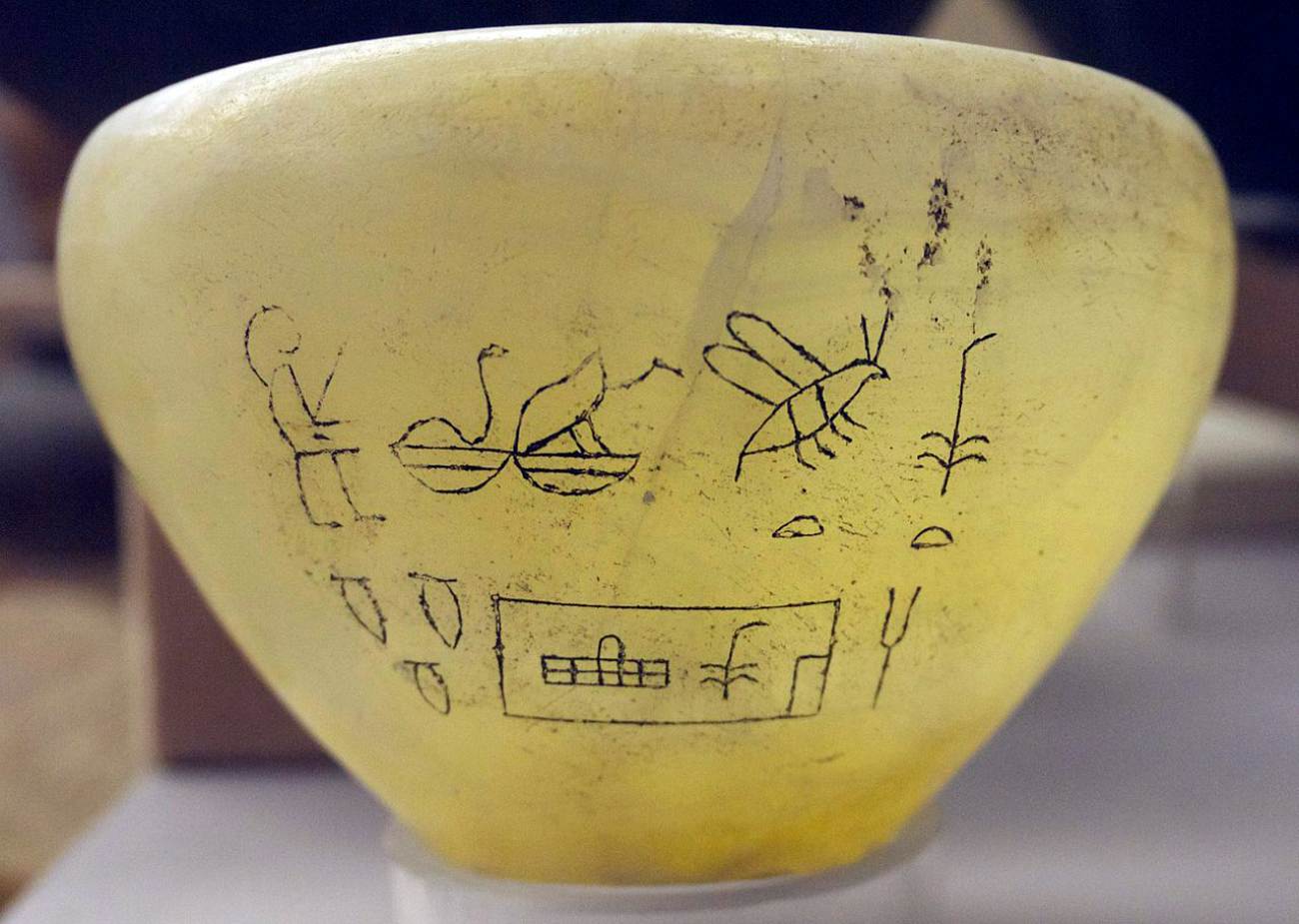
Sen-Nebty (“kissed by the Two Ladies” or “brother of the Two Ladies”). And king Hotepsekhemwy called himself Sehotep-Nebty (“the Two Ladies are pleased (with him)”),
As if that weren’t enough, the name of the Two Ladies, also known as the title “nebty,” followed, further emphasizing the Egyptian king’s role as unifier and providing justification for his rule over both Upper and Lower Egypt.
The “Two Mistresses” refers to the goddesses Nekhbet and Wadjet, who were the patronesses of Upper and Lower Egypt. Variations on this theme included being a “brother of the Two Ladies (Sen-Nebty)”, “he who succeeds Two Ladies”, and even “being kissed by the Two Ladies”.
The third official name for the ancient Egyptian kings was Golden Horus, also known as the “golden name.” The name usually began with a hieroglyph depicting Horus sitting on a golden pedestal. According to ancient Egyptian mythology, gold was the flesh of the gods. And as a symbol of the sun, it also began to appear in the “golden” title during periods of increased emphasis on solar worship. These names could have different meanings such as “Sun in gold,” “Golden in his name,” or “Golden Horus, plentiful in his years like the god Atum.”
Lastly, the king’s given name at birth was also included in his title, which was often followed by the title “Son of Ra” to indicate that the king was born of a sacred union.
Pharaohs sometimes changed their own titles
From the time the Middle Kingdom was formed until much later, this series of four title names (excluding the personal name) served as a kind of political manifesto for each Egyptian king. The titulature of a ruler’s reign can shed light on the characteristics they admired most, the priorities that guided their policies, and the achievements of their reign. At the beginning of each new phase of their rule, several Egyptian pharaohs even altered the name that was attached to their official title.
Mentuhotep II, founder of the 11th dynasty, renamed himself “Unifier of both regions” in the Chorus from “He whose white crown (i.e., the crown of Upper Egypt) is divine.” His actions marked the beginning of the Middle Kingdom era, which followed his reunification of Egypt after it had been split during the First Intermediate Period.
Let us take the titling of Thutmose III as an example. He was one of the most important kings throughout the New Kingdom era, and he was also a great conqueror who expanded Egypt’s tributary lands all the way to Syria in the north and to the fifth threshold of the Nile in the south.
Bibliography:
- James Peter Allen. Egyptian: An Introduction to the Language and Culture of Hieroglyphs. New York, 1999.
- Alan Gardiner. Egyptian Grammar; Being an Introduction to the Study of Hieroglyphs. Oxford, 1957.
- Ronald J. Leprohon. The Great Name: Ancient Egyptian Royal Titulary. Atlanta, 2013.