When most people hear the word Norman, they immediately think of William the Conqueror sailing across the cold, grey waters of the English Channel in 1066 to defeat the Anglo Saxons at the Battle of Hastings. Yet during that exact same eleventh century, another band of landless Norman knights rode south across the Alps into the sun drenched world of the central Mediterranean, pulling off an even more improbable conquest. Carving a kingdom out of Lombard principalities, Byzantine provinces, and the Islamic Emirate of Sicily, the Hauteville dynasty created the Kingdom of Sicily—the wealthiest, most intellectually vibrant, and most remarkably tolerant multicultural state in medieval Europe.
From Mercenary Pilgrims to the Hauteville Brothers
The Norman adventure in the south began around the year 999 or 1016 not with an invading army, but with small bands of Norman knights returning home by sea from pilgrimages to the Holy Sepulchre in Jerusalem. Stopping at Salerno and the shrine of Saint Michael the Archangel at Monte Gargano in southern Italy, these tall, battle hardened descendants of Vikings discovered a region fractured into perpetual war among three competing powers: Byzantine Greeks governing Apulia and Calabria, independent Lombard princes ruling Benevento, Capua, and Salerno, and Arab Muslim emirs controlling the island of Sicily across the strait.
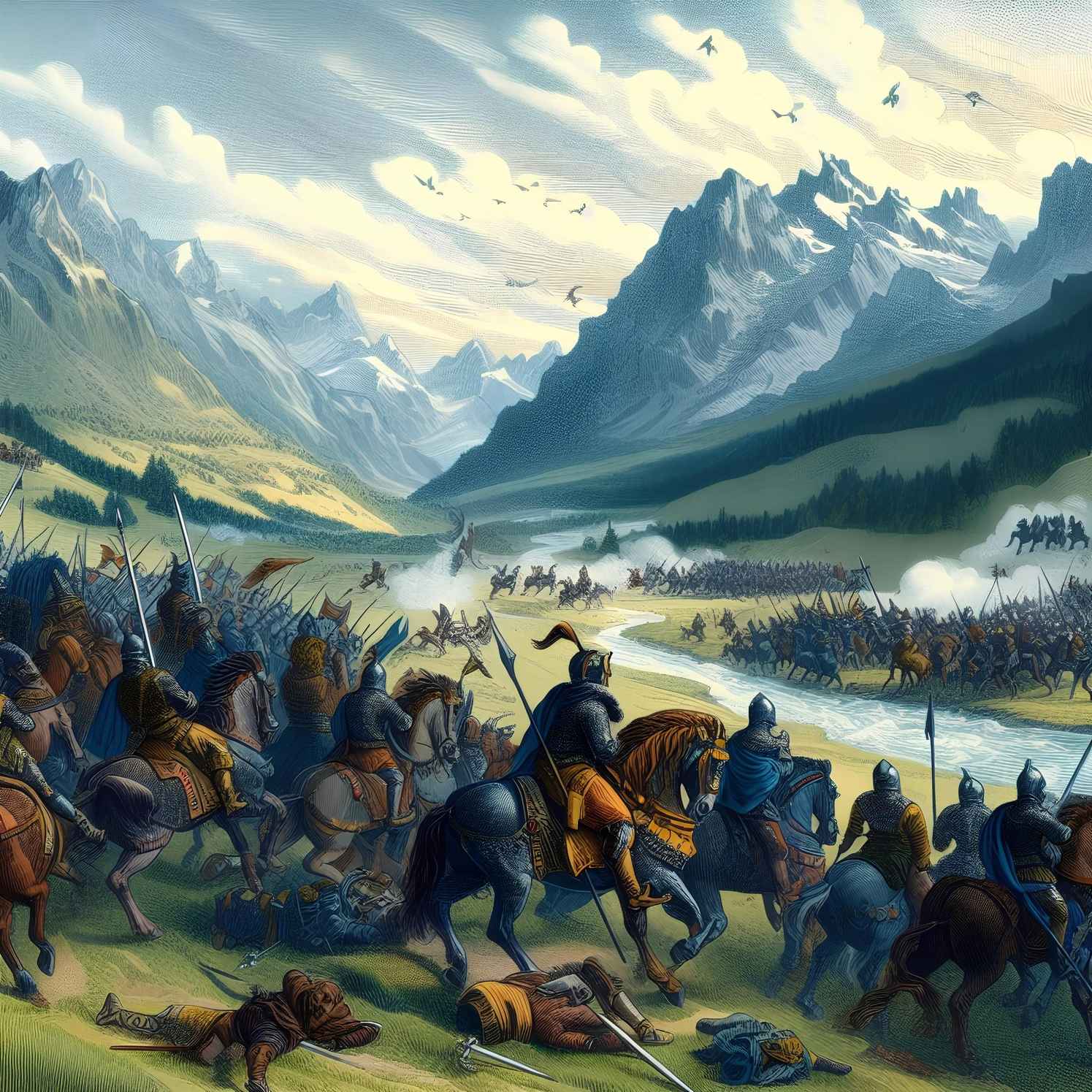
Realizing that every prince in southern Italy was eager to hire heavy cavalry mercenaries for gold, word spread quickly back to Normandy, where the strict laws of primogeniture left younger sons of minor noblemen without land. Among the most ambitious of these landless knights were the twelve sons of a minor baron named Tancred of Hauteville from the Cotentin Peninsula. Arriving in southern Italy in the 1030s and 1040s, the Hauteville brothers—led first by William Iron Arm and later by the cunning giant Robert Guiscard (“the Crafty”) and his youngest brother Roger Bosso—soon stopped fighting for foreign employers and started conquering southern Italy for themselves. After routing a papal army at the Battle of Civitate in 1053 and treating the captured Pope Leo IX with such pious respect that the Papacy became their ally, Robert Guiscard was formally invested by the Pope in 1059 as Duke of Apulia, Calabria, and the future conqueror of Sicily.
Roger I and the Thirty-Year Conquest of Sicily
In May 1061—five years before Hastings—twenty-nine-year-old Roger Hauteville (Count Roger I) crossed the Strait of Messina under the cover of darkness with a tiny force of a few hundred Norman knights to seize Messina, initiating a thirty-year campaign to conquer the island of Sicily. Ruled since the ninth century by Kalbid Arab emirs, Islamic Sicily was a prosperous garden island of lemon groves, sugar cane plantations, silk workshops, and three hundred mosques in its dazzling capital city of Palermo, which rivaled Cordoba and Cairo in population and wealth.
Because Roger I never commanded more than a few hundred or a few thousand Norman horsemen at a time, he could not possibly rule Sicily by expelling or slaughtering its vast majority population of Arabic-speaking Muslims and Greek-speaking Orthodox Christians. Instead, the pragmatic Roger offered remarkably generous surrender terms to every city that opened its gates, including Palermo in 1072: Muslim citizens retained full freedom to worship in their mosques, kept their personal property, were judged in their own courts by Islamic qadis under Sharia law, and even served by the thousands as elite archers and engineers inside Roger’s own army.
Roger II and the Golden Age of Trilingual Palermo
The Norman state reached its dazzling pinnacle under Roger I’s son, Roger II, who united the island of Sicily with the mainland southern Italian territories and was crowned King of Sicily on Christmas Day in 1130 inside Palermo Cathedral. Under Roger II and his successors William I and William II, twelfth-century Palermo became a marvel that astonished travelers from across Europe and the Islamic world, including the Spanish-Arab geographer Ibn Jubayr. Instead of imposing feudal French culture by force, the Norman kings governed a trilingual state where royal charters and coins were issued simultaneously in Latin, Greek, and Arabic.
Walking into Roger II’s royal palace, visitors found a blonde, tall Norman Christian king wearing silk robes embroidered with golden Arabic calligraphy (tiraz), guarded by Muslim palace soldiers, having his treasury managed on the model of the Fatimid Egyptian fiscal office (the Diwan al-Tahqiq al-Ma’mur), and entrusting his formidable Mediterranean war fleet to Greek admirals like George of Antioch (whose Arabic title Amir al-Umara, “Commander of Commanders,” entered Western languages in Sicily as the word “Admiral”). At the center of Roger’s court sat the renowned Muslim geographer Muhammad al-Idrisi, who spent fifteen years interviewing travelers from across the known world to engrave a massive solid silver planisphere map of the Earth and compile the Tabula Rogeriana (The Book of Roger), the most accurate geographical encyclopedia of the Middle Ages.
Arab-Norman-Byzantine Architecture: The Cappella Palatina and Monreale
Nowhere is the genius of Norman Sicily more visible today than in the UNESCO-listed churches and palaces of Palermo, Cefalu, and Monreale, which fused three seemingly incompatible artistic civilizations into a single breathtaking style known as Arab-Norman-Byzantine architecture. Inside Roger II’s private royal chapel, the Cappella Palatina (completed in the 1140s), and inside the colossal Cathedral of Monreale built by William II, Romanesque Western basilica floorplans and pointed arches support shimmering walls covered in thousands of square meters of solid gold Byzantine Greek mosaics depicting Christ Pantocrator.

Yet when a visitor looks straight up at the ceiling of the Cappella Palatina, they behold the largest and finest surviving medieval Islamic wooden muqarnas (stalactite honeycomb) ceiling in the world, painted by Fatimid Muslim artisans with scenes of court musicians, dancers, chess players, and Arabic blessings wishing the Christian King happiness, power, and victory. Serving as the vital intellectual translator bridge where ancient Greek scientific and philosophical texts by Aristotle, Ptolemy, and Euclid were translated directly from Greek and Arabic into Latin long before the Italian Renaissance, Norman Sicily proved for over a century that the medieval Mediterranean could be a crossroads of extraordinary synthesis rather than perpetual crusade.