How Did They Catch the Elephants?
When it came to turning an elephant into a battle elephant, the Indian elephants used to be tamed easily regardless of age; therefore, it was usually best to capture young elephants that could be put to work right away. Training an African elephant, on the other hand, was a long and arduous procedure because of the elephant’s sluggish learning rate. (This was likely because Asian animals had better motor coordination than their African counterparts.) The battle elephant trainers never wanted to capture a newborn-sucking elephant, an elephant without tusks, a sick or immature elephant, or a female that was either pregnant or nursing.
- How Did They Catch the Elephants?
- The Elephant Needed to Learn the Basics of Living Before It Could Understand the Complexities of War
- Learning to Control An Elephant
- Training the Elephants to Trample, Grasp, Stab, and Crush
- Carrying a Chisel and Hammer
- Using Elephants For Non-Combat Purposes
- Decorating the Elephant and Protecting Its Body
- Feeding The War Elephants
- Taking Care of the Health of War Elephants
Related:
- Surus: The Story of Hannibal’s Favorite Elephant
- Did Hannibal’s Elephants Carry Towers?
- What Kind of Elephants Did Hannibal Use?
Elephants chosen to be turned into battle elephants were first captured by driving them into a trap ditch or an enclosure made of poles. To bring captured elephants to the camp and tame them, the trained elephants were used.
The Elephant Needed to Learn the Basics of Living Before It Could Understand the Complexities of War
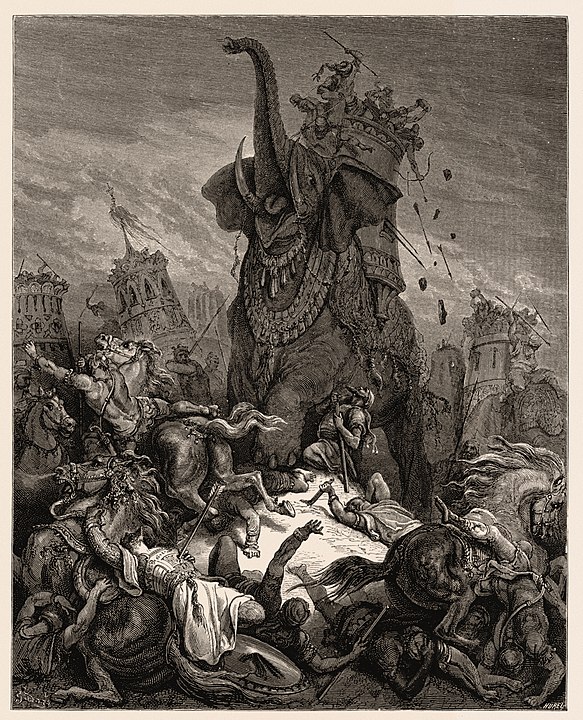
Training an elephant for war required acclimating it to a variety of human stimuli, including girths, reins, chains, and the entire herd. Adult Indian elephants were controlled by malnutrition and beatings and then taught to obey the herdsman’s simple directions with the aid of tamed war elephants. An African elephant could take anywhere from a month to a year to fully complete its initial training, during which time it learned to be gentle around humans and followed simple orders.
In most respects, training an elephant for battle was no different from training any other pet.
Learning to Control An Elephant
How to restrain an elephant has remained mostly unchanged for thousands of years, with the arrow, bamboo cane, and other devices all being used in the same ways as they were before.
The arrow was never used as a first resort while training an elephant. The elephant was slapped or stabbed in the neck or ears by its trainer (kornak, cornac, or mahout). The elephant usually responded to the kornak’s verbal directions or those delivered by tapping the animal’s heels or placing your thumbs behind the animal’s ears. But while there were a few different elephant-riding positions, they were all pretty much just variations on how to manage any other riding animal.
Training the Elephants to Trample, Grasp, Stab, and Crush
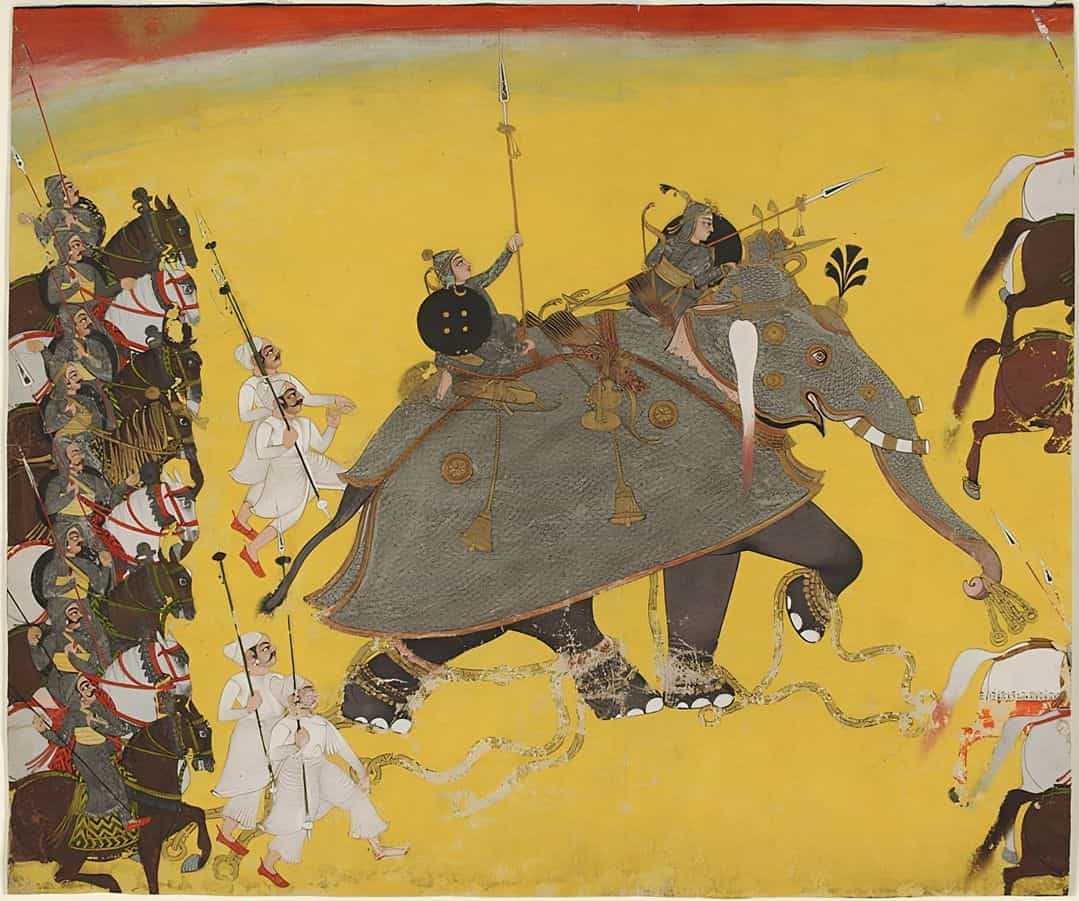
Attacking, slaughtering, and crushing enemy soldiers; engaging in combat with other elephants; storming an enemy city; and engaging in open-field combat were all activities characteristic of a fighting battle elephant. The battle elephants were trained to attack by crushing enemy troops with their trunks, trampling them underfoot, shredding their bodies with their tusks, seizing enemy soldiers and horses, as well as tossing spears with their trunks.
But elephants are not naturally violent, so if you really want to provoke one, you could use alcohol, pepper, or narcotics. Indians and later Greeks recognized early on that elephants were easily intoxicated. As a result, alcohol was included in the diet of battle elephants; however, instead of wine, the elephants were fed a drink derived from rice and sugar (it was probably much stronger than wine and probably more like vodka).
The war elephants were given opium in Ceylon. Mulberry juice was used to stain the elephant’s trunk in ancient times because it was believed that the color red would encourage the animal to become more aggressive and vicious, much like how a huge bell hanging around an elephant’s neck would annoy and provoke the animal whenever it moved.
Carrying a Chisel and Hammer
As soon as a war elephant showed signs of being agitated and started trampling its fighting order, the animal had to be killed. In extreme cases, the rider would position a chisel at the victim’s skull base and whack it with a hammer to put the elephant down before it killed any of the friendly warriors.
Using Elephants For Non-Combat Purposes
The British in India took advantage of the elephants’ superiority in the highlands by having them haul heavy weapons. However, these elephants were used for transporting goods and were not used in battle. They were particularly helpful in marshy regions, where horses and oxen had a hard time moving forward, and indispensable in hilly regions. Elephants have strong trunks that could be used to free blocked carriages or artillery pieces.
Decorating the Elephant and Protecting Its Body
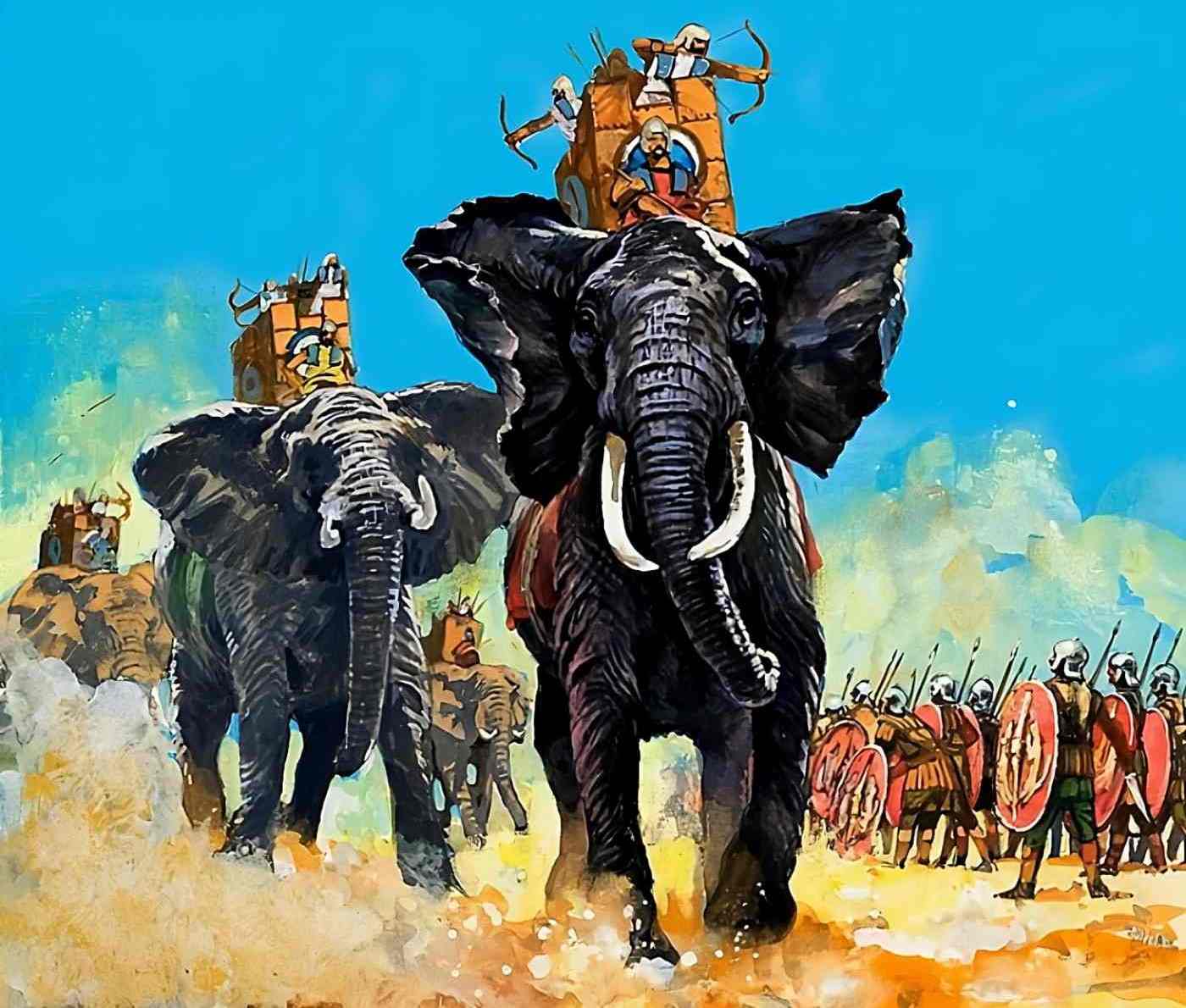
To spread fear, the war elephant had to make a good first impression on the adversary. The Indians, Greeks, and Carthaginians ornamented their war elephants with gold and silver to make them look more regal. They wore purple blankets over their bodies and had red, blue, or white paint applied to their foreheads and ears.
Having armor that covered as much of the elephant’s body as possible along with some strategic weapons to crush the opponent was also helpful. Elephant tusks and spears would be more effective if they were tipped with iron. Elephants with stakes fastened to their chests were an extremely useful tool for disrupting the enemy’s battle formation.
Feeding The War Elephants
Even though elephants have a lengthy gut (115 feet or 35 meters), their digestion is so slow that it takes at least a day for the animal to process its food. The war elephants would quickly lose strength if their food was inadequate.
Adult elephants in the wild today require eating for around 20 hours per day, compared to 8–10 hours a day for non-foraging domesticated animals. The average daily need for grass and roots for an elephant is around 160 kg or 350 pounds. And considering the limitations of war, their minimum limit to survive is around 40 kg or 90 pounds. And that’s just enough to protect the animal from being too weak to survive.
The war elephants were supplemented with pepper, wine, or vodka in addition to rice, sugar, bread, fruit, and other tonics to boost their vigor during battle.
Taking Care of the Health of War Elephants
When compared to humans and other animals, elephants rely on their habitat and the weather a great deal more. They are extremely delicate to temperature shifts, and they suffer equally from hot and cold. Since elephants don’t have fur to shield their skin from the sun, they suffer from painful sunburns. This was also true for battle elephants back in the ancient days.
The improper quantity of water was also just as harmful to them as it is today. All battle elephants needed a regular wash by their kornaks. Every day in the afternoon, a war elephant was given a drink of water since it had been working nonstop since dawn. Because the corrosive secretion within their bodies would cause them to go blind if they didn’t drink enough water or take baths. Any army primarily composed of elephants had to relocate themselves to a location with a lot of water, and marching in the wet season was the ideal way to go to war.