Sendai Daikannon at a Glance
What is Sendai Daikannon?
Sendai Daikannon is a statue located in Izumi-ku, Sendai City, Miyagi Prefecture, Japan. It is the second tallest statue in Japan, after Ushiku Daibutsu. The statue represents the Shingon School of Buddhism and depicts Guanyin or Kannon in Japanese, the Bodhisattva of Compassion or the Goddess of Mercy.
How tall is Sendai Daikannon?
The statue is exactly 328 feet (100 m) tall; however, the figure itself is actually 302 feet (92 m) tall, with the pedestal bringing its total height to 328 feet (100 m).
What is the design of Sendai Daikannon?
Sendai Daikannon sits on a redeveloped land that towers around 590 feet (180 m) above sea level. From the front, it appears like Sendai Daikannon is perched on a dragon, whose mouth serves as the entrance to the statue on the pedestal. Visitors may look out onto the city and Mt. Izumigatake from the observation windows that line the perimeter of each of the statue’s 12 levels.
What is the guardianship charge to see the inside of the monument?
There is a guardianship charge of 500 yen ($3.76) per person that must be paid before entering Sendai Daikannon to see the inside of the monument. Visitors may offer prayers directly to the 33 Kannon sculptures, 12 Shinto priests, and 108 Buddha statues that are housed on each of the building’s 12 internal levels.
Sendai Daikannon is a statue located in Izumi-ku, Sendai City, Miyagi Prefecture, Japan. Completed in September 1991, the statue represents the Shingon School of Buddhism. Sendai Daikannon is exactly 328 feet (100 m) tall and it is the second tallest statue in Japan after Ushiku Daibutsu. The statue depicts Guanyin which is called Kannon in Japanese, and she is the Bodhisattva of Compassion or the Goddess of Mercy. The Sendai Daikannon monument can be seen from the city’s center region, including many high-rise buildings. The statue is directed toward Sendai Station, located approximately 4.3 miles (7 km) away.
- Sendai Daikannon at a Glance
- What is Sendai Daikannon?
- How tall is Sendai Daikannon?
- What is the design of Sendai Daikannon?
- What is the guardianship charge to see the inside of the monument?
- Sendai Daikannon’s Design
- Sendai Daikannon’s Interior
- Trivia
- Expensive Restoration
- History of Sendai Daikannon
- Traveling to the Sendai Daikannon
Sendai Daikannon’s Design
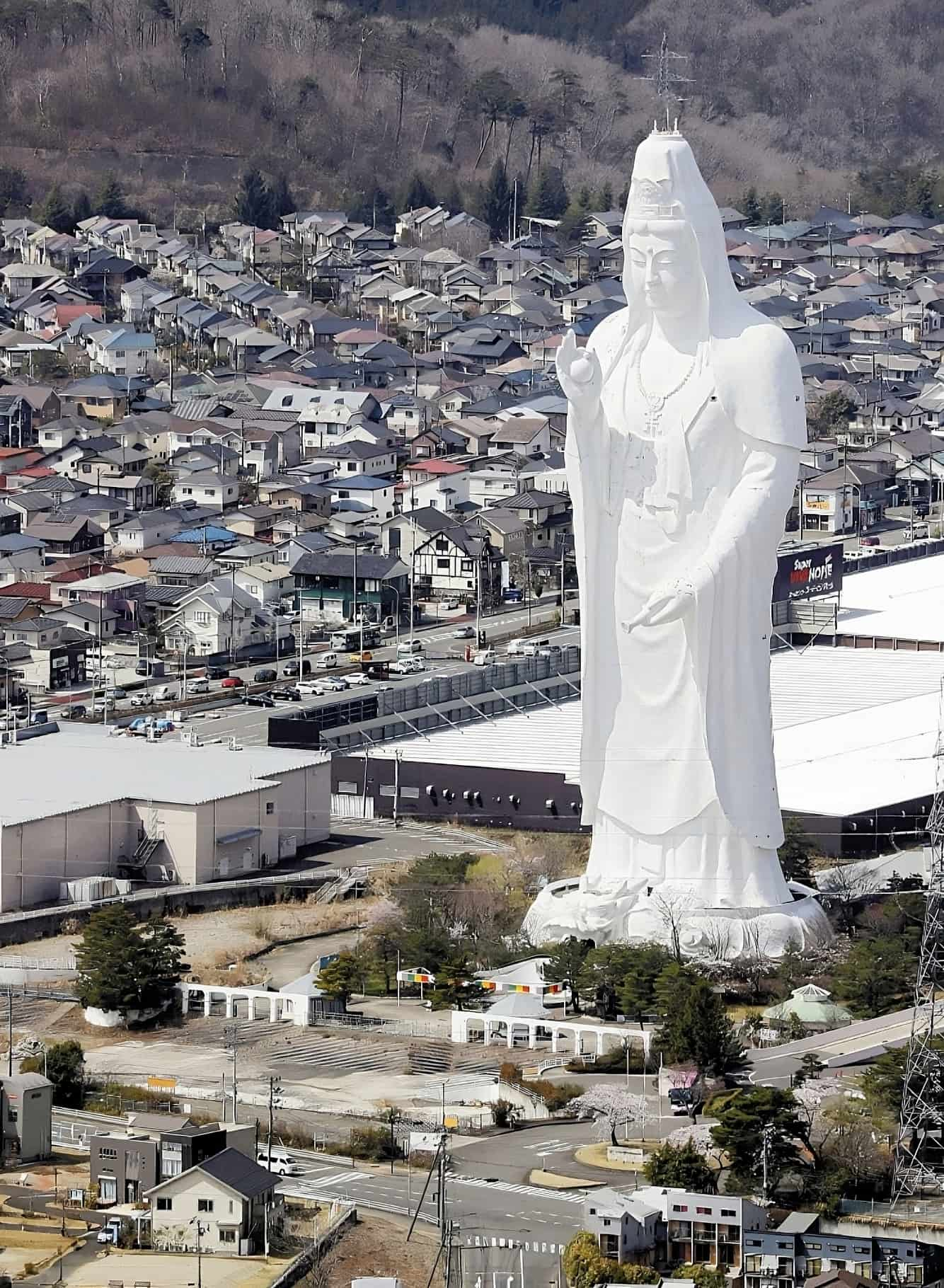
Sendai Daikannon sits on a redeveloped land that towers around 590 feet (180 m) above sea level. It is found around 4 miles (6.5 km) northwest of Sendai’s city center. The official name of the statue is Sendai Tend Byakue Daikannon and Byakue Kannon means “White-robed Kannon”.
This statue has been watching over the lives of citizens for over 30 years. The exterior of Sendai Daikannon was painted with white fluoropolymer resin which is water-repellent.
The monument itself is 302 feet (92 m) tall, while the pedestal brings its total height to 328 feet (100 m). This makes Sendai Daikannon the sixth tallest statue in the world since 2018. For comparison, Christ the Redeemer in Brazil is at 125 feet (38 m).
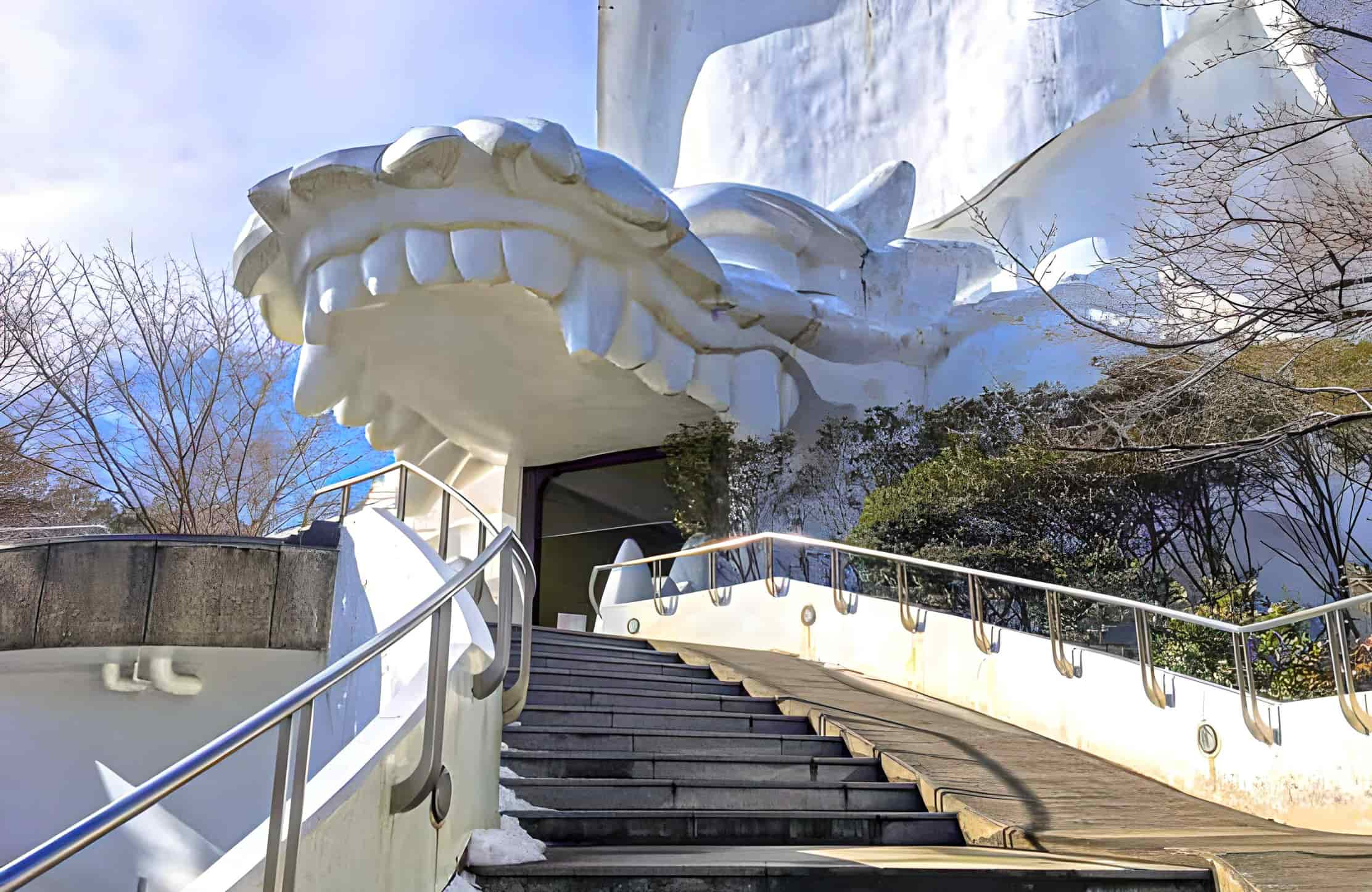
From the front, it appears like Sendai Daikannon is perched on a dragon (Toryumon, 登龍門), whose mouth serves as the entrance to the statue on the pedestal.
By climbing the Sendai Daikannon, visitors may look out onto the city and Mt. Izumigatake from the observation windows that line the perimeter of each of the statue’s 12 levels. One observation window is at 223 feet (68 m) around the monument’s chest.
The Oshika Peninsula may also be seen well on a clear day. Additionally, both shoulders have windows at the height of the aviation obstruction lights. The statue withstood the 2011 Tōhoku earthquake and tsunami.
Objects and Their Meanings
In Sendai Daikannon, the byakugō (or urna) on her forehead measures 29 inches (74 cm). It is a dot placed between Kannon’s eyebrows. The word literally means “fine white hair” and they are placed on the forehead of all Buddha statues.
The Cintamani jewel (Nyoihōju) Sendai Daikannon holds in her right hand is 9.85 feet (3 m) in diameter and weighs 34 tons. It is a wish-fulfilling jewel in both Hinduism and Buddhism. So, the statue grants people’s wishes.
The water flask in her left hand is 26 feet (8 m) in length and 6.5 feet (2 m) in diameter, and it is big enough to store 67 tons of water. According to tradition, this water flask pours wisdom.
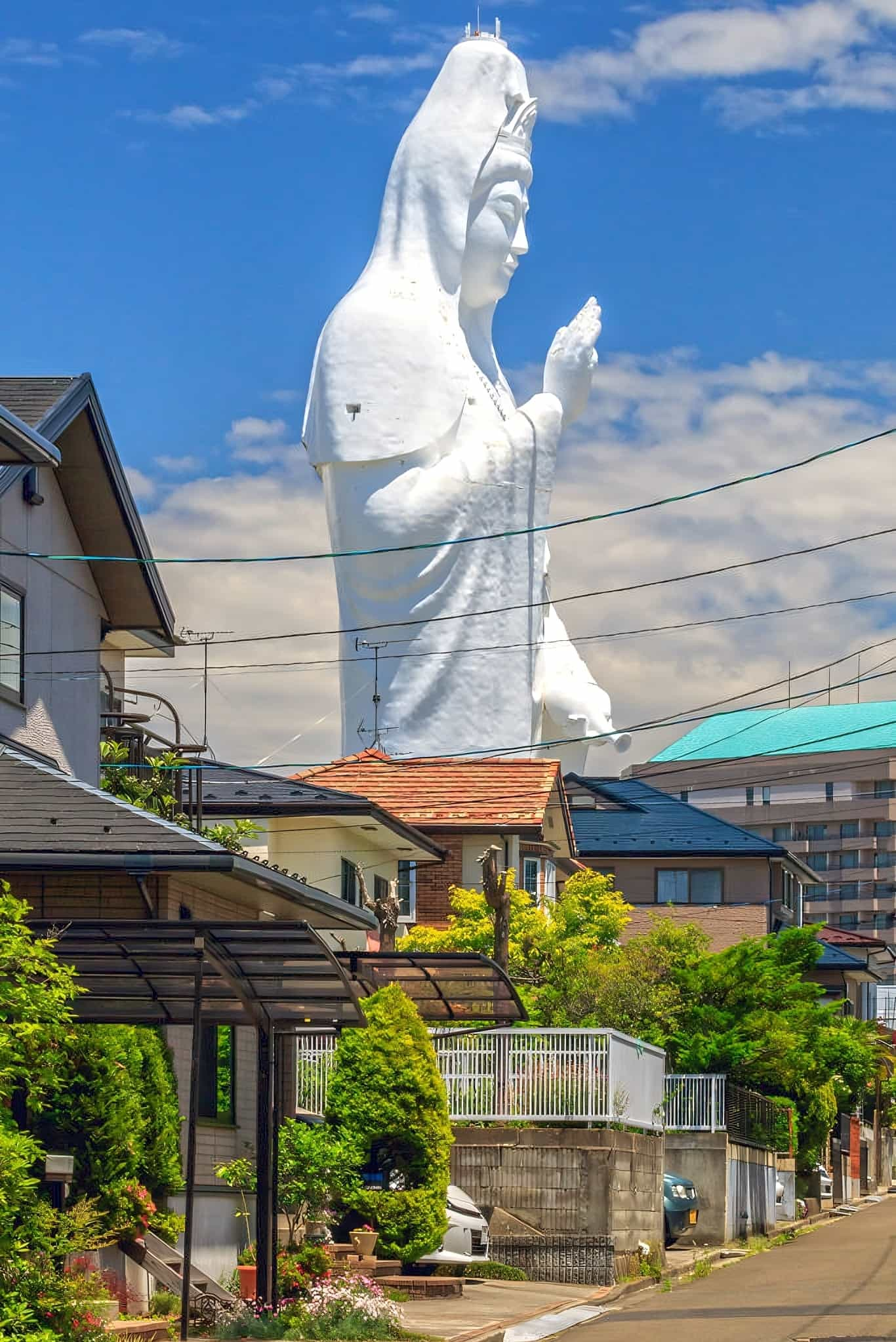
Since 1991 marked the 100th anniversary of Sendai’s establishment as a city, this made the number 100 noteworthy for the monument. The statue also reaches 69 feet (21 m) underground to represent the success of the 21st century.
Sendai Daikannon’s Interior
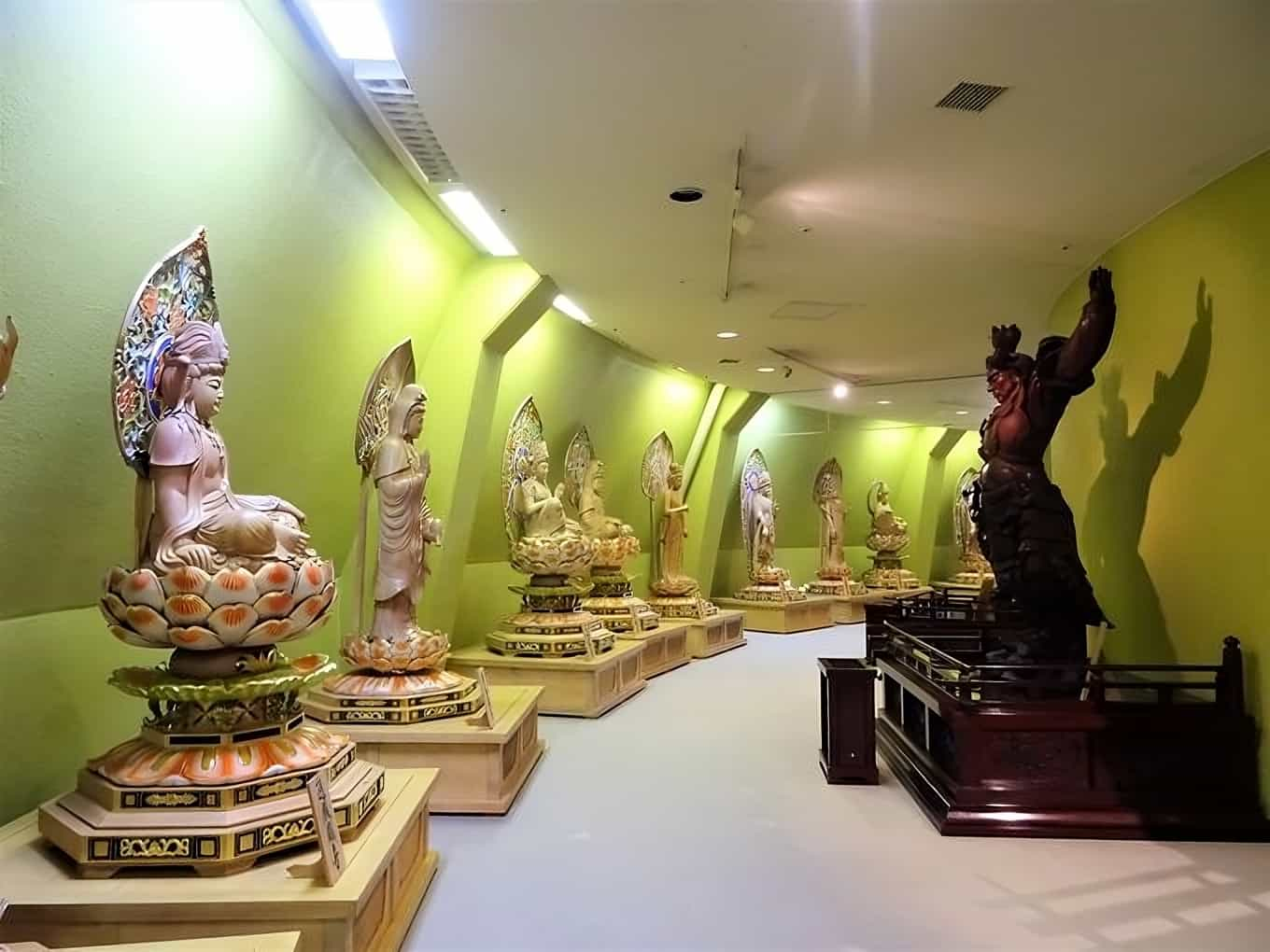
There are 33 sculptures depicting the 33 forms of Kannon along the ground level. There are demonic figures in armor decorating the inner wall, one for each month of the year according to Chinese astrology.
The atrium of the statue measures 197 feet (60 m) in height and is split into 12 sections. In this sense, Sendai Daikannon is also a building as much as it is a statue.
Visitors may offer prayers directly to the 33 Kannon sculptures, 12 Shinto priests, and 108 Buddha statues that are housed on each of the building’s 12 internal levels. The building has an elevator that takes guests straight to the 12th level.
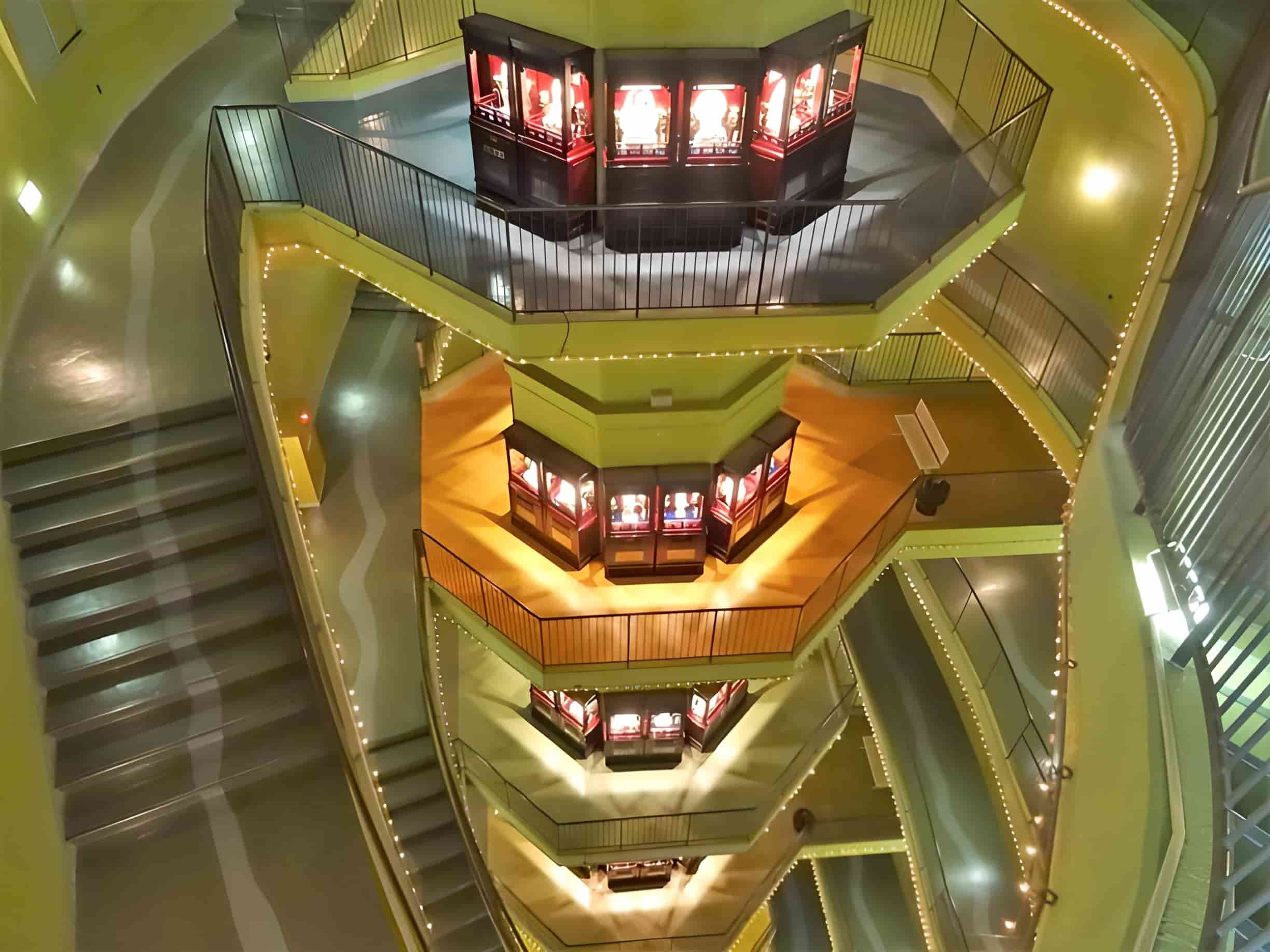
There is a guardianship charge of 500 yen ($3.76) per person that must be paid before entering Sendai Daikannon to see the inside of the monument.
Trivia
- Once completed in 1991, the monument interfered with ground-based analog TV transmission signals, which led to the construction of the New World Nakayama Television Relay Station close to the monument. However, it was done away with once analog TV transmissions stopped.
- In Buddhist nations like Thailand in particular, Sendai Daikannon has been utilized as a filming site and even a Thai booklet in advertising Sendai as a tourist destination was published in the country.
- Many people came from all over the nation on bus tours when the statue first opened since the economy was on a bubble at the time. Also well-attended were the summer celebration’s 200 huge fireworks displays.
Expensive Restoration
Repairing the surface cracks of the monument would cost around 200 million yen or 1,500,000 US dollars. Since putting up scaffolding would be prohibitively expensive, Sendai Daikannon’s restoration was outsourced to a firm that has extensive experience working with ropes for such purposes.
In March 2023, the statue went through full-scale restoration work for the first time since its construction in 1991. The restoration plan involved repairing surface cracks, removing dirt, and repainting the statue white.
To minimize costs, workers used a “climbing method” in which they hung from ropes attached to the top of the 328-foot-high (100 m) Sendai Daikannon’s head. Cracks on the surface of the statue were first seen in about 2001.
History of Sendai Daikannon
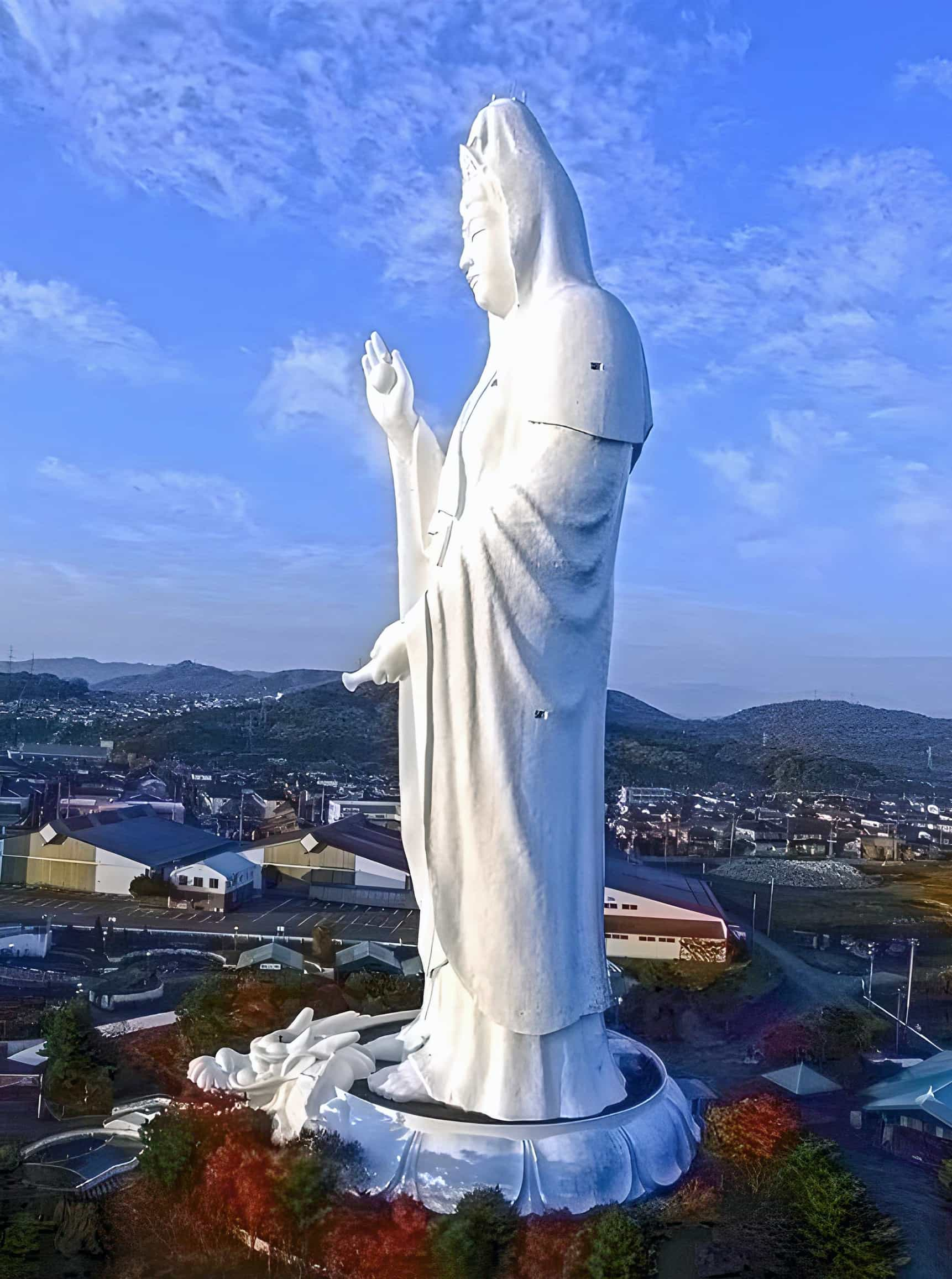
The Futaba Group, a real estate development corporation, built the Sendai Daikannon as part of their massive “Nakayama” residential and recreational complex, which they began building in 1964. Man Kubara, the group’s founder, planned to build a monument in Sendai to honor Kannon, whom he thought had helped him succeed in business.
He started building the monument on the property owned by the Futaba Group. An opening ceremony was conducted for the nearby New World Hotel (now Sendai Hills Hotel) on the same day that the monument was dedicated (September 1991). The hotel’s bus station and the nearby junction are also called “Sendai Daikannon.”
When Sendai Daikannon was originally erected, visitors and devotees flocked to the area to see the enormous monument for the first time.
Locals organized a protest campaign once the project was first disclosed, and their sentiments were that the monument was creepy. However, the statue has grown rooted in the neighborhood, serving as a place of worship and social gathering.
The gigantic Kannon monument, which can be seen from the whole city, became more popular among international visitors to Japan in the 2010s due to its uniqueness as a statue.
Daikaku-ji Temple (that is 517 mi; 832 km away) is the administrative temple of Sendai Daikannon and the Daikokuten enshrined here is known for the rare worship method of pouring oil on it. There are many worshipers from inside and outside Sendai City visiting this temple.
It is believed that this worship method of pouring oil was originally derived from the bath oil method, one of the methods of Shingon Esoteric Buddhism.
Traveling to the Sendai Daikannon
- By bus: To get to Sendai Daikannon, take the Sendai City Bus from Sendai Station’s West Exit Bus Pool 14 and get off at the “Sendai Daikannon-mae” bus stop. The statue will be a minute’s walk away.
- Sendai Daikannon complex offers free parking for 15 buses and 200 cars.
References
- The restoration work of Sendai Daikannon [in Japanese]: Kahoku Shimpo Online.
- The official website of Sendai Daikannon: Daikannon.com.
- [YOUTUBE] dji PHANTOM 仙台大観音と仙台市内をマルチコプターで空撮.