The Horseman’s Pick at a Glance
What is a horseman’s pick?
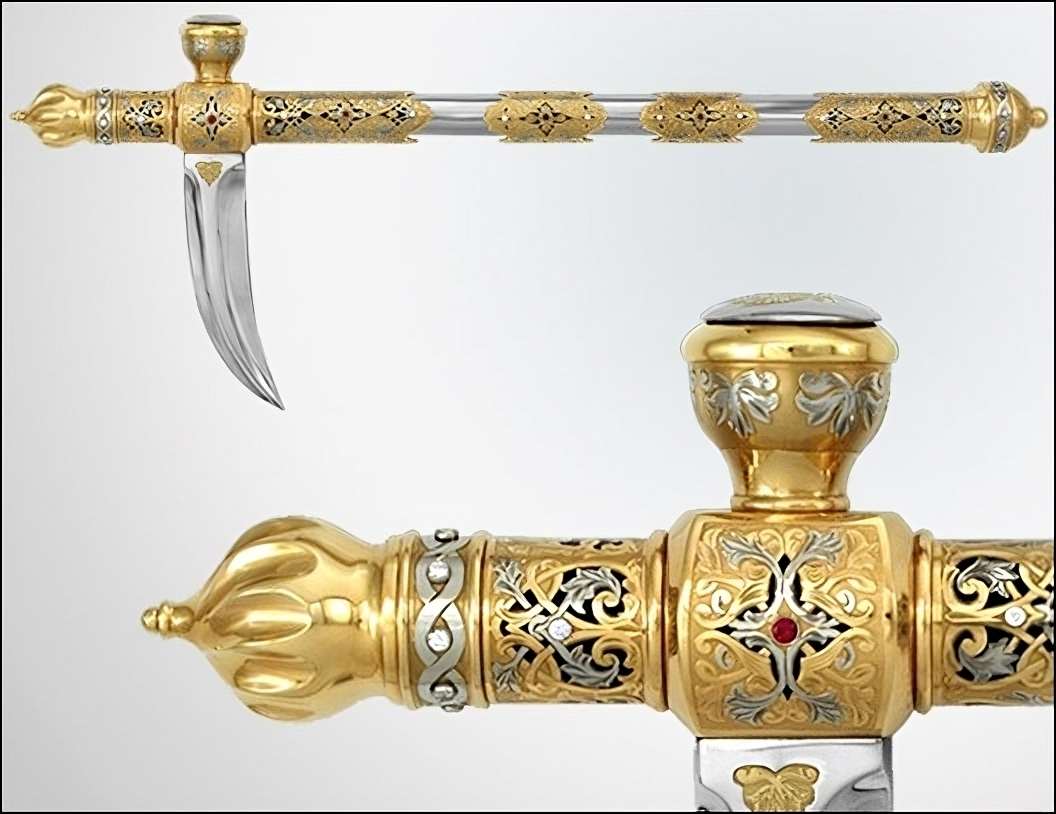
A horseman’s pick was a one-sided protrusion on a cold weapon that was both a blunt and an edged weapon used for delivering a pinpoint strike. It had a spike or beak that could be flat, faceted, or round in cross-section, and was often curved downwards, similar to a pickaxe.
What is the origin of the horseman’s pick?
The horseman’s pick was derived from a non-military instrument that was adopted for use on the battlefield: the pickaxe. Contacts between Europeans and Ottoman Turkish knights battling in the Balkans in the 14th and 15th centuries led to the rapid spread of the horseman’s pick.
What was the mechanism of the horseman’s pick?
It was a relatively short weapon, typically measuring between 20 and 32 inches (50 and 80 cm) in length. Its handle was commonly reinforced with metal bands or entirely made of metal, and the weapon weighed between 3 to 4.5 lbs (1.4 to 2 kg). This weapon could have various impact surfaces that were either smooth, spiked, pyramidal, conical, or even decorated with a figure or monogram.
What was the purpose of the horseman’s pick?
It was used like an axe because its spike was placed at a modest angle with respect to its rod. This design angled the handle and the spike, shifting the point of impact to the handle and reducing recoil. It was often used in tandem with a hammer head and sometimes a hatchet head. The weapon was used to rip enemy riders off their horses during the Hundred Years’ War.
The horseman’s pick was a one-sided protrusion on a cold weapon used for delivering a pinpoint strike. It was both a blunt and an edged weapon. The spike or beak of the horseman’s picks could be flat, faceted, or round in cross section, and could be of varying lengths, but was more commonly curved downwards, similar to a pickaxe. The horseman’s pick was often used in tandem with a hammer’s head, and sometimes a hatchet’s head. While long-handled variants, like the Lucerne hammer, were common in Western and Central Europe and the Far East, they were never employed in most other parts of the world.
- The Horseman’s Pick at a Glance
- What is a horseman’s pick?
- What is the origin of the horseman’s pick?
- What was the mechanism of the horseman’s pick?
- What was the purpose of the horseman’s pick?
- Origin of Horseman’s Pick
- Mechanism of the Horseman’s Pick
- Usage and History of Horseman’s Pick
- Drawbacks of the Horseman’s Pick
- Other Varieties and Names of Horseman’s Pick
| Horseman’s Pick | |
|---|---|
| Type of weapon: | War hammer |
| Other names: | Bec de corbin, War hammer, Polish nadziak |
| Region of origin: | Central Asia |
| Distribution: | Widespread use in Europe and the Middle East |
| Overall length: | around 6-7 ft (180-210 cm) |
| Material: | Iron, bronze, metal-reinforced handle |
Origin of Horseman’s Pick
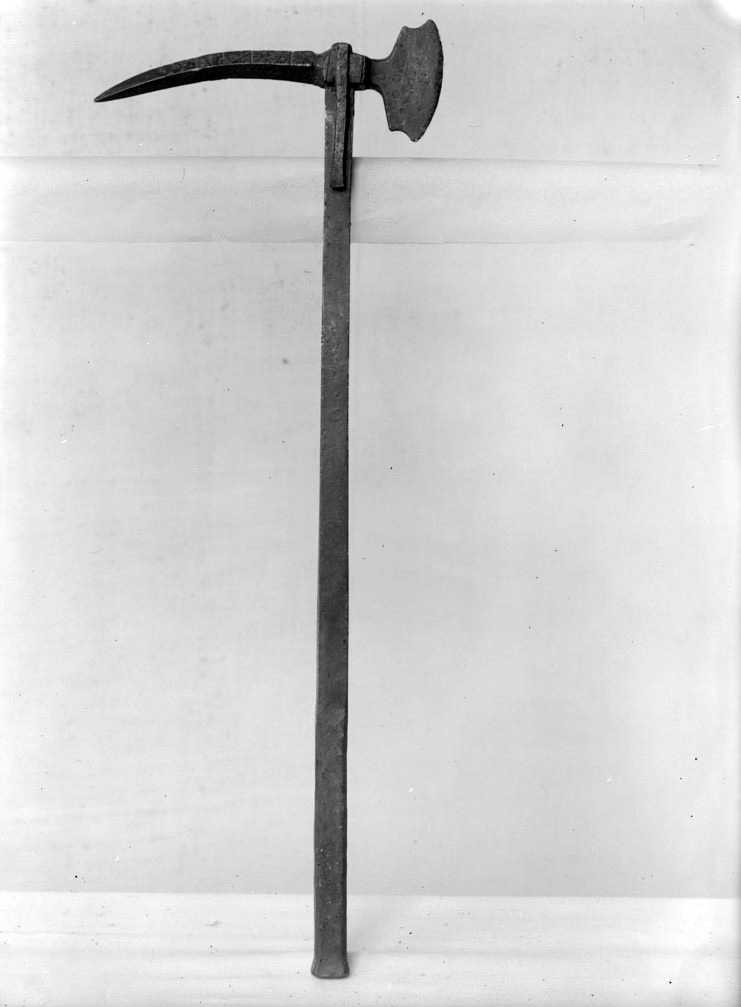
Like the war hammer and war axe before it, this weapon was derived from a non-military instrument that was adopted for use on the battlefield: the pickaxe. Contacts between Europeans and Ottoman Turkish knights battling in the Balkans in the 14th and 15th centuries led to the rapid spread of the horseman’s pick.
In the middle of the second millennium BC, Krotov culture (the Bronze Age people of Western Siberia’s Altai Mountains) warriors appeared in the forest-steppe region of the Ob-Irtysh water system, brandishing weapons made of elk horns with a head resemblance to a long-billed bird. This weapon was both a status symbol and a practical tool.
The Late Bronze Age (1200 BC) saw an upgrade for the ancestor of the horseman’s pick: This timeline coincided with the beginning of the Iron Age and the emergence of iron implements for this weapon.

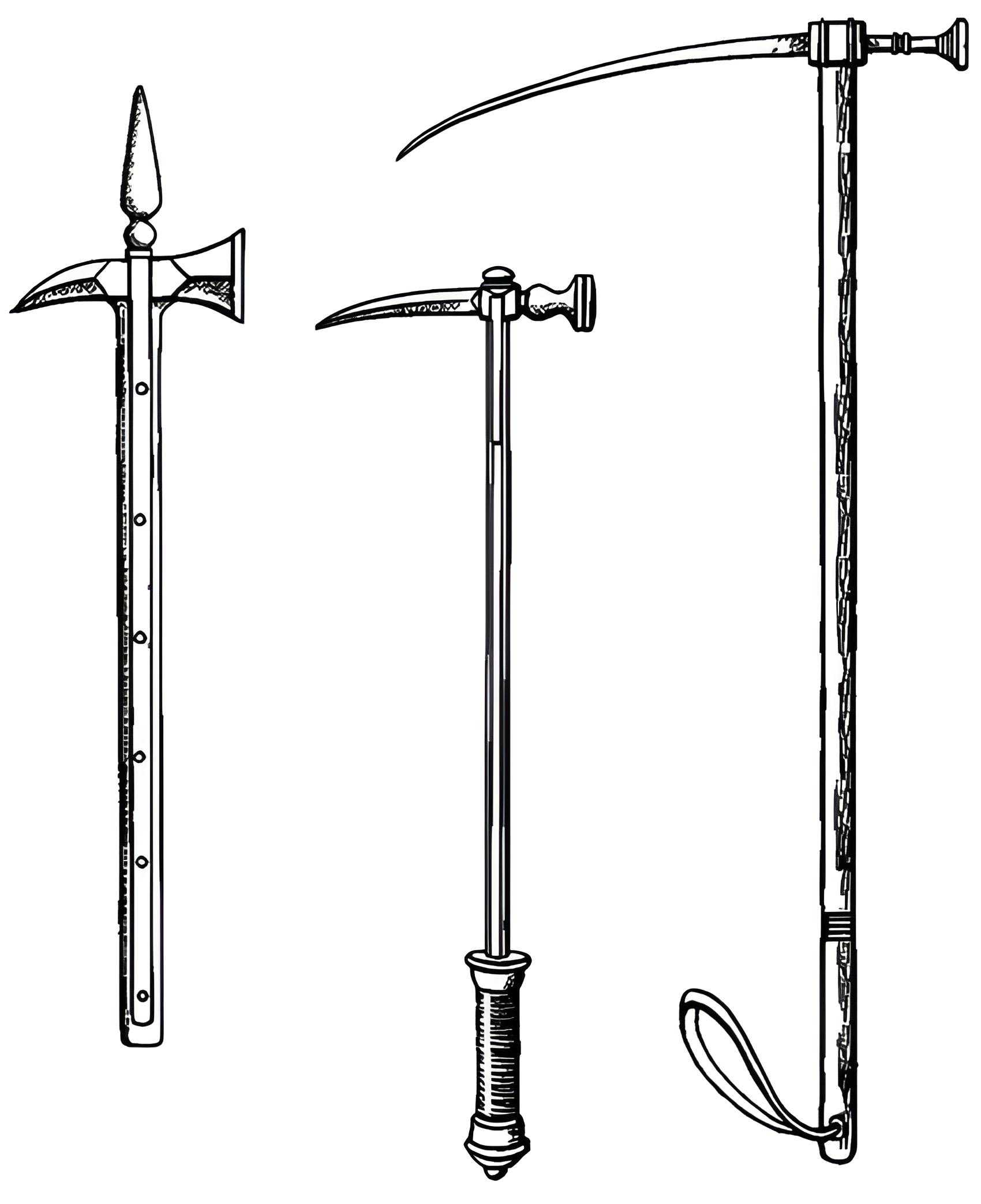
Late Bronze Age nomads in Central Asia used bronze horseman’s picks, which had a tube-shaped body with a flat and long, leaf-shaped spike (similar to a dagger) attached to the side of the weapon. Their spikes had raised ridges or grooves on their surface, which provided additional stiffness and strength to the weapon.
The horseman’s pick was used like an axe because its spike was placed at a modest angle with respect to its rod. This design angled the handle and the spike, shifting the point of impact to the handle and reducing recoil.
Iron’s widespread usage allowed for horseman’s picks to be designed with a slightly curved striking area that followed the path of the hit. In addition to that, the butt of the spike was attached to a hammer’s head (called the “face”) for the same purpose.
This final form of the weapon was officially defined as a “striking weapon” by archaeologists. Metal caps (or sockets) were included with all horseman’s pick handles in the Pazyryk civilization (Nomadic Scythian Iron Age culture).
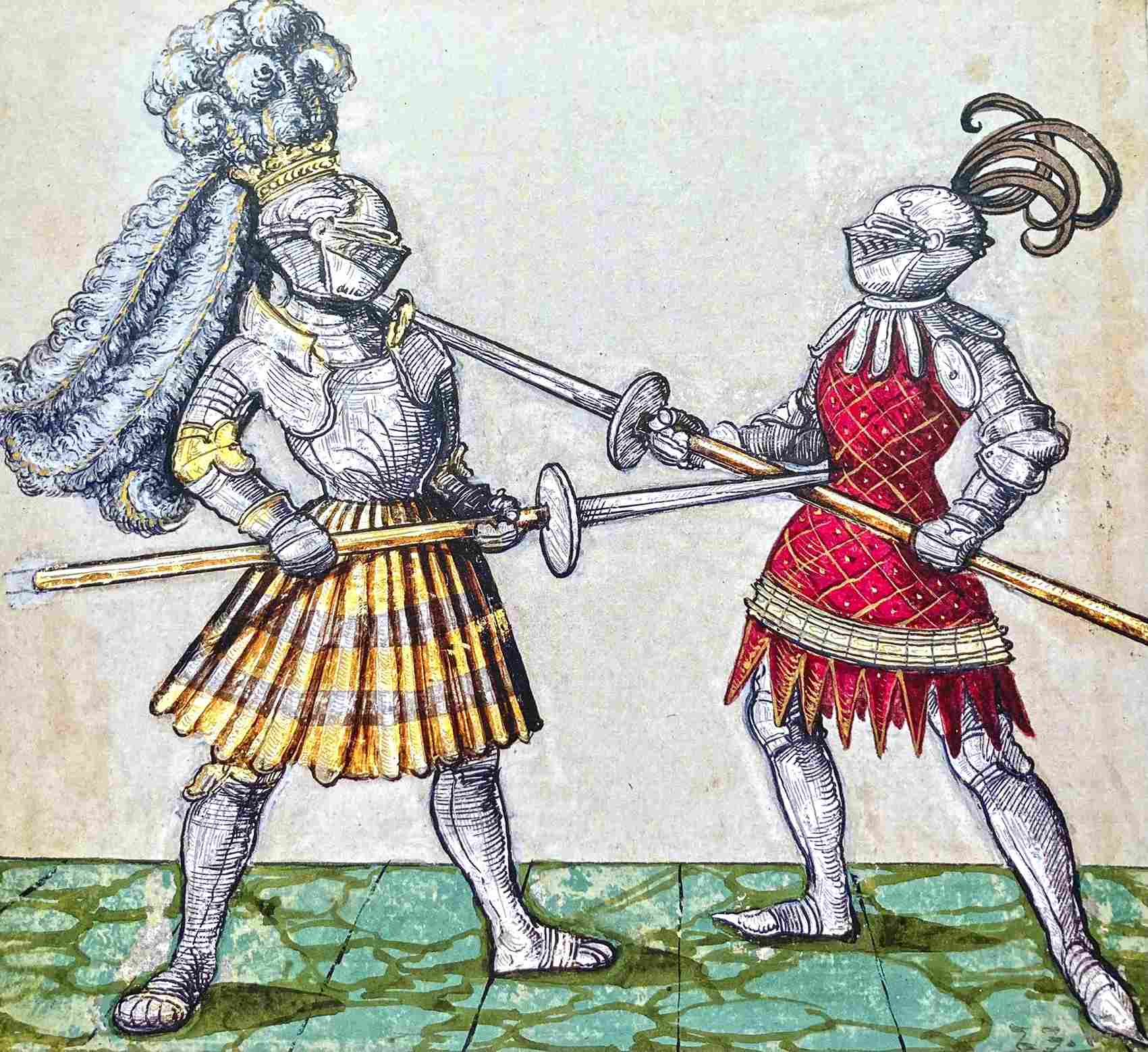
The existence of such a detail implies the use of sophisticated fencing methods in order to own this weapon.
The English also developed their own version of the horseman’s pick, which was used by their heavy Billmen (the infantry soldiers who carried bills). During the Hundred Years’ War, it saw widespread application, with fruitful results. They used it to rip enemy riders off their horses.
Mechanism of the Horseman’s Pick
The horseman’s pick was a relatively short weapon, typically measuring between 20 and 32 inches (50 and 80 cm) in length. Its handle was commonly reinforced with metal bands or, in some cases, entirely made of metal. The weapon weighed between 3 to 4.5 lbs (1.4 to 2 kg).
A horseman’s pick, also known as a war hammer, could have various impact surfaces that were either smooth, spiked, pyramidal, conical, or even decorated with a figure or monogram. The weapon was in the subcategory of hammers and axes.
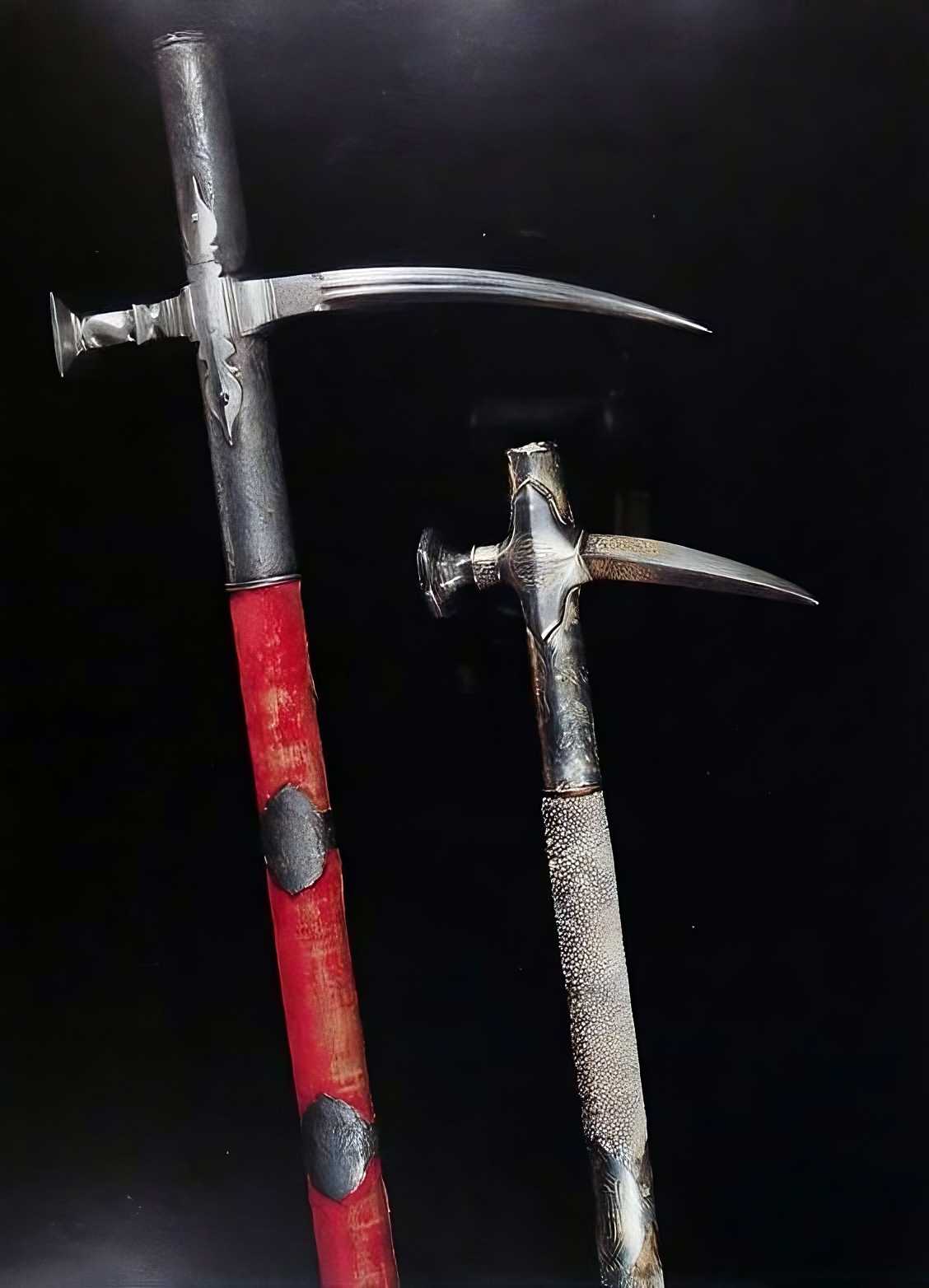
The last two types of impact surfaces, those adorned with a figure or monogram, were specifically designed to make an imprint on a defeated enemy. In addition to the hammer-shaped butt, a horseman’s pick could also be equipped with a hatchet head or a vertical spike for thrusting.
If the pommel of the Turkic buzdygan mace was used in place of the hammer’s head, the resulting weapon would be called a “Polish nadziak.” The nadziak was made entirely of iron, and the total weight of the weapon typically ranged from 3.3 to 4.4 lbs (1.5 to 2 kg). The length of its shaft was between 24 and 32 inches (60-80 cm).
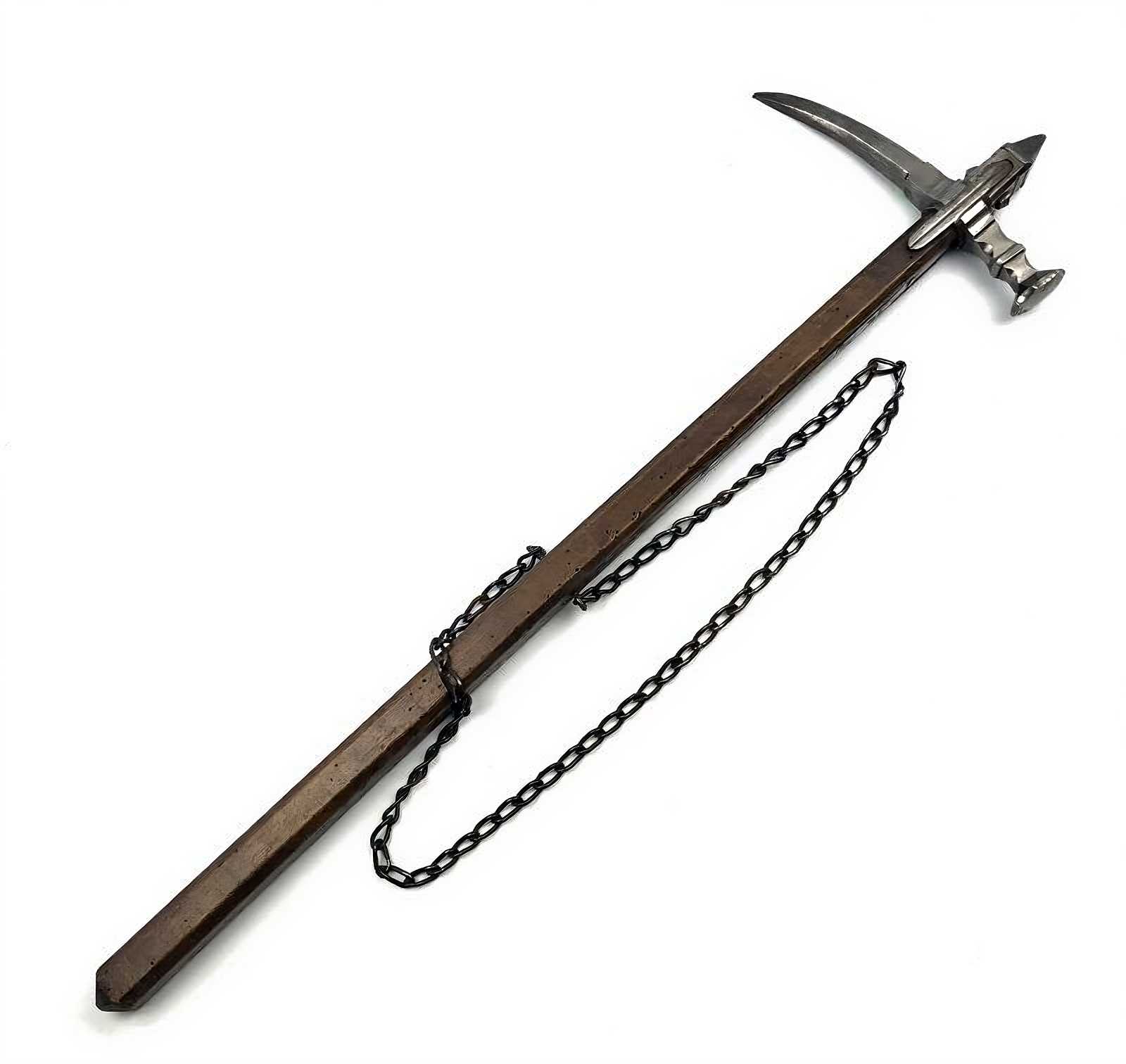
The horseman’s picks in Europe and the Middle East typically had a short shaft made of iron and a handle suitable for one or two hands. There was often an upward-pointing spike. That’s why the horseman’s picks are considered “combined arms.”
This practice originally emerged with the hope that it would lead to more impactful hammers, but the modifications made to them had no discernible effect. Despite this, though, the practice persisted.
The military historian Wendelin Boeheim (1832–1901) claims that the tradition was established to increase the lethality of the hit, but it has instead resulted in the uncomfortable task of searching the bodies of the dead for the sign of the monogram (reference: Wendelin Boeheim, Handbuch der Waffenkunde, page 366).
Usage and History of Horseman’s Pick
Horsemen often carried the horseman’s pick because of its design for close battle. The weapon was light and compact while nevertheless having powerful penetration. The blow of this weapon only affected a limited area. The horseman’s pick could break through a variety of armor types; however, it often became stuck.
A cavalryman’s hammer strike might rip apart the enemy’s helmet and chest armor, rendering them helpless from the shock of the hit or damaging the armor to the point that the wearer could no longer move or breathe normally.
Stone, wood, and bone (horn) weapons of a similar design to the horseman’s pick have been used by numerous cultures, such as the Australian Aborigines, although these examples are very recent. Since the Bronze Age, metal has been used to make this weapon.
This weapon was recognized in the Middle Ages as early as the 10th century. The weapon was most prevalent in Western European countries that had absorbed Islamic culture.
For instance, the first horseman’s picks made their way to Poland through Turkey and then Hungary. The Old Polish word “czakan” (or czekan) has its root in Turkish (“çakan”), which means “the one that staples.”
The Horseman’s Pick was developed as a weapon to counter plate armor, which first appeared in Europe during the 13th and 14th centuries. As a result, it is likely that Europeans began to use this weapon around this time period.
They were a secondary weapon that cavalry forces used alongside the sword from the middle of the 15th century onward. The weapon became very popular in Europe and Rus’ during the 15th and 17th centuries. The Polish-Lithuanian Hussar cavalry liked them too.
The military authorities of the time (German states, Italian states, and others), as well as Cossacks and atamans (i.e., “leaders” in Turk-Mongols), continued to wield horseman’s picks even after plate armor had become obsolete.
At the time, it was common to receive this weapon with a dagger-like piece attached to the handle. In Poland during the 18th century, the weapon was transformed into a civilian weapon (that is, a weapon of self-defense) called “obuch.” This was in response to a restriction on its use by the Polish aristocracy (szlachta) outside the battlefield during 1578, 1601, and 1620. The obuch had a curved beak for less killing potential.
The reason for the ban was simple. Abbot Jdrzej Kitowicz’s (who lived during the reign of Augustus III of Poland) testimony is eloquent in this respect and explains the deadly side of the horseman’s pick:
“The horseman’s pick (nadziak) is a formidable weapon in the hands of Poles, particularly when used in combat or in a state of heightened emotion. While a saber can be used to inflict devastating injuries, such as severing limbs, tearing flesh, and causing head wounds, the sight of blood can sometimes have a calming effect on the user. However, the blunt instrument of the horseman’s pick could result in fatal injuries without the visible presence of blood. In some cases, the user may continue striking their opponent repeatedly, breaking bones and vertebrae. Nobles who wielded maces have been known to beat their servants to death. Due to the potential danger it posed, the use of the horseman’s pick was prohibited during large assemblies or parliamentary sessions. Ultimately, the horseman’s pick was regarded as a tool of brigands, as a single strike to the temple with the pointed beak could instantly kill the victim.”
“Customs and Culture in Poland under the Last Saxon King by father Jędrzej Kitowicz,” 1728-1804.
The horseman’s pick was a symbol of prestige and honor in Russia. The weapon was carried on horseback during campaigns while fitted into a sheath made of Morocco leather and embroidered with gold or silver.
Drawbacks of the Horseman’s Pick
There were benefits and cons to using the horseman’s pick. It was nevertheless a potent weapon, but some potential downsides of it included the following:
- Too Heavy: The horseman’s pick was normally forged from metal. Because of this, it was difficult for anybody without considerable strength to use, and consistent usage could be taxing on the body. Thus, it was easier to avoid the weapon.
- Not Too Practical: The horseman’s pick was often used to break through heavy plates or mail. However, the weapon often only delivered minor wounds, which seldom resulted in instantaneous death. Swinging too hard frequently resulted in the weapon being stuck in the victim’s armor, making it impossible to retrieve.
- Short Range: Because it was a melee weapon, the horseman’s pick was only useful up close. This meant that a skilled opponent with a longer weapon or a greater reach could keep the user at bay.
- Complicated Form: The horseman’s pick was powerful against armored foes because of its complex design with numerous sharp edges and points. However, the high level of complexity also increased the time and cost required for manufacturing and maintenance.
- Limited Usage: The horseman’s pick was less successful in any other context since it was mainly intended as a weapon for use on horseback. This limited its usefulness in comparison to other general-purpose weapons like swords and spears.
Other Varieties and Names of Horseman’s Pick
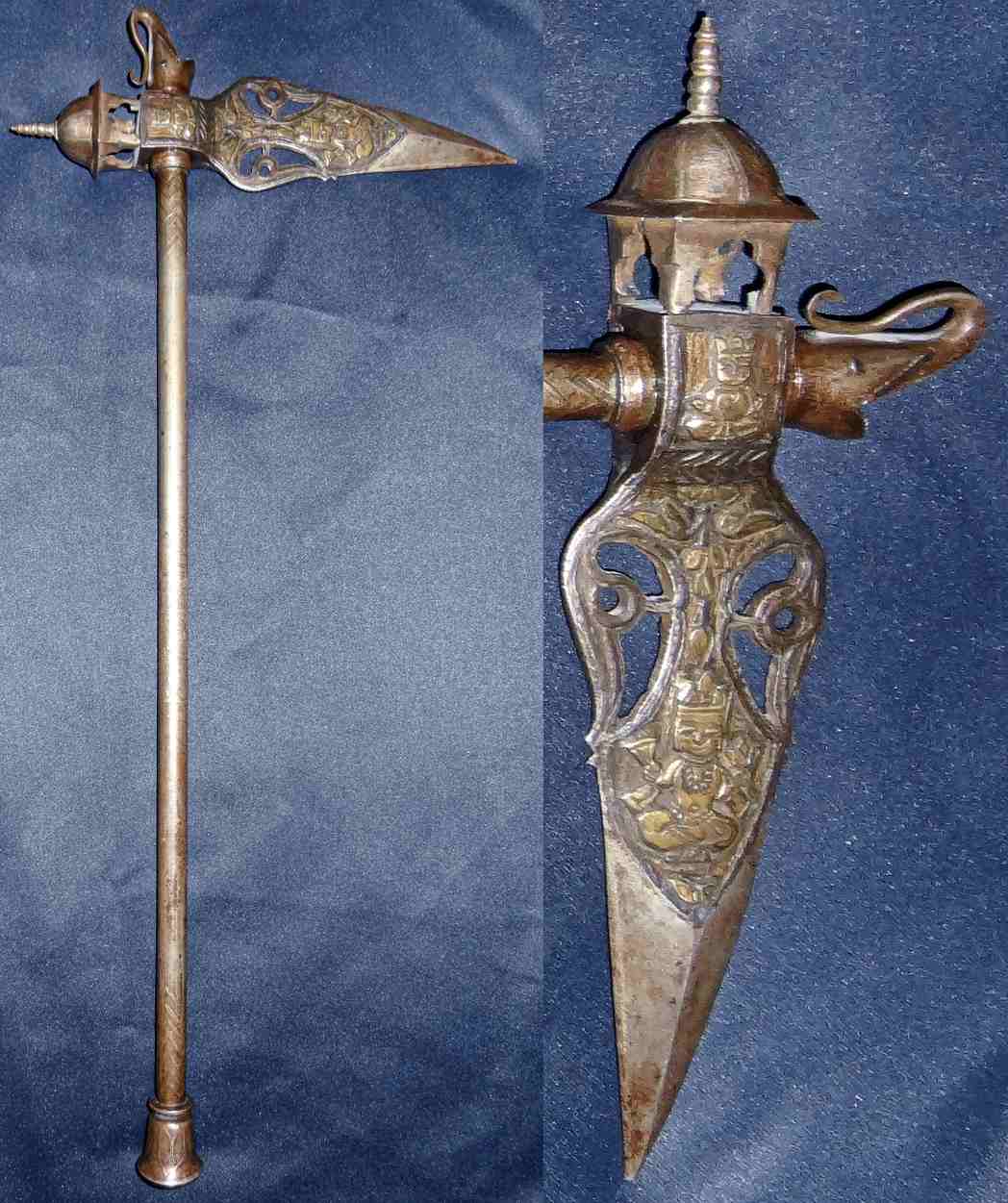
The horseman’s pick was also known as cavalry hammers or knightly hammers in Western Europe and it was often called a war hammer. For example, in Spain and France it was known as a “raven’s beak” (Old French, bec de corbin), in Italy as a “falcon’s beak” (Old French, bec de faucon), in Germany as a “parrot’s beak”, and in Poland as a “nadziak”.
The Tatars employed a horseman’s pick called “kulak-balta,” or “kulyuk-balta.” This means “ear-axe” and probably refers to its use as a tool to pierce the helmets of enemy soldiers. A blow to the temple of the head or behind the ear from the weapon’s sharp beak would kill the person instantly.
The Indo-Iranians used “zaghnal” (crow’s beak), the Persians used “tabar“, and the Afghans and Pakistanis used “lokhar” for the same weapon. The military and civilian use of such weapons persisted in the East for far longer than it did in Europe.
The Indo-Persian region used the term “crow’s beak” to describe the weapon throughout the 17th and 19th centuries. India was a proud producer of combined arms like this.
The North American Indians’ spontoon tomahawks are the equivalent of the horseman’s pick. The Chinese long-pole “dagger-axe” (戈) and the all-iron “fangs” are distant cousins of this weapon.
The fakir’s staff (bairagi) is another type of horseman’s pick well-known in India. Though it looks like a horseman’s pick, the kama-yari, a Japanese battle sickle, is really a piercing and cutting weapon rather than a crushing one.
References
- Customs and Culture in Poland under the Last Saxon King: Selections from Opis obyczajów za panowania Augusta III by father Jędrzej Kitowicz, 1728-1804: Kitowicz, Jędrzej, Swan, Oscar E.: 9789633862759: Amazon.com: Books
- Handbuch Der Waffenkunde (German Edition): Boeheim, Wendelin – Amazon.com: Books