Guisarme at a Glance
What is the origin of the term and its etymology?
The term u0022guisarmeu0022 originated from the French word wîsarm, which has its roots in the Germanic word wisarme. Another theory suggests its origin as the Old High German word getīsarn, meaning u0022weeding iron.u0022 These terms likely relate to the production of iron and iron tools through smelting and forging.
What are the main features of the guisarme’s design?
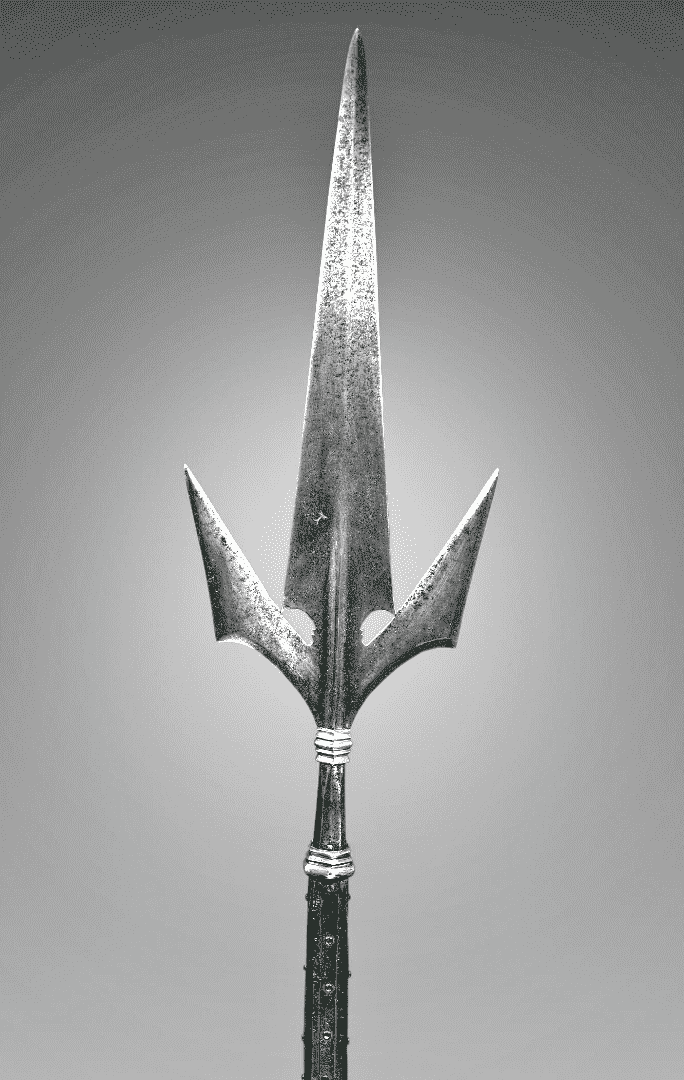
It is a pole weapon that combines elements of the spear, billhook, poleaxe, and war hammer. It typically consists of a wooden handle, a curved blade with spikes and a hook, and a pommel with a spearhead. The shaft is usually made of wood, and the blade resembles a poleaxe or billhook. The hook on the blade allows for dismounting riders or disabling their steeds.
What are the different variants of this weapon?
There are several variants of the weapon, including the bill-guisarme, voulge-guisarme, and glaive-guisarme. The first variant includes the properties of the bill polearm, featuring a crescent-shaped or hooked blade with a pointed tip. The latter variant resembles a voulge, with a curved or hook-shaped cutting edge and a spear tip. The last variant combines elements of the glaive, featuring a long, single-edged blade with a hook or spike attached to the rear.
What is the significance of this weapon?
The guisarme was used both as a defensive tool against bandits and wild animals and as an aggressive weapon in times of war. Its versatility made it popular among the common citizens, and it was often employed in rural areas of Europe from the 12th century to the 19th century. The weapon’s agricultural origins, coupled with its military capabilities, made it a cost-effective and practical weapon during a time of metal scarcity. Its use is documented in historical events such as the Galician uprisings during the Peninsular War.
The guisarme is a medieval pole weapon that looks like a halberd but has a sickle-like blade on two sides and terminates in a spearhead at the bottom with one or more spikes. As a refined form of the billhook, this cold weapon first appeared in the 11th century. As more and more polearms featured the same hook, the term “guisarme” grew to encompass any polearm with a hook on the blade. The names bill-guisarme, voulge-guisarme, and glaive-guisarme are examples of this.
- Guisarme at a Glance
- What is the origin of the term and its etymology?
- What are the main features of the guisarme’s design?
- What are the different variants of this weapon?
- What is the significance of this weapon?
- The Etymology of the Guisarme
- The Guisarme’s Design
- The Variants of the Guisarme
- The Use of Guisarme
- Guisarme in History
- Guisarme in Europe
- Guisarme in Popular Culture
The Etymology of the Guisarme
The French word “guisarme”, which was borrowed into English, has its roots in another French word wîsarm, which in turn derives from the Germanic wisarme.
In other sources, the origin of this name is a Germanic word called getīsarn in Old High German, which meant “weeding iron”. It possibly refers to the production of iron and iron tools through smelting and forging.
The word likely came from the Proto-Germanic getīhsernan, which meant “to make ironwork” or “to work with iron”. However, the original name of this edged weapon still remains a theory.

The peasants of rural Europe who were obligated to serve in the military helped spread this sort of weapon/tool throughout the Middle Ages. For instance, the Venetian Republic’s territorial holdings in Italy had a sizable population of cernida (territorial armies) who used this weapon.
| Guisarme | |
|---|---|
| Type of weapon: | Polearm |
| Other names: | Welsh Hook, Forest Bill, Roncone, Rossschinder |
| Origin: | Germanic or English/French |
| Distribution: | Throughout Europe |
| Total length: | Around 80 to 100 inches (2-2.5 m) |
| Weight: | 6.5-9 lb (3-4 kg) |
The Guisarme’s Design
In the guisarme weapon, there are elements of the spear, billhook (an agricultural tool used to cut tree branches), poleaxe, and war hammer (see: Bec de Corbin). The three main parts of the weapon include a wooden handle, a curved blade with spikes and a hook, and a pommel with a spearhead.
The two-handed polearm’s shaft is often crafted from wood and has a rounded handle. The spear point is attached to the end of a blade resembling a poleaxe or billhook, the forerunners of this weapon.
Thus, the polearm could be used to attack the opponent and also to unseat opposing riders or hamstring their steeds with the hook, with its piercing and cutting qualities.
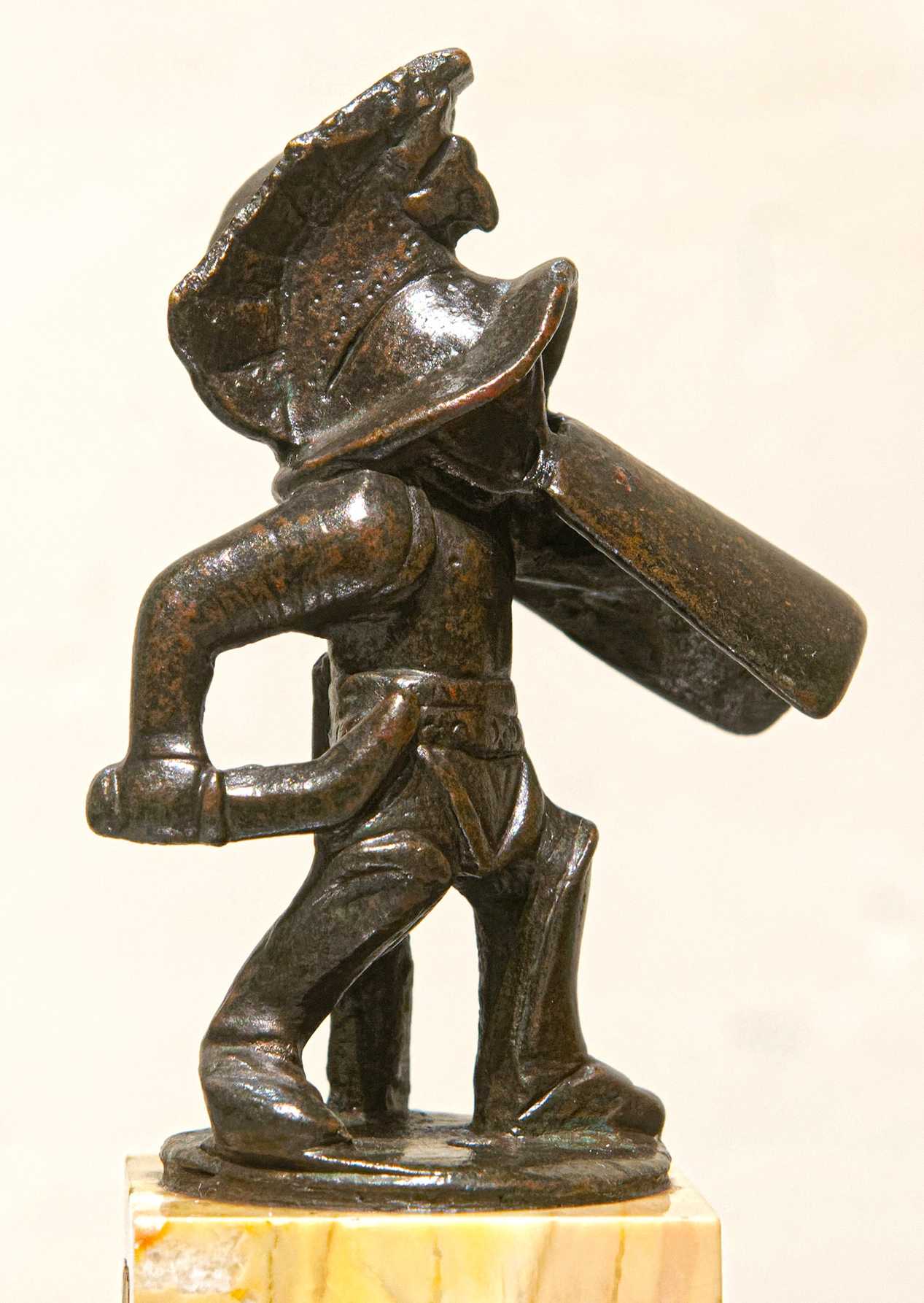
As with the “sauroter” (the rear of the spear with a spike) on traditional spears like the dory spear (the chief spear of hoplites—heavy cavalry—in Ancient Greece), a pointed spike was often placed on the pommel.
The Variants of the Guisarme
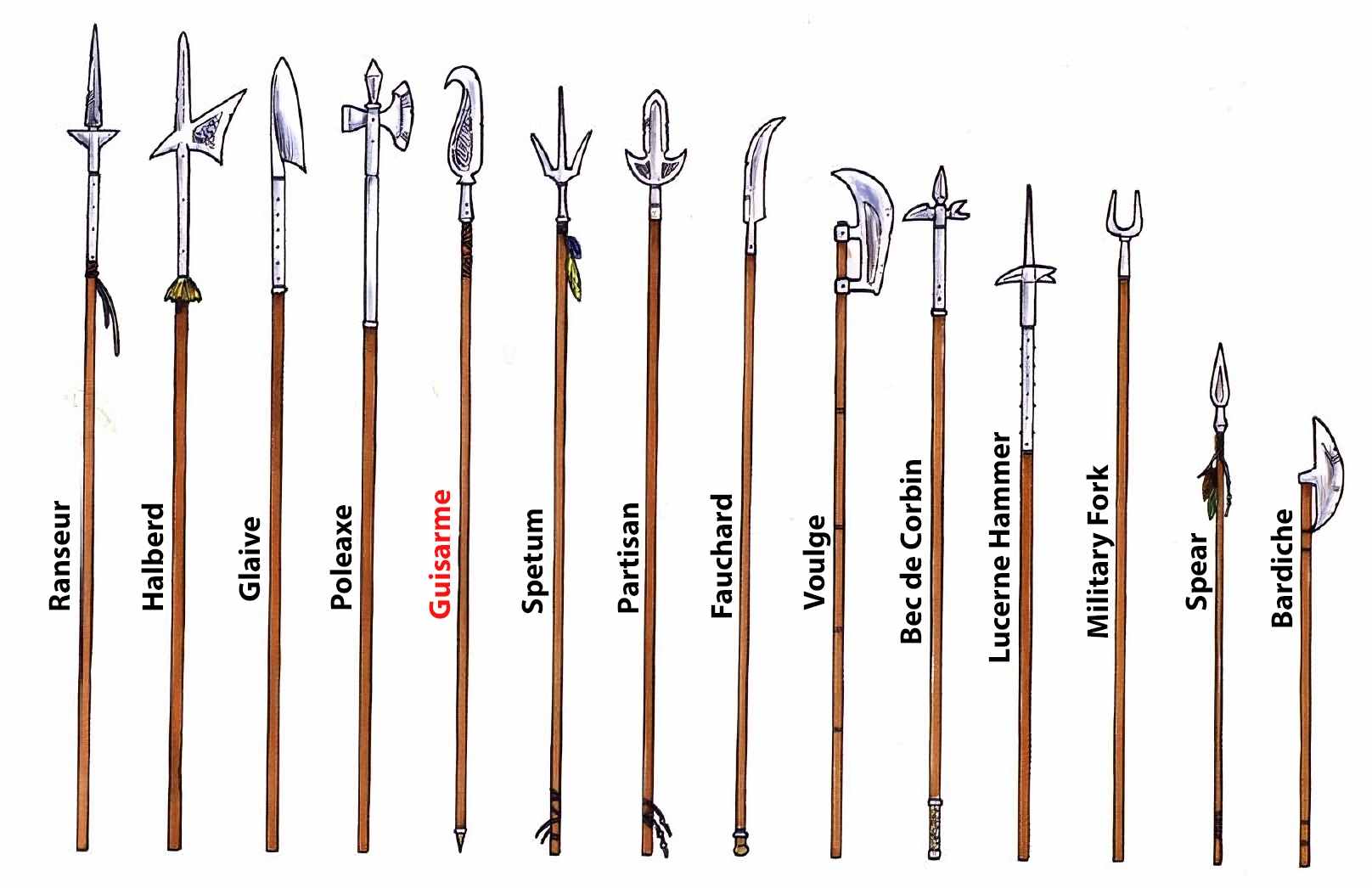
- The bill-guisarme was a hybrid form of this weapon and the bill polearm that had a side spur unlike the first variants. A full chunk of iron was forged into the tip of this weapon. The bill featured a crescent-shaped or hooked blade that was sharpened on the inside and had a pointed tip for stabbing. It was useful against both armored and unarmored foes since it could be cut or pushed. Infantrymen of the late Middle Ages often carried this variant.
- The voulge-guisarme was another variant of the weapon used in Europe throughout the 14th and 15th centuries. The blade was usually equipped with a spear tip in addition to its curved or hook-shaped cutting edge, which resembled a voulge. It was most effective against unarmored or poorly armored foes due to its primary usage in cutting and slashing strikes. Soldiers on foot and in infantry formations often employed this weapon.
- The glaive-guisarme gained popularity in Europe during the 15th century. It resembled a glaive. This variant of the weapon was a long, single-edged bladed weapon. A hook or spike was often attached to the rear of the blade, which could be curved or straight. Its primary use was as a cutting and slicing weapon, giving its user the range and reach of a long polearm. Infantrymen and guardsmen alike were frequent users of this weapon.
Guisarme is sometimes known as the Welsh hook or forest bill.
The Use of Guisarme
The tip of the guisarme could be used to stab like a spear, while the pruning blade might be used as a hook to attempt to pull the riders or the legs of their mounts (by cutting the tendons of the enemy’s horse).
There are allusions to this weapon in literature as early as 12th-century England. Beginning in the 12th century and continuing through the 14th and 15th centuries, this form of plebeian weapon was often employed in the rural areas of Europe during the Middle Ages until the 19th century. For comparison, the earliest billhook itself (the ancestor of this weapon) dates back to the 11th century.
In the historical annals of the Peninsular War (1808–1814), the employment of this polearm is noted during the Galician uprisings against Napoleon’s forces.
Because of its characteristics as an agricultural tool, the guisarme was a successful balance between low cost and high utility—since there was a shortage of metal at the time and it offered both agricultural and military capabilities.
Guisarme in History
The Impressment (the taking of men into the military by compulsion) in Europe, who were known to make use of polearms resembling peasant implements, were the first to be credited with using the guisarme. This is a typical characteristic ascribed to polearms throughout history.
In one theory, the guisarme is said to have originated in either France or England, and to have developed from peasant implements such as the scythe or the glaive. The English infantry corps of the 14th century and the Franc-archers (a regular infantry in France) of the 15th century popularized this weapon throughout Europe.
Given the wide variety of multi-bladed pole weapons and the numerous etymological and translation challenges associated with them (bill, bill-hook, guisarme, bisarme, partisane, partisan, glaive, vougue, voulgue, fauchard, halberd, etc.), the French version (where archers were even called “guisarmiers” for a period) appears to be the most accurate name of this polearm.
As a result, there are occasional translation errors and historical reports that refer to a different kind of weapon. In a guisarme, the “hook” and “spike” were joined to a shaft of approximately 80 inches (2 m), and this simple weapon was especially employed to defend foot soldiers and/or archers in the aforementioned two nations.
The two major functions of this “composite” blade polearm—hooking and knocking down and assaulting by piercing—are its defining features. That’s where it got its start, and that’s where it changed further.
Later, in order to prevent strikes from being deflected by shields and armor, tiny spikes were added to the traditionally curved edge. This was done to assure “grip” on blows rather than to increase damage. However, the rudimentary design of the long spike at the top and the hook that emerges in the shape of a serpentine from the spear’s “iron” remained intact.
The contemporary English term for this weapon was “bill-hook,” a variation on “bill-guisarme,” and “guisarme” was used even when the weapon lacked an upper spike. According to this theory, the French word for the weapon—the guisarme—might be derived from the fauchard (another polearm) and faux de guerre (war scythe).
The “practical” length of these combat polearms was often equivalent to the height of a man’s extended arm, so that its length wouldn’t get in the way while swinging the spear from side to side. Keep in mind that large groups didn’t start using long spears in battle until much later in history.
The typical English soldier of the late Middle Ages stood between 67 and 70 inches (1.7 – 1.8 m), so a weapon of this sort would have to be at least 80 inches (200 cm) tall to reach its target.
The main blade of this weapon often had a long spike protruding from its bottom half in a perpendicular orientation; however, this detail varied from country to country. A typical form of the guisarme in 16th-century Italy resembled a halberd in shape but featured a longer, three-sided spike and a heavier hook that was sharpened on the inside, setting it apart from its English counterpart.
Guisarme in Europe
The guisarme was widely used in Europe as a defensive tool against bandits and wild animals and as an aggressive weapon in times of war.
The weapon is specifically named in the Letter of Discharge (a type of royal diploma issued by the “House of Accounts” in Portugal) of 1455, which was given to officials of the Crown at both the central and local administration levels and tasked with collecting the kingdom’s revenues and managing royal expenses.
In Pastrana tapestries, the weapon is featured prominently. Despite the guisarme’s reputation as a weapon of the common citizen, these tapestries show Afonso V of Portugal as the sole user of the polearm, which endows it with noble status.
Guisarme in Popular Culture
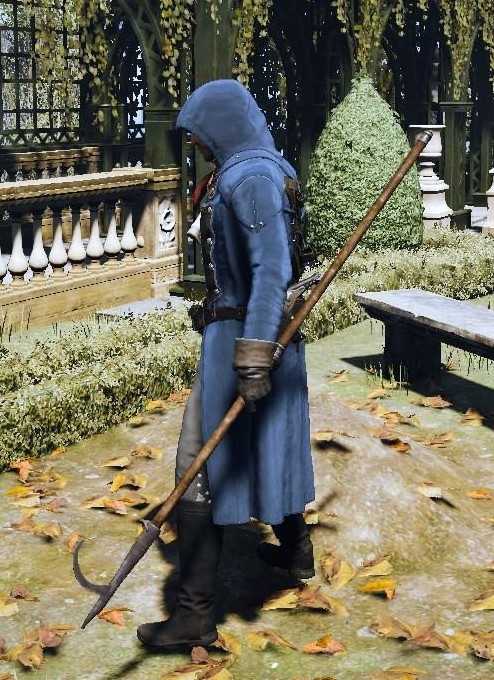
Guisarme is featured in many movies, anime, TV shows, and video games. The weapon is featured most in detail in video games:
- The Witcher 2: Assassin’s Of Kings (2011)
- Gloria Victis (2016)
- Kingdom Come: Deliverance (2018)
- Mordhau (2019) (Also see: Mordhau: The Murder Stroke)
- Assassin’s Creed: Unity (2014)
References
- Hafted Weapons in Medieval And Renaissance Europe: The Evolution of European Staff Weapons Between 1200 and 1650 – John Waldman – Google Books
- European Weapons and Armour: From the Renaissance to the Industrial Revolution – Ewart Oakeshott – Google Books
- How to Read European Armour – Metropolitan Museum of Art Series – The Wallace Collection Shop