The Corseque at a Glance
What is the origin of the corseque weapon?
The weapon originated on the island of Corsica, near France and Italy.
How were the curved prongs used in combat?
The curved prongs, resembling wings, were used to hook onto the corners of a knight’s armor, allowing the wielder to forcefully pull the rider from their horse.
What are the variants of this weapon?
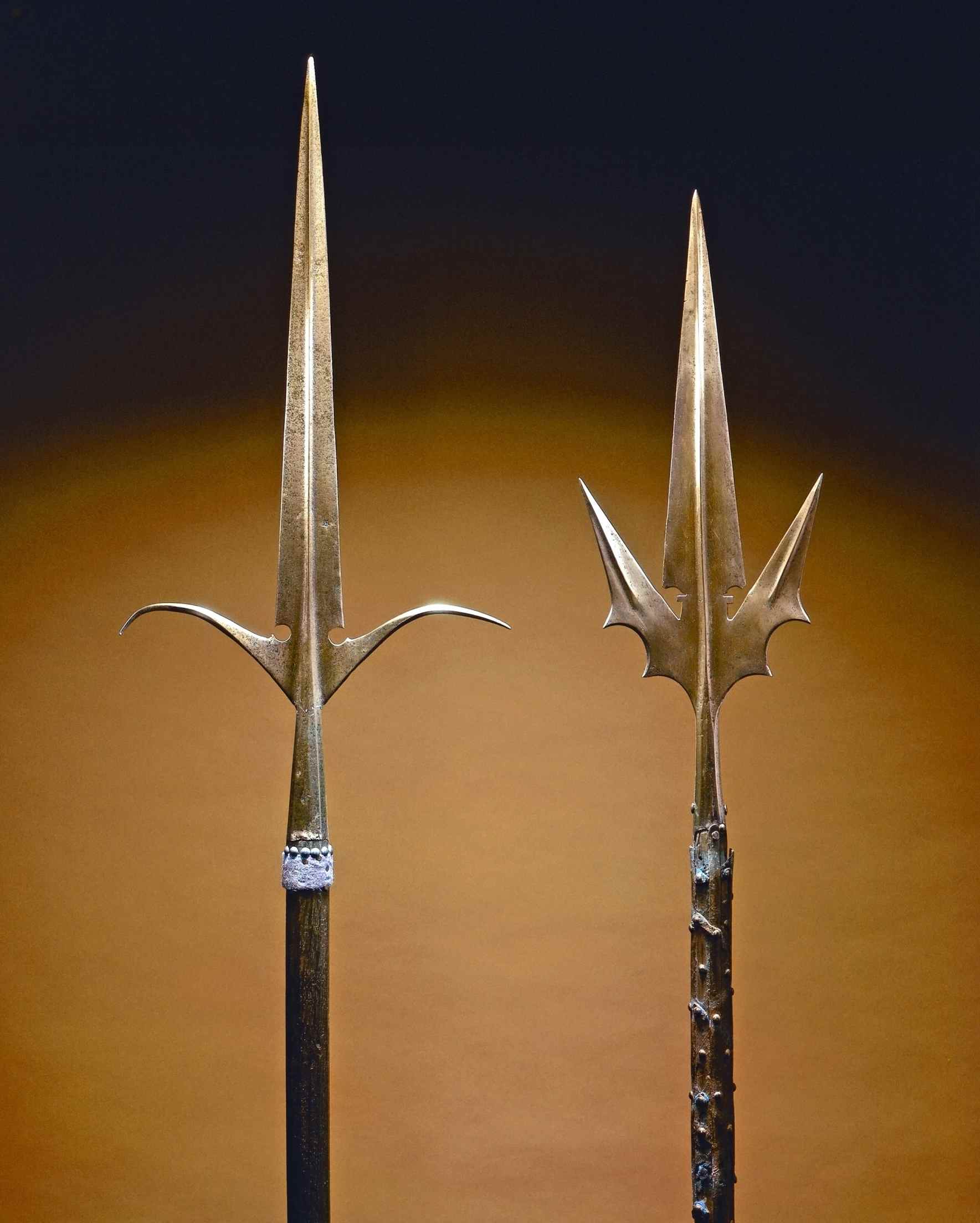
There are two distinct variants. The true corseque has a long central cusp with spread and arched wings, while the chauve-souris has triangular blades, longitudinal ribs, and razor-sharp edges.
What are some similar weapons?
Similar weapons include the trident, ranseur, spetum, corseca, and partisan, each with their own variations in blade shape and direction of lateral branches.
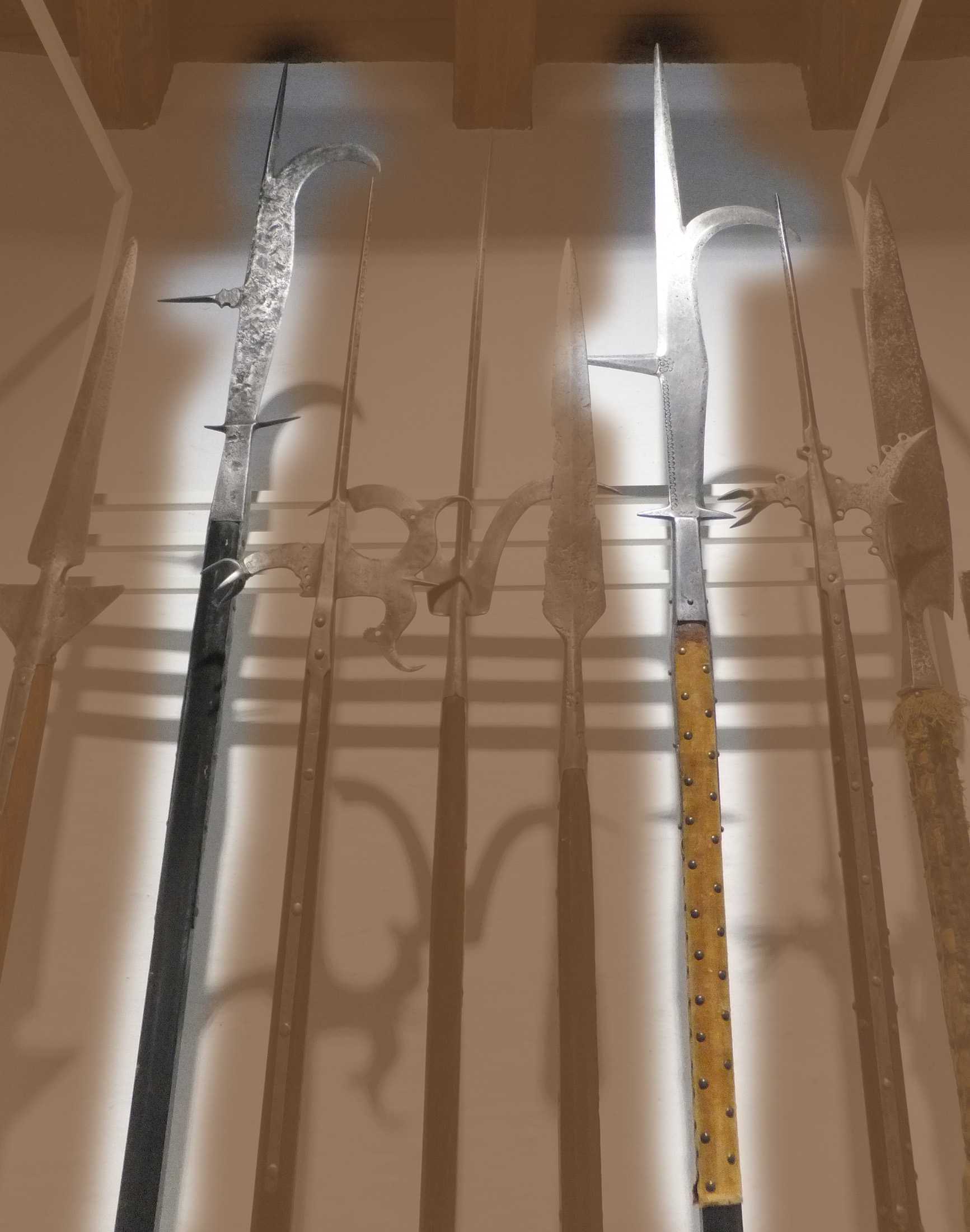
During the Middle Ages, European armies utilized poled weapons such as the corseque, which had a shaft between 70 and 100 inches (1.8 and 2.5 m) in length and a metal head with a central blade (cusp) flanked by two prongs in the shape of curving wings. The convex edges in the corseque were more often used for cutting than the concave ones. The weapon appeared like a trident, the weapon of the sea god Poseidon. But this spear is actually a development of the 12th-century venabulum (hunting-spear) from the Middle Ages. It was in use until the early modern period (around the 17th century).
| Corseque | |
|---|---|
| Type of weapon: | Polearm |
| Other names: | Chauve-souris |
| Origin: | Corsica Island |
| Utilization | Infantry |
| Total length: | 70 to 100 inches (1.8–2.5 m) |
| Weight: | 6.5–9 lb (3–4 kg) |
The Corseque’s Definition
The corseque is a cold weapon with two elongated blades, featuring large, strongly curved blade hooks on two sides. The hooks are used to grasp, pull closer, injure, unbalance, or overthrow the opponent.
Additionally, the hooks serve to drag down shields, hindering the opponent and depriving them of their cover.
The weapon was mainly used in Italy and France. Corsican mercenaries serving the Italian states and the French crown popularized this polearm throughout the 15th and 17th centuries.
The corseque was merely an intermediate development that mostly emerged in the 14th century and was eventually superseded by the glaive around the 16th century.
The History of the Corseque
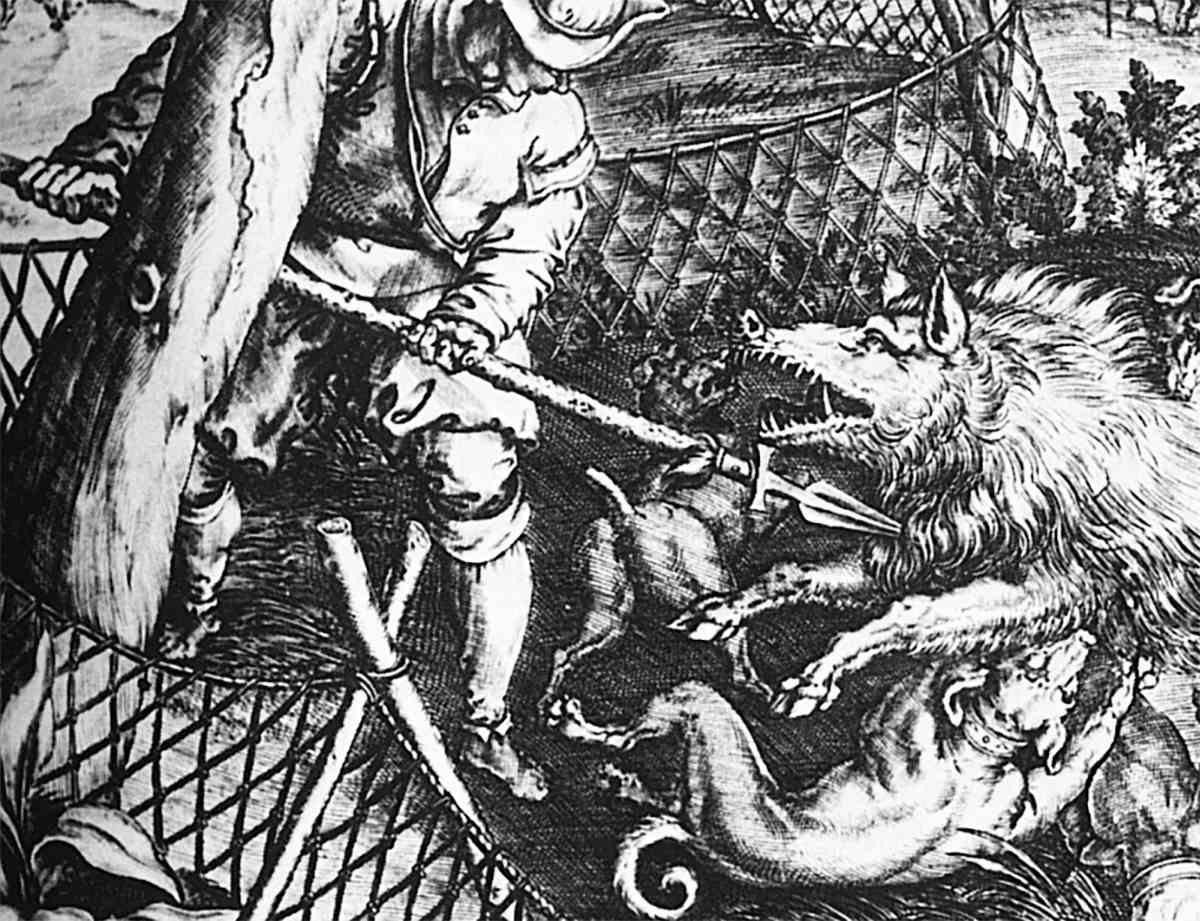
The corseque weapon got its name because it was first created on the island of Corsica, near France and Italy. The weapon is widely believed to be one of the many military developments of the hunting-spear originally designed for hunting large, hazardous animals like wild boars, bears, etc. (such as the boar spear)
It is thought that this weapon, which can penetrate an object and then hook it by pulling it to the ground, is a cross between a hunting-spear and a pike. The French polearm also has similarities to the partisan weapon.
Other theories suggest the spetum and ranseur pole weapons as the origins of the corseque.
The curved prongs (also known as flukes or wing blades) of the infantryman’s corseque would hook onto the corners of the knight’s armor, enabling the wielder to forcefully pull the rider from his horse. The weapon with curved hooks or wings looking up, toward the blade, is known as a ranseur.
Since the long and tapered metal tip of the corseque was sturdy, it could be sharpened several times and used to pierce plate armor. The central spike could either be used to attempt to pierce the breastplate of a cuirass or the visor of a helmet.
The Corseque’s Variants
There are ceremonial versions of this edged weapon that were never created for warfare. Originally, they attempted to represent the French monarchial symbol “fleur-de-lis” and served as a weapon for troops and guards of the aristocracy. This version was primarily used during the 16th century.
Two distinct varieties of this weapon existed:
- The true corseque has a long central blade (cusp) that’s either rhomboidal or square in cross-section, and it’s tailed off at the base by two spread and arched wings that each finish in a spike. The concave sides are often not sharpened at all.
- The chauve-souris, unlike the true corseque, has triangular side blades instead of the wings and longitudinal ribs that branch out from the gorge. The gorge is at a 45-degree angle from the two lateral webbed blades. The whole blade is razor sharp, making it ideal for thrusting rather than grappling. This variant of the corseque was usually ornate. Its name comes from the French word for “bat,” chauve, since the blades on the sides are sometimes compared to the wings of a bat.
There is also the “three-bladed staff” mentioned as part of Henry VIII’s (the former king of England, 1491–1547) arsenal. There are 80 rawcon spears in this arsenal, which suggests that the two weapons (rawcon and corseque) were not seen as interchangeable by 16th-century Englishmen.
Similar Weapons
The corseque is a polearm that has a core double-edged blade and two sharp, outstretched wings. The guard on the side blades protected the soldier’s hand as he stabbed with the main blade.
There are several closely related species of this European spear:
- Trident – lateral thin wings, usually without an edged blade, pointed, and the same length as the main spike.
- Ranseur – lateral branches are usually bent forward without an edged blade and are about twice as long as the main spike.
- Spetum – lateral branches directed forward at an angle of 45°, they are bladed.
- Corseca – the lateral branches, which are bladed, are directed forward and then bent backward. This version of corseque was popular in Spain.
- Partisan – lateral branches that are perpendicular or slightly folded forward, with edged blades.
References
- Hunting Weapons: From the Middle Ages to the Twentieth Century – Howard L. Blackmore – Google Books
- The Medieval Tournament (Dover Military History, Weapons, Armor) by R. Coltman Clephan, 1995 – Abebooks
- Weapons and Warfare : Armies and Combat in Medieval Times by Hilliam, Paul, 2003, Abebooks