- The Seven-Branched Sword was presented as a diplomatic gift to Japan by Baekje.
- It had a ceremonial role in rituals, rather than practical combat use.
- The inscriptions on the sword offer insights into ancient diplomatic ties.
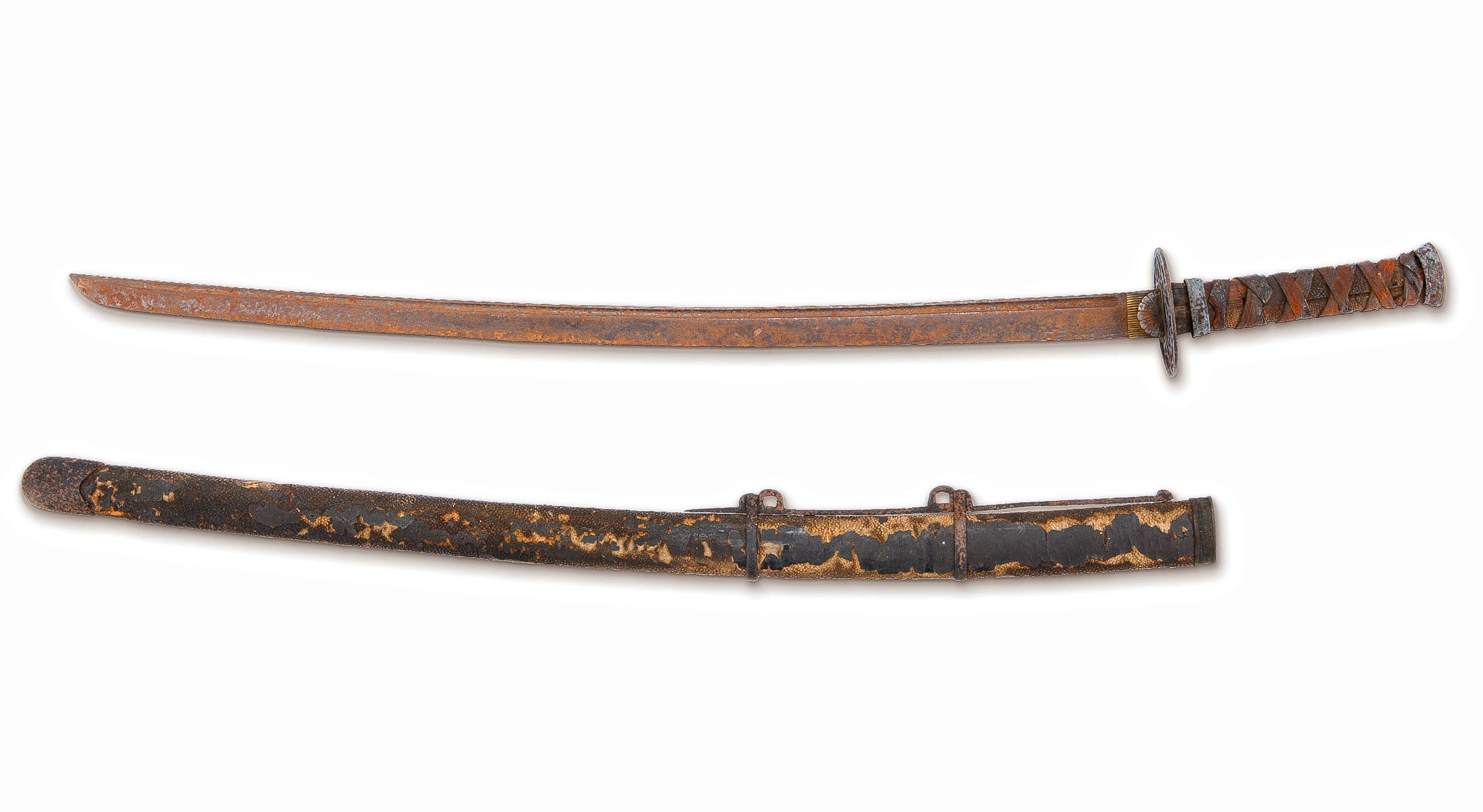
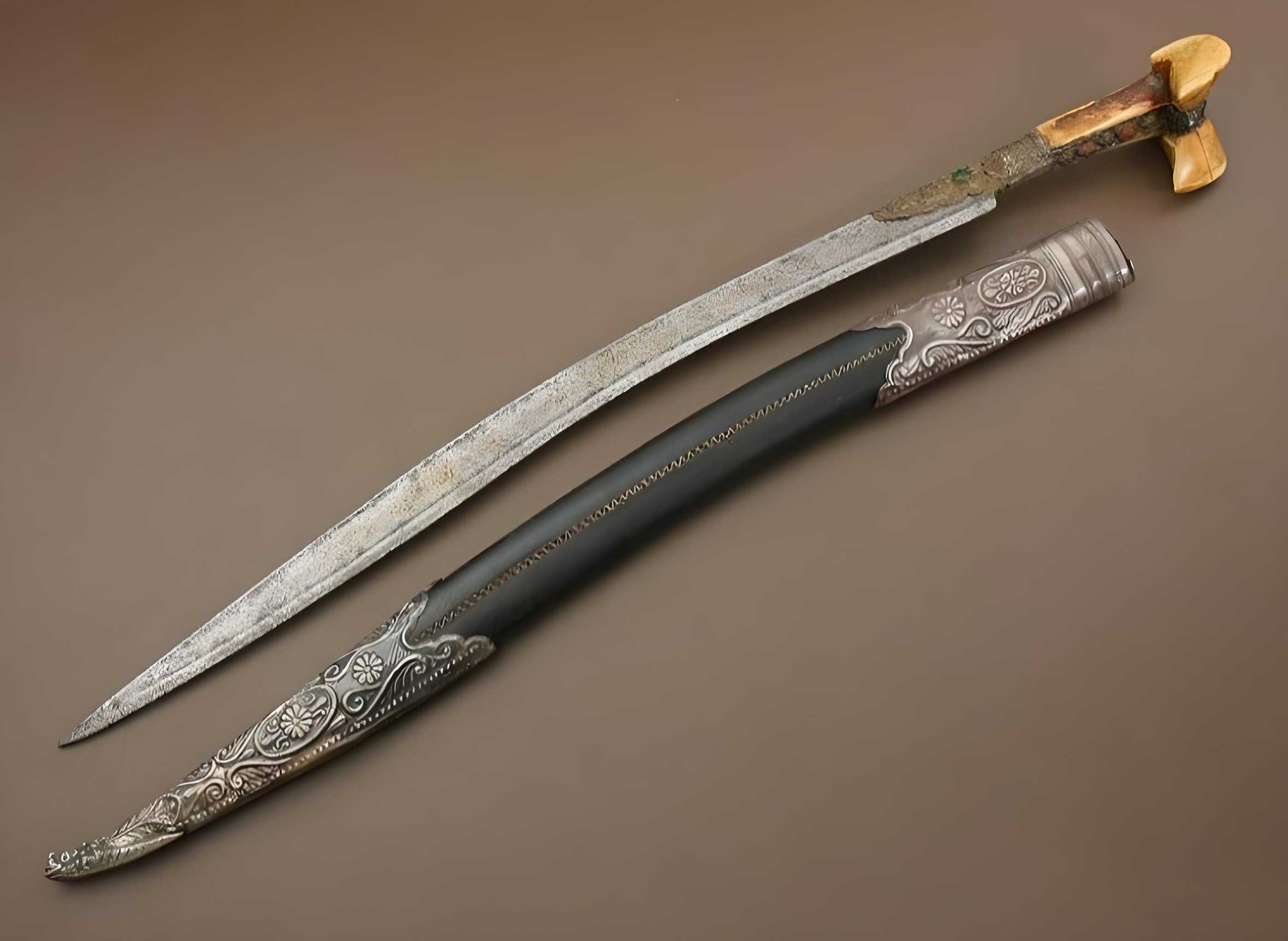
The Seven-Branched Sword is an ancient iron sword that originated at Isonokami Shrine in Tenri City, Nara Prefecture, Japan. This cold weapon measures 29.5 inches (74.9 cm) in length and has six branches of blade edges, three on each side of the sword. You can think of the main blade as the “seventh” branch. There are inscriptions in gold inlay on its blade. The Seven-Branched Sword was designated as a Japanese National Treasure in 1953.
Origin and Use
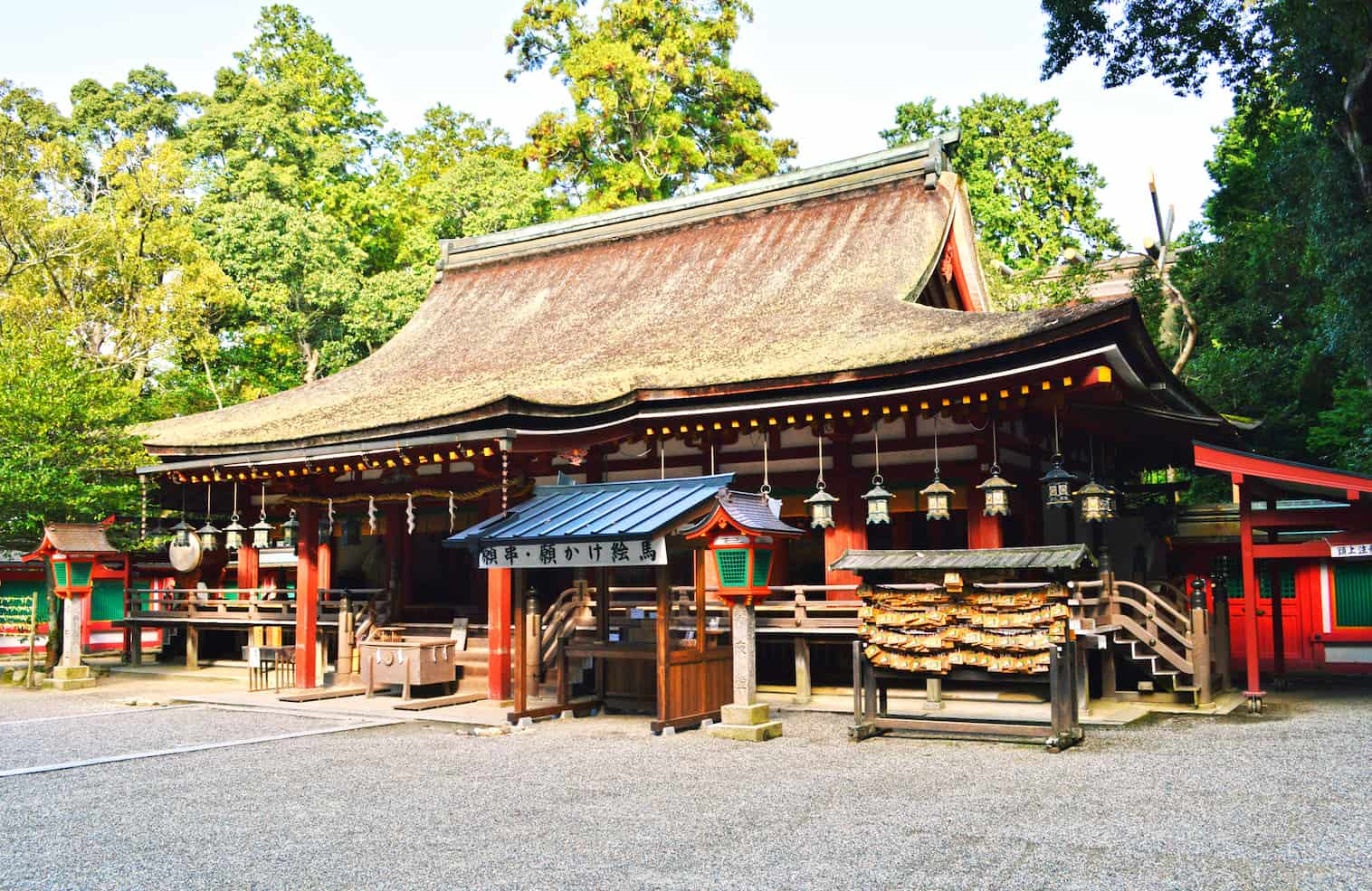
The exact origin of the Seven-Branched Sword has been forgotten, and it was referred to as the “Six-Pronged Spear” in Isonokami Shrine. This sword was used as a ceremonial object in rituals, particularly during a ceremony where the first seedlings of the year were planted in the fields. Thus, the sword had more of a symbolic or ceremonial role than being a practical edged weapon.
The Seven-Branched Sword may have been presented by the Korean kingdom of Baekje (18 BC to 660 AD) to Japan, and it is associated with diplomatic exchanges between Baekje and Japan during ancient times.
Why the Seven Protrusions?
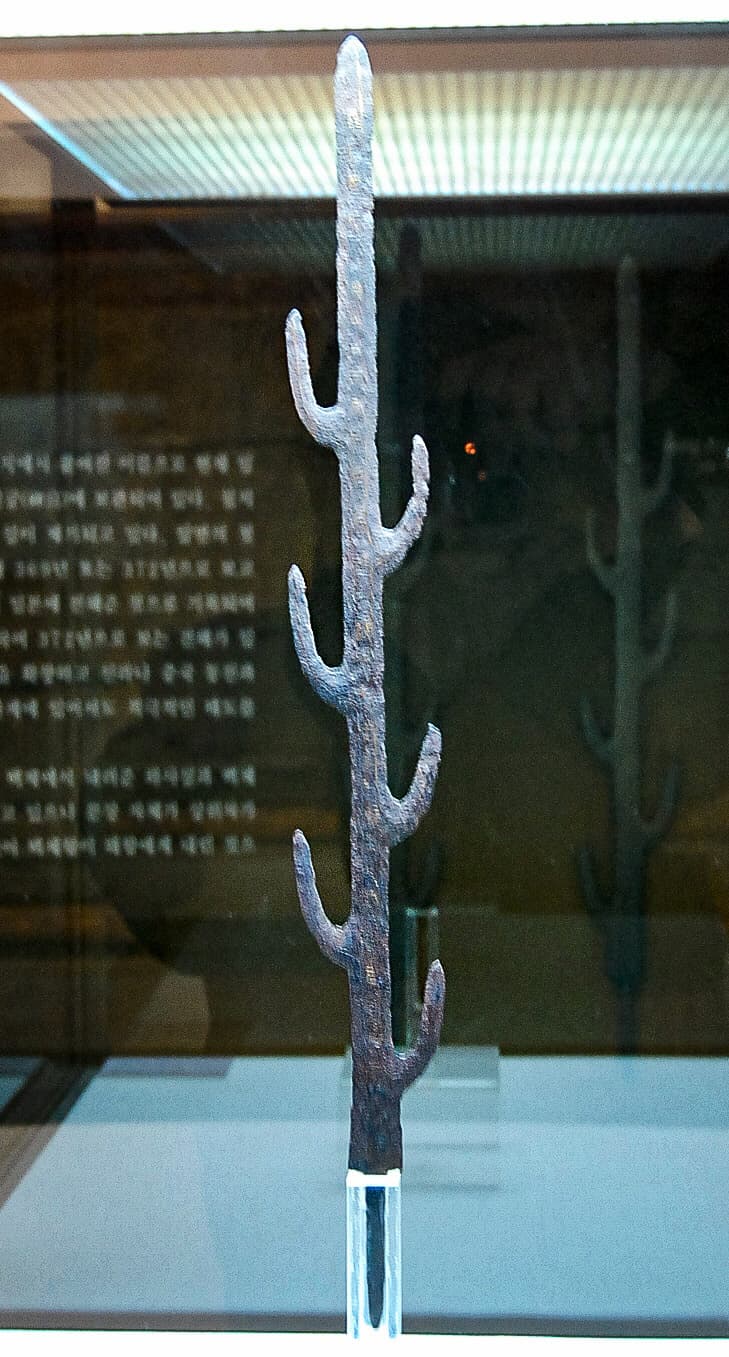
The Seven-Sons Mirror, or the Seven-Little-One Mirror gifted alongside the sword, is described as having seven protrusions, which aligns with the “seven sons” theme in Korean folklore. The same theme might be the reason why the Seven-Branched Sword has seven protrusions.
This bronze mirror and other artifacts were reportedly unearthed from the Daisenryo Kofun of the mid-5th century (a kofun is an “ancient grave”), and they are believed to be related to the reign of Emperor Nintoku (r. 313–399), the 16th Emperor of Japan.
Still, there is speculation that these artifacts were purchased in Kyoto by Okakura Kakuzo, a Japanese art critic, and do not precisely align with the tomb’s construction period.
There have been two separate attempts at restoring or reproducing the Seven-Branched Sword, one in 1980 and another in 2005. Due to a lack of information on the original production process, a new one has been implemented during these restorations.
Inscriptions on the Seven-Branched Sword
The sword has inscriptions on its blade, with a total of 61 characters inlaid in gold. Due to corrosion and damage, 49 characters are legible, 4 are entirely unreadable, and 8 can be partially deciphered.
The Chinese inscriptions are said to have been written by the monarch of Baekje when he presented the sword to the king of Wa (Japan) in the third century AD.
The sword is constructed of “one hundred layers of steel” and can penetrate “one hundred enemies”, according to the inscription. The first of its type, this sword was commissioned for the King of Wa by the King of Baekje. The inscription states that the sword should be handed down to the “next generations”.
Various interpretations of the year mentioned in the inscriptions suggested varying dates as the origin of the sword, such as 268 AD, 369 AD, or 468 AD in the Chinese calendar. The specific construction year of the Seven-Branched is yet to be resolved.
Significance of the Sword
The Seven-Branched Sword is a valuable artifact. It provides insights into the relationship between ancient Japan and China during the 4th century. It is one of the few surviving written historical records from that period.
According to the Nihon Shoki (Chronicles of Japan), the sword, along with a mirror called “Seven-Little-One Mirror,” was presented to Japan as a diplomatic gift from Baekje. The idea that “Tai” may be a unique Baekje-era name suggests once again that the sword may have been created in the context of Baekje’s internal politics.
Despite its large, deadly size, this sword was likely used more for symbolic purposes than practical combat.
Physical Features
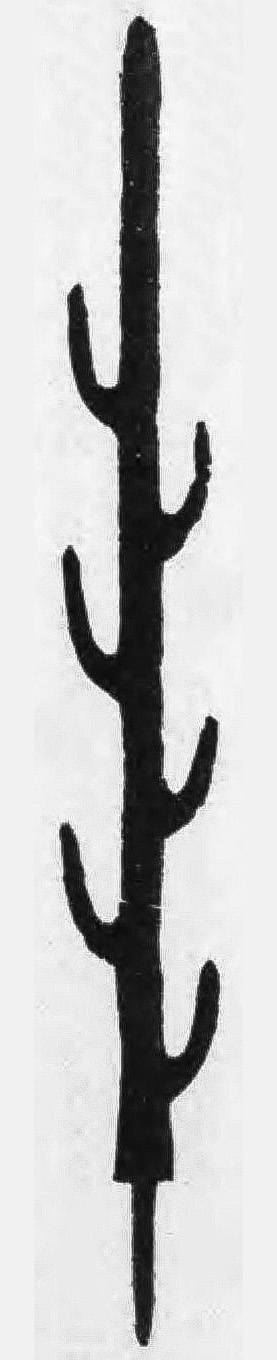
The original Seven-Branched Sword is still in existence today, and it has been guarded in the Isonokami Shrine ever since it was introduced there. However, the sword is not visible to the general public. It has the following physical features:
- Total length: 29.5 in (74.9 cm).
- Blade: 25.8 in (65.5 cm), double-edged and slightly curved with a central ridge.
- Tang: 3.7 in (9.4 cm), it does not have a hole for fixing the sword.
- Weight: 4.03 lb (1.83 kg).
- Material: Iron.
- Branches: The branches are 3.9 in long (10 cm) and 1.2 in wide (3 cm).
History of the Seven-Branched Sword
Envoys from Baekje under the command of Chikuma Nagahiko traveled to Japan in the ninth month on the tenth day of the 52nd year of the Japanese empress Empress Jing’s reign, according to the Chronicles of Japan (Nihon Shoki). They presented the Seven-Branched Sword, the Seven-Little-One Mirror, and various precious items to the Japanese court.
Chikuma Nagahiko mentioned that there was a river to the west of his country, and its source was an iron mountain in Kokuna. This river was so distant that it would take seven days to reach it. He offered to provide the iron from this mountain to the Japanese court.
Therefore, the Seven-Little-One Mirror and the Seven-Branched Sword were described as treasures made using the iron from Tetsuzan (“Iron Mountain”) in Kokuna.
Chikuma also conveyed that the connection between his country and Japan, given by the heavens, was essential for the stability of Japan. He advised the Japanese court to maintain good relations, gather tribute regularly, and continue the exchange. Following this, annual tributes and exchanges between Baekje and Japan continued.
Chikuma Nagahiko later took action against the Korean Kingdom of Silla after it seized tribute from Baekje in 247 AD, according to the Japanese chronicles.
In the 49th year of Empress Jingū’s reign, Japanese forces were dispatched to Takachimura and attacked the Silla Kingdom. Baekje generals like Kira Sho and Sasha Nuguai also cooperated in defeating Silla forces, resulting in the subjugation of several regions.
There are various interpretations regarding the exchange of the Seven-Branched Sword:
- Some believe it was a gift from Eastern Jin to Japan.
- Others suggest that Baekje offered and gifted it to Japan.
The historical context of Baekje facing the threat of an invasion by the Korean Kingdom of Goguryeo might have led to their alliance with Japan, resulting in the creation of the Seven-Branched Sword. In this interpretation, this ornamented sword was a valuable gift exchanged between the two countries as equals.
According to the scholar Kosaku Hamada, the exchange of the Seven-Branched Sword, which was created by Eastern Jin in 369 AD, was a diplomatic move. He believes it solidified an alliance between Baekje and Japan and established a southward diplomatic line involving Japan, Baekje, the Gaya Confederacy, and the southern Chinese states, which lasted into the early 6th century.
Another scholar, Yoshitane Sakamoto, interprets the sword’s inscription and suggests that Baekje received titles and status from Eastern Jin, and out of joy and respect, they gifted the ornamented Seven-Branched Sword to Japan. The inscriptions on the sword contain historical clues related to Baekje’s military achievements and alliances.
How Old is the Seven-Branched Sword?
In the original inscription on the sword, the Seven-Branched Sword appears to be associated with the year 369 AD. There is a mention of the “Baekje King” and “Crown Prince,” who received investiture from Eastern Jin, which indicates a connection between the sword and Baekje royalty.
The negotiations between Baekje and the Eastern Jin Dynasty are initially recorded in the Book of Jin as starting in 372 AD. Therefore, the Eastern Jin may have already acknowledged the Geunchogo of Baekje as a king before this formal investiture.
The sword’s inscription includes the term “Prince King”, which is suggested to refer to the “King of Wa” mentioned on the reverse side of the sword. This is actually of higher status or significance than the King of Baekje.
Baekje established a close relationship with the Wa Kingdom in the history of early Japan to counter the threat from the Kingdom of Goguryeo. In 369 AD, Wa and Baekje allied to launch an expedition into the Korean Peninsula, with Baekje emerging victorious against Goguryeo.
When the Korean Kingdom of Baekje began to pay tribute to the Chinese Eastern Jin around 372 AD, the Seven-Branched Sword might have been presented as part of this diplomatic relationship. The bronze mirror was also presented alongside the sword, and it is currently believed to be housed in the Boston Museum of Fine Arts.
References
- The Six National Histories of Japan – Taro Sakamoto – Google Books
- A History of Korea – Google Books
- Relationship Between Korea and Japan in Early Period: Paekche and Yamato Wa. By Wontack Hong – Cambridge Core