The Boar Spear at a Glance
What is a boar spear, and how was it used in battle?
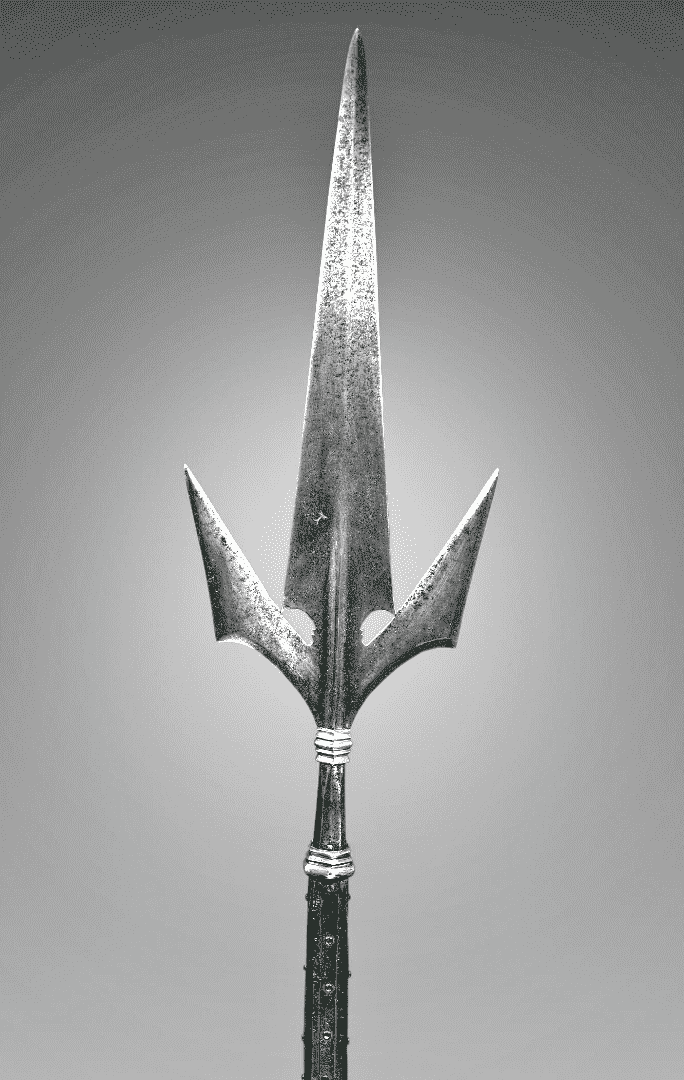
The boar spear was a spear-like weapon popularized by the Germanic barbarians during the Roman era. It featured a diamond-shaped metal tip mounted on a short, heavy shaft with lugs or wings at the gorge. These wings served multiple purposes, such as preventing a charging boar from reaching the hunter and providing versatility in battle. They could be used to snag an opponent’s shield, tear it off, or deflect incoming attacks. The boar spear proved durable and effective, capable of breaking through shields and armor.
What role did the boar spear play in hunting and warfare throughout history?
The boar spear had a significant historical role in both hunting and warfare. In hunting, it originated from the need to capture and kill wild boars, which were highly symbolic and held cultural significance among the Germanic tribes. The weapon allowed hunters to keep a safe distance from the boar while delivering a lethal blow. In warfare, the boar spear was utilized by Germanic and Roman-barbarian fighters during the High Middle Ages. It provided them with a versatile and effective weapon for combat, capable of breaching shields and deflecting strikes.
How did the decline of the boar spear come about?
The popularity of the boar spear declined over time due to several factors. The emergence of long-bladed swords in the hunting field, as well as advancements in European metallurgy through contact with the eastern Mediterranean, contributed to the trend. High-ranking European hunters began using swords to finish off boars after they had been trapped and weakened by hounds and spears. Additionally, the rise of the jousting lance as the preferred weapon for heavy cavalry in the Late Middle Ages relegated the boar spear to infantry armies.
What were the key design features of the boar spear?
The boar spear was designed with durability and effectiveness in mind. Its metal head varied in length between 8 and 16 inches and had a lozenge-shaped blade with lugs or wings attached to the shaft. The sturdy 80-inch long wooden shaft, often wrapped in leather for a better grip, could withstand the impact of a blow and the force exerted by a boar. The rounded edges of the spear’s blade were later refined during the Renaissance to align with the aesthetic and military trends of the time, resulting in versions with a leaf blade and long, curved wings.
The Germanic barbarians of the Roman era created and popularized a new sort of spear known as the boar spear. The boar spear has a diamond-shaped metal tip mounted on a short, heavy shaft with lugs (sometimes called “wings”) at the gorge to prevent the boar from charging the hunter while s/he is impaling the animal. Its basic design is similar to that of the winged lance, a medieval weapon popular at the time, as well as the Bohemian earspoon of the 14th century.
- The Boar Spear at a Glance
- What is a boar spear, and how was it used in battle?
- What role did the boar spear play in hunting and warfare throughout history?
- How did the decline of the boar spear come about?
- What were the key design features of the boar spear?
- The Origins of the Boar Spear
- History of the Boar Spear
- The Boar Spear’s Design
- Boar Spear Today
| Boar Spear | |
|---|---|
| Type of weapon: | Polearm |
| Other names: | Saufeder in German |
| Origin: | Germanic barbarians |
| Utilization | Hunting and infantry |
| Total length: | 90 inches (2.3 m) |
| Weight: | 4 lb (1.8 kg) |
The wings on the boar spear also made it useful in battle, as they could be snagged on an opponent’s shield and torn off, or they could be forced forward to deflect an oncoming spear. In the 16th century, the boar spear was a prestige symbol for the leaders of the foot army as well as a weapon of combat.
During the High Middle Ages (1000–1300), these edged weapons were still in use, although they eventually died out due to the popularity of the jousting lance. A version with a longer tip was employed for combat in Italy in the 15th century.
Boar spears can sometimes be confused with bear spears or rogatinas.
Some modern-day boar hunters still use hounds and boar spears, much like their medieval ancestors. A mature wild boar has impressive strength. When it protects itself, it poses a major threat because of the severity of the damage it can inflict.
The Origins of the Boar Spear
In the civilizations of the Indo-Europeans, hunting wild boars has always played a significant role, frequently serving as a test of bravery and manliness as well as a means of providing for basic survival needs. Initiation into maturity was marked by the first wild boar hunt among the ancient Romans.
Similarly, in the amphitheaters of minor rural villages remote from the big gladiatorial circuit in Rome and Capua, the slaughter of wild pigs was a highly admired sight. The boar spear was born as a new cold weapon out of this need.
Although the Latin-Italic peoples did not invent the boar spear used for hunting wild boar, its origins can be traced back to the period of the Roman Empire.
The Germanic barbarians invented the wild boar spear because their civilization centered on hunting and wild animals (such as boars, bears, and wolves) had an essential symbolic role in their society.
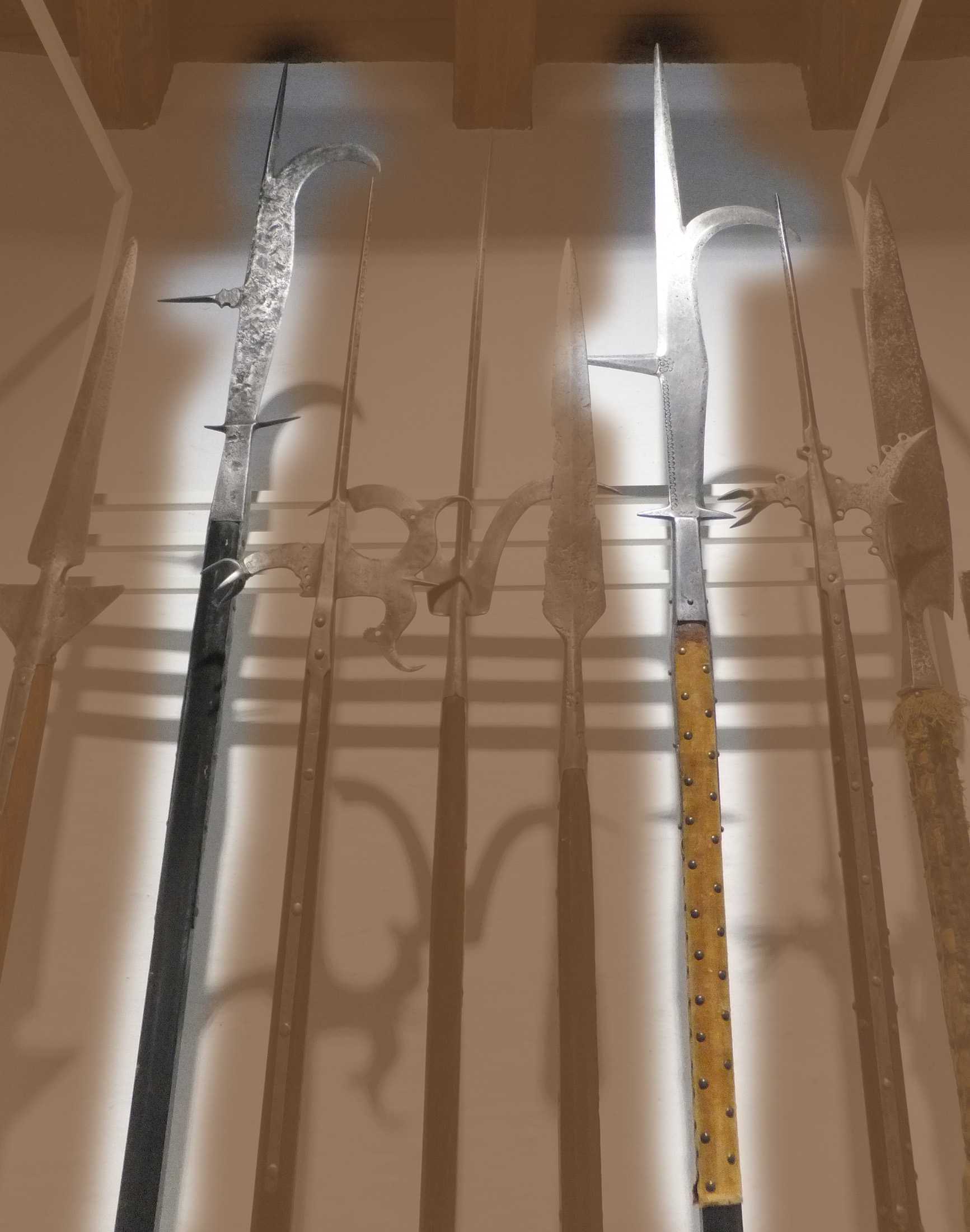
After the wild boar had been captured and debilitated by the hounds, it was killed using the boar spear (“saufeder” in German). It was a big and heavy weapon fitted with lug wings to keep the beast at a safe distance from the hunter.
History of the Boar Spear
The Germans, for their part, resorted to using the boar spear in combat as well. The weapon’s durability ensured that it could easily break through hostile shields and armor. The “wings” on the spear made it more versatile, allowing it to catch an enemy shield or deflect a strike from another spear or sword, such as the partisan, guisarme, or flamberge.
The Roman Empire began systematically recruiting Germans as mercenaries in the 2nd century AD, and it was at this time that this massively tipped boar spear with stopping “wings” spread across Germany.
Evidence of the weapon and its employment may be seen in numerous mosaics, thanks to the widespread Germanization of the Empire that ensured its inclusion in Roman art by the 4th century AD.
Changes to the Boar Spear in the Middle Ages
Roman-barbarian fighters (Visigoths, Ostrogoths, Vandals, Burgundians, Lombards, Franks, etc.) and later troops of the Holy Roman Empire utilized the same sort of spear for both wild boar hunting and fighting during the High Middle Ages (1000–1300).
An explicit mention is made of a boar hunting episode featuring Emperor Charlemagne in the book Karolus Magnus et Leo papa. Charlemagne successfully hunts a wild boar with the weapon. The book is preserved at the Abbey of St. Gall and attributed (likely erroneously) to the poet Angilbert (740–814).
Odin, the ultimate warrior-god, was often shown by the Vikings in Northern Europe, who lived outside the cultural basin of Carolingian Europe, with a holy Gungnir spear with the usual lugs of a boar’s spear.
It is interesting to note that the Germanic wedge formation, which was favored in combat and was said to have been created by the deity Odin, was also known as the “formation with the boar’s head” (Svinfylking in Old Norse or caput porcinum in Latin). Saxo Grammaticus’s Gesta Danorum gives a detailed account of the Germans’ strategic usage of the wedge.
The Holy Lance, an icon of the Holy Roman Empire (the lance that is said to have pierced the side of Jesus while he was crucified on the cross), is a modified boar spear with two mock blades running the length of the weapon from its lugs to its tip.
After the jousting spear developed as the preferred weapon of the Franco-Norman heavy cavalry in the Late Middle Ages (1300–1500), the boar spear was consigned to the ranks of infantry armies.
The Decline of the Boar Spear
Long-bladed swords (see spadone) also began to proliferate in the hunting field as the tactical and symbolic significance of the sword increased along with advancements in European metallurgy as a result of contact with the eastern Mediterranean basin through the Crusades (such as Damascus steel).
After the wild boar had been crippled and trapped by the hounds and by the servants armed with spears, the high-ranking European hunters started to use their swords to exterminate the beast.
Even among the Carolingian emperors, who saw wild boar hunting as a good way to practice their martial arts, the trend persisted and even grew during the Late Middle Ages (1300–1500), eventually giving rise to the Renaissance-era invention of the “hunting sword”.
In the 15th century, foot soldiers were still using the boar spear. This included not just the common infantryman but also the knight, who had been forced to fight on the ground instead of on horseback.
The master of fencing, Fiore dei Liberi (1350–1410) details the precise use of the boar spear against an opponent on horseback in his work Flos Duellatorum (around 1409–1410). This involves striking the enemy in the head with both the spear’s tip and its handle.
The Boar Spear’s Design
When a boar spear was inserted into a chamber or rib cage, it was claimed to cause instantaneous death by severing the heart, lungs, and major blood vessels. Thus, a boar spear had to be very sturdy because of its intended use:
- The length of the metal head varied between 8 and 16 inches (20 and 40 cm). The “wings” (lugs) of the spear’s lozenge-shaped blade were attached to the shaft by a conical or pyramidal gorge. This metal point was heavy enough to ensure the weapon could penetrate the boar’s thick rib cage and deliver a lethal blow to the boar’s heart.
- The 80-inch (2 m) long rod was fashioned from a single piece of specially selected wood (such as the ash wood) to prevent breaking. It was sometimes wrapped in leather for a better grip and was designed to withstand the impact of the blow as well as the pressure exerted by the enraged animal. The hunters intended on keeping the animal blocked with the lugs.
The boar spear’s harsh edges were rounded down during the Renaissance to reflect the prevailing aesthetic and military trends of the period. For this reason, later versions of the weapon, notably those made in Italy, include a “leaf” blade similar to the pike’s and long, curved “wings” that resemble the corseque spear’s prongs.
Boar Spear Today
Even in modern times, the boar spear is employed to dispatch of wounded wildlife. When compared to a gunfire, killing a wild boar with a boar spear is preferable since the dogs hunting the pig are not put in danger and their hearing is not damaged by the loud explosion. While hunting, the boar spear is sometimes used as a defense weapon in case of an attack. However, expertise and experience are necessary while tackling this issue.
Aside from the aforementioned exceptional circumstance, the boar spear is mostly employed as a decorative object in hunting halls and as a trophy for meritorious hunters.
In many jurisdictions, shooting wild boar with nothing more than a boar spear is not against the law. But when there is a possibility of animal cruelty from inexperience or lack of competence, hunting with a boar spear becomes troublesome on a daily basis. Engaging in hand-to-hand combat with an aggressive animal carries the inherent risk of endangering one’s own well-being and life.
References
- Flos duellatorum – Fiore Dei Liberi, Giovanni Rapisardi – Google Books
- Medieval Combat: A Fifteenth-century Illustrated Manual of Swordfighting and Close-quarter Combat – Hans Talhoffer, 1467 – Google Books
- The Danish History, Late 12th – Early 13th Century A.D., by Saxo Grammaticus – Gutenberg.org
- Treasures from the Tower of London: An Exhibition of Arms and Armour – Alexander Vesey Bethune Norman, G. M. Wilson, 1982 – Google Books