Haiti was the first black supremacist country in history. Despite the severe circumstances, many Africans were forced to work on the sugar plantations of the “Island of Death,” or Haiti. Despite the terrible working conditions and high mortality rate among the blacks during the first decade, the slaves were brought in as though they were “disposable.” Slaves revolted against Napoleon Bonaparte‘s troops, achieved independence for Haiti, and founded a new country based on the principle of “black supremacy.” Yet, the international oppression the country suffered afterward at the hands of Western European nations would prove terrible.
Saint-Domingue, the Crown Jewel of France’s Colonies
France established colonies all over the globe in the middle of the 18th century, including North America, the Caribbean, and India. Nonetheless, there were colonies inside the large imperial domains that were far more lucrative.
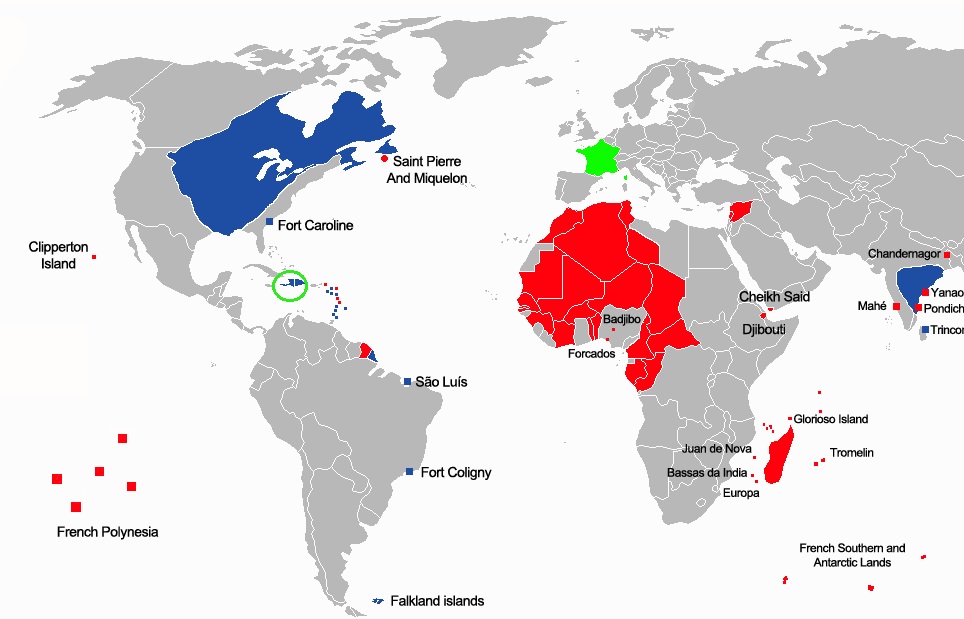
Sugar cane and coffee beans were gathered in great quantities in Saint-Domingue, processed into white sugar, and sent to Europe. The result was a huge payday. Saint-Domingue supplied 60% of the world’s coffee and 40% of the world’s sugar.
The value of exports to France from Saint-Domingue at the time was comparable to that of exports to England from the original 13 American colonies.

About one million French citizens out of 25 million were directly engaged in Saint-Domingue imports at the time, while another three million French citizens were in Saint-Domingue, reaping the economic advantages of the island indirectly.
But the lives of African slaves were sacrificed to achieve this prosperity.
Every year, Haiti received the forced importation of over 20,000 additional African slaves. Their primary function was to ensure a sufficient supply of slaves.
Slaves were subjected to deplorable working conditions and often little nourishment. Slaves were not permitted to be treated or educated if they were ill, and diseases like yellow fever and malaria were common.
Thus, after a year, half of all black slaves perished, and by three years, only around 15-20% were still alive. The white slave owners believed that it was more profitable to labor their black employees to death and replace them with fresh slaves as soon as possible.
Among the island’s 40,000 whites, 20,000 free blacks, and 450,000 black slaves, there was considerable racial discrimination, with whites at the top.
However, in 1791, a massive uprising of African slaves occurred.
A Massive Uprising of African Slaves
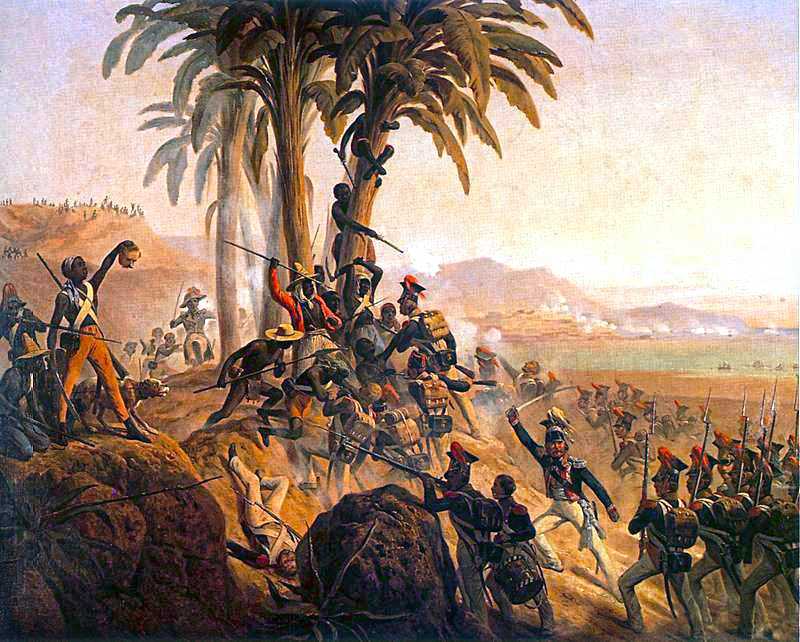
Slaves in northern St. Domingue staged a huge uprising on August 22, 1791, after months of planning. Black slaves with a vendetta led by Toussaint Louverture (1743–1803) killed numerous whites, but eventually, the uprising stalled.
Both Britain and Spain engaged in the Haitian Revolution (1791–1804) because of the conflict that the French revolutionary government launched with them in Europe.
However, due to concerns that their own slaves in the area could rise up if this revolutionary slave army were to win the uprising and gain independence, Britain and Spain decided to oppose the slaves of Haiti.
Despite that, the slave army of Haiti defeated the armies of Britain, Spain, and Napoleon over the course of 13 years to achieve independence in 1804. It became the world’s first freed slave nation, or, in other words, the first country formed by slaves.
The First Black Supremacist Country
Louverture’s lieutenant and the head of the black army, Jean-Jacques Dessalines (1758–1806), took control of the government of the Republic of Haiti.
As a former slave, Dessalines had a strong resentment against white civilization for its historically demeaning treatment of Haitian slaves. His first significant policy as dictator was the “1804 Haitian Massacre”, in which he ordered the death of all remaining white inhabitants on the island after he had won independence for Haiti.
Nearly all of Haiti’s white population had been wiped out after an estimated 5,000 deaths, which was not comparable to the deaths of black slaves over the last decades.
Jean-Jacques Dessalines made no special effort to cover up this slaughter, claiming:
“We responded to these cannibals with force, matching crime with crime and sorrow with sorrow. I defended my country and sought retribution for the American nations.”
Jean-Jacques Dessalines after the 1804 Haitian Massacre.
A bill was passed prohibiting whites from holding citizenship or owning property in Haiti after the nation was designated a “black country.” This was with the exception of the small number of Germans and Poles who actually fought for Haiti’s independence.
It was a governmental structure that blatantly promoted “black supremacy.”
The Aftermath of the Events
However, due to its policies of black supremacy, the Republic of Haiti as a whole faced considerable discrimination from Western countries. Since nations like the United Kingdom, the United States, Spain, etc. had too many slave colonies, the fear was that if Haiti—a country formed by revolted slaves—established diplomatic ties with the colonizer countries, their own slaves would rise up in rebellion as well.
The Republic of Haiti was unable to trade with any nation for a very long time, despite being the world’s leading exporter of coffee and sugar prior to gaining independence.
As a prerequisite for establishing diplomatic ties, France imposed a demand for reparations, insisting Haiti settle outstanding obligations to France before granting France the role of mediator in international affairs. The requirement was to “compensate the white exiles from Haiti with the value of Haiti’s property.” The computation of “Haiti’s property value” included the worth of the emancipated slaves, which was a source of profound embarrassment.
For emancipated slaves, this entailed being told, “If you want to establish diplomatic relations, you must pay the value of your former enslaved status.”
A Short-Lived Black Supremacy
The government of Haiti agreed to this stipulation and paid 15 million francs in reparations because the country realized that the island’s economy could not function without commerce. That was more than twenty years worth of tax money for Haiti.
In addition to all that, in France, the payments were made via high-interest loans from major French banks.
The government of Haiti was unrealistically optimistic when it assumed that resuming commerce and paying off its obligations would happen as soon as diplomatic connections were restored and sugar and coffee exports resumed at previous levels.
However, since many sugar and coffee manufacturing facilities had been abandoned for almost a decade, rendering them useless, and the Haitian government was deeply in debt, the country’s economy quickly crumbled.
More than 80% of the government’s tax income was supposed to be utilized to settle the debt after the reparations deal of 1825. Therefore, the island’s economy was highly taxed to collect the means to repay it, which made the island even more economically unviable.
With the implied threat that “if you do not pay, you will be bombed,” the French government threatened to send military ships to Haiti if the payback was not made on time.
The Haitian government kept making loan payments until 1947, by which time the country had fallen into extreme poverty.
Haiti Today
The current GDP per capita in Haiti is around $1120 as of 2023.
In 2003, President Jean-Bertrand Aristide of Haiti voiced his strong opposition to the French government during a United Nations address, denouncing the 1825 reparations as unjustifiable. He emphatically called for Haiti to receive reparations amounting to 21 billion US dollars.
But the French government quickly shot down the idea.
The former French president François Hollande and others have claimed that France has a “moral debt” to Haiti. But in February 2010, French President Nicolas Sarkozy paid a visit to Haiti, the first by a French President, and brushed aside the idea of making reparations, declaring, “There is no legal obligation for compensation.”
France maintains its stance, emphasizing that there is no liability for compensation.