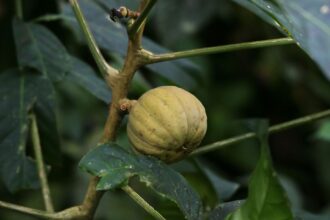
Across the ancient moss-draped stone walls of Kyoto temples, the rugged coastal cliffs of Honshu, and the evergreen forests of Jeju Island and Taiwan climbs one of East Asia’s most resilient botanical treasures: Japanese Ivy (Hedera rhombea), known in Japan as Kizuta (“Tree Ivy”) or Fuyuzuta (“Winter Ivy”). While summer vines like Boston ivy drop their crimson leaves at the first November frost, Hedera rhombea keeps its glossy, diamond-shaped emerald foliage gleaming against grey granite and white winter snow—playing a vital role in East Asian ecology, traditional herbal medicine, and centuries of classical Japanese poetry.
Botanical Identity and the Secret of Two Leaf Shapes
A proud member of the ginseng family (Araliaceae), Hedera rhombea is a woody evergreen climbing liana native to the coastal and mountainous woodland regions of Japan, South Korea, Taiwan, and eastern China. Using thousands of tiny, specialized aerial rootlets along its stems that secrete a natural bio-adhesive cement, the vine can scale vertical rock faces and giant cedar trunks up to thirty feet (ten meters) high without harming the host tree’s vascular bark.
What fascinates botanists—and gives the species its Latin name rhombea—is its dramatic heterophylly (the ability of a single plant to grow two completely different leaf shapes depending on its maturity and sunlight exposure):
- Juvenile Climbing Leaves: When the young vine is creeping across shaded forest floors or climbing up a vertical trunk, its leaves grow with three to five pointed lobes, resembling the classic silhouette of European English ivy.
- Adult Flowering Leaves (The Rhomboid Diamond): Once the vine reaches the top of a sunlit wall or canopy and matures into its reproductive phase, it stops growing lobed leaves altogether. Instead, its adult branches produce smooth, unlobed, diamond-shaped (rhomboid) or oval leaves with waxy dark-green surfaces that shed heavy snow effortlessly.
In late autumn (October and November), just as almost every other forest plant is shutting down for winter, mature Japanese ivy bursts into bloom with spherical umbels of tiny, greenish-yellow flowers rich in late-season nectar—providing a critical survival buffet for native Asian bees, hoverflies, and wasps before ripening into clusters of glossy jet-black berries in spring that feed migrating thrushes and bulbuls.
“Winter Ivy” in Japanese Culture and Family Crests
In Japanese language and aesthetics, callers carefully distinguish between two plants that share the English word “ivy.” Deciduous Boston ivy (Parthenocissus tricuspidata) is called Natsuzuta (“Summer Ivy”), famous in haiku poetry for turning fiery scarlet in autumn before leaving bare vine skeletons behind. Hedera rhombea, by contrast, is celebrated as Fuyuzuta (“Winter Ivy”) or Kizuta because it stays lush and green through the harshest January blizzards.
Because of its tenacity in clinging to castle stones and flourishing in the dead of winter, the stylized leaf of Japanese ivy (the Tsuta motif) became one of the ten most prestigious heraldic family crests (Kamon) in feudal Japan, worn on the armor and silk kimono of samurai clans including the Matsudaira and Todo families, and later adopted by geisha houses as an emblem of enduring loyalty, prosperity, and longevity.
Traditional Herbal Medicine and Variegated Cultivars
In traditional East Asian phytotherapy—known as Kampo in Japan and Hanbang in Korea, where the plant is called Songak (“Pine Cliff Ivy”)—the stems and leaves of Hedera rhombea are harvested in autumn and dried in the sun. Rich in triterpenoid saponins (specifically hederacoside C and alpha-hederin) and flavonoids, decoctions of the plant have been used for centuries by herbalists to soothe joint inflammation, relieve spasmodic winter coughs, reduce blood pressure, and treat skin sores externally.
In modern horticulture, Japanese breeders during the Edo Period and twentieth century selected exquisite variegated dwarf cultivars of Hedera rhombea—such as ‘Variegata’ (Fuiri Kizuta), featuring creamy-white margins around emerald diamond leaves—making it a prized specimen for traditional Japanese rock gardens, bonsai tray landscapes (saikei), and shaded urban walls.