- The Fiji mermaid, a famous sideshow attraction, gained popularity in the 19th century.
- It was a fabricated creature, combining the upper body of a monkey with the lower body of a fish.
- Its legacy thrives in books, films, and music.
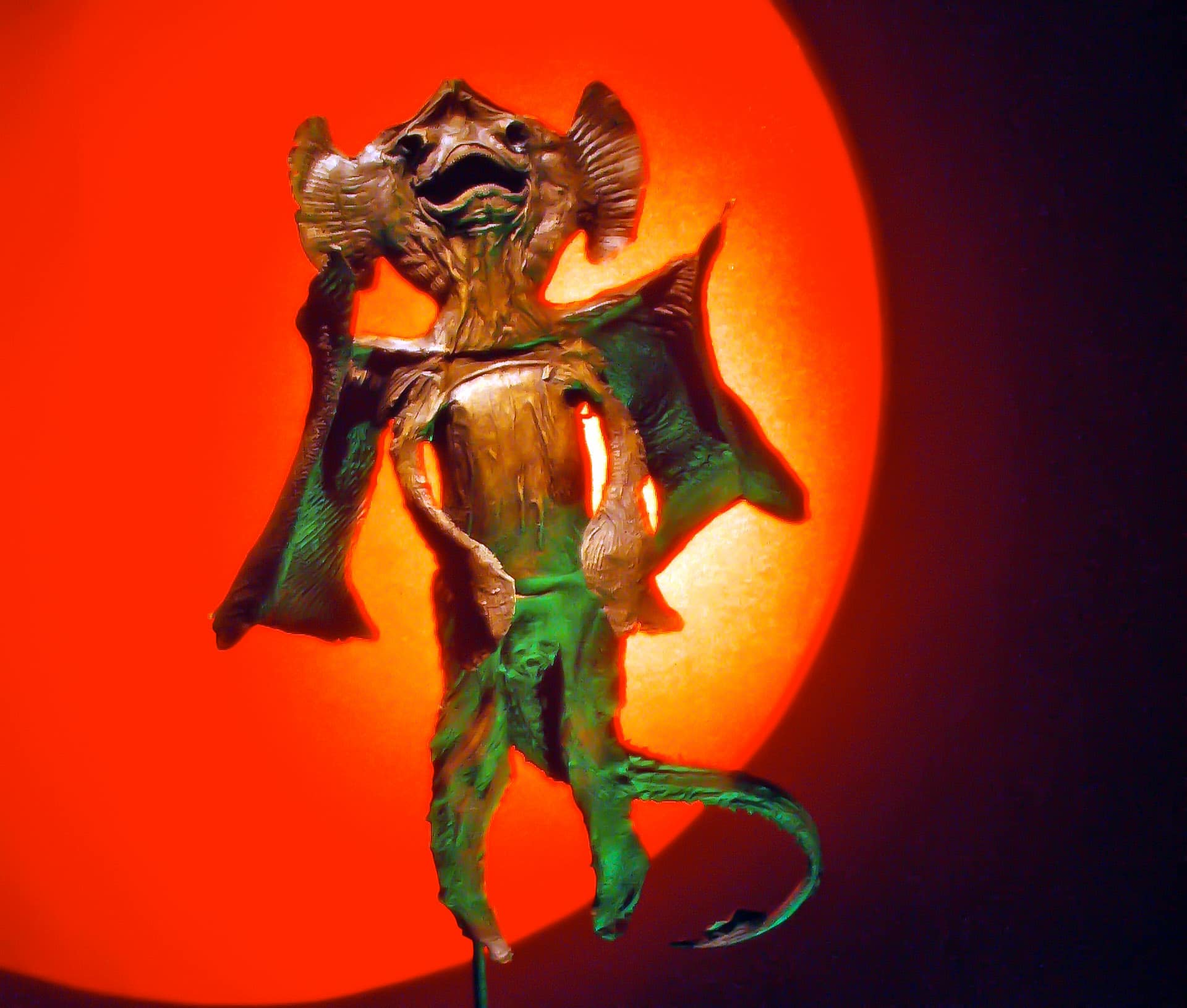
The Fiji mermaid, or Feejee mermaid, is a legendary sea monster with its roots in the South Pacific nation of Fiji. It was initially made available to the general public in 1842 in New York, United States. In the 19th century, the Fiji mermaid rose to prominence when a specimen was put on display as a “mystical marvel” for the benefit of interested visitors. Because of its fishy bottom half and monkey-like upper half, the Fiji mermaid is also known as the Monkey Fish. Until modern times, many people had different opinions on whether or not the Fiji Mermaid really existed.
Mermaids in Folklore
The stories of mermaids have been told for thousands of years. Even today, those who go out into the ocean keep their eyes peeled for this legendary beast. Dugongs are believed to be the inspiration for mermaids. Dugong skeletons were frequently showcased as “mermaid skeletons” in Renaissance and Baroque-era cabinets of curiosities in public, the forerunners of modern museums.
Many of the displays included fabricated dugongs or children with sirenomelia (“mermaid syndrome”), a rare genetic disorder. The popularity of the “Fiji mermaids” notion may be attributed to the efforts of Phineas Taylor Barnum, whose display has been replicated several times by various hoaxers, notably in the collection of the renowned Robert Ripley.
What Was a Fiji Mermaid?
Until the 17th century, people believed in a world where mysterious creatures lived in the sea. While mermaids were once thought to be real, they were now recognized as mythical. Nevertheless, reports of living or dead mermaids persisted even in the 19th century. The Fiji mermaid, popularized by P.T. Barnum, was a notable example that inspired many imitations.
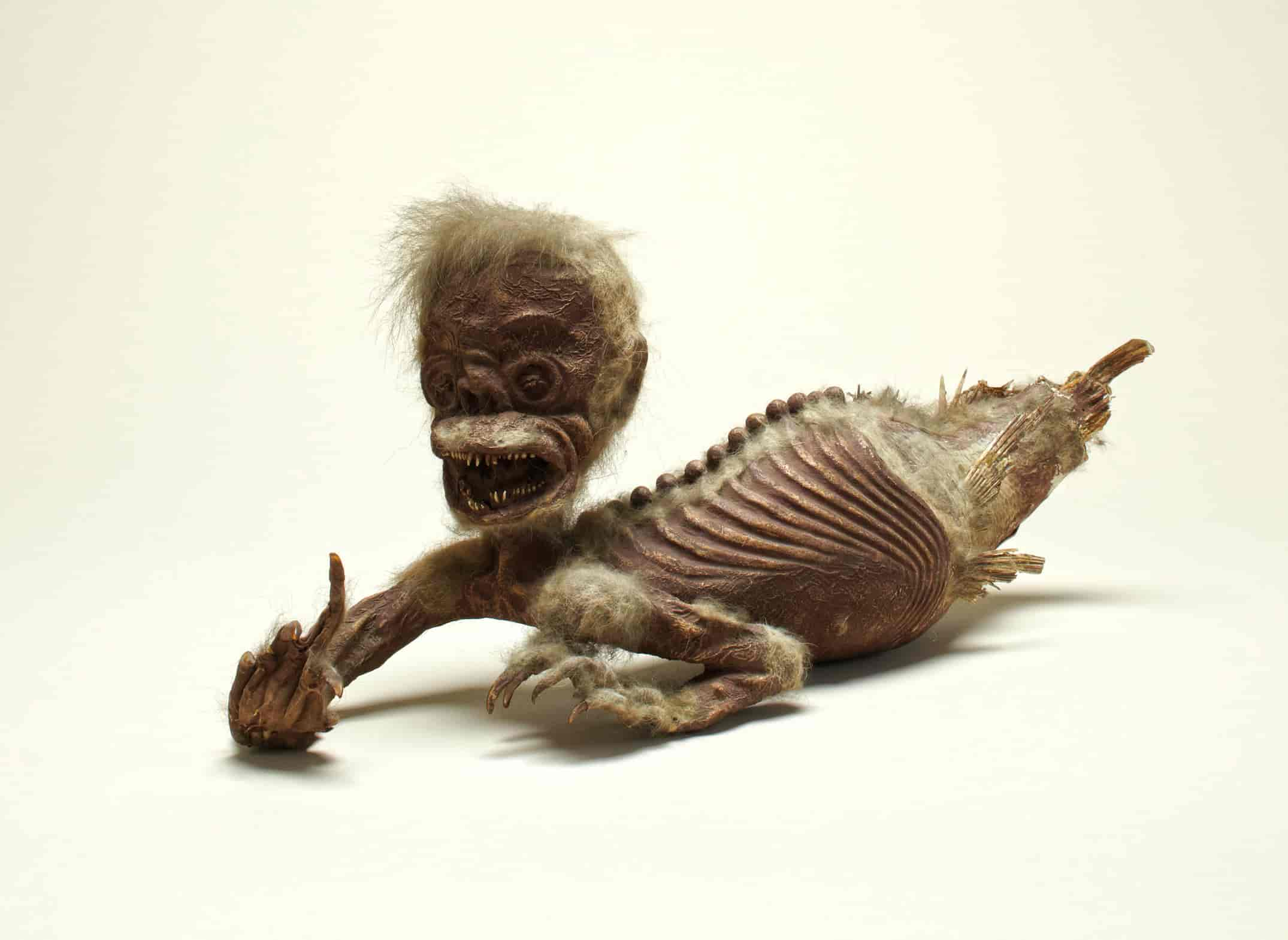
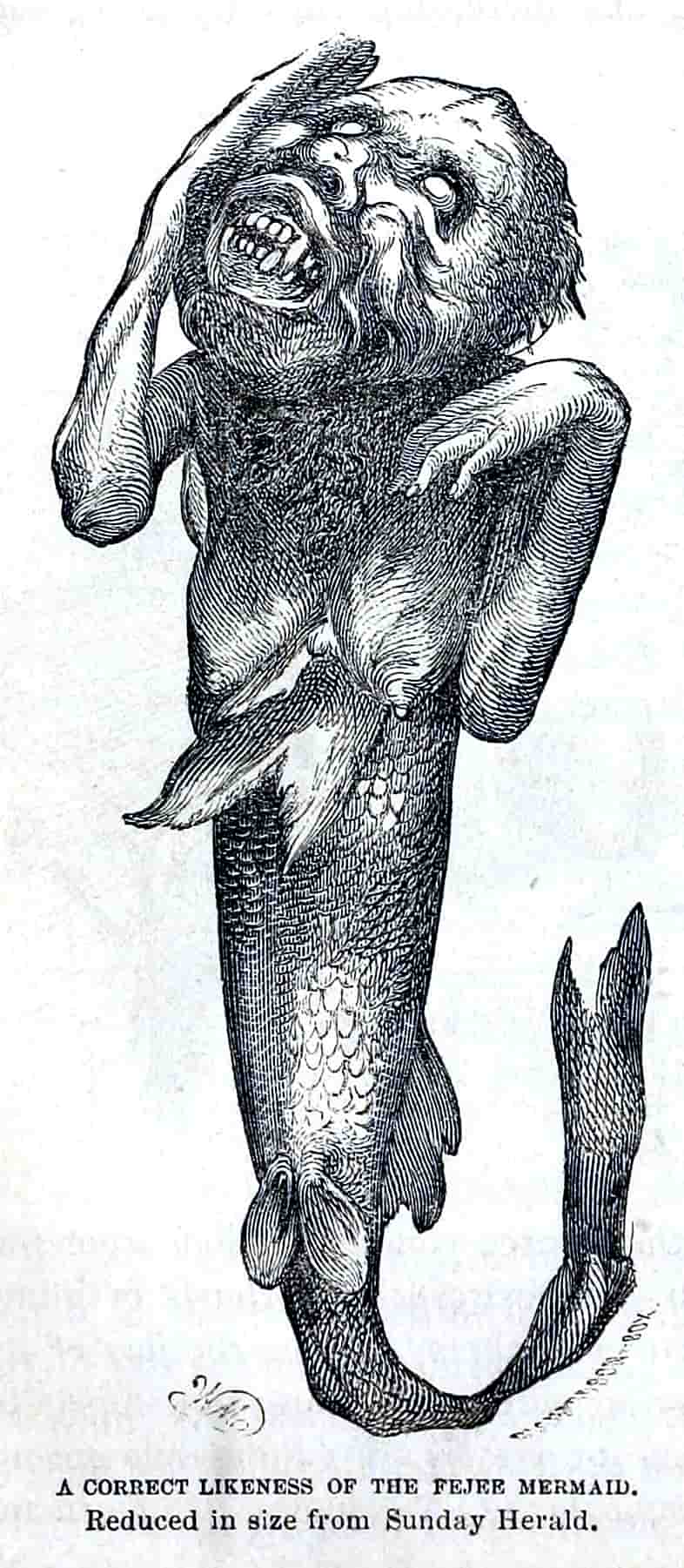
The discovery of the Fiji mermaid in 1840 brought it to widespread attention. The Fiji mermaid looked nothing like the lovely sea creatures represented in stories; instead, she had a monkey’s upper body and a fish’s tail. The 1840 specimen was just 20.7 inches in length, 8.3 inches in height, and 8.3 inches in breadth, yet it had an uncanny face and a peculiar look. The top 60 percent of this specimen was made up of a small monkey, while the bottom 40 percent was made up of a fish.
In 1842, Phineas Taylor Barnum brought the first Fiji mermaid to New York City to display at his museum. Many people who came to the museum were interested in this enigmatic and terrifying beast. The museum’s revenue greatly exceeded the previous month, with sales of $12,341 compared to $1,272.
Several additional mermaids from Fiji were shown in museums around the United States in the years that followed. The existence of mermaids gained credibility as the Fiji mermaid was showcased in Barnum’s exhibition for years. Although various Fiji mermaid replicas surfaced at Barnum’s exhibit in the early 1860s, the original specimen was lost forever after a devastating fire.
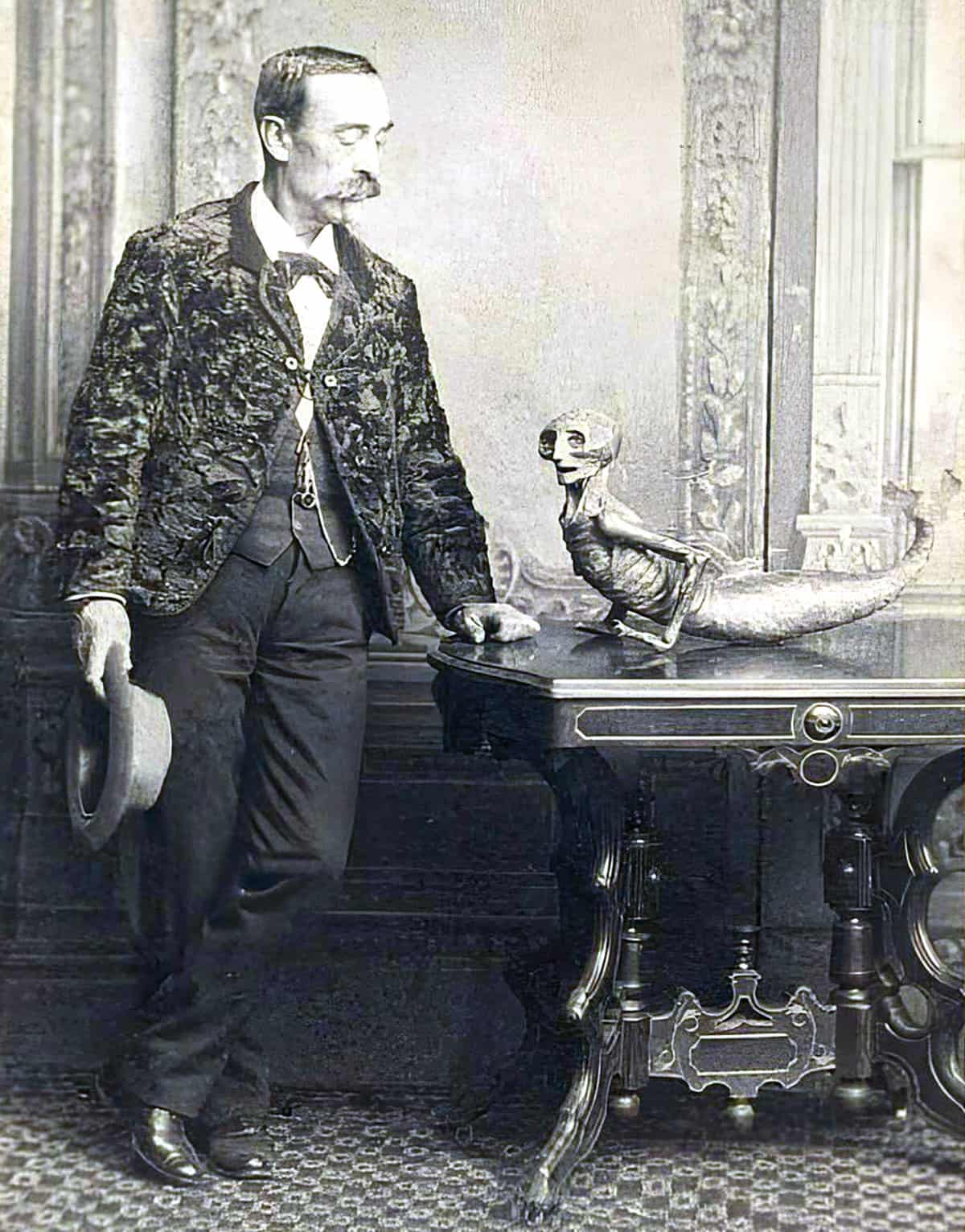
At this time, the Fiji Mermaid was a catchall term for several touring displays of oddities and street performances. The inclusion of “Fiji” in the name was a nod to P. T. Barnum, who propagated the story that these animals had been discovered off the coast of Fiji, an island country that was mostly unknown to the general populace of the United States and Europe in the middle of the 19th century.

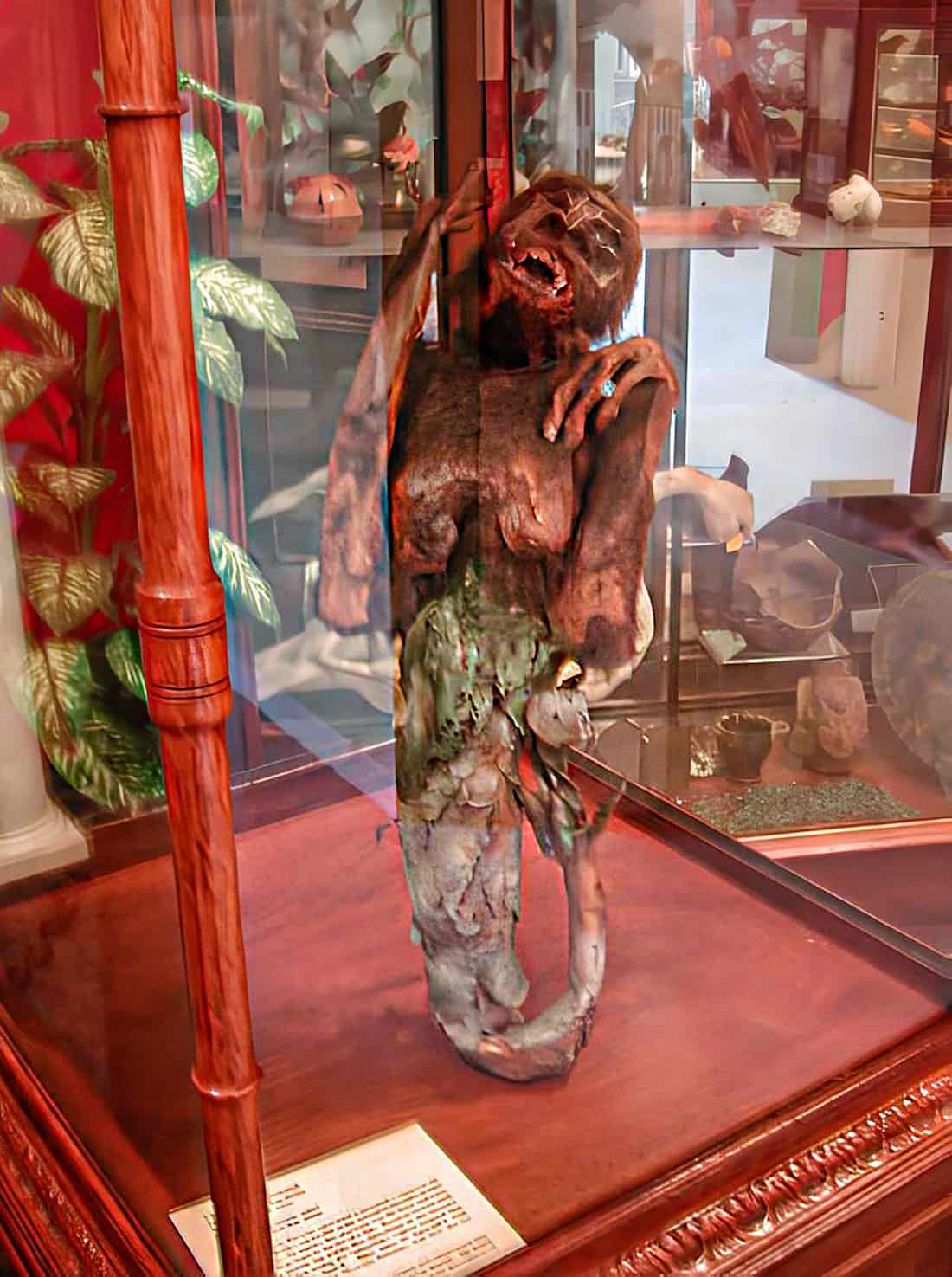
When Barnum’s Museum was burned down in 1865, it took with it the original duplicate that had toured the United States. An alleged second (or original) copy was purchased by Harvard University’s Peabody Museum of Archaeology and Ethnology and is kept in the museum’s attic.
History of the Fiji Mermaid
The legend of the Fiji mermaid in the United States originated in mid-July of 1842, when a British man called J. Griffin arrived in New York City. Griffin said that the mermaid he was carrying was 100% real, saying that a Japanese fisherman had captured her near the Fiji Islands in the South Pacific. Journalists heard about J. Griffin and the strange creature and rushed to the hotel where she was staying to see the mermaid as soon as the rumor spread.
Griffin’s portrayal of the Fiji mermaid fooled the reporters into thinking the creature indeed existed. In an effort to convince Griffin to display the Fiji mermaid in his museum, P.T. Barnum paid a visit to the editorial offices of major New York newspapers.
A Sensational Specimen
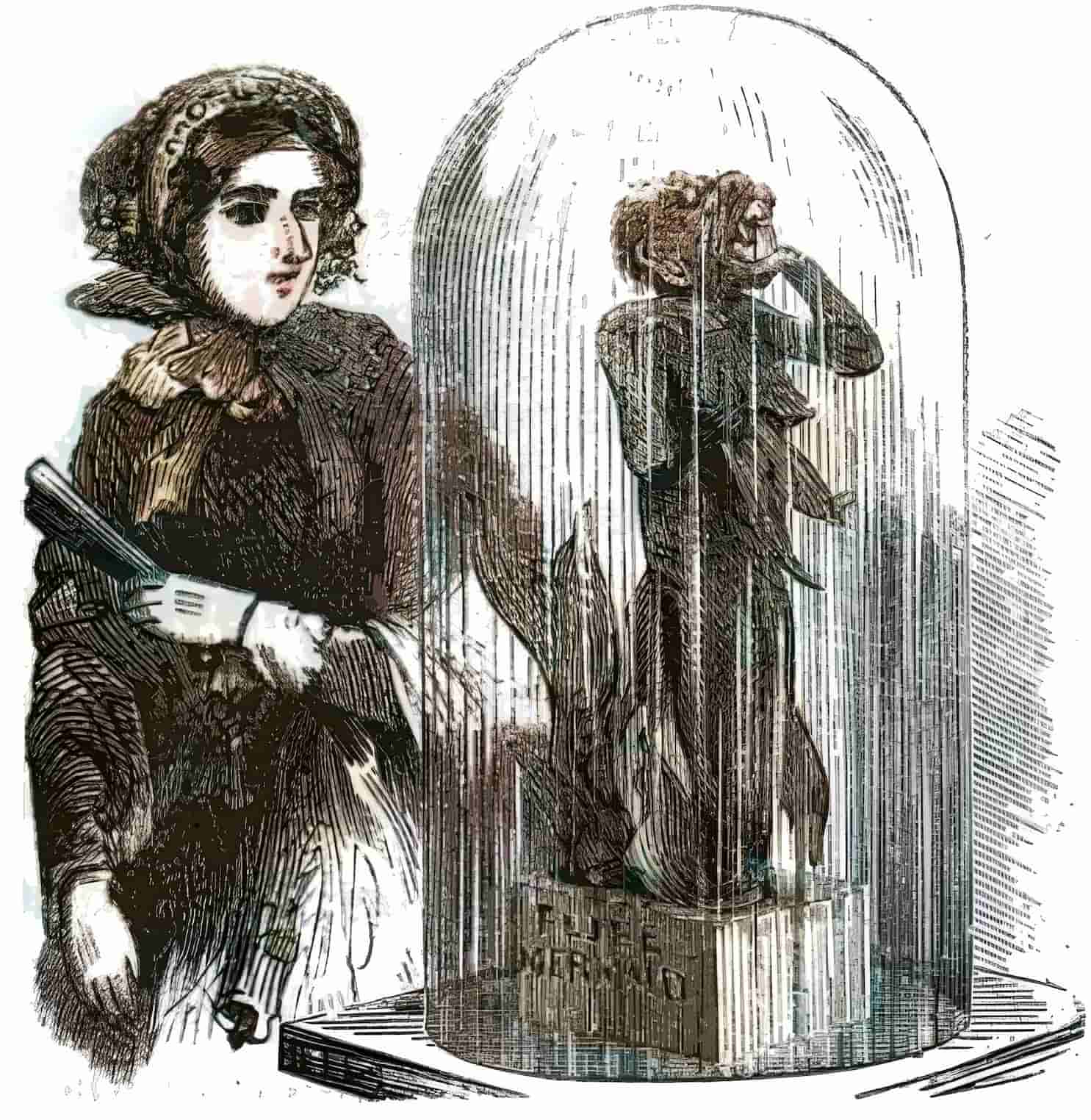
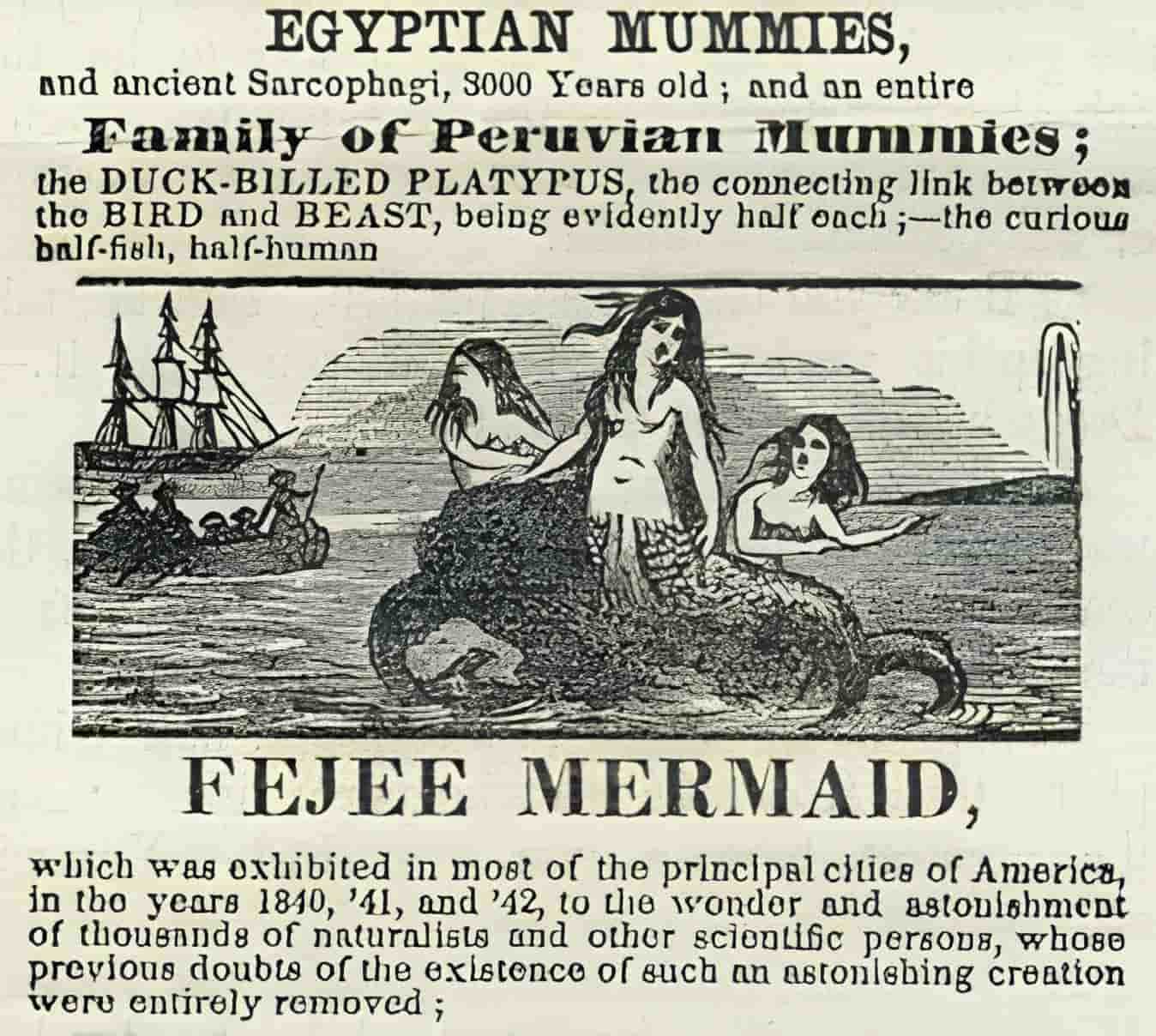
After then, newspapers began publishing mermaid woodcuts as well. With Barnum’s help, Griffin’s Fiji mermaid became the talk of the town as he handed out ten thousand brochures in New York depicting the creature.
Griffin eventually consented to having the Fiji mermaid shown in New York’s Concert Hall on Broadway. Visitors flocked to see the display for the whole week. Griffin then planned a month-long show at Barnum’s American Museum in New York City. Griffin not only displayed artifacts related to the Fiji mermaid but also offered talks to the public. Griffin’s creation was not appealing in the least to the curious onlookers, who saw an atrocity of a monkey and fish combined in a dried body instead of a beautiful, topless sea-lady as advertised.
The mysterious mermaid became a sensation.
The Fiji mermaid was originally mentioned in the British tabloid The Mirror. In 1842, Moses Kimball, the manager of the Boston Museum in the United States, purchased the mermaid from the son of Captain Edes, who had inherited the mermaid after his father’s death. Kimball then presented the Fiji mermaid to P.T. Barnum in New York City.
Barnum and Kimball had the mermaid examined by a naturalist before bringing her to the public. The naturalist looked at the mermaid’s teeth and fins and still didn’t believe in the existence of the creature. Barnum still leased the monster from Kimball for $12.50 a week because he thought it would bring a lot of people to his exhibit.
A Weather Report in Disguise
Barnum then proceeded to send a series of anonymous letters to prominent New York newspapers in which he made weather-related observations and also referenced a mermaid owned by a British man signed “J. Griffin.” Griffin then made a hotel reservation in Philadelphia. He eventually let the hotel owner see the Fiji mermaid after being there for a few days.
The public’s interest in the Fiji mermaid kept growing from there. The plan called for Griffin to go to New York and display the mermaid at Concert Hall as expected. The Fiji mermaid went on a cross-country tour after her debut at Barnum’s American Museum. After making its way to London in 1859, the Fiji mermaid made her way back to the United States and was shown at Kimball’s Boston Museum.
Origin of This Whole Hoax
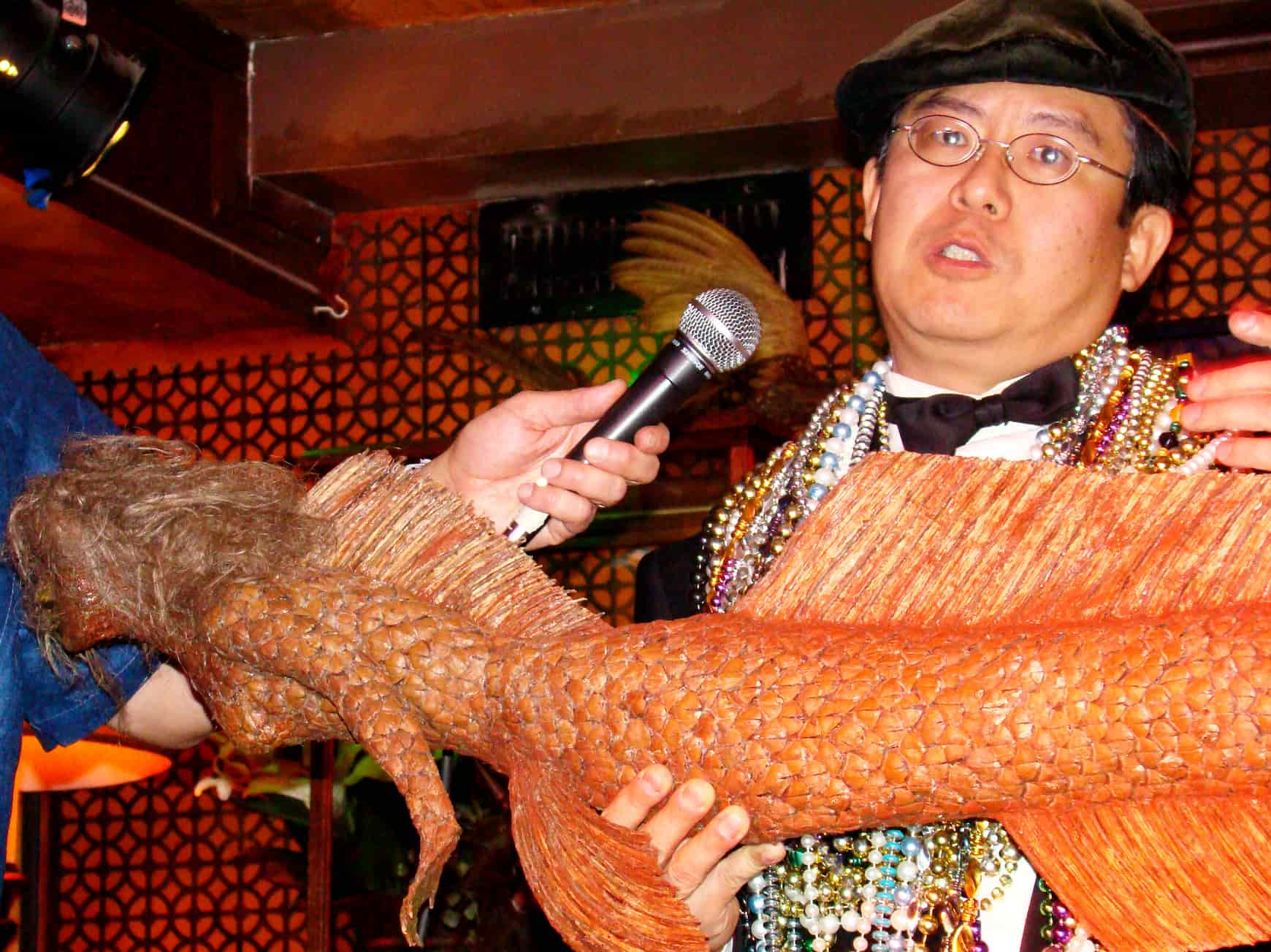
Scientists of the time were baffled by the occurrence of the mermaid since they couldn’t make sense of the event. Many started to hypothesize that, just as humans descended from apes, so did the inhabitants of the ocean. Changes in the environment and the topography of the Earth had caused the extinction of the fish people, of whom Fiji was allegedly the progenitor.
However, not everyone fell for this hoax. After all, it appeared that two animals were skillfully sewn together and later covered in papier-mache to produce this fake animal and cash in on people’s curiosity. According to some theories, it was the Japanese fishermen who were responsible for creating the Fiji mermaid using their centuries-old artistic techniques.
The Plot
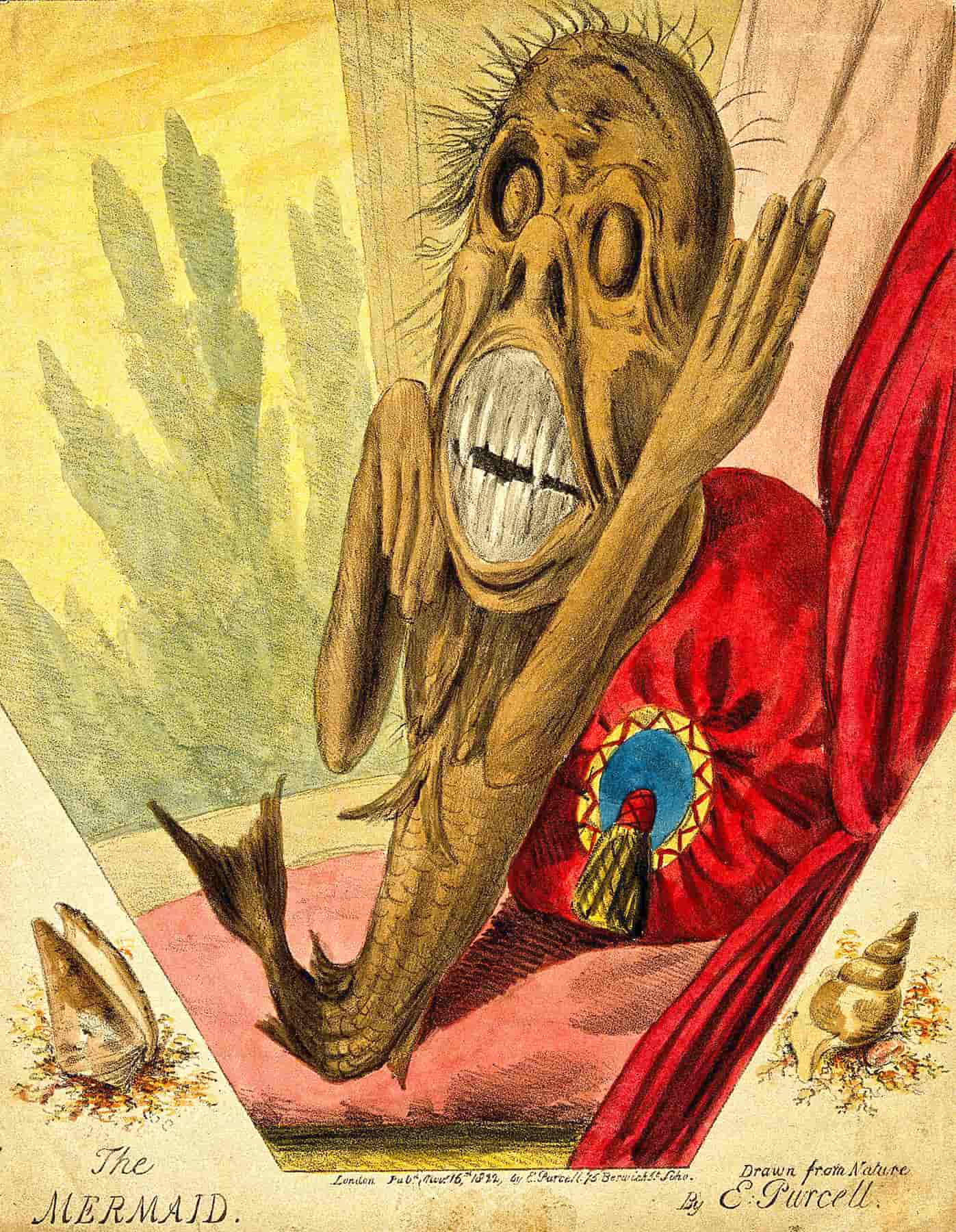
Dr. Griffin (actual name: Levi Lyman) was a trusted subordinate of Barnum’s. The “mermaid” was supposedly bought by American captain Samuel Barrett Edes from Japanese seamen in 1822 for $6,000. This same year, according to Edes, this beast was on display in London, England. The fire at Barnum’s exhibit in 1865 is blamed for the loss of the Fiji mermaid. The Fiji mermaid may have also made it, and some people actually think it ended up at Harvard’s Peabody Museum of Archaeology and Ethnology. It is unclear, however, whether or not the mermaid on display in this museum is the authentic Fiji mermaid from Barnum and Bailey.
Not Made of a Monkey
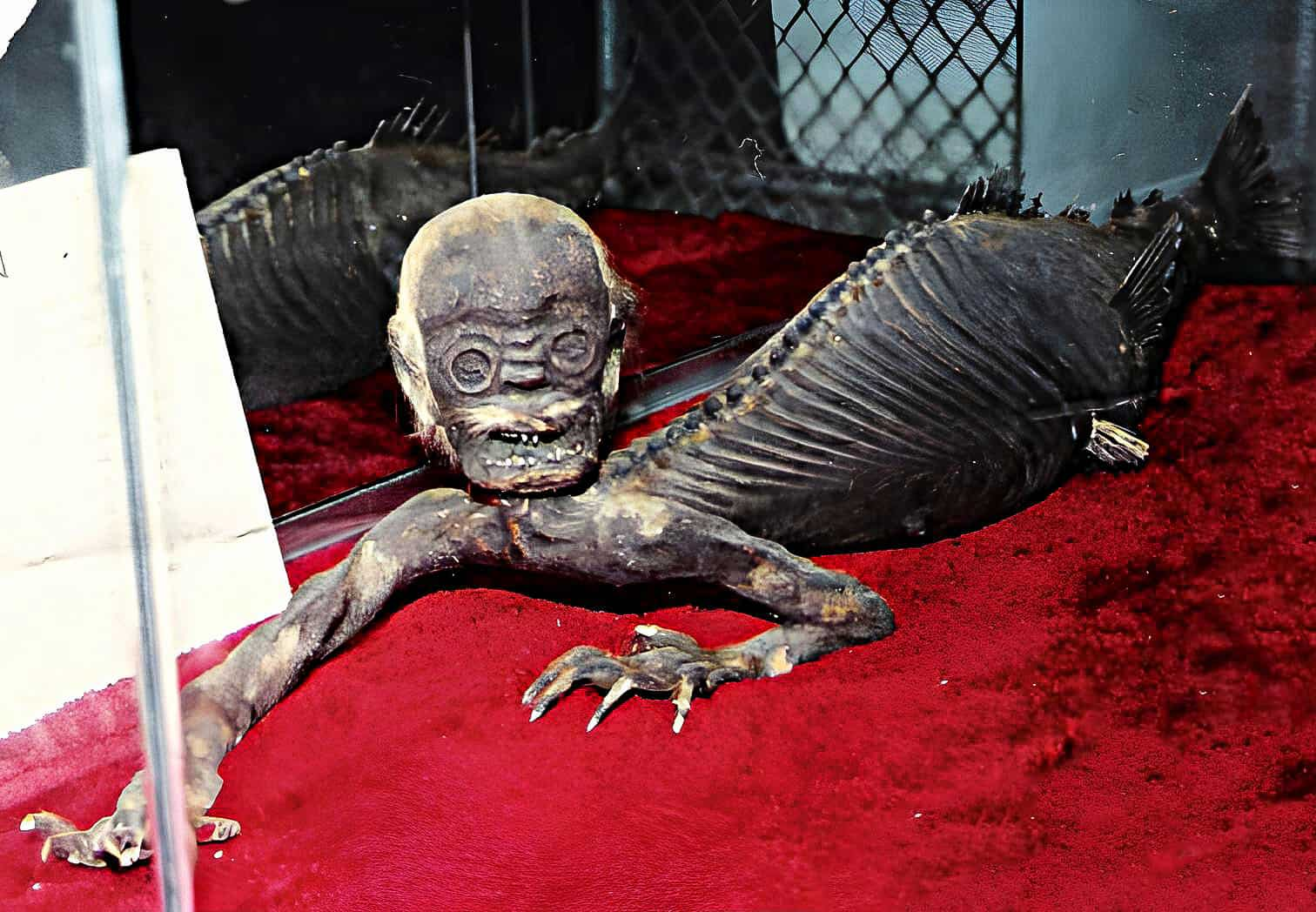
By the end of 2011, a research team had determined that the Fiji mermaid was indeed a fraud but not a monkey. The scientists employed modern equipment to do painstaking structural analyses of these monkey-fishes. The monkey-fish mummy on display at London’s Horniman Museum was shown to be composed of paper, leaves, iron wire, clay, fish bones, and chicken feet thanks to X-ray technology.
Nothing that may have come from a monkey was found. The Fiji mermaid was originally designed as a fortunate charm for fishermen on lengthy sea trips, but due to its surprising popularity, many people began to believe in the reality of mermaids.
Where Is It Today?
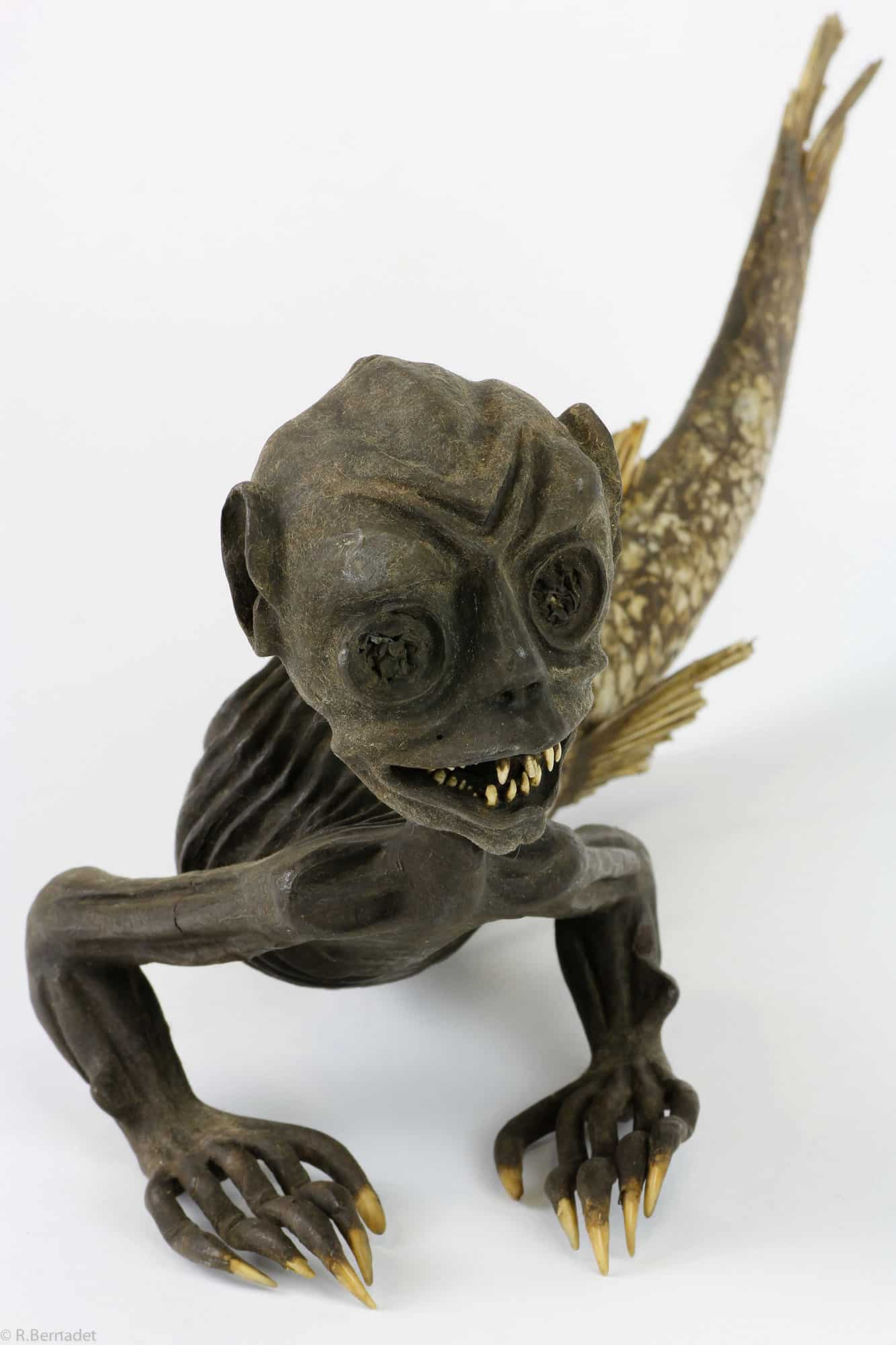
Even today, there remains debate regarding whether or not the Fiji mermaid perished in the fire at Barnum’s American Museum in 1865. Despite many claims to possession of the genuine specimen, the Peabody Museum at Harvard University has the strongest case. It’s not an exact duplicate, but it has the same bare teeth and flat nose. Since the mermaid no longer looks precisely like it did when it was in Barnum’s hands, experts believe that the fire was to blame.
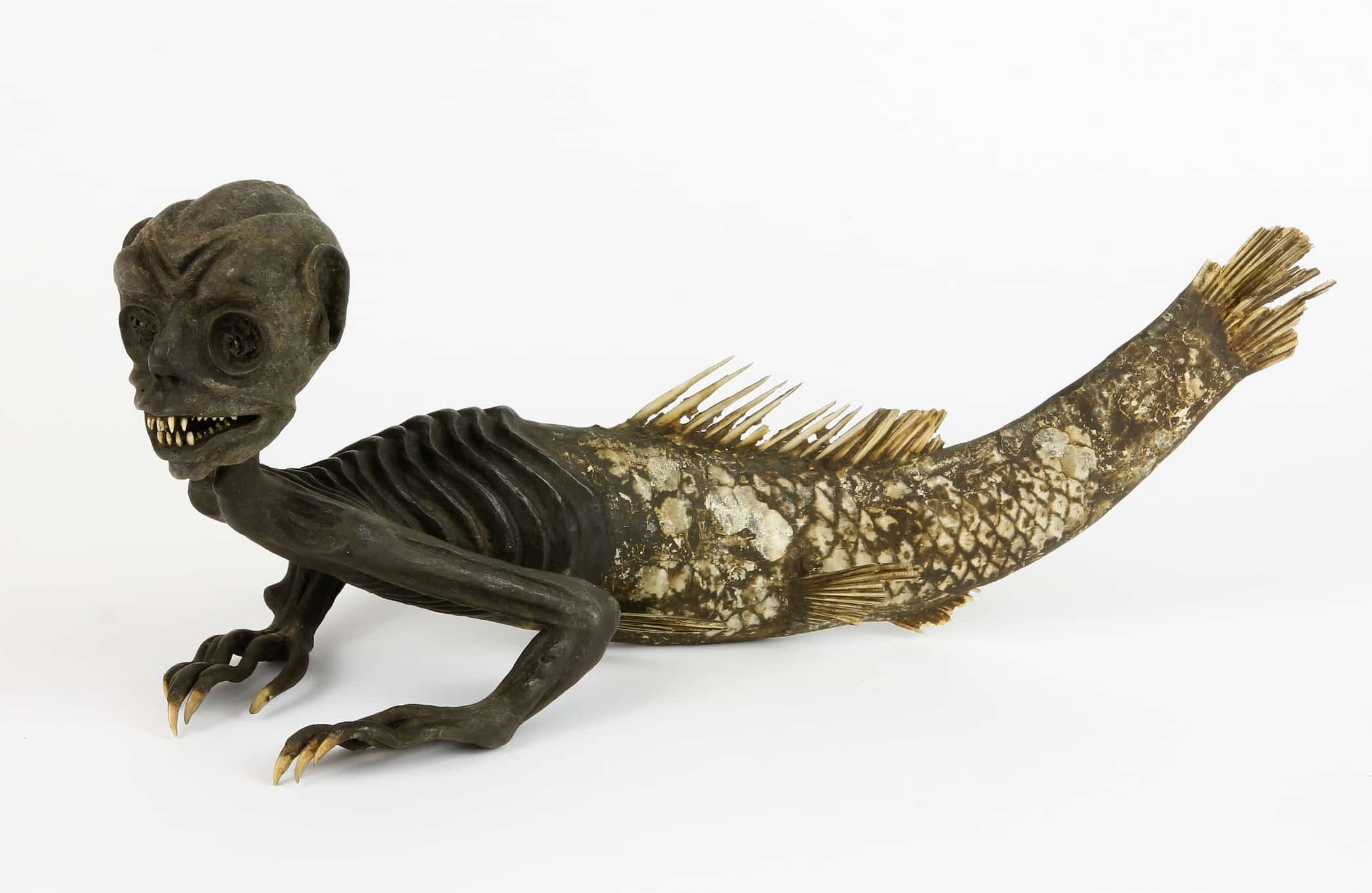
Fiji Mermaid in Popular Culture
- The Fiji Mermaid is depicted on the cover and is referenced in the song “Megalodon” from Mastodon’s second album, Leviathan.
- The episode “Humbug” of the 1990s TV show The X-Files speculates that a Fiji mermaid may have been responsible for a string of killings.
- In the episode “The Secret Serum” from 2010’s Scooby-Doo! Mystery Incorporated, Fiji Mermaid is shown as an exhibit in Darrow University Museum of Oddities.
- At the film’s conclusion in 2019, the mermaid Fiji makes an appearance in Missing Link.
- The Mermaid, published in 2018, is the story of P. T. Barnum and the mermaid of Fiji, by Christina Henry.
- The mockumentary Mermaids: The New Evidence is a sequel to the 2003 film Mermaids: The Body Found which focuses on the mermaids of Fiji.
- MewithoutYou, an indie rock band, released the song “Fiji Mermaid” in 2012 on their fifth studio album, titled Ten Stories.
- Rainn Wilson’s character, Bill Hudley, is murdered in Rob Zombie’s House of 1000 Corpses, and his body is transformed into a Fiji mermaid using the art of taxidermy.
- Puss in Boots’s episode “Mermaid” features the rescue of a mermaid called Fiji, who has a horrible appearance and dangerous fangs.
- First seen in the episode “Tourist Trapped” from 2012’s Gravity Falls, Mermaid Fiji is one of the curiosities shown at the Mystery Shack. Weirdmageddon 3: Take Back The Falls, the concluding episode in the series, has a different adaptation.