The main European monarchist nations have looked down on France ever since the French Revolution and the beheading of Queen Marie Antoinette (aunt of the Austrian Emperor); hence, the country has been at war with them ever since. Since his coronation as emperor in 1804, Napoleon Bonaparte has led the French imperial army in its fight against European invaders. France and the coalition countries (Britain, Prussia, and Russia) fought in the War of the Fourth Coalition between 1806 and 1807.
The Winter Campaign and the Battle of Friedland, which pitted Russia against France, eventually brought an end to this endless conflict after a string of decisive French wins. Napoleon I’s reputation was boosted by the peace pact that followed the fight. Unfortunately, the calm only lasted for almost two years before the War of the Fifth Coalition broke out.
Why Did the Battle of Friedland Take Place?
There was a string of conflicts leading up to the Battle of Friedland that occurred during the War of the Fourth Coalition. Through three wars, Napoleon’s empire grew and humiliated the rest of Europe.
Prussia joined forces with the United Kingdom and Russia in an effort to fight Napoleon and reclaim the continental supremacy it had lost in recent years. Prussia declared war on France because France refused to pull its forces back from the Rhine, which functioned as a natural border. In 1806, Napoleon launched an offensive against Prussia and Poland, defeating the forces of both European kings.
The imperial soldiers resumed their winter offensive to the east after taking Berlin. The Russians and the French clashed in several major conflicts. This fourth war lasted less than a year, from October 9, 1806, to July 9, 1807. The Russian army was defeated and forced to retire to Friedland, the final battle that ended the conflict.
Who Took Part in the Battle of Friedland?
The Russian Empire and the French Empire faced off against one another at the Battle of Friedland. Napoleon I, who had been the French Emperor for less than three years, led France while Tsar Alexander I ruled Russia. One of Napoleon’s most faithful commanders, Jean Lannes, who was also well-versed in Russian tactics, was given leadership of the French army. For their part, the Russian armed forces were split between two veteran commanders: Levin August von Bennigsen and Piotr Ivanovich Bagration.
With just around 66,000 troops, France was vastly outnumbered. On the other side, Russia fielded close to 84,000 troops. Despite this numerical inferiority, France benefited from the prisoners of war captured during the Polish campaign, who helped maintain the armies and provided manpower for tactical maneuvers.
How Did the Battle of Friedland Unfold?
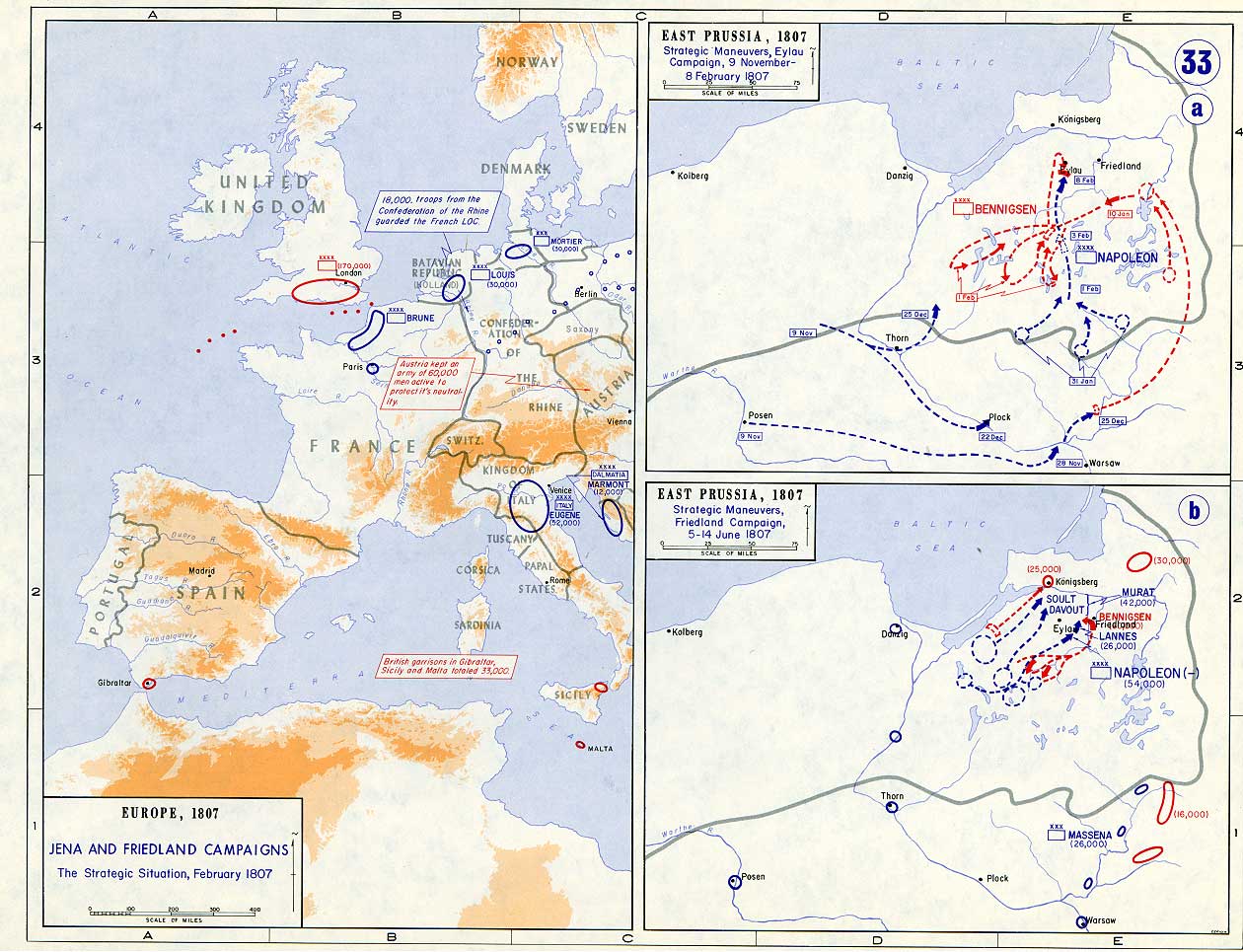
On June 14, 1807, at Friedland, the Battle of Friedland started. Now called Pravdinsk, the city is part of Russia’s Kaliningrad Oblast, which is wedged between Poland and Lithuania. The day before, Napoleon’s soldiers, under the command of Jean Lannes, dispersed across the plains to prevent the Russians from reaching Friedland should they launch an attack. The French intended to hold off the Russians for as long as they could so that Napoleon’s reinforcements could arrive and bolster their numbers. However, the lay of the land, with its winding roads and hilly terrain, made the Russians’ advance invisible as they reached the town and established outposts.
Napoleon and his reinforcing army arrived on the night of June 14 from the left bank of the Alle. Both forces called upon their cavalry units to harass opposing positions and impede camp setup. In the afternoon, the two armies faced each other and the battle started. In order to begin their onslaught, the French sent troops straight into Friedland. As a result of the terrain and other factors, they decided to assault from the left side. The French army reached Friedland without opposition and the remaining French forces swiftly surrounded the Russian army. Heavy cavalry known as “dragons” played a crucial role in the victory by penetrating the Russian defenses from afar.
Who Won the Battle of Friedland?
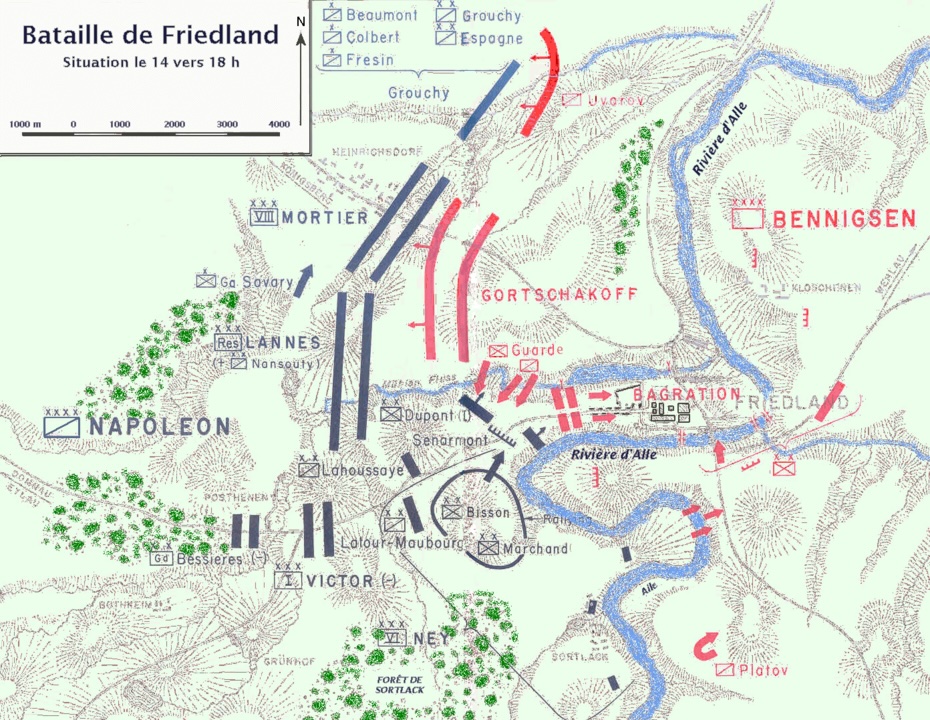
France’s victory at Friedland may be attributed to two factors that ultimately convinced the Russians to sign their surrender. The first was the taking of Friedland, which would provide the French with a significant tactical advantage in terms of defense and reinforcement and thus should not be allowed to happen. The second was the surrounding of the outnumbered Russian armed forces. On the night of June 15 (after being pushed back), the Russians surrendered.
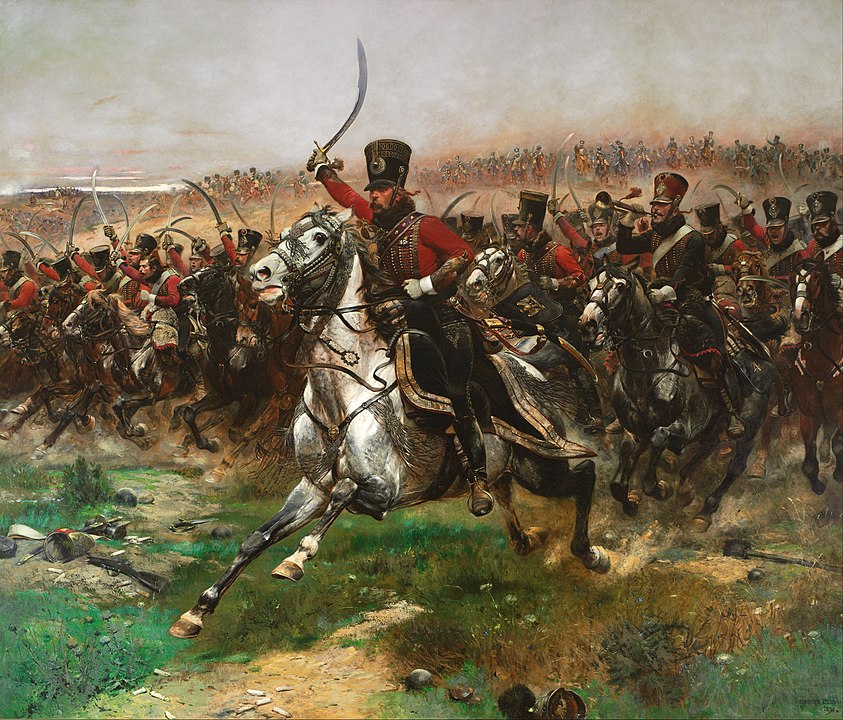
Both sides used a variety of military tactics in the war. Napoleon Bonaparte, known for his innovative strategies, used a combination of artillery, infantry and cavalry tactics. He opened the battle with a surprise attack on the Russian left flank, while the main French force attacked the Russian center. The crucial moment of the battle came when the French cavalry under Marshal Joachim Murat launched a series of devastating charges. Thus the Russian lines collapsed.
How Many People Died in the Battle of Friedland?
When the number of men participating in the battle is taken into account, the Russian side suffered a much higher loss of life than the French did. Nearly 12,000 Russians were killed or injured, while another 10,000 were captured as prisoners. This is more than 20% of Russia’s total military strength. Less than 1,645 Frenchmen were killed, and about 8,995 were injured. The 2,426 French prisoners taken during the battle were released after the French victory.
What Were the Consequences of the Battle of Friedland?
The Russian generals begged Tsar Alexander to request an armistice; the emissaries he sent to Napoleon on June 16 were well received. The same day, Königsberg fell to the French and three days later, the Grande Armée (The Great Army) reached the banks of the Niemen, but Napoleon felt unable to pursue the enemy beyond the river. Above all, he feared that Austria would join the coalition and attack the Grande Armée, so far from its bases. For his part, Alexander feared a peasant revolt in the Ukraine and an Ottoman offensive on the Danube.
On the 25th, Alexander met Napoleon on a raft in the middle of the Niemen, “The new frontier of the world“, exclaimed Napoleon. Alexander is said to have approached Napoleon, saying “Sire, I hate the English as much as you do“. Napoleon replied, “In this case peace is made!”.
On July 7, the two heads of state signed the treaty of the same name at Tilsit. Russia became France’s ally, relinquishing its territories in the Mediterranean, in particular the Ionian Islands, and adhering to the Continental Blockade. The treaty also included secret articles, such as the plan to dismember the Ottoman Empire. A similar treaty was signed with Prussia on July 9.
The treaty was catastrophic for the Kingdom of Prussia, which lost all its territories west of the Elbe to form the Kingdom of Westphalia, headed by the Emperor’s brother Jerome. Prussia also had to cede its possessions in Poland to form the Duchy of Warsaw and pay a heavy war indemnity. Napoleon and his empire became even more powerful.