- Alexander Sizonenko’s height continued to increase throughout his life due to a growth disorder.
- Despite his height, he was praised for his positional awareness and passing ability in basketball.
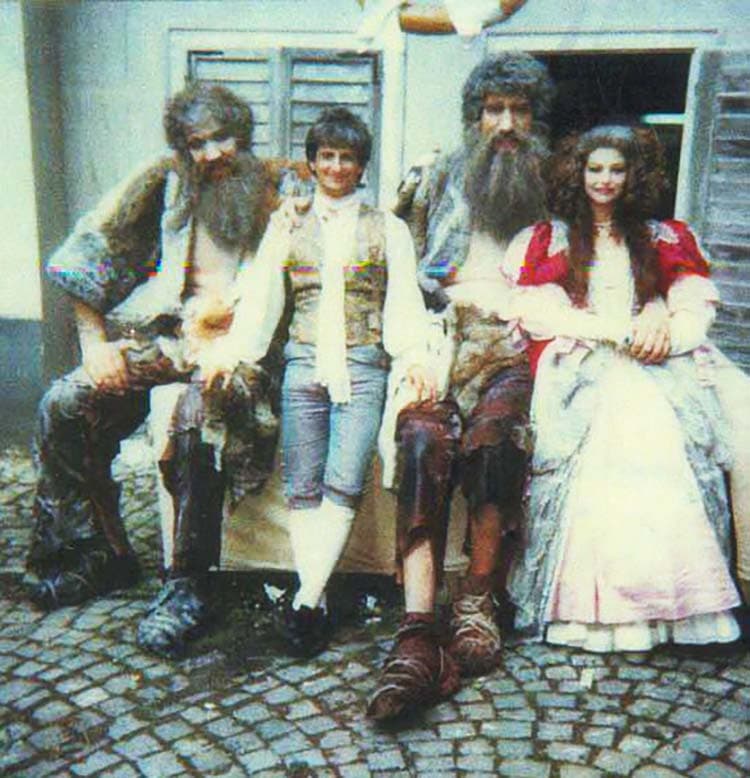
- Sizonenko portrayed a giant in the 1989 film “The Brave Little Tailor.”
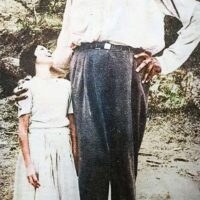
Alexander Alekseyevich Sizonenko (20 July 1959 – 5 January 2012) stood at a towering 7 feet 10 inches to 8 feet tall. Born in Ukraine, he suffered from acromegaly due to a pituitary tumor, causing him to continue growing throughout his life. He was a basketball player for the Soviet Union (USSR) and the world record holder for height in 1990. Sizonenko also holds the record for being the tallest professional basketball player at 7’11 listed height (Suleiman Ali Nashnush was 8 feet tall, but he was 7’10 while playing). If he were chosen in the 1984 NBA drafts, Sizonenko would still be the tallest NBA player to this day (the current record holder is 7’7 Gheorghe Mureșan).
In 1991, the Guinness Book of Records recognized him as the tallest living person.
Sizonenko became the world’s tallest living man in 1991 when Gabriel Monjane died. A year later he lost this title, although he was bigger (at his peak) than the next record holders (Alam Channa, Radhouane Charbib, Naseer Soomro, Bao Xishun and Leonid Stadnyk) until Sultan Kösen took over the title in 2009.
Who Was Alexander Sizonenko?
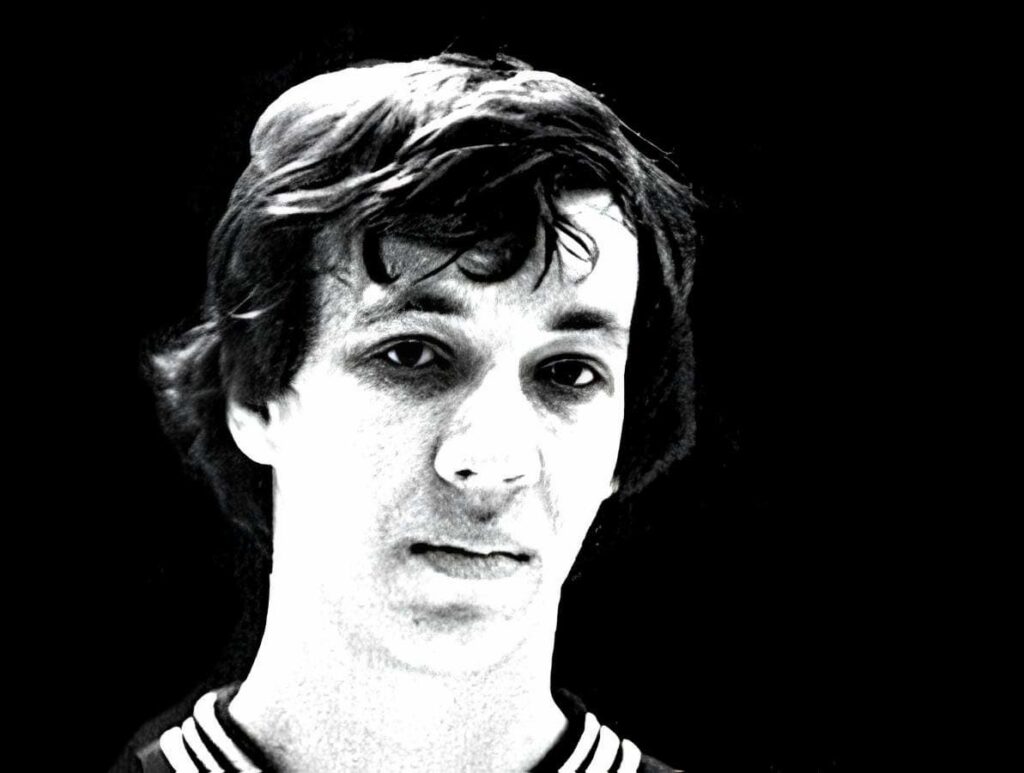
Since his childhood, Alexander Sizonenko always stood out because of his towering size. Due to his height, he had to have skull trepanations and pituitary gland (a pea-sized organ that secretes growth hormone) surgery when he was only in school. Nonetheless, Sizonenko matured and ultimately found fulfillment in the sport of basketball.
In 1976, Sizonenko moved to St. Petersburg, which was known as Leningrad during the Soviet era. He began his career in the USSR Premier Basketball League in 1976 as a center for Leningrad’s “Spartak” and then moved on to Kuybyshev’s “Stroitel” (also known as BC Samara) in 1979, where he remained until his retirement in 1986.

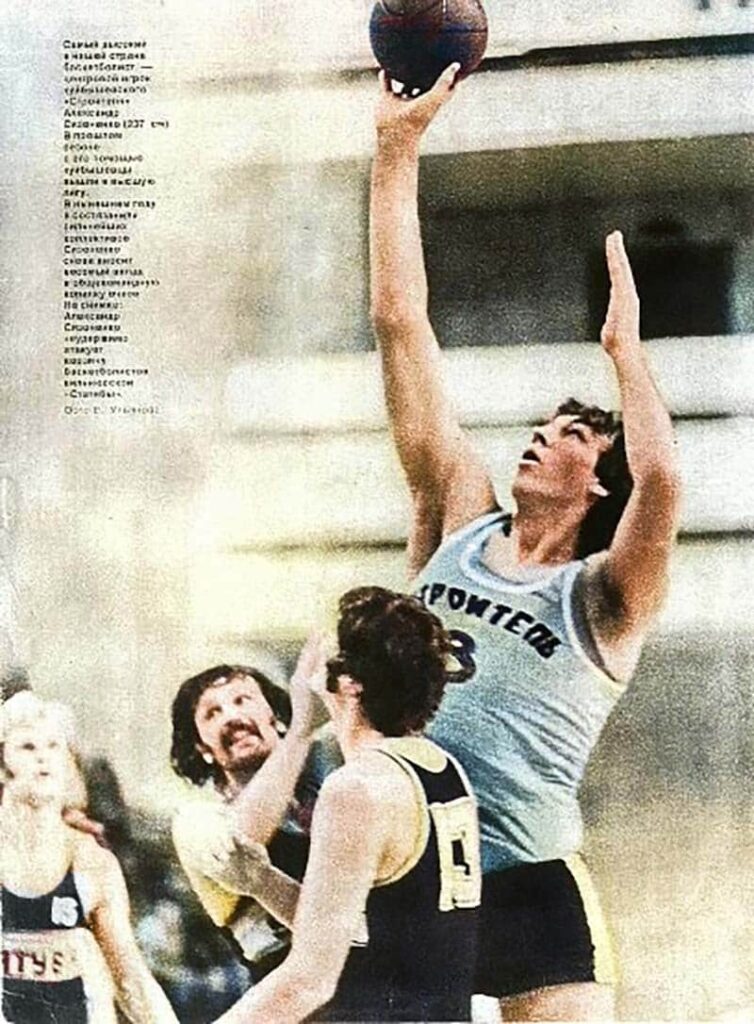
He was one of the top centers in the Soviet Union and was considered for the national team. Despite his condition severely limiting his mobility and agility on the court, he made twelve appearances for the Soviet national team, although he did not qualify for any championships. Sizonenko had to retire from basketball at the age of 27 due to his growth disorder. In his best game, he finished with 39 points, 15 blocks, 5 steals, and 12 boards, and in 1978, he won a Soviet Cup.
Although his height prevented him from reaching the highest levels of the sport, he was still praised for his excellent positional awareness and passing ability by experts. Due to a hormonal imbalance brought on by an ankle injury and improper treatment, he was forced to retire from professional athletics in 1986. Extremely tall people like him often suffer joint problems, such as Robert Wadlow, the tallest documented human in history.
He portrayed a giant in the 1989 Czechoslovak art film “The Brave Little Tailor,” which was an adaptation of a German fairy tale.
After His Retirement
Alexander Sizonenko represented the national team before his career ended prematurely in 1986 due to his growth disorder, where his bones and heart were unable to support his body mass as a result.
After his retirement, he settled in St. Petersburg on a disability pension. His osteoporosis (a skeletal disorder) was so bad that he needed crutches even around the house. He lived in St. Petersburg with his 5-foot-8.5-inch wife Swetlana, whom he later divorced, and their son Alexander, born in 1994.
Fearing for his life, Sizonenko later turned down a 1999 offer from German anatomist Günter von Hagens to give his corpse to the Heidelberg Institute of Plastination (a technique Hagens developed for preserving biological tissue).
His Figures
After a lifetime of growth, Alexander Alekseyevich Sizonenko measured in at 8 feet, 410 pounds, with a shoe size of 58 EU (around 20 US). The man wore tailor-made suits and shoes. The famous Georg Wessels produced him special-sized shoes, just like he did for Sandy Allen or Sultan Kösen.
In other sources, he was measured at 7’10 and 7’11. The discrepancy in his height might be related to his skeletal disorder. He used a cane to walk, as his spine could no longer hold his body upright, causing him to compress by approximately 4 inches in his later years while lying down. He had an injury in late June 2011 and has been unable to walk since then.
Gastric hemorrhage (bleeding), made worse by incompatible drugs, prevented surgery, and he was admitted to the hospital. Since he couldn’t walk, he stayed at home on July 25, 2011. During this time, his former team, BC Spartak Saint Petersburg, as well as his friends and other volunteers, helped him to ease his difficulties.
He checked himself into a St. Petersburg hospital on August 2, 2011. In November 2011, he was released from the clinic and placed under the care of a caretaker.
His Death
On January 5, 2012, Sizonenko died away at his apartment at the age of 52 as a divorcé, and on January 9, he was laid to rest in the Northern Cemetery.