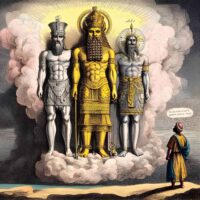
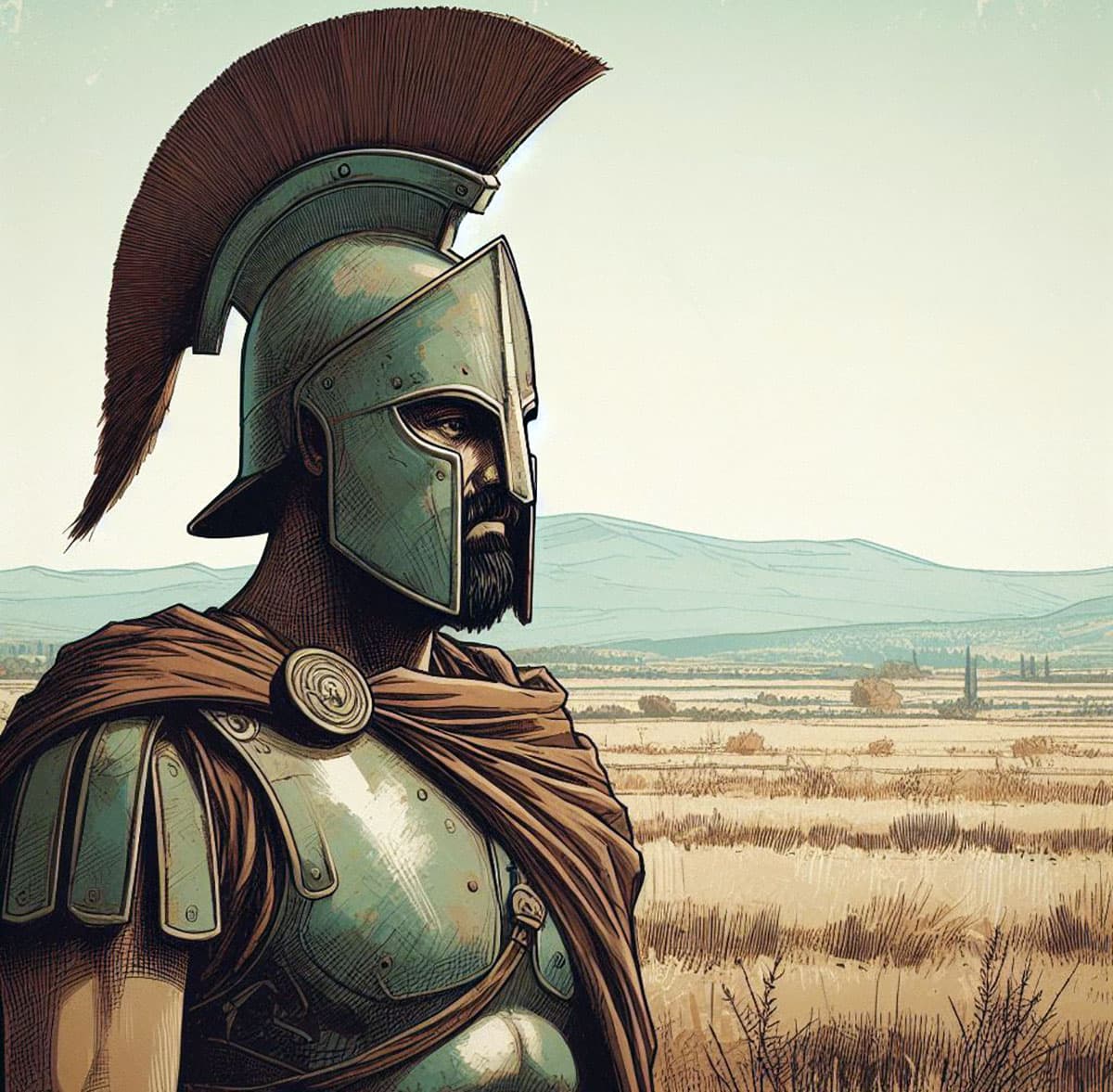
Chares of Lindos (before 305 BC–c. 280 BC) was a Greek sculptor who was trained by the famous Lysippos. He was born on the island of Rhodes. In 282 BC, he commemorated Rhodes’ triumph against the Macedonian invasion in 305 BC by erecting the Colossus of Rhodes, a massive bronze monument to the sun god Helios and the city’s patron deity. The statue, which had been considered one of the Seven Wonders of the Ancient World, was destroyed by an earthquake in 226 BC.
There are several theories about what happened to Chares, including that he committed suicide because of a defect in his work and that he became bankrupt. Perhaps another sculptor by the name of Laches finished his work.
The Story of Chares of Lindos
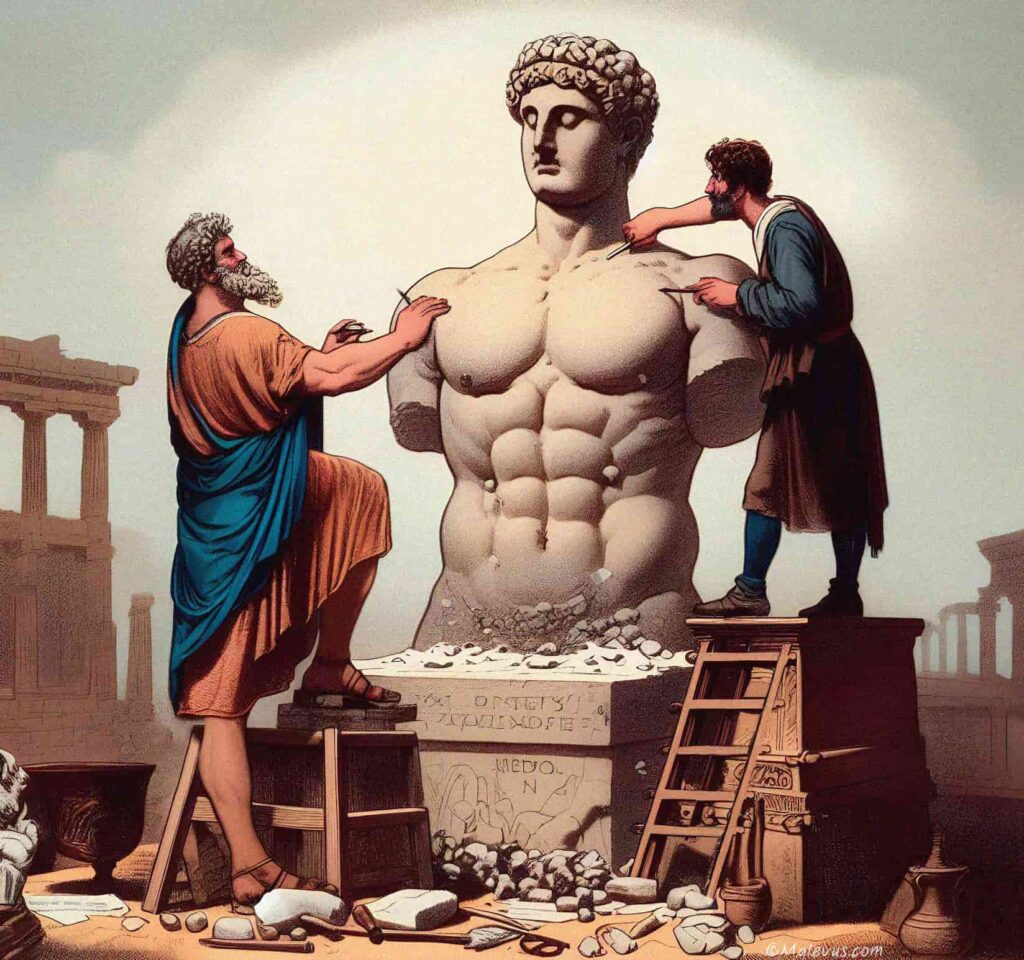
The Greek sculptor Chares of Lindos worked around the turn of the fourth and third centuries BC. Lindos was a fishing village and former municipality of ancient Greece located on the island of Rhodes.
Several of Lysippos’ students eventually made their way to Rhodes, where they established a sculptural school that rivaled even that of Alexandria (Egypt) and Pergamon (Turkey).
One of them, Chares, in the early third century BC, sculpted the Colossus of Rhodes, a massive monument of Helios (the sun god, patron deity of the Rhodes Island), which stood at the entrance to the port of Rhodes until it was destroyed by an earthquake 56 years later. Its ruins were still visible in the Roman author Pliny the Elder’s day (c. 23 AD–79 AD). The statue was 105 feet in height (32 m).
Pliny wrote this about the Colossus of Rhodes and Chares of Lindos:
But that which is by far the most worthy of our admiration, is the colossal statue of the Sun, which stood formerly at Rhodes, and was the work of Chares the Lindian, a pupil of the above-named Lysippus; no less than 70 cubits in height. This statue 56 years after it was erected, was thrown down by an earthquake; but even as it lies, it excites our wonder and admiration. Few men can clasp the thumb in their arms, and its fingers are larger than most statues. Where the limbs are broken asunder, vast caverns are seen yawning in the interior. Within it, too, are to be seen large masses of rock, by the weight of which the artist steadied it while erecting it. It is said that it was 12 years before this statue was completed, and that 300 talents were expended upon it; a sum raised from the engines of warfare which had been abandoned by King Demetrius, when tired of the long-protracted siege of Rhodes.
Pliny the Elder, The Natural History, BOOK XXXIV.
According to Pliny, the Roman consul P. Lentulus donated a monumental head by Chares of Lindos to the Capitol in 57 BC. Lentulus actually dedicated two heads to the Capitol; the other was created by another sculptor called Decius who may have lived in the first century BC.
Pliny states that while Decius’ work was acclaimed, it was outdone by a statue carved by Chares, the sculptor of the Colossus of Rhodes, and brought to Rome by the consul Publius Cornelius Lentulus Spinther in 57 BC.
The Story of the Colossus of Rhodes
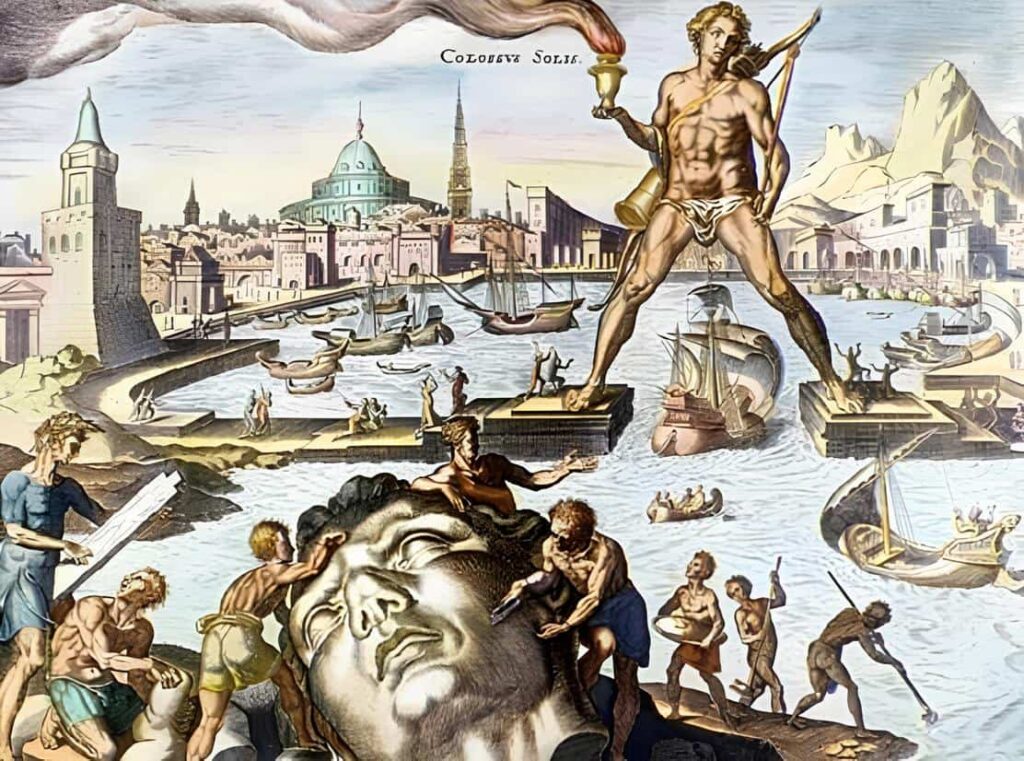
Around 290 BC (according to some sources, it was made between 294 and 282 BC), the people of Rhodes commissioned the bronze statue of the god Helios to commemorate their successful defense against an attack by the Macedonian ruler Demetrius I in 304 BC with the assistance of the Egyptian ruler Ptolemy I Soter. Demetrius I was the son of Antigonus who was a general of Alexander the Great.
With great pride, Chares of Lindos inscribed his creation:
“The colossus you are looking at is seventy cubits tall and was created by Chares, a native of Lindos.”
Chares’ creation was considered one of the ancient world’s greatest marvels. The statue was destroyed more than half a decade later in 226 BC. According to legend, an oracle forbade the Rhodians from restoring the Colossus to its former glory.
What Happened to the Ruins?
The monument lay in ruins for 984 years when the Saracens, who ruled the island at the time, sold the ruins to a Jewish trader from Edessa in 672 AD. He used 900 camels to carry the ruins.
What Happened to Chares of Lindos?
Several myths claim that Chares died before his work was finished. In one story, he commits himself after discovering what he believed to be a fault in the statue. In another telling, Chares becomes bankrupt and kills himself when he underestimates the amount of material required to construct a bigger monument.
The narrative that Chares committed suicide before finishing the statue of the god Helios because the cost of the monument surpassed the monies acquired is told by Sextus Empiricus (in his book “Pros logikous,” 1.107, “Against the Logicians”), but it is very improbable. He claims that Laches of Lindos put the finishing touches on the monument instead of Chares of Lindos.