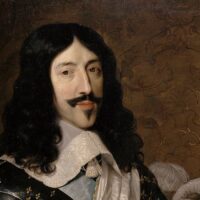
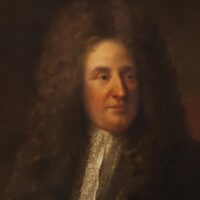
Throughout the seventy-two-year reign of the Sun King, Louis XIV, as France waged war against nearly every major power in Europe simultaneously, the survival and expansion of the kingdom rested upon the geometric genius of one tireless soldier-scholar: Sebastien Le Prestre de Vauban. Rising from impoverished provincial nobility in Burgundy to become a Marshal of France, Vauban personally directed over forty major military sieges without a single failure while designing or upgrading more than one hundred and sixty fortresses around the perimeter of France. Yet beyond his mastery of stone bastions and gunpowder trenches, Vauban stood as one of the earliest Enlightenment humanitarians, econometrists, and brave truth-tellers at Versailles, famously risking royal disgrace at the end of his life to defend religious minorities and overtaxed peasants.
From Rebel Soldier to the King’s Chief Engineer
Born in May 1633 in the tiny village of Saint-Leger-de-Foucheret in the rugged Morvan hills of Burgundy, Vauban grew up in such genteel poverty that he walked barefoot with village peasant boys and educated himself in mathematics and geometry under the local parish priest. At the age of seventeen, during the civil war of the Fronde, he enlisted as a cadet in the rebellious regiment of the Prince of Conde, fighting against the royal army until he was captured in 1653. Recognizing the young Burgundian’s extraordinary talent for reading terrain and building earthworks, Cardinal Mazarin personally persuaded the twenty-year-old Vauban to switch sides and enter the service of the young King Louis XIV.
Over the next five decades, Vauban lived almost continuously on horseback and inside muddy siege trenches, traveling thousands of miles each year from the North Sea to the Pyrenees and the Rhine. His scarred face bore literal witness to his hands-on courage: during the 1667 siege of Douai, a Spanish musket ball tore across his left cheek, leaving a permanent scar that appears in all his portraits, and he was wounded seven more times throughout his career because he insisted on personally crawling out into no-man’s-land at night to inspect enemy moat defenses before sending a single French soldier forward.
Revolutionizing the Attack: Parallel Trenches and Ricochet Fire
Paradoxically, the man most famous for building unbreakable fortresses earned his initial fame by figuring out how to crack any fortress open with mathematical certainty and minimal loss of French blood. Before Vauban, seventeenth-century sieges were chaotic, bloody affairs in which infantry charged across open ground from narrow zig-zag trenches and suffered devastating casualties from defender counterattacks. At the famous Siege of Maastricht in 1673, Vauban unveiled his revolutionary system of the Three Parallels.
Instead of pushing narrow trenches straight forward alone, Vauban ordered thousands of sappers to dig three wide, concentric trench lines running completely parallel to the enemy fortress walls—the first at roughly six hundred yards out of musket range, the second at three hundred yards for heavy artillery batteries, and the third right at the foot of the enemy’s sloped glacis. Connected by zig-zag communication trenches that prevented enemy cannons from firing straight down them, these parallel lines allowed whole infantry battalions to sit safely underground right in front of the walls. Later, at the sieges of Philippsburg (1688) and Ath (1697), Vauban invented “ricochet fire”: loading cannons with precisely reduced gunpowder charges and elevating the barrels slightly so the iron cannonball barely cleared the top of an enemy bastion wall, bounced downward along the length of the hidden rampart walkway like a stone skipping across water, and smashed five or six enemy cannons and gun crews in a single shot. As a popular French military saying of the era put it: “A town besieged by Vauban is a town taken; a town defended by Vauban is an impregnable town.”
The Pre Carre and the Three Systems of Fortification
Whenever Vauban captured a border city, he immediately turned around and rebuilt its defenses to protect France against counter-invasion. Appalled by the chaotic, jagged northern border where French and Spanish-held towns were tangled together, Vauban wrote to War Minister Louvois in 1673 proposing the strategic doctrine of the Pre Carre—the “Square Field” or dueling meadow. Under Vauban’s plan, France gave up indefensible forward outposts and instead constructed a double line of interlocking, star-shaped fortresses stretching from Dunkirk on the English Channel to Sedan and down the Rhine through Strasbourg to Briancon in the Alps.
Refining the Italian trace italienne bastion style across three progressive engineering phases, Vauban abandoned tall, flat medieval stone walls that shattered easily under cannon fire. Instead, he sank his fortresses low into the earth so only a gently sloping grass mound called the glacis was visible to an approaching army. Behind that earthen slope lay a deep ditch, detached triangular islands of masonry called ravelins and half-moons, and five-sided projecting bastions engineered so that every single square inch of the moat was covered by interlocking crossfire from neighboring walls, leaving zero blind spots (“dead ground”) for an attacker to hide. In his masterpiece at Neuf-Brisach in Alsace—built using his “Third System”—he added multi-story vaulted stone artillery towers (tours bastionnees) recessed behind massive outer ramparts. Simultaneously, in 1687, Vauban transformed infantry warfare forever by inventing the socket bayonet: replacing the clumsy plug bayonet that jammed inside the musket barrel with a hollow iron collar that slipped around the outside of the muzzle, allowing a soldier to load and fire his musket even while his bayonet was fixed, permanently eliminating the pike from European armies.
The Royal Tithe and Courageous Dissent at Versailles
Because Vauban spent forty years crisscrossing rural France to hire tens of thousands of local masons, diggers, and carters for his fortresses, he knew the true economic misery of the ordinary French peasant far better than any silk-clad courtier sitting in the Hall of Mirrors at Versailles. Shocked by the famines of the 1690s, Vauban pioneered the science of modern statistics and national census-taking, designing pre-printed demographic forms and calculating how much grain France could produce per square league.
In 1689, four years after Louis XIV revoked the Edict of Nantes and outlawed Protestantism, Vauban courageously wrote a secret memoir to Louvois begging the King to restore religious freedom immediately, pointing out that persecuting the Huguenots had driven one hundred thousand skilled craftsmen, thirty million livres in coin, nine thousand of France’s best sailors, and six hundred veteran army officers straight into the armies and fleets of France’s enemies, while declaring boldly that the conversion of the human heart belongs to God alone. Finally, in early 1707, the seventy-three-year-old Marshal privately printed three hundred copies of his economic treatise La Dime Royale (The Royal Tithe). In it, Vauban exposed how the corrupt French tax system crushed starving peasants while the wealthiest nobles and clergy paid almost nothing, proposing to abolish all tax exemptions and replace them with a single, fair, flat income tax of five to ten percent paid equally by every subject in France—from the peasant to the dukes and princes of the blood. Outraged that anyone dared question the divine social order, the aging Louis XIV ordered the Royal Police to seize and pulp every copy of Vauban’s book on February fourteenth, 1707. Heartbroken by the royal condemnation of his life’s work to save France from bankruptcy, Vauban died in Paris just six weeks later on March thirtieth, 1707—though a century later Napoleon Bonaparte personally ordered Vauban’s heart enshrined beneath the dome of Les Invalides, and twelve of his surviving star fortresses stand today as a collective UNESCO World Heritage site.